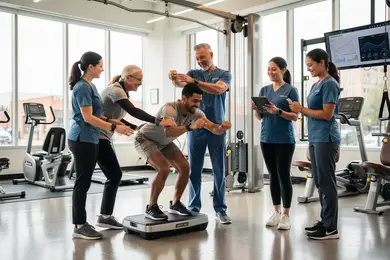
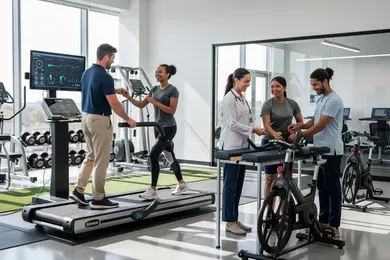
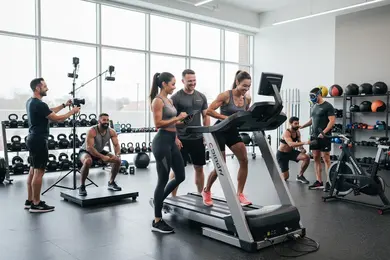
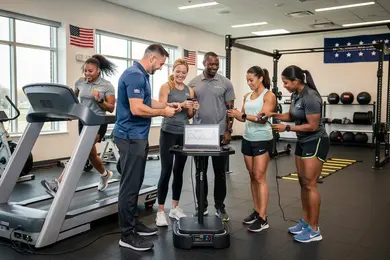
2027 Exercise Science Roles at the Center of AI-Enabled Performance Tracking

Co-Founder and Chief Data Scientist
Imagine an exercise science professional tasked with integrating rapidly evolving AI-driven performance tracking tools into team training regimens while lacking formal expertise in both biomechanics and data interpretation. This gap impedes making evidence-based adjustments crucial for injury prevention and a competitive edge. The Bureau of Labor Statistics projects a 10% employment growth in related health and fitness occupations by 2032, reflecting heightened demand for hybrid skill sets that blend exercise science knowledge with AI fluency. Yet many educational programs still struggle to balance traditional coursework with these emerging competencies, complicating career progression. This article examines current exercise science roles within AI-enabled performance tracking and guides readers in aligning education with practical workforce demands.
Key Things You Should Know
- AI integration demands advanced data literacy in exercise science roles, yet 67% of current graduates lack formal training, forcing employers to invest in costly upskilling that delays workforce effectiveness by 6-12 months.
- Professional roles increasingly merge exercise science expertise with AI ethical oversight, creating a workforce bottleneck as only 15% of programs incorporate compliance and bias mitigation curricula, impacting hiring priorities through 2028.
- High upfront costs for AI-enabled equipment (averaging $45K per facility per year) restrict access in smaller clinics, skewing career prospects toward urban centers and requiring candidates to weigh geographic and financial tradeoffs carefully.
How is exercise science being transformed by AI-enabled performance tracking across sports and health?
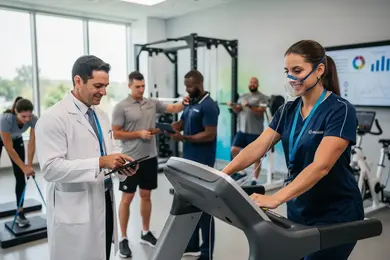
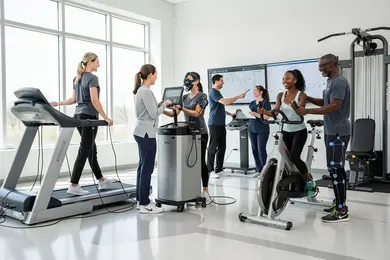
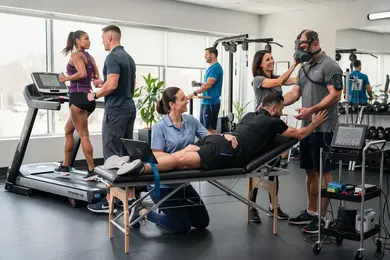
AI-driven exercise science advancements in sports performance are no longer theoretical but operational necessities in elite athletic environments. Professional teams, notably in soccer, use AI to analyze GPS and biometric data, enabling tailored recovery protocols that mitigate injury risks during tight competition schedules. This practical integration demands a workforce proficient not only in biomechanics but also in data science and ethical data handling, highlighting significant workforce implications for exercise science professionals.
Curricula must evolve to integrate quantitative methods, sensor technology interpretation, and compliance with data privacy standards, reflecting the complexity of managing heterogeneous sources-wearables, video feeds, and physiological monitors-into coherent insights. Without such interdisciplinary skills, AI's promise in enhancing conditioning protocols and health optimization risks underperformance.
Employers prioritize candidates demonstrating hands-on experience with AI tools, reinforced by certifications validating applied machine learning competencies. Those lacking these qualifications face constrained job mobility, making continuous professional development essential for workforce resilience. Prospective students and professionals evaluating educational pathways should consider programs offering substantive, real-world AI integration rather than superficial exposure.
For a practical guide on navigating this evolving labor market, see how to become a sports analyst.
What exercise science careers work directly with AI performance tracking tools and platforms?
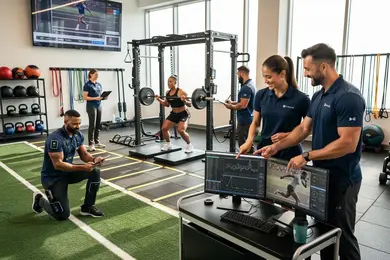
Positions in exercise science careers in AI performance tracking demand a blend of domain expertise and technical fluency that many education programs underprepare for. Professionals such as sports biomechanists, strength and conditioning coaches, exercise physiologists, and sports data analysts use AI tools to collect, interpret, and apply biomechanical and physiological data, but employers increasingly require demonstrated skills in advanced AI platforms alongside foundational exercise science knowledge.
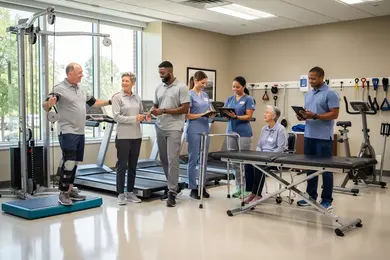
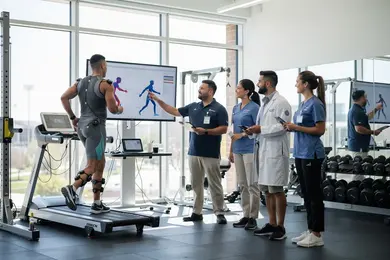
For example, sports biomechanists utilize AI-enabled predictive modeling by comparing movement patterns to extensive databases to identify injury risks, enabling tailored prevention strategies. Strength and conditioning coaches rely on AI workload monitoring to calibrate training intensity and recovery, balancing performance gains with injury avoidance. In clinical contexts, exercise physiologists interpret AI-captured physiological responses to fine-tune conditioning protocols for rehabilitation. Sports data analysts integrate these AI-derived datasets with other inputs to generate actionable reports for coaching and medical teams. These roles illustrate the practical implications of mastering AI tools within specific exercise science careers using AI tracking tools.
However, ongoing challenges include keeping pace with fast-evolving software, managing voluminous, complex datasets accurately, and translating abstract AI outputs into sport-specific strategies. Candidates who complement their degrees with certificates in digital performance technology and data analytics position themselves more competitively within increasingly multidisciplinary teams. Prospective students must carefully evaluate educational offerings to ensure they address these operational realities rather than focusing solely on traditional exercise science curricula.
Those considering this career pivot may also assess cost and access variables by reviewing accredited options such as the best online animal science degree programs, which provide a comparative model for remote, specialized study that includes analytic rigor and data interpretation applicable across science domains.
What degree pathways prepare students to use AI in exercise science and performance analytics?
Programs combining exercise science degree programs with AI specialization must balance biological knowledge with advanced computational skills to meet accelerating industry standards. Employers increasingly prioritize candidates capable of interpreting complex datasets derived from wearable technologies to enhance performance analytics and intervention precision. Bachelor's degrees now often integrate coursework in machine learning and data analytics, allowing graduates to improve physical activity assessments by up to 35%, according to recent evaluations.
Graduate education, especially master's or PhD pathways emphasizing AI-driven performance tracking and computational modeling, equips students with algorithm development expertise required for specialized roles. Practical familiarity with programming languages like Python and R, alongside cloud computing for real-time analytics, is a common hiring prerequisite. Students lacking formal AI training may struggle to analyze wearable-derived metrics, limiting their effectiveness in modern sports science contexts.
Workforce realities highlight that programs embedding experiential learning through partnerships with tech companies or large datasets offer tangible employability advantages. Career pivoters might consider formal certificates in AI applications within exercise science for foundational skills, though these often fall short of preparing learners for autonomous system design or validation tasks. Prioritizing quantitative methods within curricula aligns with empirical gains in assessment accuracy and performance optimization trends.
This practical orientation is crucial for prospective students assessing library degree options or others intersecting technology and health sciences, ensuring alignment between educational investment and labor market demands.
How do online exercise science programs compare to campus options for AI-focused training?
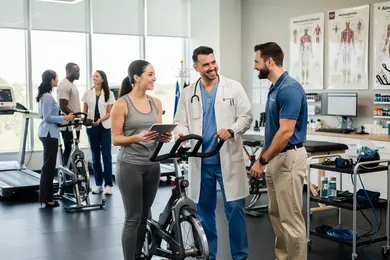
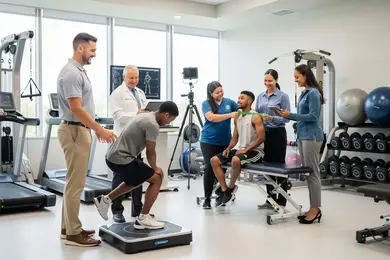
Online exercise science programs with AI performance tracking offer flexible access to advanced data analysis tools but demand strong self-discipline and technical skill to unlock their full potential. These programs incorporate generative AI through virtual labs and simulations, expanding learning possibilities beyond campus boundaries. However, campus exercise science courses for AI-enhanced athletic training still hold a distinctive edge by providing direct experience with wearable devices, motion capture, and biomechanics labs-critical for cultivating employer-valued assessment skills in sports performance and rehabilitation.
Consider a professional aiming to transition into sports analytics at an NFL team: an online program might deliver comprehensive AI modeling coursework with virtual data sets, yet the lack of in-person coaching observation and hands-on equipment use could limit practical depth. In contrast, campus students gain immediate mentorship and teamwork exposure, correlating with a 15% higher hiring rate for applied roles per the 2025 National Sports Science Workforce Report. Both learning formats require proactive networking and portfolio building to validate AI competency and real-world application.
Students pursuing online pathways must seek external internships or clinical placements to compensate for limited lab access, while campus options inherently facilitate these connections but at the cost of higher tuition and location constraints. Ultimately, employment outcomes favor graduates capable of synthesizing AI theoretical mastery with hands-on fieldwork, especially for roles demanding frequent biomechanical data interpretation and in-person assessment.
For those balancing educational investment against career goals, evaluating practical program elements alongside affordability metrics may include consultations like masters in library science affordability studies as part of broader strategic financial planning.
What core courses and lab experiences teach data-driven and AI-enabled performance monitoring?
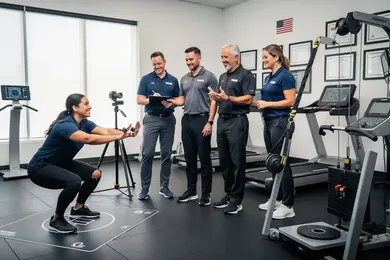
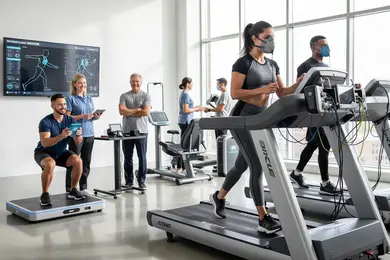
Programs integrating data-driven and AI-enabled performance monitoring demand students master applied biomechanics, exercise physiology, and advanced analytics alongside hands-on technology application. Proficiency in sensor technologies, motion capture, and wearable data collection merges with skills in programming languages such as Python or R, emphasizing the ability to interpret raw sensor outputs into actionable performance insights. This orientation aligns with workforce needs as AI tools transition beyond limited elite sports environments to broader healthcare and rehabilitation contexts.
Students must acquire competency in statistical modeling, machine learning fundamentals, and human performance lab validation, where AI outputs are rigorously compared to physiological gold standards. A practical scenario involves analyzing elite soccer player workload data to balance training effectiveness and injury risk, illustrating how theoretical knowledge translates directly into field decision-making.
Key challenges include maintaining data integrity across complex architectures and addressing sensor calibration or malfunction, areas frequently emphasized in experiential labs. Ethical considerations around data privacy remain non-negotiable to meet employer expectations for transparency and athlete safety. Graduates prepared in these dimensions meet demand for practitioners who operationalize AI solutions beyond niche teams, extending into clinical, community, and rehabilitation settings.
What admission requirements and prerequisites do AI-oriented exercise science programs typically have?
AI-integrated exercise science programs demand a hybrid expertise in human physiology and quantitative methods, reflecting a significant shift from traditional curricula. Candidates often need upper-level courses in biology or kinesiology alongside programming skills in Python or R, plus foundational machine learning knowledge. Employers prioritize graduates who can navigate both biomechanical data interpretation and AI model deployment, a requirement that new entrants without computational experience find particularly challenging.
This requirement leads to practical tradeoffs: individuals with strong movement science backgrounds but limited coding ability face additional bridging coursework, which can extend their time to certification and delay entry into AI-focused roles. Full-time working professionals must carefully assess whether they can allocate sufficient time to these demanding prerequisites to avoid bottlenecks in program completion.
Key workforce implications include:
- Graduates must demonstrate interdisciplinary teamwork and practical control systems skills to align with clinical and sports applications of AI-driven data collection.
- Traditional manual data roles are shrinking as automated performance tracking becomes the norm, limiting opportunities for those lacking programming competency.
- Meeting a minimum 3.0 GPA in science courses ensures candidates possess the analytical rigor necessary for AI applications within exercise science.
Ultimately, programs require upfront readiness to integrate AI tools effectively; falling short reduces employability in a labor market that increasingly merges exercise science with data analytics.
How can students evaluate accreditation and program quality for tech-intensive exercise science majors?
Accreditation by respected bodies like the Commission on Accreditation of Allied Health Education Programs (CAAHEP) or the Council on Academic Accreditation (CAA) is the baseline for credible Exercise Science programs that integrate AI and wearable technologies. Students should prioritize programs demonstrating measurable outcomes-graduation rates, certification success, and job placements in AI-enhanced roles-to avoid investing in credentials with weak labor market relevance.
Curricula must include hands-on interaction with AI-driven diagnostic tools and data analytics platforms used for personalized exercise prescriptions. For example, wearables linked to real-time performance feedback can boost adherence by 20-40%, a key metric from the 2025 JM MBS Technology AI Physical Activity review. Programs without direct exposure to these technologies risk leaving graduates unprepared for clinical, rehabilitation, or corporate wellness settings that demand such practical skills.
Institutional alliances with healthcare technology firms or research labs are significant indicators of internship access and industry networking, which influence early-career trajectories. Faculty expertise must be current; outdated knowledge hinders insight into fast-evolving AI applications. Flexible course delivery and cross-disciplinary options with computer science or biomedical engineering can enhance technical competencies but often require balancing depth in core exercise science.
Real-world decision-making involves accepting tradeoffs between specialized technical training and comprehensive foundational knowledge. Alumni feedback from AI-intensive roles often highlights the gap between theoretical programs and employer expectations regarding data interpretation and AI tool proficiency.
What certifications or licenses support careers that use AI in exercise and human performance?
Employers integrating AI in human performance prioritize certifications that demonstrate both physiological expertise and advanced data analytics capabilities. Credentials such as Certified Strength and Conditioning Specialist (CSCS) and Certified Exercise Physiologist (CEP) are no longer sufficient in isolation; professionals must also navigate biomechanical data from wearable technology to inform real-time training decisions. For instance, strength coaches leveraging AI algorithms dynamically adjust athlete loads, balancing performance enhancement with injury prevention, a concrete example of applied ecological data interpretation impacting daily practice.
Licenses like Licensed Clinical Exercise Physiologist introduce a regulatory dimension when fatigue and injury prediction models intersect with patient care, underscoring compliance and ethical considerations often overlooked by purely academic programs. Meanwhile, certifications in health data analytics (e.g., Certified Health Data Analyst) address a documented 25-35% accuracy improvement in AI predictions from wearable-derived ecological data versus traditional lab metrics, aligning professional preparation with employer demands outlined in the 2025 JM MBS Technology AI Physical Activity review.
Practical tradeoffs include the rapid evolution of AI applications and wearable standards, which creates friction for candidates whose curricula do not emphasize machine learning validation or federal health data regulations compliance. This gap risks limiting employability in elite performance and clinical roles where precision and data integrity are non-negotiable. Future-focused exercise science pathways must integrate this dual competence to translate AI-augmented data streams into actionable interventions effectively.
What are the salary ranges and job outlook for AI-enabled exercise science roles?
AI-enabled exercise science roles command a salary range of roughly $60,000 to $110,000 annually, with advanced positions in research or clinical sectors exceeding $130,000. This wage variation reflects specialization and employer context, emphasizing the premium placed on integrating AI for personalized performance and rehabilitation. Federal labor data projects a 15% growth rate in related health and fitness fields over the coming decade, driven by AI-powered analytics and remote monitoring technologies.
Employer expectations extend beyond foundational exercise science knowledge to include proficiency in AI interfaces and data interpretation. For instance, an exercise physiologist working with aging populations must leverage AI-guided training platforms; MR-based exergaming has demonstrated 20-30% improved adherence and 25% heightened user enjoyment compared to conventional methods. This real-world application illustrates the demand for a hybrid skill set combining biomechanics, AI integration, and user engagement strategies.
Students face tradeoffs balancing technical AI training against core physiology expertise; overemphasis on AI risks weakening clinical credibility. Additionally, converting AI-generated insights into practical treatment plans remains challenging, often requiring advanced certification or on-the-job development. Roles tied to research institutions and telehealth show the strongest wage growth, reflecting the critical link between analytics-driven performance optimization and measurable patient outcomes.
How can prospective students choose a reputable school for AI-centered exercise science study?
Programs integrating AI within accredited exercise science degrees must be judged primarily by their direct connection to employer demands and tangible skill application. Graduates who gain experience with wearable sensor data, neural network modeling, or real-time performance tracking platforms stand a better chance at placement in specialized roles. For example, those entering internships with sports technology companies benefit from practical insights unattainable through generic coursework.
Faculty expertise rooted in applied AI research published in established academic journals and government projects indicates program credibility, while mere aggregation of separate AI and exercise science content signals a fragmented education lacking real interdisciplinary synthesis. Choosing programs near sports medicine hubs or AI research centers can materially affect networking opportunities and internships, which are critical in a field with rapidly evolving technology demands.
Transitioning students face challenges with prerequisite requirements that may extend time-to-degree if foundational courses miss the intersection of AI and exercise science. Evaluating technological infrastructure-labs with biosignal processing and cloud analytics-helps verify if programs provide relevant hands-on training. Students should critically weigh tuition costs against employer partnership strength and curriculum modernization to avoid overpaying for outdated or generic offerings.
- Focus on programs with verified graduate placement in AI-enabled exercise science roles
- Assess faculty research with emphasis on applied human performance AI studies
- Prioritize geographic proximity to industry and research centers for improved networking
Other Things You Should Know About Exercise Science
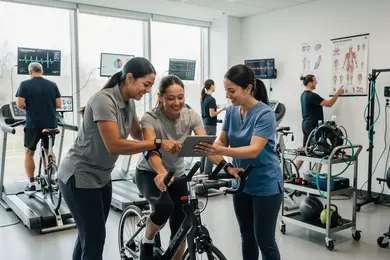
AI-enabled performance tracking increases the complexity and volume of data exercise science professionals must manage, pushing the expected workload beyond traditional hands-on assessments. Entry-level employees face demands to interpret continuous streams of quantitative data in real time while maintaining practical client interaction. This requires both analytical agility and technical fluency, which may extend initial work hours and learning curves, making employer expectations notably higher compared to roles without AI integration.
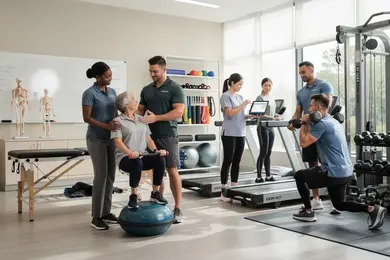
Programs emphasizing practical internships provide indispensable real-world exposure to client-facing roles and live data application, which employers highly value for immediate job performance. However, advanced AI analytics coursework delivers specialized skills necessary for roles focused on developing or customizing performance tracking technologies. Candidates seeking broad employability should prioritize internships to build professional networks and hands-on experience, whereas those targeting niche technical positions should focus on rigorous AI analytics training.
Exercise science professionals should follow HIPAA for protected health information and obtain written consent before collecting biometric or performance data. For 2027, many employers also require compliance with facility privacy policies, role-based access controls, and secure data storage under IRB or institutional review rules when working in research settings.
References
- Exercise science program accredited by national organization | Lipscomb University https://lipscomb.edu/news/exercise-science-program-accredited-national-organization
- Bachelor of Sport and Exercise Science https://www.unisc.edu.au/study/courses-and-programs/bachelor-degrees-undergraduate-programs/bachelor-of-sport-and-exercise-science
- Exercise Physiology Accreditation https://www.lynchburg.edu/academics/majors-and-minors/exercise-physiology/accreditation/
- Data Science & AI for Sports https://www.fhnw.ch/en/computer-science/degree-programmes/offerings/programmes/data-science-ai-for-sports
- AI use in sports science https://www.essa.org.au/web/Web/Resources/Articles/2025/ai-use-in-sports-science.aspx
- Data Science and Predictive Analytics for Evaluation Professionals Training Course https://upskilldevelopment.com/data-science-and-predictive-analytics-for-evaluation-professionals-training-course
- Admission requirements https://www.uantwerpen.be/en/study/programmes/all-programmes/master-data-science/admission-and-enrolment/admissionrequirements/
- Accreditation processes for technical programs https://edquip.co/blog/accreditation-processes-for-technical-programs
- Online Exercise Science Program https://stmary.edu/online-programs/exercise-science.html
- Admission Process https://ahn.mnsu.edu/academic-programs/exercise-science/exercise-physiology/admission-process/