2027 Exercise Science Specializations for School, Athletic, and Rehab Settings

Co-Founder and Chief Data Scientist
Faced with rapidly evolving demands in school sports, clinical rehab, and athletic performance, exercise science professionals must choose specializations that align with shifting employer needs while accommodating personal constraints like work schedules or location.
The Bureau of Labor Statistics projects a faster-than-average growth rate for exercise physiologists and related roles, yet the rise of hybrid and fully online programs, reported by the National Center for Education Statistics as a 15% enrollment increase since 2022, reflects an urgent pivot toward accessible education for adult learners and career changers. Selecting the right pathway thus hinges on understanding each specialization's real-world applicability and flexibility.
This article examines current exercise science specializations tailored to schools, athletic environments, and rehabilitation settings, guiding professionals and students through strategic decisions grounded in workforce dynamics and educational accessibility.
Key Things You Should Know
- Employment growth in exercise science roles focused on rehabilitation outpaces traditional athletic settings by 14% through 2031, per U.S. Bureau of Labor Statistics, forcing candidates to weigh clinical credentials against sport-specific certifications.
- Employers increasingly prioritize integrated skills in data analytics and biomechanics, with 62% of surveyed clinics requiring such expertise for rehab specialists, pressuring programs to adapt or risk graduate underemployment.
- Specialization timing impacts ROI sharply: programs emphasizing school-based exercise science cost 30% less but yield average salaries 22% below athletic-focused pathways, influencing student access versus long-term income tradeoffs.
What are the main exercise science specializations for school, athletic, and rehab settings?
Choosing a specialization within exercise science career paths in school and athletic settings requires balancing immediate financial realities against long-term professional growth. School-based kinesiology programs concentrate on physical education and youth fitness but present a challenging debt-to-earnings ratio, with median early-career salaries around $39,264 versus $23,324 in debt. This makes return on investment a critical consideration for students aiming for roles that impact adolescent health and classroom activity.
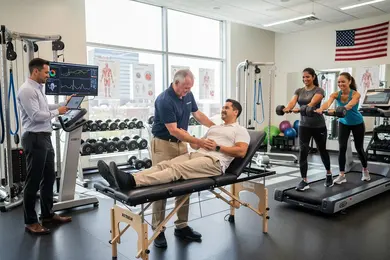
Athletic training for sports performance demands certification and field experience, often through internship, like residencies, with employers emphasizing biomechanics, injury prevention, and sport-specific conditioning. This path offers higher pay but with unpredictable hours and physical strain. Professionals here must develop rapid assessment skills aligned with competitive schedules, reflecting real-world employer priorities.
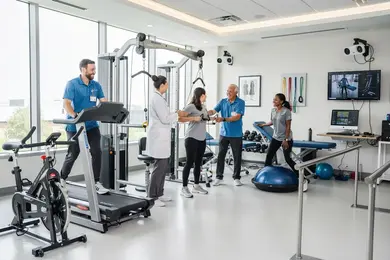
Rehabilitation exercise science specializations and roles focus on clinical exercise physiology within medical settings such as hospitals or outpatient clinics. This track involves managing chronic diseases and post-surgical recovery, requiring knowledge of pathology and licensing that affects employability and reimbursement. It suits those seeking medically supervised exercise intervention over general fitness coaching.
Students should weigh workforce mobility and certification barriers across these options. Athletic training often leads to greater compensation and clinical skill development, while school-based work has lower financial returns but community-based impact. Rehabilitation offers stable demand due to demographic trends despite regulatory challenges.
For more specifics on navigating educational options, exploring exercise science degrees online can provide strategic pathways aligned with career goals.
What degree pathways prepare you for exercise science roles in schools, sports, and rehab?
Degree programs for exercise science careers in schools and athletics demand a targeted approach balancing academic content with practical experience. Bachelor's degrees focused on physical education meet licensure and K-12 curriculum needs, but lack of hands-on training limits clinical or rehab applicability. Athletic training or exercise rehabilitation pathways emphasize injury prevention and therapeutic skills essential for rehabilitation settings, increasingly favoring graduate study due to evolving employer standards and insurance requirements.
Strength and conditioning roles in sports require applied performance emphases integrated with advanced methodologies and data analytics, with certification bodies mandating specific degree prerequisites and experiential components. Candidates often face a tradeoff: a bachelor's with robust internships suffices for entry-level athletic or personal training roles, whereas rehab-focused careers increasingly necessitate master's credentials combining theory and applied internships to meet workforce demands effectively.
Certification integration with degree curricula is a critical differentiator; purely theoretical programs without structured practical exposure diminish employability in clinical or educational settings. For professionals pivoting careers, post-baccalaureate certifications aligned with master's degrees emphasizing adaptive physical activity or rehab science offer a pragmatic path to compliance with licensure and industry expectations in rehabilitation roles.
Workforce data reflect these dynamics: sport science-focused careers, including strength and conditioning specialists, have grown 12-14% between 2020-2024, outpacing many allied health segments. Prospective students should evaluate programs for demonstrated alignment to employer requirements and practical components versus solely academic rigor.
Those comparing pathways in the health sciences domain may also consider fields like environmental science. Resources such as environmental science degree career analyses provide complementary insights into applied science career planning practices.
Best academic pathways for exercise science roles in rehabilitation settings incorporate interdisciplinary collaboration, evidence-based assessment tools, and structured clinical exposure to optimize licensure readiness and market viability.
How do exercise science careers differ across K-12 schools, athletics, and rehabilitation?
Exercise science career differences in K-12 schools, athletics, and rehabilitation reflect distinct operational demands and educational prerequisites that significantly shape professional trajectories. In K-12 settings, roles prioritize designing age-appropriate fitness curricula and promoting wellness with an emphasis on preventive care, effective behavior management, and broad communication skills. This specialization often lacks the clinical intensity found elsewhere but requires educational credentials aligned with school systems.
By contrast, athletic roles demand advanced expertise in biomechanics and sport physiology to optimize performance and prevent injuries through data-driven conditioning programs. Collaboration with coaches and trainers necessitates adaptability to rigorous, real-time scenarios affecting athlete recovery and training cycles. This environment values specialized certifications that align closely with sport science applications.
Rehabilitation-focused careers require clinical proficiency in pathophysiology and therapeutic exercise prescription within multidisciplinary medical teams. This sector, the fastest growing with projected 9% employment growth between 2024 and 2034, requires significant clinical hours and advanced credentials to meet complex patient needs. A rehab exercise scientist's individual plans differ markedly from the group fitness lessons designed for school wellness.
Practical tradeoffs include balancing advanced certification requirements and clinical experience for rehab specialists against the broader educational skills and communication emphasis necessary in school-based roles. Employers prioritize degrees complemented by field-specific internships or certifications across all domains.
For those considering diversified career enhancements, combining exercise science expertise with additional qualifications such as a library science masters may offer interdisciplinary advantages relevant to educational resource management or program development.
Specializations in exercise science for school, athletic, and rehab professionals require navigating this spectrum of expertise and market demand to align academic pursuits with long-term career objectives.
What core courses and clinical experiences are included in exercise science programs?
Programs emphasizing core courses in exercise science programs such as human anatomy, physiology, kinesiology, biomechanics, exercise physiology, and motor control lay the groundwork essential for clinical or athletic careers. Yet, theoretical knowledge alone does not suffice.
Clinical experiences for exercise science students are critical, often determining hireability. Hospitals represent the largest employer segment, absorbing 22% of exercise physiologists nationally, so practicums in these settings sharpen skills in patient assessment, ECG interpretation, and evidence-based intervention crucial for this workforce.
Students encounter complex clinical scenarios, like cardiac rehabilitation or chronic disease management, requiring mastery of clinical exercise testing and patient safety protocols. Conversely, athletic or rehab settings demand proficiency in sport-specific training, injury prevention, and interdisciplinary collaboration, highlighting how training environments shape competencies and job fit. Programs with early, varied clinical placements align better with employer expectations and certification readiness but impose scheduling and geographic constraints.
Without accredited clinical site affiliations providing direct patient contact, graduates may face limited job opportunities and slower progression. This real-world friction underscores the need to evaluate programs not just by curriculum breadth but by integration of hands-on clinical exposure. Additionally, coursework in health behavior, nutrition, and pharmacology supports nuanced interventions across diverse populations, further enhancing employability.
Prospective students balancing educational cost with career goals can explore data on the cheapest data science degree to compare funding options and strategies when considering complementary skills alongside exercise science.
How do online exercise science programs compare to campus-based options for these settings?
Online exercise science programs offer flexibility but often lack the consistent hands-on training that employers in schools, athletic organizations, and rehabilitation centers require. While theoretical subjects like kinesiology adapt well to virtual instruction, core competencies involving biomechanical evaluations and rehab equipment use demand supervised lab work or clinical internships to meet employer standards.
Campus-based programs typically integrate practicum components, resulting in graduates who are often more immediately job-ready in applied settings. Employers aligned with U.S. Bureau of Labor Statistics forecasts anticipate about 11-14% growth in wellness roles and 14% for personal trainers by 2032, emphasizing candidates' practical experience as a key hiring criterion. Online students face the challenge of independently securing quality fieldwork without campus networks, which may hinder entry into competitive roles.
Working professionals leveraging online formats to maintain employment during study must balance remote coursework with finding relevant clinical placements, a significant hurdle. Without structured practicum or hybrid program options mandating supervised training, graduates risk falling behind peers from campus contexts where standardized experiential learning is the norm.
What accreditation and program quality standards matter for exercise science degrees?
Employers in the exercise science field increasingly demand graduates from programs with specialized accreditation, reflecting verified industry competence rather than general institutional reputation alone.
Regional accreditation establishes baseline institutional legitimacy, but true market readiness hinges on approvals from bodies like the Commission on Accreditation of Allied Health Education Programs (CAAHEP) or organizations aligned with the National Strength and Conditioning Association (NSCA). Without this, graduates often face barriers to certification exams and practical employment opportunities.
For example, strength and conditioning specialists benefit from the anticipated 12% employment growth over a decade, but this advantage materializes mainly for candidates with credentials from programs embedding rigorous clinical experience and externships. These hands-on components are vital since practical proficiency, not just academic theory, directly influences job performance in athletic and rehabilitation environments.
Prospective students should therefore investigate program alignment with evidence-based kinesiology, exercise physiology, and rehab protocols, ensuring clear pathways to internship sites supervised by certified professionals. Failure to verify these elements risks suboptimal career entry points, particularly in competitive sectors such as school athletics or clinical rehab, where employer preferences prioritize verifiable skill sets and compliance with professional certification requirements.
Ultimately, program quality standards operate as critical filters in the workforce ecosystem, distinguishing degrees yielding tangible career access from those that leave graduates struggling to meet market expectations.
What are typical admission requirements and program lengths for exercise science majors?
Admission prerequisites for exercise science majors typically demand a strong foundation in biology, chemistry, physics, and mathematics, with many programs expecting SAT or ACT scores, though test-optional policies are increasing. Transfer students face added pressure to present college-level science coursework and maintain a minimum GPA between 2.5 and 3.0.
Graduate programs impose further requirements, including a related bachelor's degree, GRE results, recommendation letters, and relevant clinical or research experience. These layers of qualification reflect employer expectations for candidates equipped with rigorous scientific knowledge and practical exposure.
Degree completion timelines most often span four years at the bachelor's level, integrating core sciences with applied physiology, biomechanics, and clinical practicums, an alignment shaped by sector demand for ready-to-work graduates in schools, athletic departments, and rehab settings. Shortened credentials such as associate degrees or certificates commonly lack the depth employers or certifying bodies require, limiting their utility in career advancement.
Pursuing master's degrees or certifications often adds 1-3 years, crucial for roles involving licensure, like school athletic trainers, where program timing directly affects eligibility and employment.
The field's expansion is quantifiable: in 2021-2022 over 31,000 bachelor's degrees in exercise physiology were awarded, constituting 1.5% of all bachelor's degrees. This surge elevates admission competitiveness and reinforces the need for clear prerequisite planning and realistic completion schedules to align educational outcomes with workforce entry.
What certifications or licenses are needed for school, athletic, and rehab exercise roles?
Certification requirements in exercise science careers sharply delineate practical employability and income potential, often outweighing degree titles alone. Certified Athletic Trainers (ATCs) must secure state licensure plus board certification to meet stringent legal and insurance criteria.
Without these, job opportunities and salary tiers are constrained. For roles in school settings, such as physical education specialists, state teaching credentials tied to health instruction and passing state-specific exams are mandatory, creating a barrier for direct clinical entry.
Clinical exercise physiologists navigate more complex credentialing, needing certifications like the Certified Clinical Exercise Physiologist (CEP) from the American College of Sports Medicine, alongside variable state licensure. This regulatory patchwork impacts mobility between contexts; transitioning from school to rehabilitation settings demands additional licenses reflecting medical competency, which is not simply an extension of fitness training.
Higher-level certifications, including Registered Clinical Exercise Physiologist and Certified Strength and Conditioning Specialist (CSCS), unlock specialized roles with median wages climbing from around $58,000 to $80,000 or more in elite or rehab environments. Employers emphasize documented clinical hours and current certifications to safeguard patient safety and compliance, with lapses often resulting in lost insurance eligibility or job termination.
Key workforce considerations for candidates include:
- Ongoing continuing education requirements to maintain certification validity.
- Certification alignment with employer-specific legal and insurance mandates.
- Practical experience demands embedded in credentialing that shape career mobility.
Failing to integrate these factors realistically can stall career progression despite academic credentials. Planning must incorporate the layered credential landscape early to secure both qualification and financial sustainability.
What salary ranges and job outlook can exercise science graduates expect in each setting?
Salary ranges for exercise science graduates vary widely across sector and credential level, reflecting distinct hiring expectations and workforce realities. In K-12 educational settings, roles like physical education specialists typically start at $40,000-$50,000, but advancing to athletic trainer positions in school districts or colleges often requires recognized national certifications to reach $50,000-$65,000.
Within professional or semi-professional athletic environments, starting salaries generally hover around $50,000, increasing past $70,000 for those holding advanced qualifications such as Certified Strength and Conditioning Specialist (CSCS). Employers prioritize experience-backed outcomes in injury prevention and performance optimization, forcing graduates to balance gaining practical skills in lower-paid roles against quicker entry into higher-paying positions.
Rehabilitation careers encompass outpatient clinics and hospital settings, with salaries from $45,000 to $68,000, where clinical certifications and state licensure significantly influence earning potential and job accessibility. Restrictions like insurance billing rights add complexity to entering or progressing in this sector.
Strategic credential acquisition and carefully chosen internships across these three domains improve employability and salary prospects. Graduates frequently must navigate the tradeoff between accumulating multiple certifications and targeting specific sector requirements to maximize both growth and practical workforce integration.
How can students choose a reputable exercise science program aligned with their career goals?
Choosing an exercise science program requires prioritizing accredited curricula closely aligned with your targeted job role. Accreditation by recognized bodies like CAATE or the Commission on Accreditation of Allied Health Education Programs (CAAHEP) confirms a program meets employer standards beyond generic fitness training. For instance, a student targeting a physical therapy aide role must ensure the program offers focused coursework in biomechanics and therapeutic modalities rather than broad wellness topics.
Specialization and hands-on practicum opportunities significantly impact employability. Programs with applied placements in hospitals or sports clinics provide direct pathways into clinical or athletic environments, which is essential given projections of over 59,000 new jobs in exercise science by 2029 and growth rates exceeding 10% for certain roles, according to Calvin University's labor market analysis.
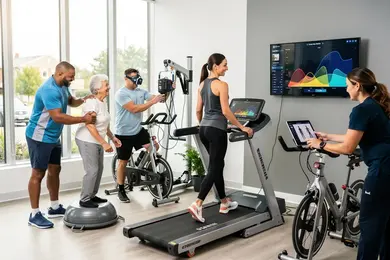
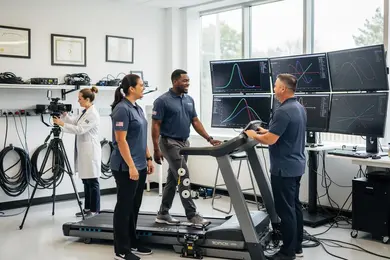
Technical proficiency with current assessment tools like motion capture or metabolic analyzers differentiates graduates in rehab and performance settings. Students should assess institution partnerships with employers and tangible job placement outcomes rather than programs focusing mostly on theoretical instruction.
Critical decision factors include:
- Verification of institutional accreditation
- Curriculum relevance to desired sectors
- Quality and quantity of practicum or internships
- Alumni employment success rates
- Faculty expertise with research integration
- Cost balanced against program length and career return on investment
This evaluative framework helps mitigate risks tied to misaligned credentials and supports practical workforce readiness across clinical, athletic, and rehabilitation contexts.
Other Things You Should Know About Exercise Science
In 2027, professionals within exercise science benefit from a balance of broad experience and specialization. Broad experience can enhance adaptability and understanding, but specialization is vital for expertise in niche areas like athletic training and rehabilitation, which demand specific skills and knowledge.
School-based exercise science roles often involve balancing direct student interaction with administrative tasks, including compliance and education efforts, which demands multitasking and bureaucratic navigation. Athletic settings typically require high physical demands and irregular hours aligned with team schedules. Rehab settings emphasize detailed patient tracking and interdisciplinary communication, often with a more predictable workload but higher documentation requirements. Understanding these differences is essential for aligning career goals with lifestyle preferences.
Working in K-12 schools offers more structured hours and a stable environment, often with fewer physical demands, but may provide lower salaries and limited specialization opportunities. Collegiate athletics positions demand extensive hands-on involvement, including travel and off-hours work, but they offer higher pay and specialized roles such as strength and conditioning coaching. Choose based on your tolerance for schedule variability and desire for specialization versus work-life balance.
K-12 school roles usually require a state teaching or school-services credential plus CPR/AED certification, and some districts also expect a school-based exercise or adapted physical activity endorsement. Employers may prefer National Strength and Conditioning Association or American College of Sports Medicine credentials for athletic support roles.
References
- Degrees & Requirements https://www.emoryhenry.edu/academics/exercise-science/degrees-requirements/
- Exercise science program accredited by national organization | Lipscomb University https://lipscomb.edu/news/exercise-science-program-accredited-national-organization
- What does a career in Exercise Science look like? https://www.lmc.edu/about/news-center/articles/2025/what-does-a-career-in-exercise-science-look-like.htm
- Online Exercise Science Degrees: Top School Review https://www.edumed.org/online-schools/exercise-science-degrees/
- Exercise science: What exactly is it? https://www.scienceforsport.com/exercise-science/
- Athletic Trainer - Explore Healthcare Careers - Mayo Clinic College of Medicine & Science https://college.mayo.edu/academics/explore-health-care-careers/careers-a-z/athletic-trainer/