2027 Exercise Science Roles That Most Often Lead to Leadership Positions

Co-Founder and Chief Data Scientist
Professionals in exercise science often confront a critical barrier when targeting leadership roles: distinguishing which career trajectories reliably translate into management or executive opportunities. Compounding this challenge, evolving workforce demands push many to navigate flexible educational options tailored for adult learners, with the National Center for Education Statistics reporting a 17% increase in online program enrollments since 2023. This shift reveals a broader trend toward accessible, career-movable credentials, yet not all pathways equally position graduates for advancement. Understanding which specific exercise science roles serve as consistent springboards into leadership informs strategic decisions on education and career planning. This article identifies those roles and outlines practical strategies to optimize career mobility toward leadership positions in exercise science.
Key Things You Should Know
- Advanced certifications in exercise science leadership roles correlate with 27% higher salaries but require 18-24 months of additional education, limiting accessibility for mid-career pivots as per 2024 National Center for Education Statistics data.
- Employers increasingly prioritize candidates with integrated biomechanics and data analytics skills, reflecting a 42% demand surge in leadership positions documented by the Bureau of Labor Statistics in 2024, reshaping workforce composition.
- The scarcity of executive-track exercise science professionals, with only 15% reach director-level roles within ten years, creates strategic tension between gaining broad clinical experience versus niche specialization.
What exercise science roles most often lead to leadership positions?
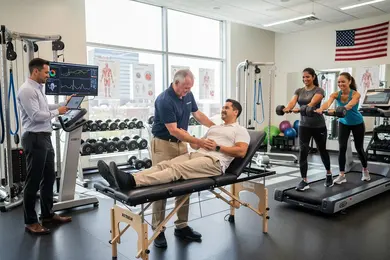
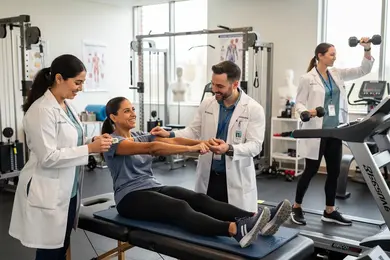
Leadership in exercise science careers often emerges from roles that combine direct patient interaction with operational management, such as clinical exercise physiologists and rehabilitation program directors. These positions demand frontline oversight of patient care and team coordination, creating an experiential foundation highly valued for supervisory roles. For example, clinical exercise physiologists managing cardiac rehabilitation teams must ensure protocol adherence and staff collaboration, differentiating their leadership capacity from entry-level positions focused solely on task execution.
The top exercise science professions for management positions also include strength and conditioning managers in sports organizations and wellness program directors in corporate environments. These roles require a blend of technical expertise and organizational leadership, often involving budget oversight and large-scale program design. Advancement frequently hinges on attaining specialized certifications or advanced degrees in healthcare administration, reflecting an employer preference for candidates who balance clinical knowledge with administrative competence.
Prospective leaders must weigh the tradeoff between developing in-depth clinical skills versus broader managerial capabilities, aligning educational choices with targeted leadership tracks rather than generalist training. Employment growth in these roles is robust, with exercise physiologist positions projected to grow 9% from 2024 to 2034, supporting expanded opportunities to move into management.
For professionals curious about related salary benchmarks, a useful comparison can be drawn from how much does a sports analyst make, offering insights into parallel career trajectories with analytical and leadership components in health and sports fields. Comprehensive guidance on such career pivots is available at how much does a sports analyst make.
Which exercise science degree qualifies you for management roles?
A bachelor's degree in exercise science with a concentration in strength and conditioning remains a decisive credential for securing leadership roles in sports and fitness management. Employers commonly expect candidates steering teams and program budgets to not only demonstrate practical coaching results but also apply scientific frameworks in developing training protocols. This degree directly addresses gaps often cited in candidates holding only associate degrees or certifications, which may restrict upward mobility due to insufficient depth in physiology and strategic planning.
The best exercise science qualifications for management roles integrate both theoretical knowledge and applied experience. For instance, graduates who combine their degree with industry certifications often transition smoothly into supervisory positions at commercial gyms, collegiate athletic departments, or rehabilitation centers, managing both personnel and performance outcomes. However, pursuing graduate degrees offers diminishing returns unless targeting specialized clinical or collegiate environments where advanced expertise commands premium roles.
The U.S. Bureau of Labor Statistics projects 19% growth in fitness trainer and instructor roles through 2031, underscoring a robust demand for leadership prepared by a bachelor's exercise science degree. The median wage reflects moderate starting salaries around $46,180 with progression linked to experience and credentials. Professionals evaluating pathways should consider affordability and duration tradeoffs carefully, particularly when exploring online options such as an online sports management bachelor's degree that may complement or accelerate management readiness.
What accreditation should an exercise science program have?
Employers and licensing bodies in health promotion and rehabilitation increasingly require credentials tied to accredited exercise science programs in the United States. Programs lacking CAAHEP accreditation often fail to meet national certification standards for exercise science degrees, creating barriers to licenses or credentials like the Certified Exercise Physiologist (CEP) designation. This credential, integral for wellness coordinators or corporate wellness directors, is critical as projected job growth nears 20% through 2028 with salaries ranging from $54,000 to $83,400 annually.
Opting for a non-accredited program can limit access to vital internship placements and hands-on training, leaving graduates underprepared for real-world demands, especially in sports performance or clinical rehabilitation fields that require National Commission for Certifying Agencies (NCCA) recognized standards. State licensure boards commonly mandate attending a CAAHEP-accredited program, making this a non-negotiable for candidates aiming for regulatory compliance and professional standing.
Decisions about program choice also intersect with financial considerations, where scrutiny over the computer science degree cost has become common; similarly, exercise science students should weigh investment versus career outcomes. Careful verification of program accreditation, practicum quality, and alignment with employer expectations will influence long-term mobility and salary potential.
Should you choose an online or campus exercise science program?
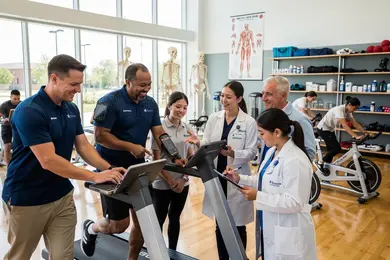
Campus exercise science programs generally provide a significant advantage in meeting the hands-on training requirements essential for leadership roles such as fitness director or gym manager. Direct supervision, access to structured labs, and in-person internships ensure students develop clinical competencies and client management skills sought by employers. These practical experiences align closely with certification pathways and hiring expectations, which increasingly emphasize verified clinical proficiencies over credentials alone.
Conversely, the benefits of online exercise science degrees often lie in their accessibility and scheduling flexibility, particularly for working professionals. However, these programs usually require students to independently secure supervised practicum sites, which can create challenges in fulfilling mandatory clinical hours and delay professional credentialing. A candidate juggling a full-time job while pursuing an online degree may find it difficult to obtain quality local internships, potentially limiting skill acquisition relevant to roles commanding over $50,000 annually in kinesiology and exercise science, as reported by SportsDegreesOnline.org using ZipRecruiter data.
Employers prioritize graduates with seamless access to faculty guidance, real-time feedback, and established connections to healthcare and fitness providers. On-campus programs inherently facilitate these conditions, thereby enhancing employability and leadership readiness.
For those unable to attend campus, proactively identifying and securing quality supervised practicum placements is mandatory to remain competitive. Exploring related advanced degrees, such as a master of data science online, may offer complementary skills highly valued in health analytics and performance measurement within the exercise science field.
What coursework prepares exercise science students for leadership?
Leadership preparation within exercise science degree programs demands more than technical knowledge; it requires integrating scientific expertise with management skills to meet employer expectations in dynamic settings. Coursework must extend beyond physiology and biomechanics to include applied research methods, communication strategies, and organizational principles-areas often overlooked yet critical for supervisory roles.
Key curriculum components should address:
- Data analysis and research methodology tailored to real-world performance metrics;
- Sports psychology and effective communication to navigate team dynamics;
- Management principles, leadership theory, and ethics related to budgeting and compliance;
- Field-based internships or capstone projects simulating leadership challenges in clinics, athletic departments, or wellness programs.
For example, a performance analyst working with professional athletes uses statistical research to maximize outcomes, but also requires leadership capabilities to coordinate interdisciplinary teams. This combination correlates with salary data showing sports scientists average $113,000 annually, with top earners near $154,000, signaling labor market value placed on overlapping scientific and managerial skills.
Students who neglect organizational and communication training risk stagnating at practitioner levels, as technical ability alone often fails to open supervisory opportunities. Balancing these areas early in academic pathways better positions candidates to meet employer demands and transition toward decision-making roles in exercise science careers.
What certifications help exercise science professionals advance?
Leadership roles in exercise science increasingly demand a blend of targeted certifications and management expertise to remain competitive. For instance, the Certified Strength and Conditioning Specialist (CSCS) credential is often a baseline requirement for aspiring athletic directors or sports facility managers, reflecting employer preference for demonstrated technical proficiency alongside at least a bachelor's degree. Without these credentials, candidates risk exclusion as professional standards evolve.
Graduate-level qualifications and specialized certifications like Certified Facility Manager (CFM) or advanced degrees in sports management become differentiators for executive roles overseeing budgeting, personnel, and compliance-duties beyond typical entry-level scopes. Professionals must evaluate the tradeoff between investing time and resources in such credentials versus the tangible salary premiums and job responsibilities they unlock.
A practical pathway might involve layering certifications to match role expectations: a sports medicine professional could combine ATC certification with a master's degree and management courses to balance clinical and administrative demands, while facility managers often augment exercise science credentials with leadership training tailored to operational complexities.
What are the admissions requirements for exercise science programs?
Admission into exercise science programs demands more than baseline academic credentials, often requiring a high school diploma with a substantial foundation in biology, chemistry, and math. The practical implication here is clear: a 2.5 to 3.0 GPA threshold and completion of advanced science courses separate candidates ready for rigorous curricula from those less prepared. Many programs still require ACT or SAT scores, though test-optional policies are increasing, shifting emphasis to candidates' transcripts and relevant experience.
Applicants strengthen their prospects by demonstrating prior involvement in related fields such as personal training or healthcare internships. These experiences address a key employer expectation-applied skills over theoretical knowledge alone. Personal statements and letters of recommendation from professionals who can vouch for work ethic and technical aptitude are often decisive components, especially for candidates targeting leadership roles within community program management or health education.
Programs that integrate real-world internships offer tangible advantages. These practicum experiences help bridge academic theory with management competencies valued by employers. For working professionals pivoting into exercise science leadership, flexible admissions recognizing certifications or prior learning can minimize friction and align education with strategic career goals.
How long does an exercise science degree usually take?
Choosing between a bachelor's and a master's degree in exercise science is a pivotal decision that directly shapes career trajectory and earning potential. A standard bachelor's program, typically completed in four years, qualifies graduates for entry-level roles but limits access to leadership positions that demand advanced credentials. Accelerated bachelor's options may shorten this timeline to about three years but come with increased academic pressure.
Graduate degrees add two to three years and are typically essential for roles in clinical management, academic research, or hospital-based cardiac rehabilitation centers, where employers expect both a master's and professional certification. For instance, clinical exercise physiologists leading interdisciplinary teams require these credentials to fulfill regulatory and patient care standards.
Income data from workforce studies by Concordia University, St. Paul referencing BLS statistics demonstrate that exercise physiologists in the top 10% earn over $79,830 annually, whereas fitness trainers with primarily a bachelor's or less education can earn more than $82,050, reflecting differences in role complexity rather than simple educational attainment.
Students must weigh whether rapid workforce entry via a bachelor's suffices or if investing up to seven years total to obtain a master's is warranted for sustained advancement and managerial responsibilities. This decision involves balancing immediate employment goals against long-term leadership ambitions and compensation outcomes.
What jobs and salaries can exercise science graduates expect?
Starting salaries for exercise science graduates typically range from $40,000 to $50,000 annually in roles like exercise physiologist, strength and conditioning coach, or wellness coordinator. However, specialization in tactical strength and conditioning or military human performance can push mid-career earnings to between $70,000 and $90,000. These niche areas, especially within military or public safety sectors, are poised for approximately 20% job growth through 2028, indicating employer investment in workforce physical readiness and injury prevention.
Success in these fields often requires more than a bachelor's degree. Advanced certifications such as the CSCS (Certified Strength and Conditioning Specialist) or graduate qualifications are frequently mandatory for leadership positions, particularly those involving strategic injury mitigation and program oversight in high-stakes environments like military human performance units.
- Public safety and military roles offer job stability but demand rigorous physical and logistical standards that can limit accessibility.
- Corporate wellness and athletic training roles typically provide faster entry but may cap salary growth and advancement potential.
- Employers prioritize demonstrated impact on performance metrics and injury reduction, making skills in data-driven documentation essential.
Graduates who combine evidence-based conditioning expertise with leadership and operational knowledge command higher salaries and quicker promotions. This practical balance of specialized technical skills and measurable results shapes employability and long-term career trajectories.
What is the job outlook for exercise science leadership careers?
Exercise science leadership roles in 2026 demand a hybrid skill set extending beyond traditional clinical or fitness knowledge. Professionals who combine expertise in business development, data analytics, and digital program management stand to lead wellness initiatives effectively in complex organizational settings. For example, managing a corporate wellness program requires measurable outcomes such as improved employee productivity or reduced healthcare spending, which challenges leaders to integrate interdisciplinary coordination and technology-driven engagement strategies.
The labor market reflects growth in health and wellness coaching, fitness management, and rehabilitation services, but this expansion comes with intensified competition. Without measurable impact and additional management or entrepreneurship certifications, advancement beyond entry-level roles will likely stagnate. Geographic factors also shape opportunities: urban centers show more openings alongside greater competition compared to rural areas.
Students or professionals weighing career advancement must consider tradeoffs between deepening clinical specialization and broadening leadership capabilities in wellness. The former may limit scope to technical roles, while the latter demands versatility managing diverse teams addressing holistic health challenges.
- Strong leadership roles require skills in program scaling and interdisciplinary team management.
- Certification in entrepreneurship or management enhances prospects for upward mobility.
- Urban markets offer more roles but necessitate stronger competitive differentiation.
These realities illustrate why combining exercise science with practical business and analytical proficiencies is essential for securing executive-level positions within evolving wellness sectors.
Other Things You Should Know About Exercise Science
Certified Strength and Conditioning Specialist (CSCS), ACSM Clinical Exercise Physiology certification, and Corrective Exercise Specialist credentials are common leadership signals. Employers often expect 2 to 5 years of supervised experience, CPR/AED certification, and documented staff training or program management before promoting into manager or director positions.
Specialization narrows your expertise but can enhance leadership potential if aligned with high-demand areas such as sports performance, rehabilitation, or wellness program management. However, over-specializing early may limit flexibility in career progression within broader leadership tracks. Candidates aiming for leadership should balance specialization with diverse competencies in administration, program development, and interprofessional collaboration.
Transitioning involves shifting from individual client outcomes to managing teams, budgets, and strategic initiatives, which requires different skills than those gained through standard exercise science training. Many professionals underestimate the importance of soft skills such as communication, conflict resolution, and business acumen. Proactive development of these areas, through formal training or mentorship, is essential to meet employer expectations and succeed in leadership roles.
References
- Applied Exercise Science https://springfield.edu/programs/applied-exercise-science
- Exercise Science and Human Performance https://mcm.edu/major/exercise-science-and-human-performance/
- Online Exercise Science Program https://stmary.edu/online-programs/exercise-science.html
- Shippensburg University - Exercise Science Major https://www.ship.edu/academics/coehs/exercise_science/exercise_science_major/
- Medical Exercise Specialist Certification | ACE https://www.acefitness.org/fitness-certifications/certified-medical-exercise-specialist/default.aspx
- ESSA's career guide for Accredited Exercise Scientists https://www.essa.org.au/Web/Web/Resources/Tools-and-templates/ESSA-AES-Guide.aspx
- Exercise Science Degree Careers, Jobs and Salaries - Peak Physical Therapy and Sports Performance https://peaktherapy.com/blog/exercise-science-degree-careers-jobs-and-salaries/
- Top 20 Careers With a Master’s in Exercise Science | PLNU https://www.pointloma.edu/resources/health-sciences/top-20-careers-masters-exercise-science
- Online Exercise Science Degrees: Top School Review https://www.edumed.org/online-schools/exercise-science-degrees/
- Exercise science: What exactly is it? https://www.scienceforsport.com/exercise-science/