2027 Online Exercise Science Degrees With Strong Exercise Programming Training

Co-Founder and Chief Data Scientist
Professionals aiming to deepen exercise programming expertise often face rigid schedules and geographic limits that impede timely credentialing. The shift toward online education, which saw a 12% enrollment rise among adult learners in 2024 according to the National Center for Education Statistics, reveals a demand for flexible pathways that accommodate working individuals without sacrificing curriculum rigor.
Employers increasingly prioritize candidates with verified, hands-on exercise programming skills, yet many online programs struggle to balance accessibility with the practical training essential for workforce readiness.
This article evaluates current online exercise science degrees emphasizing strong exercise programming components and guides prospective students through selecting programs that align with career mobility and skill applicability.
Key Things You Should Know
- Online exercise science degrees with strong programming training average 12-18 months longer completion times than campus programs, driven by delayed practical skill assessments; this timing gap risks slower workforce entry per NCES data.
- Employers in kinesiology and rehabilitation increasingly demand proficiency in evidence-based exercise prescription software, which only 37% of online programs integrate fully, limiting remote graduates' immediate job readiness per recent industry surveys.
- Cost variability spans 45% between accredited programs focused on exercise programming biomechanics versus broader health sciences curricula, creating a tradeoff between specialized skill depth and financial efficiency documented by CHEA 2024 reports.
What is an online exercise science degree with a focus on exercise programming?
Specializing in an online exercise science degree with comprehensive exercise programming equips graduates to meet employer demands for expertise in biomechanical analysis, physiology, and evidence-based intervention design. This focus enhances capability in crafting tailored exercise plans for diverse populations, from athletes to patients recovering from injury, while also demanding skillful interpretation of assessment data for effective outcomes.
Real-world application includes roles such as designing scalable wellness initiatives for sedentary corporate populations, where integration of wearable technology data informs remote exercise adjustments. Within clinical environments like physical therapy, proficiency in targeted program delivery directly influences recovery speed and reduces repeat visits.
Students considering accredited online exercise science programs specializing in exercise programming must weigh practical constraints such as limited in-person lab access, typically addressed via virtual simulations or hybrid internships. These learning modalities aim to build technological fluency and client communication skills necessary for workforce readiness.
Outcome data highlight a median salary around $50,705 and annual tuition near $15,150 from top-tier programs, which suggests a generally positive investment. However, prospective students should scrutinize curricular robustness to ensure alignment with evolving market needs and employer expectations.
Exploring options for an exercise science degree online provides insight into programs balancing flexible delivery with specialized training essential for practical career advancement.
How do online exercise science programs compare to campus-based options for hands-on training?
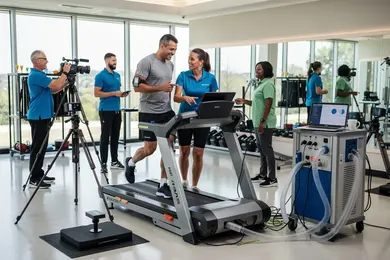
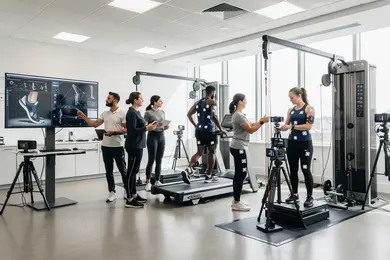
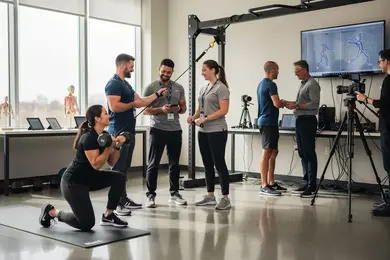
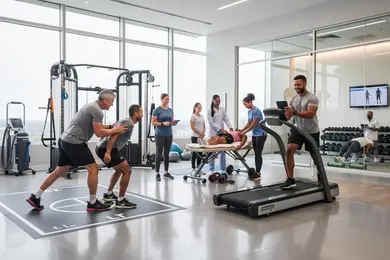
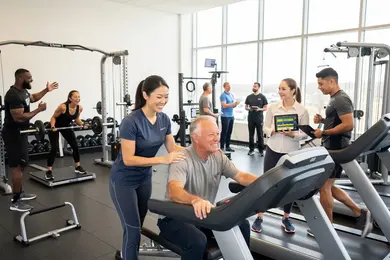
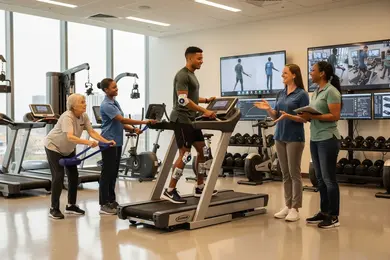
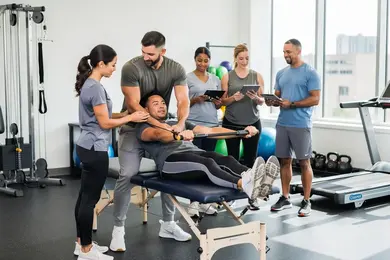
Online exercise science hands-on training comparison reveals a clear limitation in virtual programs. They cannot replicate the essential tactile experiences of campus-based practicals. Physical skills such as manual muscle testing, proprioceptive assessments, or client interaction during group training demand presence that online formats struggle to deliver effectively. Campus programs provide supervised internships and access to fully equipped fitness labs, offering an integrated environment for real-time skill development and client evaluation.
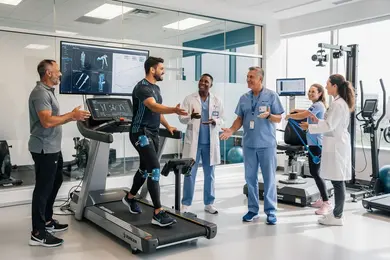
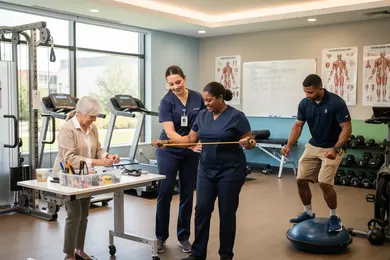
For instance, students targeting rehabilitation exercise specialist roles gain noticeably more from campus-based programs requiring clinical rotations with licensed professionals monitoring diagnostic palpation and corrective techniques.
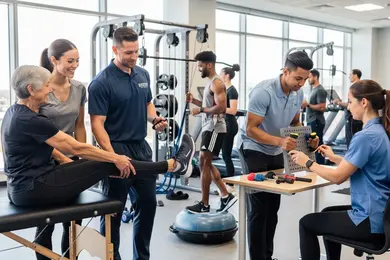
By contrast, online exercise science practical experience often involves logistical hurdles for arranging such hands-on components independently, risking delayed completion or fragmented internships. Employers typically favor candidates with verified comprehensive practical training due to the high safety and efficacy standards expected in fitness and rehabilitation.
The U.S. Bureau of Labor Statistics projects over 45,000 new fitness trainer and instructor jobs from 2022 to 2032, highlighting ongoing demand for professionals grounded in both theory and practice. Online programs incorporating hybrid models or mandated in-person externships align better with these workforce realities.
Prospective students must evaluate access to such blended components carefully, especially if workforce readiness is paramount. Those assessing alternative degrees might also consider an online computer science degree for faster technical career pivots.
Which accreditation and program quality standards matter for online exercise science degrees?
Accreditation for online exercise science programs is a practical gatekeeper that shapes graduate prospects in licensure, certification, and employment. Institutional recognition by the U.S. Department of Education or CHEA establishes a non-negotiable baseline, but programmatic accreditation, such as from CAAHEP or ACEND, differentiates programs that authentically prepare students for applied roles.
These specialized accreditations ensure curricula rigorously address kinesiology, biomechanics, and physiology with the standards employers demand for clinical and fitness professions.
Beyond accreditation, measurable outcomes such as graduation rates, internship availability, and certification pass rates provide clearer indicators of program quality. For example, programs integrating supervised practicums with healthcare or fitness facilities substantially increase workforce readiness. Graduates from theory-centric programs lacking applied experience often struggle with practical skill demands in exercise prescription and rehabilitation.
The employability impact of quality online exercise science degrees is reflected in earnings. Methodist University reports average salaries near $71,000 for its graduates, linking practical training and recognized credentials to competitive pay. Students must weigh programs' accreditation status and experiential components carefully, as deficits in either can hinder certification eligibility and limit upward labor market mobility.
Prospective students seeking accredited online exercise science programs should also compare program outcomes and practical experiences rather than rely on surface-level rankings or general reputation. For those evaluating related fields, an insightful resource on affordable online education alternatives is available for library degree pathways.
What exercise programming courses and practical training are included in these online degrees?
Exercise programming within online exercise science degree course modules must translate theory into actionable, individualized training regimens to meet distinct employer demands across athletic and clinical settings.
Programs that integrate practical exercise programming training online emphasize biomechanics, kinesiology, and exercise physiology paired with strength and conditioning modules, requiring students to navigate realistic challenges such as designing sport-specific periodized plans and rehabilitation protocols.
Practical components often include virtual labs, case studies, and supervised remote coaching, with assignments like digital training logs and video critiques serving as proxies for in-person evaluation. This approach addresses common barriers inherent in online formats-limited physical facility access and the need for remote load management tools-while aligning coursework directly with national certification standards valued by recruiters.
Graduates must demonstrate the ability to adapt programming dynamically based on client metrics, shifting seamlessly from youth sports environments to rehabilitation centers or corporate wellness programs, reflecting the labor market's emphasis on evidence-based, individualized training solutions. This skillset is particularly crucial given strength and conditioning coaches command an average salary of $48,610, signaling a tangible return on mastering program design.
For those balancing flexible learning and workforce demands, understanding how these degree modules address practical implementation gaps can inform strategic educational choices. Students comparing pathways may also consider how investments in online programs relate to opportunities like data science masters online that often promise different industry outcomes.
What are the typical admission requirements for online exercise science bachelor's and master's programs?
Admission to online exercise science programs reflects a balance between academic criteria and demonstrated practical skills, aligning with employer expectations for job readiness.
Bachelor's applicants must present a high school diploma (or equivalent) with a GPA typically between 2.5 and 3.0, occasionally accompanied by standardized test scores depending on evolving admissions policies. Programs often require foundational coursework in biology or chemistry, ensuring candidates can engage with advanced scientific material without remediation.
At the master's level, the emphasis shifts toward relevant academic and experiential credentials. Entrants generally need a bachelor's degree in exercise science or a related discipline, with GPA benchmarks commonly at or above 3.0, alongside transcripts, recommendation letters, and a statement of purpose reflecting targeted career goals.
Candidates with prior work or research experience in fitness, rehabilitation, or health promotion have a discernible advantage, validating their practical competence in a competitive admissions pool. Pragmatically, certifications such as CPR or prerequisite exercise programming courses serve as minimum proficiency markers that some programs require or recommend.
Given the growing integration of nutrition knowledge in practice, trainers who combine exercise and nutrition skills report approximately 21% higher earnings, according to Concordia University-St. Paul's 2024 career data. This trend advises applicants to pursue interdisciplinary competencies, enhancing both admission prospects and real-world employability in a field that rewards versatile expertise.
How long do online exercise science degrees take, and what do they usually cost?
Choosing an online exercise science degree requires weighing duration, cost, and practical training to align with career goals and market demands. A standard bachelor's degree involves four years full-time, but accelerated paths reduce this to two or three years, often requiring transfer credits or heavier course loads.
Part-time options extend study well beyond five years, affecting tuition and timely workforce entry. Graduate programs typically span 1.5 to 2 years full-time, reflecting advanced specialization but also increased expense.
Annual tuition commonly ranges between $12,600 and $15,150 according to OnlineU's 2026 analysis, implying a total bachelor's investment of about $50,400 to $60,600. Working professionals must factor employer assistance or aid programs, but also the opportunity costs tied to longer enrollment periods.
A critical consideration is whether programs integrate hands-on components or internships, which, though logistically complex, substantially impact employability in fields like rehabilitation or sports performance. Employers prioritize demonstrated abilities in exercise prescription and evaluation, favoring graduates with applied experience.
For example, a prospective rehabilitation therapist balancing work might opt for a part-time program with local clinical placements despite longer completion times, gaining essential practical exposure that purely theoretical degrees lack. Such tradeoffs directly influence job readiness and the capacity to secure roles demanding both expertise and field-tested skills.
What careers can you pursue with an online exercise science degree emphasizing programming?
Exercise science degrees with strong programming components equip graduates for roles demanding precise, data-driven exercise design across diverse settings. For example, strength coaches working with collegiate athletes must create periodized training schedules to optimize performance and reduce injury risk. This requires applying online-acquired programming knowledge to real-time athlete management, balancing physiology and sport demands.
In clinical environments, exercise physiologists develop monitored interventions for cardiac rehabilitation patients, tailoring regimens based on cardiovascular response data. Public health roles emphasize scalable, evidence-based programming strategies to improve community activity levels, a shift driven by increasing employer focus on measurable outcomes.
The U.S. Bureau of Labor Statistics forecasts a 10% job growth through 2032 for related professions, reflecting steady demand for candidates who integrate scientific knowledge with applied programming skills. However, credentialing requirements, like Certified Strength and Conditioning Specialist (CSCS) or Certified Exercise Physiologist (CEP), vary widely by state and specialty, adding complexity post-graduation.
Financially, programs offering substantial aid, such as Methodist University's online BS in exercise & sport science where 99% of students receive support, can materially lower debt burden, enhancing net return on investment. Prospective students should weigh such costs alongside their career goals and licensing pathways.
What salary ranges and earning potential are common in exercise programming careers?
Salary outcomes for exercise programming professionals vary widely based on specialization, location, and employer type, with practical implications for career planning. Clinical roles, particularly in cardiac rehabilitation or physical therapy settings, often command wages exceeding $80,000 due to the required licensure and technical expertise.
In contrast, fitness trainers in community or corporate wellness environments tend toward lower, more variable incomes linked to client retention and contract work.
Entry-level positions typically start in the $40,000 to $55,000 range, yet geographic factors heavily influence earnings. Urban hospitals and private healthcare providers generally offer better compensation and benefits than rural or education-based roles, where budget constraints limit growth potential.
For example, a graduate entering a hospital system as an exercise physiologist can expect a median starting salary near $55,000, with advancement tied to credentials like ACSM or NSCA certifications, pushing total compensation beyond $80,000. By contrast, those prioritizing flexible schedules or rapid workforce entry through online programs may accept lower initial pay but benefit from quicker labor market integration.
The variability underscores the need for prospective students to align educational routes with realistic employer demands and local market conditions, avoiding assumptions that all pathways yield uniform economic returns.
What certifications or licenses align with exercise science and exercise programming roles?
Securing advanced certifications such as the Certified Exercise Physiologist (CEP) from the American College of Sports Medicine and the Certified Strength and Conditioning Specialist (CSCS) from the National Strength and Conditioning Association significantly shapes employability within exercise science. These credentials confirm a practitioner's capability to design medically informed protocols, a requirement increasingly favored in clinical and rehabilitation settings.
For example, an exercise physiologist aiming to work in a cardiac rehabilitation clinic must hold a CEP and commit to continuing education units (CEUs) to maintain clinical competency. Without such certification, candidates face restricted opportunities, often relegated to general fitness roles rather than specialized healthcare teams.
Employment projections underscore this practical demand. Exercise physiologist roles are expected to grow 13% by 2030, largely driven by employers seeking certified professionals adept at managing chronic disease rehabilitation and injury recovery.
Licensing adds another layer of complexity. Some states require Physical Therapy Assistant or Occupational Therapy Assistant licensure for certain roles, which can limit mobility or progression depending on regional regulations.
How can students choose a reputable online exercise science program for their career goals?
Programs in exercise science must be evaluated through the lens of targeted career outcomes rather than broad appeal.
Those focused on clinical rehabilitation need curricula rich in specialized therapeutic programming and certifications, while candidates pursuing roles in sports performance or fitness training require exposure to periodization and injury prevention techniques. Accreditation by agencies like CAATE ensures adherence to relevant professional standards, which employers weigh heavily in hiring decisions.
Online programs that integrate experiential components such as virtual labs or community partnerships better bridge the gap between theory and applied skill. For instance, aspiring strength and conditioning specialists benefit markedly from practical programming experiences rather than solely theoretical coursework.
Employment data underscores critical workforce trends. The fitness trainer sector's 14% growth rate and median wage of $46,180 signal steady demand, but graduates lacking robust exercise programming acumen may remain underemployed.
Graduates targeting diverse roles, from physical therapy assistants to wellness coordinators, must assess program emphasis on rehabilitation strategies, health promotion, and industry certifications to align education with job market realities.
Technical support quality, instructor expertise in exercise science, and transparent career services profoundly impact learning effectiveness and workforce integration. Low tuition or flexible delivery alone do not guarantee improved hiring potential without these foundational elements.
Other Things You Should Know About Exercise Science
Programs with synchronous components often provide greater interaction with instructors and peers, which can enhance understanding of complex exercise programming concepts and allow for immediate feedback during practical discussions. However, asynchronous programs offer more flexibility, which benefits working professionals balancing jobs and studies but may reduce opportunities for live skill application and networking. For those aiming to enter hands-on roles quickly or who thrive on direct engagement, prioritizing programs with some synchronous elements is advisable despite scheduling challenges.
In 2027, applied internship or practicum experience is crucial for online exercise science degrees. They provide real-world exposure and hands-on skills that complement theoretical learning, enhancing employability and readiness for certification exams focused on exercise programming.
Preparation quality varies significantly across online programs, often depending on curriculum rigor and integration of applied content aligned with certification bodies' competencies. Students should prioritize programs that explicitly align course content and assessments with key certifications rather than those that only offer broad foundational knowledge. Without this alignment, students might need additional self-study or supplemental courses, delaying certification and weakening their competitive edge in hiring.
Most programs require a laptop, stable broadband internet, webcam, and access to video-conferencing software such as Zoom or Microsoft Teams. Exercise programming courses may also use video-analysis platforms, electronic training logs, and learning systems like Canvas or Blackboard for submitting movement assessments and workout plans.
References
- Exercise Science Degree Careers, Jobs and Salaries - Peak Physical Therapy and Sports Performance https://peaktherapy.com/blog/exercise-science-degree-careers-jobs-and-salaries/
- Exercise Science Degree Programs Lead to Rewarding Careers in Health and Fitness https://www.carrollcc.edu/articles/exercise-science-degree-programs-lead-to-rewarding-careers-in-health-and-fitness/
- Exercise Science Careers: Paths with Degrees https://www.fitnessmentors.com/exercise-science-careers/
- CPD Courses for Personal Trainers I Fitness Education Online https://fitnesseducationonline.com.au/
- Online Exercise Science Program https://stmary.edu/online-programs/exercise-science.html
- Online Exercise Science Degrees: Top School Review https://www.edumed.org/online-schools/exercise-science-degrees/