2027 Best Online Exercise Science Degrees for Strength and Conditioning Careers

Co-Founder and Chief Data Scientist
Securing a strength and conditioning role often hinges on not only credentials but also timing and accessibility to quality education. Many aspiring professionals juggle full-time work or coaching commitments, making traditional campus attendance a barrier. A 2024 National Center for Education Statistics report found a 28% increase in US adult learners enrolling in online health and kinesiology programs, underscoring the demand for flexible pathways.
This trend signals shifting expectations-students now prioritize programs that blend rigor with adaptability to enter or advance in competitive fitness and athletic performance careers efficiently. This article identifies the best online exercise science degrees tailored to those pursuing strength and conditioning, emphasizing program features that align with career immediacy, employer credibility, and practical skill requirements.
Key Things You Should Know
- Online exercise science degrees often lack mandated in-person practicum hours, limiting immediate eligibility for CSCS certification and requiring out-of-pocket internships that delay workforce entry by 6-12 months per the NSCA.
- Employers increasingly prefer candidates from programs with integrated biomechanics and physiology labs, reported by 63% of surveyed strength coaches in 2024 as a hiring filter, emphasizing hands-on technical skills over theoretical knowledge.
- Cost variance for accredited online programs ranges from $15K to $45K, with mid-tier tuition correlating to 18% higher graduate placement rates, highlighting a critical tradeoff between upfront investment and job market competitiveness.
What are the best online exercise science degrees for strength and conditioning careers?
Programs listed among the best online exercise science degrees for strength and conditioning careers consistently show a clear connection between practical curriculum elements and measurable employment outcomes. Those offering median alumni salaries near $50,705-coupled with tuition around $9,480-demonstrate a balance of affordability and effectiveness that supports realistic workforce entry.
Emphasizing biomechanics, kinesiology, and applied strength training principles alongside recognized certifications such as NSCA or CSCS directly addresses employer expectations. For candidates pursuing top accredited online exercise science programs for strength and conditioning, embedded practicum or internship components-even in virtual formats-are indispensable.
Without them, graduates frequently face difficulty filling roles requiring hands-on expertise, such as collegiate strength coaches who must execute functional movement screenings and design athlete-specific programs from day one. Tradeoffs often center on weighing program cost against accreditation and alumni network quality.
Public institutions with regional accreditation can afford graduates access to state coaching credentials and graduate pathways essential for advancement in many settings. In contrast, online degrees lacking strong industry ties risk limiting practical skill acquisition and networking, factors that correlate with slower workforce transitions.
Evidence-backed selection of programs reduces career friction. Holders of exercise science degrees aligned with verified employer outcomes typically move faster into stateside strength and conditioning roles than peers from non-specialized or less transparent options. For practical context on compensation trends within related fields, see how much does a sports analyst make.
How do online exercise science programs compare with campus programs?
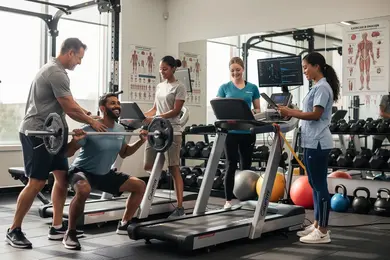
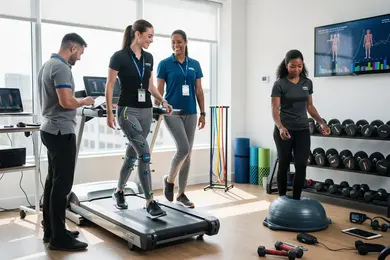
Graduates pursuing an online exercise science degree vs campus program benefits must weigh the significant difference in practical skill acquisition. Campus programs provide immediate access to specialized equipment and in-person mentorship essential for competencies like biomechanical assessments and strength coaching, which employers prioritize.
For instance, internships embedded in campus curricula often serve as vital gateways to employment, especially in competitive markets demanding hands-on experience. Online programs offer flexibility suited for working professionals but require deliberate planning to secure accredited internship opportunities and certification preparation independently.
Without such proactive measures, students risk graduating with theoretical knowledge that lacks the experiential depth demanded by hiring managers. Consequently, online learners must balance coursework with arranging local practicums, which may delay readiness for industry roles.
The U.S. Bureau of Labor Statistics forecasts over 45,000 new fitness trainer and instructor jobs by 2032, reinforcing the importance of practical training in employability. Those navigating differences between online and campus exercise science courses should factor in these workforce realities and the presence or absence of embedded certification pathways. For detailed cost and tuition comparisons related to a comparable field, see online bachelors in animal science.
Is accreditation important for online exercise science degrees?
Accreditation shapes employability and licensure paths for those pursuing online exercise science degrees, particularly in strength and conditioning. Employers emphasize credentials from accredited online exercise science programs for strength and conditioning to verify candidates' mastery of fundamental competencies and compliance with professional standards.
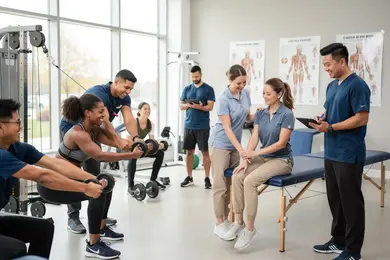
Graduates from non-accredited programs often encounter barriers to certification through bodies like the National Strength and Conditioning Association (NSCA), delaying entry into roles within collegiate or professional athletics. Practical training access is a key differentiator; accredited degrees typically include clinical practicums facilitated through partnerships with sports teams, hospitals, or fitness centers.
Without these supervised hours, candidates may be ineligible for critical certification exams, which can stall career progression. From a financial standpoint, data from Methodist University indicates individuals holding a BS in Exercise & Sport Science from accredited programs earn an average of $71,000 annually, signaling employer trust in these credentials over those from unaccredited tracks.
Accreditation also impacts access to federal financial aid, a major consideration for working professionals managing education costs. Students should confirm both regional or national accreditation and program-specific recognition aligned with strength and conditioning sectors.
For those weighing educational costs, comparing an computer science degree cost may offer perspective on value relative to labor market outcomes. Ultimately, navigating the importance of accreditation for online exercise science degrees requires recognizing its direct influence on certification eligibility, income potential, and practical experience availability, all of which are pivotal for strategic workforce entry or transition.
What courses are in an online exercise science degree?
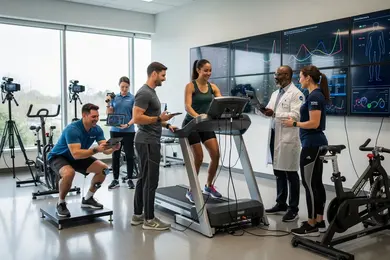
Effective online exercise science degree courses focused on strength and conditioning are structured around both foundational science and applied methodologies, reflecting the demanding expectations of collegiate and professional sports employers. Core subjects like human anatomy, physiology, kinesiology, biomechanics, and exercise physiology provide the necessary scientific literacy, while advanced topics in strength training, sports nutrition, motor learning, and injury prevention translate knowledge into practical program design skills.
Students should anticipate rigorous training in assessing muscular strength and endurance through evidence-based protocols, often augmented by local lab work or clinical internships that cannot be fully replicated online. This hybrid approach balances theoretical content with applied experience, a critical distinction for those targeting certifications from bodies such as the National Strength and Conditioning Association (NSCA).
Program structure affects the feasibility of balancing coursework with employment, especially when internships require asynchronous completion or on-site attendance. Financial considerations also influence decisions, as some institutions maintain tuition stability with minimal increases, helping manage long-term costs.
For comparison across educational options, prospective students may consult national affordability rankings, such as those for data science programs, which provide insight into cost trends in related technical fields. Choosing a program without evaluating how its curriculum aligns with employer credential preferences and regional internship availability risks undercutting career placement. The strength and conditioning program curriculum should therefore be assessed for practical application opportunities alongside foundational coursework, ensuring graduates are equipped for evidence-based practice and competitive employment landscapes.
What admission requirements do online exercise science programs require?
Entry into online exercise science programs involves balancing prerequisite rigor against career objectives and market readiness. Most bachelor's degree tracks require a minimum 3.0 GPA and foundational coursework in biology, anatomy, physiology, and kinesiology, setting a baseline for technical proficiency employers seek, especially in strength and conditioning roles demanding quantitative skills and research literacy.
Applicants without direct exercise science experience often confront additional barriers, such as bridge classes or practical evaluations in internships or virtual labs. Working professionals must provide documented fitness or rehabilitation experience to demonstrate relevant competencies beyond academic credentials.
International candidates are expected to meet English language standards through TOEFL or IELTS to handle coursework complexity. Admissions committees weigh professional references heavily to distinguish candidates with genuine field engagement from those pursuing purely academic paths.
This objective separation is crucial in workforce contexts where employers prioritize candidates prepared for real-world application over theoretical knowledge alone. Financially, programs charging around $8,625 annually correlate with median graduate salaries near $57,434, requiring students to assess return on investment relative to entry difficulty and employment outcomes. In sectors where rapid skill acquisition drives hiring decisions, prospective students might accept stricter prerequisites in exchange for stronger employer connections and practical training.
How long does an online exercise science degree take?
Degree completion time in exercise science programs varies widely and directly impacts workforce entry and skill acquisition. Accelerated bachelor's tracks, often suited for transfer students with prior credits, can condense degree timelines to around two years, enabling faster movement into roles like strength coach or exercise physiologist.
Conversely, full-time traditional pathways typically span four years, while part-time options extend duration but better accommodate employment commitments, trading speed for flexibility. Programs emphasizing strength and conditioning integrate nutrition and performance analytics, reflecting employer demand for broader skill sets.
Evidence from CSP Global indicates that personal trainers with nutrition competencies earn 21% more annually, pointing to tangible market advantages. However, these interdisciplinary additions may lengthen study by a semester or two, a worthwhile consideration for candidates weighing immediate completion against depth of expertise.
Practical training requirements, including 300 to 600 hours of clinical internships or practicum experience, remain a pivotal bottleneck. Most accredited programs necessitate hands-on hours at approved locations, presenting logistical challenges that can extend timelines if local partnerships are sparse or scheduling conflicts arise. Early planning to navigate these experiential components is vital for managing program duration.
Deciding on program pacing requires assessing individual career priorities:
How much do online exercise science degrees cost?
The cost of online exercise science graduate programs averages around $31,770 per year, but this figure only captures direct tuition and omits additional expenses common to on-campus options, such as commuting and housing, which can add 15-30% to yearly costs. For working professionals targeting strength and conditioning roles, online degrees offer a predictable financial framework that prevents income loss and relocation costs, but tuition structures vary enough to affect total debt and time to completion.
Employers in collegiate and professional sports frequently expect advanced credentials, making a graduate degree a practical necessity for many candidates. However, annual tuition typically falls between $30,000 and $35,000, so prospective students must carefully assess credit requirements and anticipate extra costs like textbooks or certification exams linked to biomechanics or data analytics courses.
Tradeoffs between online and campus programs include not only tuition but also indirect costs such as lost income and schedule disruption. Maintaining full-time work during online studies can offset higher per-credit costs by preserving financial stability, a factor often overlooked in simple price comparisons. Decisions surrounding program choice should be informed by these operational details and workforce outcomes rather than tuition alone, ensuring alignment with career goals and financial realities.
What careers can you pursue with an exercise science degree?
Exercise science graduates face a labor market that prioritizes applied expertise alongside academic credentials, particularly in strength and conditioning roles. For example, strength coaches at collegiate or professional levels must develop individualized training protocols that balance performance enhancement with injury prevention, demanding both scientific knowledge and practical certifications such as the CSCS.
These dual requirements often extend the timeline to employment but markedly improve competitiveness. The job outlook reflects this mix of theory and practice.
CSP Global labor data projects 910 annual openings for coaches and scouts in Minnesota from 2020 to 2030, a clear indication of local demand that aligns well with specialized exercise science pathways. Graduates who engage in internships and certifications are positioned to fill these roles more effectively than those with only academic credentials.
Beyond athletics, exercise science degrees support roles in rehabilitation and corporate wellness, but these typically require additional certifications. Physical therapy aides or occupational therapy assistants must navigate credentialing hurdles despite relying on exercise science foundations.
Wellness program designers leverage ergonomic and fitness expertise but face sector-specific variability in role definitions and employer expectations. Consideration of these factors is critical for candidates aiming to optimize their investment in an exercise science degree toward sustainable, measurable career outcomes.
How much do strength and conditioning professionals earn?
Salary outcomes for strength and conditioning professionals hinge on certification, employer type, and geography more than on degree credentials alone. Median earnings in the U.S. hover around $56,000 annually, with entry-level roles near $40,000 and elite positions surpassing $80,000, particularly within NCAA Division I programs or professional teams.
Candidates who pair a bachelor's or master's degree in exercise science with certifications like the CSCS typically access roles paying between $70,000 and $90,000. Financial considerations heavily influence program choice.
For example, at Methodist University, 99% of students qualify for financial aid, mitigating tuition burden, while military-affiliated students can attend institutions like Concordia University-St. Paul at $250-$350 per credit. Such pricing models materially reduce debt and accelerate mid-career transitions into better-paid positions. Employers increasingly prioritize multi-disciplinary skills encompassing rehabilitation, data analytics, and sports nutrition, which can elevate salary prospects beyond what a degree alone delivers.
Practical performance outcomes, such as measurable athlete improvement or injury reduction, often serve as key markers for compensation growth in this field. Those targeting top-tier collegiate or professional sports jobs must weigh the long-term benefits of graduate education and advanced certification against upfront costs. Conversely, roles in community fitness or rehabilitation offer more stable but modest salaries, underscoring the importance of aligning educational pathways with realistic employment environments and financial objectives.
What certifications help strength and conditioning graduates?
The Certified Strength and Conditioning Specialist (CSCS) credential remains essential for graduates targeting collegiate or professional sports roles, reflecting employer demands for proven expertise in program design, biomechanics, and athlete monitoring. For those aiming at high school or general fitness coaching, entry-level certifications like the National Strength and Conditioning Association's Certified Personal Trainer (NSCA-CPT) often provide quicker workforce access but carry less weight in competitive markets.
Advanced certifications such as the Certified Strength Coach (CSC) or CSCCa's Strength and Conditioning Coach certification differentiate candidates seeking university or elite team roles by demonstrating specialized knowledge. Employers increasingly value graduate-level preparation despite significant tuition increases, with M.S. programs charging between $1,000 and $1,750 per credit compared to around $420 per credit for online B.A. degrees, evidencing a premium on deeper expertise within applied strength and conditioning fields.
Professionals face a tradeoff between cost, time investment, and market position: entry-level credentials expedite employment but offer limited differentiation, whereas graduate degrees boost hiring potential at greater financial and time expense. Those pursuing clinical or rehabilitation-centered careers should pair these credentials with allied health licenses like Certified Athletic Trainer (ATC) or Physical Therapy Assistant to enhance job opportunities.
Ongoing certification maintenance through continuing education impacts long-term readiness and expenses. Strategic credential stacking, matched to specific sectors-such as sports performance, clinical rehab, or fitness-is advised to align educational choices with realistic career objectives and industry expectations.
Other Things You Should Know About Exercise Science
Online exercise science degrees demand significant time for studying anatomy, physiology, and biomechanics, alongside clinical hours or practicums. For working professionals, programs with flexible scheduling and asynchronous classes reduce conflicts but may still require consistent weekly commitments of 15-20 hours. Prioritize programs that balance depth of content with manageable pacing to avoid burnout and ensure retention of complex material.
A specialized curriculum focused on strength and conditioning components better aligns with employer expectations in athletic and rehab settings, providing targeted skills in program design and performance assessment. Broad programs cover general health and fitness topics but may dilute training in competitive strength methodologies. Consider your career goal: pursue specialized tracks if immediate strength and conditioning proficiency is critical, or broader ones if planning interdisciplinary roles.
Look for regional accreditation plus programmatic recognition from the National Strength and Conditioning Association. For the Certified Strength and Conditioning Specialist credential, the degree must be from a regionally accredited institution, and applicants also need a bachelor’s degree, CPR/AED certification, and a passing score on the NSCA exam.
References
- Exercise science: What exactly is it? https://www.scienceforsport.com/exercise-science/
- Strength and Conditioning Coach Salary: What You Need to Know in 2026 - Create https://create.fit/strength-and-conditioning-coach-salary/
- Strength and Conditioning Graduate Certificate https://www.gcsu.edu/health/shhp/strength-and-conditioning-graduate-certificate
- Online Exercise Science Program https://stmary.edu/online-programs/exercise-science.html
- Best Exercise Science Careers - Let's Find out! https://www.ptpioneer.com/personal-training/exercise-science-careers/
- 2025 NSCA Strength and Conditioning Salary Survey Results https://www.nsca.com/salary-survey/
- Online Certificate in Strength and Conditioning | Lipscomb University https://lipscomb.edu/academics/programs/strength-and-conditioning-graduate-certificate-online
- Exercise Science Degree Programs Lead to Rewarding Careers in Health and Fitness https://www.carrollcc.edu/articles/exercise-science-degree-programs-lead-to-rewarding-careers-in-health-and-fitness/
- Strength & Conditioning Coach Salary: What to Expect https://ironcoaching.app/blog/strength-and-conditioning-coach-salary
- Exercise Science Careers: Paths with Degrees https://www.fitnessmentors.com/exercise-science-careers/