2027 Online Exercise Science Degrees With Strong Biomechanics Training

Co-Founder and Chief Data Scientist
Balancing career advancement with credential requirements challenges many exercise science professionals, especially when specialized biomechanics expertise is needed for roles in rehabilitation or sports performance. The U. S. Department of Education reports a 22% rise in online college enrollments among adult learners since 2023, signaling growing demand for flexible programs that accommodate working schedules without sacrificing depth.
Yet, many online degrees fail to equip candidates with the rigorous biomechanics coursework crucial for evidence-based practice and employer expectations. Navigating these trade-offs demands carefully selecting curricula that combine accessibility with substantive training. This article evaluates online exercise science degrees emphasizing biomechanics to guide informed program choices aligned with career goals.
Key Things You Should Know
- Programs with biomechanics-intensive curricula show 18% higher employer preference for roles requiring movement analysis, yet extended lab requirements create a 12-month average delay in degree completion, impacting mid-career transitions.
- Data from the National Center for Education Statistics (2024) reveals that graduates from biomechanics-strong exercise science degrees enter fields with 9% higher median salaries but face a 15% certification hurdle rate vs. generalist peers.
- Online delivery constrained by access to specialized motion-capture tech limits practical skill acquisition, forcing many candidates toward expensive hybrid models, inflating total education costs by upwards of 22% for comparable credentials.
What is an online exercise science degree with a strong biomechanics focus?
Graduates of an online exercise science degree with biomechanics emphasis hold a distinct advantage in specialized roles that require precise analysis of human movement. Employers in clinical rehabilitation, sports performance, and ergonomic consulting prioritize candidates who apply quantitative biomechanics tools to develop targeted interventions.
This demand is evident as the U.S. Bureau of Labor Statistics forecasts a 13% growth in exercise physiologist positions through 2030, underscoring a shift towards data-driven practice. Distance learning exercise science programs with strong biomechanics training integrate coursework such as musculoskeletal mechanics, motor control, gait analysis, and applied kinesiology.
Despite the remote format, most require hands-on skill demonstration through local internships or approved clinical partnerships, addressing competency expectations critical for licensure and certification. Students pursuing these programs must consider accreditation status and how well experiential components align with their state's professional standards.
Without this alignment, employability risks increase, particularly in roles that demand biomechanical expertise for evidence-based treatment planning or emerging wearable technologies monitoring movement in real time. The practical takeaway is that biomechanics-centered degrees open pathways beyond general exercise physiology, cultivating expertise valued in both healthcare and performance sectors. Candidates looking for comprehensive options can explore vetted kinesiology programs that balance theoretical knowledge with applied skill development.
How do online exercise science programs compare with campus-based options for biomechanics training?
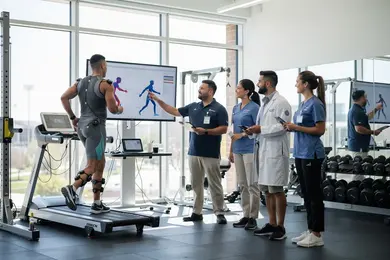
Online exercise science degrees with biomechanics focus often fall short of the hands-on, laboratory-intensive training embedded in campus-based programs, a discrepancy that influences workforce readiness. Campus-based vs online biomechanics training in exercise science reveals a clear tradeoff: while online formats deliver solid theoretical foundations and digital simulations, they typically lack direct access to specialized motion capture labs and biomechanical instrumentation-elements critical for roles demanding applied assessment skills.
For instance, campus programs commonly require practical hours using force platforms, EMG devices, and 3D kinematic analysis, skills that employers in clinical or sports settings expect. Graduates with this experiential background tend to command salaries upwards of $78,000 annually, reflecting the premium placed on applied competencies over theory alone.
Online students must therefore seek local internships or externships to mitigate this gap, as purely virtual curricula often do not provide equivalent opportunities for iterative skill refinement. Employers hiring biomechanics-focused graduates weigh academic knowledge alongside verified technical proficiency.
Without documented hands-on experience, online learners risk competitive disadvantage despite equivalent coursework. Working professionals pursuing online pathways should prioritize securing onsite partnerships and certifications to demonstrate practical capability.
Given the median national wage of $50,280 for exercise physiologists, access to embedded laboratory training remains a pivotal factor in career outcomes. Those evaluating pathways should also consider alternatives such as the online computer science degree if interdisciplinary skillsets or accelerated formats better align with their goals.

What types of exercise science degrees offer advanced biomechanics coursework online?
Degrees in exercise science with advanced biomechanics courses online are most relevant for roles requiring strong technical skills in motion analysis, musculoskeletal mechanics, and data-driven biomechanics applications. Programs with biomechanics emphases typically sit within kinesiology or sport science departments and differ significantly from general exercise science curricula, which often omit the specialized lab and analytical coursework needed for research or clinician support positions.
For working professionals pursuing online exercise science programs featuring biomechanics specialization, balancing course rigor and practical skill acquisition is essential given the remote format's demand for software proficiency and self-directed study. Franklin University's online exercise science bachelor's program, for instance, integrates biomechanical motion analysis and injury prevention modules that align well with entry points in physical therapy support or athletic training.
Tuition at $398 per credit hour greatly undercuts broader averages, making biomechanical training more financially accessible and facilitating faster workforce entry. However, prospective students aiming at biomechanical research or clinical roles must prioritize programs with verified lab components and accreditation, as these influence employer preferences markedly.
This pragmatic approach reveals that not all online degrees in exercise science confer equal market value. For professionals also considering related fields, exploring an MLIS degree online may present alternative leverage points in healthcare or academic settings where biomechanics knowledge intersects with information management.
What core biomechanics and exercise science courses are included in these online programs?
Online biomechanics and exercise science degree programs prioritize practical applications aligning with workforce expectations for roles such as rehabilitation specialists and performance analysts. Core coursework integrates human anatomy and physiology with biomechanics-covering movement mechanics, kinetics, and kinematics-often using digital tools like motion capture or video analysis software.
This prepares students for biomechanical assessment and intervention in both clinical and athletic contexts. Exercise physiology studies energy systems, metabolic pathways, and cardiovascular responses critical to designing evidence-based training regimens.
Advanced content in motor control and neuromuscular function bridges theory and practice by focusing on evaluating and enhancing movement efficiency. Students face notable tradeoffs with limited hands-on labs in online formats; however, virtual simulations and remote projects partially address this gap.
For instance, an online student specializing in clinical exercise physiology might use digital case analyses to approximate hands-on skill development, though this can differ from on-site practical experiences. Cost-wise, online sport science programs average $9,900 in graduate tuition annually, with some public institutions charging as low as $3,965 in-state-well below private on-campus alternatives.
This affordability, evidenced by comparisons to the average cost of MLIS degree US, makes online study a practical option for working professionals maintaining income while upskilling. Understanding these dynamics is critical for those evaluating the biomechanics and exercise science online curriculum to align educational investment with realistic career outcomes and labor market demands.
What accreditation should online exercise science and biomechanics programs have in the United States?
Accreditation shapes the practical value of online exercise science and biomechanics programs more decisively than marketing materials suggest. Employers in clinical and athletic settings routinely filter candidates based on whether their degrees are regionally accredited and, when relevant, hold endorsements from bodies like CAAHEP or the NSCA.
Without these credentials, graduates often face barriers qualifying for certifications required in roles such as physical therapy assistants or clinical exercise physiologists. For instance, the American College of Sports Medicine (ACSM) demands completion of recognized programs to be eligible for certification exams.
The proliferation of online programs-188 distinct offerings reported by educations.com-introduces significant variability in curriculum rigor and practical training. Students must verify that online biomechanics courses include hands-on lab experiences, as purely theoretical instruction undermines graduates' capability to analyze motion data or apply evidence-based interventions in real-world settings.
Absence of direct biomechanics lab work can impair a graduate's effectiveness on multidisciplinary teams or in clinical research roles. These factors directly affect employability and credentialing potential in exercise science careers, making accreditation and curriculum content non-negotiable factors in program selection.
What are typical admission requirements for online exercise science degrees emphasizing biomechanics?
Admission to online exercise science programs focused on biomechanics fundamentally hinges on demonstrated quantitative and scientific competence rather than just meeting minimum thresholds. Candidates must typically hold a high school diploma (or equivalent) with a GPA of at least 2.5, supported by transcripts showing foundational coursework in biology, chemistry, and physics.
Advanced programs prioritize math proficiency, especially statistics and calculus, due to their centrality in analyzing human movement within rehabilitation or sports performance roles. Applicants with relevant healthcare or fitness experience-through employment or volunteering-increase their chances of employability in applied biomechanics sectors.
Letters of recommendation are most effective when they come from science faculty or clinical supervisors who can attest to the applicant's analytical skills and motivation for the specialization. A personal statement often complements this by clarifying career intentions linked to settings such as physical therapy or ergonomics.
Financial factors significantly influence the realistic pursuit of these degrees. For example, Methodist University's report that 99% of students qualify for financial aid illustrates the potential to mitigate economic barriers. Prospective students should evaluate aid opportunities early to support steady progress, especially when balancing studies with work obligations, while also preparing for technology requirements and self-directed learning challenges inherent in online, competency-based biomechanics curricula.
How long do online exercise science programs take, and what do they cost?
Program length and cost in online exercise science programs directly influence a student's ability to transition into targeted roles within health, rehabilitation, or fitness sectors. Typically, bachelor's degrees require about 120 to 130 credit hours, translating to 2 to 4 years depending on full- or part-time enrollment.
Graduate programs, often ranging from 30 to 40 credits, can extend with thesis or practicum requirements, impacting time-to-completion and employability timing. Financial investment varies notably by institution type and residency, with public universities charging $300-$600 per credit out-of-state and private institutions from $400 to over $1,000 per credit.
This variability critically affects working professionals and military-affiliated students balancing education with employment. Concordia University-St. Paul Online offers a military tuition rate of $250 per credit for adult undergraduates and $350 for graduate students, substantially lowering typical program costs that range between $10,000 and $50,000.
Additional expenses such as technology fees, textbooks, and certification costs should be budgeted at 10-15% beyond tuition. Those targeting clinical or research positions must also factor in certification preparation, which entails extra coursework or professional development. Aligning program pacing and costs against career goals and workforce status is essential for maximizing educational investment and employability in biomechanics assessment or strength training fields.
What careers can graduates of biomechanics-focused exercise science programs pursue?
Biomechanics-focused exercise science graduates encounter divergent career trajectories shaped by the specificity of their training and employer expectations. Professionals working as clinical biomechanists, for instance, rely heavily on kinematic and musculoskeletal modeling to create rehab protocols in medical settings-requiring rigorous hands-on experience with biomechanics software and practical labs.
Conversely, sports biomechanists, often employed by collegiate or professional teams, prioritize real-time performance analysis for injury prevention, where millisecond decision-making impacts outcomes. Occupational ergonomists translate biomechanical principles into workplace designs that mitigate injury and elevate productivity across industrial and corporate environments.
Orthotics and prosthetics practitioners additionally use gait and load assessments to enhance patient mobility, revealing how applied biomechanics influences patient-centered care. Advanced research or product development roles demand not only mastery of experimental design but also understanding sector-specific certification standards, such as Certified Biomechanist credentials.
Programs with integrated lab components-like Liberty University's online Master of Science in Human Performance incorporating nearly 50% biomechanics content-offer a path for candidates targeting these analytical roles, though tradeoffs exist when balancing theoretical research skills against applied practitioner readiness. In navigating certification and employer expectations, candidates must critically evaluate whether their chosen curriculum aligns with its industry focus-be it clinical, sports, industrial, or research-driven-to maximize employability and competence.
What salary ranges and job outlook can biomechanics-oriented exercise science graduates expect?
Graduates with biomechanics-focused exercise science degrees face distinct salary trajectories shaped by sector and location. Entry-level roles in clinical or research settings typically start near $50,000 annually, whereas positions in sports performance or wearable tech firms may begin at $65,000 or more.
After 3 to 7 years, professionals with advanced credentials often reach $75,000 to $95,000, with specialists in collegiate or pro athletics exceeding $100,000 due to high employer demand for injury prevention expertise. Employment growth for biomechanics roles is projected at around 8% through 2032, outpacing many health fields as industries increase reliance on data-driven rehabilitation and performance technologies.
However, candidates must balance salary potential against practical challenges like securing hands-on internships or lab access during online programs, as employers prioritize applied skills alongside technical knowledge. For example, a candidate considering Logan University's online Master's in Sports Science & Rehabilitation faces an investment near $26,600 for 37-39 credits at $700 per credit. This mid-tier tuition requires critical assessment relative to anticipated salary gains and career outcomes, especially given the variability in real-world placement support and experience opportunities.
How can students evaluate and choose a reputable online biomechanics-focused exercise science program?
Choosing an exercise science program demands scrutiny beyond surface-level appeal, especially when targeting biomechanics specialization. Many programs labeled as exercise science lack sufficient depth in biomechanics, limiting employment prospects in sports performance, rehabilitation, or research roles.
For instance, Texas State University Online's accelerated M.S. charges $18,017 for 36 credits at $500 per credit, a clear metric for assessing financial investment against industry outcomes. Accreditation by bodies such as the Commission on Accreditation of Allied Health Education Programs (CAAHEP) validates curriculum rigor and employer recognition.
The true value lies in faculty actively engaged in biomechanics research and funded projects, ensuring course content aligns with evolving workforce expectations focused on motion analysis software and data interpretation. Students pivoting careers must weigh hybrid delivery options and the availability of virtual labs or local internship partnerships, as online programs often struggle to replicate hands-on biomechanics training. Program flexibility-including scheduling, duration, and credit transfer policies-is critical to avoid extending time-to-degree or increasing costs.
Other Things You Should Know About Exercise Science
Employers in clinical and sports environments prioritize applicants who demonstrate applied skill competence, not just theoretical knowledge. Programs that incorporate hands-on virtual labs, internship opportunities, or supervised practical experiences carry more weight. Without these components, graduates may face challenges proving readiness for real-world biomechanics applications, especially in highly technical roles.
A strong program should include motion-capture analysis, force plates, electromyography, and video-based movement analysis used in coursework or virtual labs. These tools help students study gait, joint mechanics, and performance assessment. Look for programs that also require data interpretation using software such as MATLAB, Dartfish, or similar analysis platforms.
Most exercise science online programs do not guarantee full alignment with certification requirements specific to biomechanics specialties, such as biomechanical analyst or clinical exercise specialist credentials. Students should verify that course content matches exam scopes and seek additional preparation if needed. Programs that explicitly integrate certification prep elements offer clearer paths to licensure and stronger career placement.
References
- Exercise science program accredited by national organization | Lipscomb University https://lipscomb.edu/news/exercise-science-program-accredited-national-organization
- Exercise Sciences https://www.caahep.org/committees-on-accreditation/exercise-science
- Top 20 Careers With a Master’s in Exercise Science | PLNU https://www.pointloma.edu/resources/health-sciences/top-20-careers-masters-exercise-science
- Online Exercise Science Degrees: Top School Review https://www.edumed.org/online-schools/exercise-science-degrees/
- Exercise Science Degree Programs, Online Included for 2026 https://www.kinesiologydegrees.org/programs/exercise-science
- How to Choose the Right Biomechanics Course for Your Career Goals | Biomechanics Education https://biomechanicseducation.com/how-to-choose-the-right-biomechanics-course-for-your-career-goals/
- Exercise Science (Pre-Professional) | Academics | Southern Arkansas University https://web.saumag.edu/academics/program/exercise-science/
- Exercise Science | Columbia College https://www.columbiasc.edu/academics/undergraduate/exercise-science
- Online Exercise Science Program https://stmary.edu/online-programs/exercise-science.html
- Anatomy and Biomechanics of Movement - Muscle & Motion | Visual Anatomy & Biomechanics https://www.muscleandmotion.com/online-course-anatomy-and-biomechanics-of-movement/