2027 Best Online Exercise Science Programs for Stable Exercise and Wellness Career Mobility

Co-Founder and Chief Data Scientist
Professionals juggling full-time work, family obligations, and the urgent need to future-proof their careers in exercise science face a daunting obstacle: selecting programs that offer genuine scheduling flexibility without sacrificing quality or employer recognition.
Recent data from the National Center for Education Statistics indicates that online enrollment among adult learners increased by over 20% since 2023, reflecting a growing demand for accessible, career-aligned education. However, not all online exercise science programs provide pathways that translate into stable positions or upward mobility in clinical, fitness, or rehabilitative settings.
This article evaluates the best online exercise science programs to help prospective students navigate these trade-offs effectively and secure versatile, sustainable career growth.
Key Things You Should Know
- Online exercise science programs show a 17% lower employer hiring preference compared to hybrid formats in 2024 workforce surveys, pressuring candidates to balance virtual convenience against diminished post-graduation job placement.
- Tradeoffs between accelerated online degrees and comprehensive lab-based certifications reflect in 2024 NIH workforce analysis, where faster programs yield 12% less clinical internship exposure, slowing practitioner readiness.
- Cost differentials remain stark: online bachelor's programs average $24,000 less than traditional campuses, but federal labor data links this saving to narrower alumni networks, impacting long-term career mobility in exercise science.
What are the best online exercise science programs?
Programs labeled as the best online exercise science degree programs in the US must balance rigorous academics with practical skill development to meet employer expectations and labor market realities. Employment growth projections, 13% for exercise physiologists and 39% for fitness trainers between 2020 and 2030, highlight the necessity for programs that produce industry-ready graduates rather than purely theoretical knowledge.
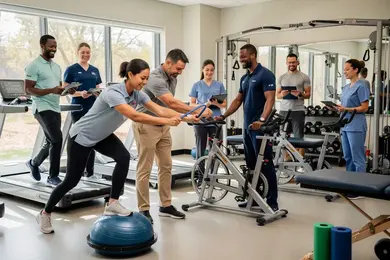
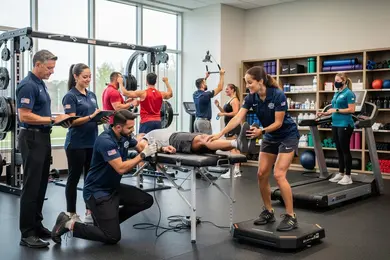
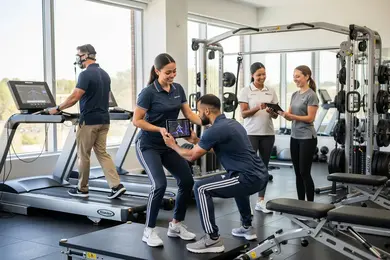
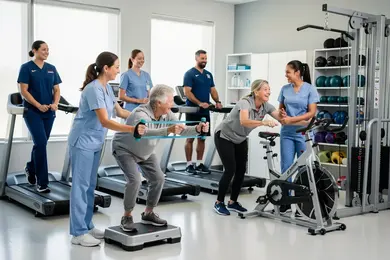
Core curriculum components should go beyond foundational science to include biomechanics, nutrition, rehabilitation, and applied clinical experience. For working professionals aiming to advance as exercise physiologists, selecting programs that incorporate formal internships or partnerships with medical centers is critical for acquiring hands-on competencies.
Conversely, fitness trainer candidates benefit more from targeted certifications aligned with employer standards, emphasizing client assessment and kinesiology.
Employers frequently require candidates to graduate from Regionally Accredited programs, especially those aligned with CAAHEP standards. Graduates from non-accredited institutions face obstacles related to certification and job placement, reducing career flexibility and wage potential.
Prospective students evaluating top accredited online exercise science programs for career growth should weigh cost and flexibility against credential portability and practical training.
For detailed selection guidance, candidates can reference online exercise science degrees that emphasize evidence-based interventions and workforce relevance.
How do you choose an accredited exercise science program?
Accreditation is essential when selecting an exercise science program, as employers depend on credentials from bodies like CAAHEP or regional accreditors to verify graduates' readiness through rigorous academic and clinical standards. Candidates from accredited programs present measurable competencies and practical experience, which directly influence hireability in health and fitness sectors.
Curriculum depth should extend well beyond theory, integrating courses in anatomy, physiology, biomechanics, and applied exercise prescription while mandating internships or practicum experience. For example, professionals aiming for roles in corporate wellness must demonstrate applied skills in client program design that purely academic tracks without hands-on elements rarely develop.
Salary outcomes reflect these program qualities: fitness trainers averaged a median wage of $45,380 in May 2023, with advanced certifications such as Certified Strength and Conditioning Specialist (CSCS) typically correlating with top-tier earnings above $80,000. Programs encouraging such certifications enhance employability and income potential.
Flexibility in delivery format affects working professionals' ability to balance study and employment. Students exploring online sports degrees should weigh this against access to practicum opportunities.
Finally, align enrollment decisions with programs demonstrating strong employer partnerships and graduate employment rates, as these connections often pave more reliable pathways to stable roles, unlike programs that lack these networks and leave graduates competing in saturated markets despite similar academic credentials.
Do online exercise science degrees meet certification requirements?
Online exercise science degree certification standards hinge on program accreditation and alignment with national certification requirements. Only degrees recognized by bodies such as the Commission on Accreditation of Allied Health Education Programs (CAAHEP) or the National Commission for Certifying Agencies (NCCA) enable graduates to pursue professional certifications like ACSM Certified Exercise Physiologist or NSCA Certified Strength and Conditioning Specialist.
These certifications are often non-negotiable for employment in clinical or rehabilitation roles, making the distinction between accredited exercise science programs for professional certification and unaccredited degrees critical.
Practical training remains a key barrier for fully virtual programs. Many accredited online programs require in-person clinical internships or practicums crucial for hands-on skills and workforce readiness. For example, a strength coach aiming to work with professional teams must complete supervised training linked to certification standards, something hybrid models accommodate through local partnerships, unlike fully online formats.
Tuition costs vary considerably, typically between $7,000 and $40,000 per year, with affordable programs usually under $25,000 total. However, candidates must budget for local internship expenses and certification exam fees not always included in tuition.
Due diligence on accreditation, certification alignment, course content, and clinical requirements is essential before enrollment to avoid limited job prospects or costly reeducation. Prospective students should also consider related fields for strategic pivots, such as a library sciences degree, which may offer alternative pathways with differing professional outcomes.
What courses are in an online exercise science degree?
Online exercise science degree courses provide critical foundational knowledge such as human anatomy, physiology, biomechanics, kinesiology, and nutrition science. These are indispensable for roles ranging from athletic training to clinical exercise testing, where a detailed understanding of movement and systemic health informs decision-making.
The exercise science curriculum for career mobility often extends into specialized areas like motor learning, sports psychology, and exercise prescription, translating theory into practical interventions for athletes or rehabilitation patients. However, the practical limitations of purely online delivery are notable.
Many programs require local lab access or internships to develop essential hands-on skills, without which graduates may find themselves at a disadvantage in hiring pools for positions in cardiac rehabilitation or strength and conditioning coaching.
The landscape of sport and exercise degree programs grew substantially by 2025, offering more than 99 fully online or distance options out of 732 total programs nationwide. This expansion creates pathways tailored to diverse industry needs, from wellness coaching to clinical preparation.
Despite this flexibility, students must weigh the tradeoffs between convenience and experiential training. Some hybrid program models attempt to bridge these gaps by partnering with healthcare sites, which mitigates but does not eliminate challenges associated with remote study.
Employers increasingly prioritize evidence-based practice, elevating the importance of research methods and statistics within the curriculum. For professionals exploring adjacent health fields, understanding comparable frameworks can be useful. For example, in evaluating online MSN PMHNP programs, where data-driven clinical decision making is also paramount.
How long does an online exercise science degree take?
Completing an online exercise science degree typically spans 3 to 4 years for a standard bachelor's program, mirroring traditional timelines; however, compressed or accelerated tracks are scarce and generally require full-time commitment or transfer credits.
For working professionals, opting for part-time study can extend completion to 5 or more years. This extension delays eligibility for roles that require timely credentialing, such as clinical rehabilitation or research positions, where practical in-person internships and lab hours remain mandatory.
The limited availability of dedicated online exercise science degrees, only 3 out of 732 sport and exercise programs as of 2025, restricts options for specialized or hybrid formats that blend online learning with hands-on clinical training. As a result, candidates often face logistical challenges arranging local placements to fulfill licensure hour requirements, which can further lengthen study duration.
Key considerations for prospective students include:
- Verifying if programs grant credit for prior learning or professional experience to reduce time-to-degree.
- Understanding employer expectations in sports performance and wellness, which prioritize demonstrable hands-on skills alongside academic knowledge.
- Balancing coursework pacing with work responsibilities to maintain employment while progressing efficiently.
These tradeoffs highlight a need for realistic planning about timeline flexibility, practical requirements, and workforce expectations within exercise science pathways. Education and career decisions should weigh the constraints of online formats against the necessity of clinical exposure and credentialing timelines.
What are the admission requirements for exercise science programs?
Admission into exercise science programs hinges on more than just a high school diploma and prerequisite coursework; real challenges emerge when aligning academic credentials with professional certification requirements.
For instance, candidates aiming to combine degrees with ACSM, NSCA, or NASM certifications face dual-entry hurdles. Both institutional admissions and certifying bodies demand documented practical experience or specific fitness criteria, which can delay progression if unmet.
Applicants with prior credits or certifications must often invest time in verifying course equivalencies and securing professional references, a process that strongly influences credit transfer and accelerates degree completion. This verification is particularly pivotal for working professionals balancing employment with academic demands, as scheduling flexibility and precise credential alignment significantly affect the feasibility of maintaining steady career momentum.
Online cohorts introduce additional variables, such as mandatory reliable internet access and baseline digital literacy, which can disproportionately impact non-traditional students and working adults. Furthermore, employers in strength and conditioning or performance enhancement increasingly expect candidates to present integrated qualifications blending degree-level knowledge with hands-on certification, underscoring the importance of strategic preparation across academic and practical dimensions.
How much do online exercise science programs cost?
Investing $8,000 to $25,000 in an online bachelor's degree in exercise science significantly shapes employability, especially when program quality includes regional accreditation and hands-on practicum experiences. For example, a graduate with applied skills from a well-structured program will outpace peers holding credentials from low-cost but limited-experience options, given the labor market's emphasis on demonstrable expertise rather than solely online completion.
Associate degrees typically range from $3,000 to $10,000, while graduate-level online programs run between $15,000 and $40,000, excluding additional costs for textbooks, equipment, or certification exams. Candidates targeting certification or licensure should anticipate further investment beyond tuition. Employers often weigh these additional qualifications heavily when filling roles in healthcare and wellness sectors.
Working professionals must balance tuition against flexible schedules, transfer credit acceptance, and employer tuition reimbursement. Choosing programs integrated with clinical placements or accredited certifying bodies can reduce time-to-certification and increase early-career earning potential. Neglecting these factors may lead to hidden costs through extended training or weaker job prospects despite lower upfront expenses.
Projected growth in fields such as recreational therapy (10%) and exercise psychology (13%) by 2030 underscores the importance of aligning education paths with labor market realities. Expect bachelor's exercise science programs to cluster around $10,000-$20,000, with variation reflecting program depth and graduate outcomes.
What jobs can you get with an exercise science degree?
Degrees in exercise science open diverse employment avenues but require navigating extended credentialing and variable market demands that shape practical outcomes. For instance, aspiring physical therapy assistants face mandatory state licensure and clinical hours, translating into additional time and financial investment beyond the degree itself.
Conversely, roles such as wellness coordinators prioritize skills in program development and data analysis more than clinical credentials, influencing curriculum choices within exercise science programs. Employers consistently seek candidates demonstrating hands-on competencies and certifications like CPR or ACSM, which often weigh heavier than academic qualifications alone.
Common job titles include exercise physiologists working in clinical care for chronic disease management, strength and conditioning coaches applying biomechanics in sports settings, and corporate health consultants focused on employee wellness programs. Positions in research or academia generally demand advanced degrees, but a foundational exercise science background remains essential.
Cost considerations also affect decision-making. Online exercise science programs tend to offer tuition below the US National Center for Education Statistics benchmarks of $19,370 at public universities and $45,920 at private institutions, easing financial barriers. Still, prospective students must assess geographic market saturation and employer recognition of practical experience to improve long-term employability.
Key factors impacting career trajectory include:
- Certification requirements and state-specific licensure
- Importance of internships or clinical partnerships to build practical skills
- Specialization in biomechanics or analytics based on targeted roles
- Balancing tuition costs versus program outcomes and regional demand
What is the salary potential for exercise science careers?
Entry-level salaries in exercise science typically start near $50,000 but can rise sharply to $80,000 or more in clinical or specialized environments. For instance, exercise physiologists median wages reach about $59,440, with the top 10% exceeding $97,000, according to the U.S. Bureau of Labor Statistics' 2024 Occupational Outlook.
This variability is largely tied to employer sector, with healthcare and rehabilitation facilities generally offering more competitive pay than commercial gyms or community centers.
Targeting roles like physical therapy assistant or cardiac rehabilitation often begins closer to $45,000, but advanced certifications such as ACSM or NSCA tend to accelerate salary growth and employability. Employers emphasize candidates who can deliver immediate patient or organizational impact, making educational pathways that shorten time-to-degree particularly valuable for career changers or working adults.
Flexible online programs that accept extensive prior credits and enable degree completion in about two years can reduce opportunity costs and speed entry into higher-paying roles.
However, regional differences and specialization significantly influence earnings, with metropolitan hospital-based exercise science grads earning more than those in rural settings. Professionals with credentials that expand their scope into allied health or corporate wellness roles tend to achieve greater long-term stability.
What is the job outlook for exercise science graduates?
Graduates in exercise science face a labor market where specialization determines access to broader, higher-value roles. Employment growth of roughly 11% from 2024 to 2034 is driven primarily by aging demographics and preventive health priorities, yet career mobility hinges on integrating interdisciplinary skills beyond core exercise physiology.
For example, a professional focused solely on exercise physiology often encounters confined roles in fitness training or rehab assistance. In contrast, those combining exercise science with nutrition or biomechanics can enter corporate wellness, chronic disease management, or clinical wellness sectors with stronger job security and compensation.
Practical challenges include navigating credential fragmentation and maintaining certifications such as ACSM or NSCA to satisfy employer and regulatory demands. These credentials are more than formalities. They dictate the viability of candidates in competitive markets, especially within healthcare-integrated roles.
Geographic disparities also matter: urban areas with concentrated healthcare infrastructure present more abundant opportunities than rural regions, where demand remains inconsistent. Strategic program selection emphasizing interdisciplinary curricula and data-driven health technologies is increasingly essential to remain employable amid evolving workforce needs.
Other Things You Should Know About Exercise Science
Online exercise science programs vary in pacing, with some offering accelerated formats while others follow traditional semester schedules. Intense accelerated programs can strain working students, risking lower retention of complex material and less time for skill application. For career mobility, choose a program with balanced pacing that allows deep learning without burnout, ensuring knowledge and certifications hold up under employer scrutiny.
Online degrees in exercise science may face skepticism from some employers, especially for entry-level roles requiring direct client interaction or lab-based assessments. Graduates without in-person components may need additional certifications or experience to compete. To mitigate this, students should seek accredited programs with mandatory practical experience and plan to obtain recognized certifications early to strengthen employability.
An online exercise science program should hold regional accreditation, and the department should have programmatic accreditation where applicable, such as CAEP for educator-preparation pathways. For graduate school admission, many universities also expect a minimum 2.75 to 3.0 GPA and specific prerequisite courses in anatomy, physiology, and statistics.
References
- Careers in Exercise Science – Jobs, Salaries, and Growth Opportunities https://www.pickmyuni.com/student-resources/careers-in-exercise-science-123
- Exercise Science https://www.malone.edu/programs/exercise-science/
- Online Exercise Science Degrees: Top School Review https://www.edumed.org/online-schools/exercise-science-degrees/
- Online Bachelor's in Exercise Science https://online.maryville.edu/online-bachelors-degrees/exercise-science/
- Online Exercise Science Program https://stmary.edu/online-programs/exercise-science.html
- 2026 Best Online Exercise Science Degrees https://www.onlineu.com/degrees/exercise-science
- University of Central Arkansas | UCA https://uca.edu/exss/careerprospects/
- Exercise science program accredited by national organization | Lipscomb University https://lipscomb.edu/news/exercise-science-program-accredited-national-organization
- Exercise Science Degree Programs Lead to Rewarding Careers in Health and Fitness https://www.carrollcc.edu/articles/exercise-science-degree-programs-lead-to-rewarding-careers-in-health-and-fitness/