2027 Online Exercise Science Degrees With Human Performance Concentrations

Co-Founder and Chief Data Scientist
Balancing clinical experience with academic progress presents a critical challenge for aspiring exercise science professionals aiming to specialize in human performance. Many must choose learning formats that accommodate rigorous schedules without compromising hands-on skill development. The National Center for Education Statistics reports a 12% rise in adult enrollment in online degree programs since 2023, signaling growing demand for flexible education pathways aligned with workforce needs. This shift reflects a broader trend: professionals seek practical, location-independent credentials supporting immediate career mobility without sacrificing employer expectations for applied competence. This article assesses online exercise science degrees featuring human performance concentrations, evaluating their accessibility, curriculum rigor, and career impact to guide strategic enrollment choices.
Key Things You Should Know
- Accredited online exercise science degrees with human performance tracks average $20K-$35K annual tuition, but delayed in-person clinical internships extend completion by 6-12 months, affecting total workforce entry timing per NCES 2024 data.
- Employers in allied health increasingly prioritize hands-on certifications over solely online degrees; the Bureau of Labor Statistics 2024 reports 18% faster job placement for graduates with hybrid practical exposure.
- The surge in telehealth and remote coaching roles reallocates demand toward online degree holders, yet wage growth remains 12% lower without synchronous field practicums, complicating ROI calculations for career pivots.
What is an online exercise science degree with a human performance concentration?
Completing an online exercise science degree with human performance focus requires balancing rigorous scientific coursework with practical skill acquisition. This pathway suits those who can navigate virtual labs and engage with regional practicum placements while managing the demands of applied internships or certifications. The distance learning exercise science programs with human performance specialization offer flexibility but demand strong self-discipline and digital literacy to meet employer expectations for hands-on experience alongside academic credentials.
In concrete terms, 100% of the top 10 ranked online bachelor's programs in exercise science report median alumni salaries above $50,000 within three years, reflecting demand for expertise in biomechanics and athletic conditioning. However, students should anticipate tradeoffs such as fewer in-person networking opportunities, which can slow entry into competitive local job markets. Conversely, the adaptable curriculum creates advantages in settings like military fitness, corporate wellness, and clinical rehabilitation, where evidence-based performance improvement influences funding and outcomes.
Graduates entering these fields benefit from early engagement with local sports teams or wellness centers to demonstrate practical competence. Professionals interested in an accelerated academic track may explore options such as the accelerated exercise science degree online to optimize time investment without sacrificing depth.
How do online and campus exercise science programs in human performance compare?
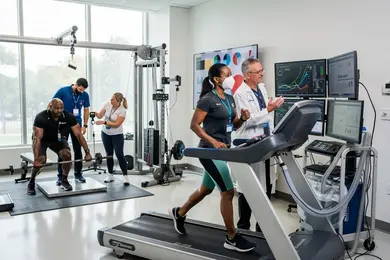
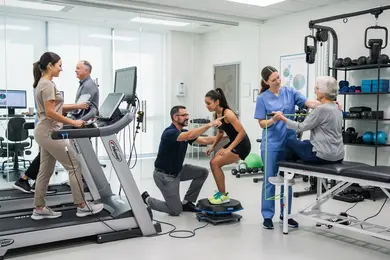
Choosing between online and campus exercise science programs with human performance concentrations involves weighing real differences in hands-on training and networking access-key factors shaping graduate readiness. Campus programs provide in-person engagement with advanced biomechanics and physiology labs, vital for roles requiring demonstrated practical skills, such as clinical exercise physiologists or strength and conditioning coaches for elite athletes. Employers in these fields expect direct experience in physical assessment techniques and face-to-face mentorship.
In contrast, online exercise science degrees compare to campus programs by offering greater flexibility for those balancing work or geographic constraints. These programs emphasize theoretical knowledge, data analysis, and remote client management skills suited to wellness coaching and emerging digital fitness roles. However, online curricula often rely on virtual simulations and limited residencies that may fall short of replicating complex, in-field experiences. Students targeting clinical or rehabilitation careers might encounter challenges in meeting employer demands without substantial hands-on components.
Prospective students should consider:
- The necessity of lab-based skill acquisition is tied to their career goals
- Availability of internship placements and network-building opportunities
- Ability to maintain employment during study
Those prioritizing telehealth, app-based fitness delivery, or entrepreneurship can effectively leverage online pathways. For additional insight into flexible health-related studies, exploring an online dietitian degree may also inform strategic decision-making in related wellness fields.
Are online exercise science degrees with human performance concentrations properly accredited?
Employers hiring clinical exercise physiologists or health promotion specialists prioritize candidates holding accredited online exercise science human performance programs. Regional accreditation by U.S. Department of Education-recognized agencies like the Higher Learning Commission remains the baseline for degree validity, impacting eligibility for certifications and licensing crucial for hospital or wellness center roles. Specialized accreditation from bodies such as the Commission on Accreditation of Allied Health Education Programs (CAAHEP) or the National Strength and Conditioning Association (NSCA) enhances a program's credibility but is less frequent in fully online exercise science degrees with recognized human performance accreditation.
Graduates from unaccredited or only nationally accredited programs often face obstacles, including limited transfer credit acceptance, ineligibility for federal financial aid, and diminished employer recognition. For instance, pursuing licensure as a clinical exercise physiologist requires accredited coursework; without it, candidates might be barred from critical certification exams. Georgia College data underscores market realities by reporting a median master's-level health promotion salary of around $66,000.
Prospective students should thoroughly verify both institutional and program-specific accreditation upfront to ensure alignment with employer standards and licensure prerequisites. Considering these factors, those evaluating an educational shift or advancement in human performance fields should prioritize accreditation status alongside curriculum rigor. For alternative pathways, reviewing related options such as an online library science masters may provide insights into different graduate training modalities relevant to workforce needs.
What courses and specialization topics are covered in human performance online programs?
A strategic choice to pursue an online human performance course curriculum online must weigh the necessity of specialized expertise against real-world constraints like balancing full-time work and hands-on learning access. Programs in 2026 emphasize biomechanics, exercise physiology, motor learning, and nutritional strategies, focusing on measurable outcomes through wearable technology analytics and motion capture. These features align with employer demand for skills in performance testing and rehabilitation planning, particularly for roles supporting military personnel or professional athletes.
Specialized topics in human performance programs include strength and conditioning, adaptive physical activity, and ergonomics-each directly tied to improving employability in clinical rehabilitation, sports teams, or occupational health consulting. For example, ergonomics training equips graduates to reduce workplace injuries and shape health policies, reflecting practical workforce impact beyond theory.
Program admission often requires certifications such as CSCS, which depend on prior anatomical and exercise prescription knowledge. An important financial consideration is tuition cost; in this field, Liberty University's $580 per credit (military rate $290) ranks in the top 35% for affordability nationally, a factor influencing access compared to broader affordability data like that for MLIS programs. These nuances affect who can pursue advanced study effectively.
Students should anticipate coursework integrated with local internships to supplement limited virtual labs, addressing practical skill acquisition crucial for entering specialized clinical or performance roles. Curricular alignment with accreditation and emerging technology trends remains essential for meaningful credential value and professional viability.
What admission requirements apply to online exercise science programs in human performance?
Admission to online exercise science programs with human performance focuses is often a practical gatekeeper reflecting workforce readiness rather than a mere procedural step. Candidates typically need a high school diploma or equivalent, alongside prior coursework in biology, chemistry, and math, to ensure foundational knowledge. Admission committees may emphasize a minimum GPA of 2.5 to 3.0, balancing access with academic rigor.
For professionals shifting careers, programs often accept relevant college credits, certifications, or documented fitness and sports experience, though this can require detailed transcript reviews and sometimes additional science courses. This flexibility is essential for reducing time-to-degree but demands strategic planning from applicants.
Despite being online, programs insist on verified hands-on experience through local partnerships or accessible practical training sites. This requirement impacts remote learners' feasibility and often differentiates candidates based on geographic and logistical realities.
From a workforce perspective, the admissions process filters candidates likely to justify tuition investments. For example, median early-career salaries reported by OnlineU's 2026 data average $50,705 annually against typical tuition of $15,150. Such figures suggest that employers value graduates who demonstrate both technical proficiency and the professional readiness that admissions criteria aim to certify.
How long do these online human performance degrees take and what do they cost?
Students pursuing online human performance degrees must carefully weigh credit transfer policies and program pacing as key determinants of both time and cost. For instance, programs like the American Public University System's Bachelor of Science in Sports and Health Sciences permit up to 90 transfer credits, effectively reducing tuition to roughly one-quarter of full price and accelerating graduation timelines for those with prior learning. This tradeoff is especially relevant for working adults aiming to pivot careers without duplicating prior coursework.
Tuition variability often hinges on residency and transfer credits, with full costs exceeding $30,000 but potentially dropping below $8,000 when credits are applied. For professionals balancing employment, extended study periods beyond four years are common, which can delay earning capacity. In contrast, accelerated online formats leveraging credit transfers enable faster workforce entry into roles such as performance coach, clinical exercise physiologist, or fitness director.
- Transfer policies reduce repetitive classes and lower debt burden
- Extended part-time study may reduce immediate income potential
- Employers prioritize verified competency and certifications over program length
Prospective students must analyze these structural factors in light of their professional obligations and financial constraints to make informed, outcome-focused decisions.
What careers can graduates pursue with a human performance concentration?
Specialization within human performance degrees shapes career trajectories distinctly, demanding domain-specific expertise rather than broad general knowledge. For example, a strength and conditioning coach must obtain certifications like CSCS and apply data-driven training programs tailored to athletes, a requirement markedly different from roles in clinical exercise physiology focused on rehabilitation and chronic disease management. These divergent pathways illustrate how employers prioritize measurable outcomes within specialized contexts.
Occupational roles break down into several focused tracks with practical implications:
- Clinical exercise physiologists collaborate with healthcare teams, needing certifications and the ability to manage complex patient rehabilitation protocols.
- Wellness program directors lead preventive health initiatives in corporate or community settings, emphasizing behavior change strategies and long-term health outcomes.
- Nutrition specialists integrate diet planning with physical performance goals, navigating licensing as registered dietitians to meet regulatory standards.
Graduates' employability hinges on demonstrating applied skills in one specialized area, responding to a market that favors precise expertise over generalized qualifications. The healthcare and sports sectors project 10-15% growth in roles aligned with this focused training, highlighting the operational advantage of selecting a cognate aligned with rigorous certification and workforce demands. Candidates should weigh specialization benefits against the added certification burden and regulatory complexities attached to each track.
What salary ranges and earning potential exist for human performance professionals?
Salary outcomes for human performance roles vary significantly by specialization and credential level, shaping real-world career trajectories. Entry-level positions such as health educators or fitness trainers typically fall in the $45,000 to mid-$50,000 range, aligning with a median annual wage near $58,000 reported by federal data. However, these roles often hit a growth ceiling without additional qualifications. For example, someone starting in corporate wellness might earn about $50,000 initially but encounter stagnant earning potential absent advanced certifications or consultative skills.
Advancing into more clinically oriented roles, like physical therapy assistants or occupational therapy aides, commands higher salaries, typically between $60,000 and $80,000, reflecting the greater credential demands and responsibility. Specialized positions within collegiate athletics or private performance labs can exceed $85,000, especially when backed by graduate degrees or recognized certifications.
The labor market's growth outlook further complicates decision-making. Health educator positions are expected to rise by over 4,000 new jobs by 2033, driven by expanding public health and workplace wellness programs. Yet, without investing in professional licensure such as PT or OT, professionals risk limited salary progression. Employers clearly favor demonstrated clinical skills and licenses over broad exercise science credentials when offering higher compensation.
Choosing the right educational pathway requires balancing upfront educational investment against long-term salary and career mobility, with a master's degree often serving as a gateway to $90,000+ median salaries within five years for clinical roles.
What certifications or licenses align with human performance exercise science degrees?
Selection between Certified Strength and Conditioning Specialist (CSCS) and Certified Exercise Physiologist (CEP) pivots on career sector focus, with tangible workforce implications. CSCS is essential for roles involving collegiate or professional athletic performance enhancement, demanding both a bachelor's degree and notable hands-on experience with athletes. Conversely, CEP aligns more closely with clinical environments such as cardiac rehab or chronic disease management, emphasizing applied physiology. Choosing incorrectly can limit employment options; for instance, facility directors predominantly require CSCS credentials, while rehabilitation clinics prioritize CEP or RCEP holders.
Licensing nuances compound decision-making: state-dependent rules mean entry-level positions often require Certified Personal Trainer (CPT) certification, while clinical roles necessitate RCEP or equivalent credentials for insurance and regulatory compliance. Supplemental credentials, like USA Weightlifting certifications in strength and conditioning, can further enhance job placement and reliability in tactical sports.
Maintaining relevance demands continuing education units (CEUs) every 2-3 years, reflecting evolving research and tech in training. Online pathways, as evidenced by Liberty University's data showing under 5% tuition growth over a decade with expanded options, offer scalable preparation solutions that can mitigate geographic and scheduling constraints for working adults.
How can students evaluate and choose a reputable online human performance program?
Choosing an online human performance program without verifying accreditation and curriculum alignment with recognized industry standards can derail employability. Accreditation from authoritative bodies like the Commission on Accreditation of Allied Health Education Programs (CAAHEP) or the National Strength and Conditioning Association (NSCA) confirms a program's rigor and employer relevance. Practical training components, such as virtual labs or partnerships enabling local facility access, are indispensable for developing applicable competencies and should be prioritized before enrollment.
Beyond credentials, transparent program outcomes-graduate employment rates, employer connections, and salaries-offer critical context for ROI considerations. Eastern Oregon University's reported median incomes of $46,180 for fitness trainers and $48,610 for other human performance roles illustrate typical entry-level earning potential and market positioning. Candidates must critically evaluate whether a program's emphasis on kinesiology theory, exercise physiology, or strength and conditioning aligns with their intended career trajectory to avoid skill mismatches that limit advancement or lead to costly credential redundancies.
Operational variables such as program length, pacing, and technology access materially affect completion likelihood and skill consolidation. Self-paced designs with academic advising benefit working professionals balancing full-time jobs, while accelerated formats might suit recent graduates seeking rapid workforce entry but risk insufficient practical depth. Adjunct certifications like Certified Strength and Conditioning Specialist (CSCS) prep can differentiate candidates in competitive markets and merit inclusion in program evaluation.
Other Things You Should Know About Exercise Science
Yes, practical experience is essential in this field, and most accredited online programs require students to complete in-person internships or clinical hours despite the remote coursework. This requirement can complicate scheduling and geographic convenience but ensures graduates possess applied skills that employers expect. Prospective students should prioritize programs with well-established partnerships for local placements, as these real-world components significantly impact job readiness and marketability.
Online anatomy and physiology courses rely heavily on virtual simulations and detailed video demonstrations to replace traditional lab settings. While this format delivers theoretical knowledge effectively, it may limit tactile learning and hands-on dissection experiences, which are valuable for certain job roles. Students aiming for clinical or highly specialized performance careers should weigh if the program's remote delivery adequately trains practical skills or if supplemental in-person coursework is necessary.
Working adults benefit from fully online courses in terms of scheduling flexibility but face challenges engaging deeply with material that requires physical demonstration or lab work. Hybrid programs offer a balance by integrating face-to-face sessions for critical skill-building while maintaining online convenience. If career advancement hinges on practical competencies, choosing a hybrid format may yield better hands-on learning without sacrificing work commitments.
Many programs require 100 to 150 supervised practicum hours in settings such as athletic performance labs, wellness centers, or rehabilitation clinics. Students usually complete the placement near the end of the degree and submit logs, supervisor evaluations, and competency checklists approved by the program faculty.
References
- ESSA's career guide for Accredited Exercise Physiologists https://www.essa.org.au/Web/Web/Resources/Tools-and-templates/ESSA-AEP-Guide.aspx
- Online Sport and Human Performance https://www.aic.edu/school-of-health-sciences/program/sport-and-human-performance-master-of-science/
- Online Exercise Science Program https://stmary.edu/online-programs/exercise-science.html
- Master's in Health & Human Performance https://www.ucumberlands.edu/academics/graduate/masters-health-human-performance
- Why Compensation Professionals Are in High Demand | HR Training https://hrcertification.com/blog/why-compensation-professionals-are-in-demand-biid1000179
- 5 ways to evaluate your online training program https://www.neovation.com/learn/73-5-ways-to-evaluate-your-online-training-program
- Bachelor of Science Degree in Strength and Human Performance - Parker University https://www.parker.edu/academics/bachelor-of-science-degree-in-strength-and-human-performance/
- Discover Exciting Career Options With a Health & Human Performance Degree https://www.salemu.edu/blog/health-human-performance-degree-careers/
- Health and Human Performance M.S. https://www.gcsu.edu/health/shhp/health-and-human-performance-ms
- Exercise Science Degree Programs, Online Included for 2026 https://www.kinesiologydegrees.org/programs/exercise-science