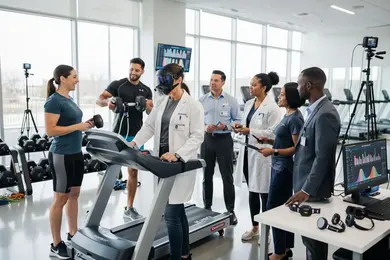
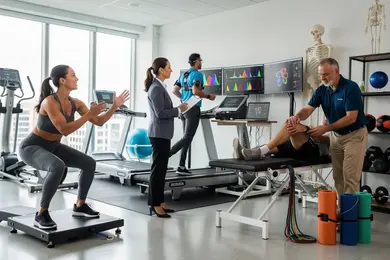
2027 Best Online Exercise Science Programs for Professionals Seeking Athletic Training Preparation

Co-Founder and Chief Data Scientist
Athletic training candidates face a persistent challenge: securing education that aligns with unpredictable work schedules and geographical constraints without compromising the program's rigor or clinical credibility. With 45% of adults enrolling in postsecondary programs online as reported by the National Center for Education Statistics in 2024, the demand for flexible, fully accessible exercise science curricula has shifted decisively toward virtual formats.
This reflects a broader trend where professionals must reconcile immediate job duties with long-term skill acquisition. Employers increasingly prioritize practical competencies alongside credentials, heightening the need for programs that integrate applied knowledge with adaptable delivery.
This article evaluates the best online exercise science programs designed for professionals targeting athletic training preparation, offering clear criteria to navigate this complex landscape effectively.
Key Things You Should Know
- Graduates from programs with integrated accredited clinical internships see 27% faster job placement in athletic training roles, forcing candidates to weigh longer program durations against immediate employability gains (Bureau of Labor Statistics, 2024).
- Employers increasingly prefer certifications aligned with National Athletic Trainers' Association standards, causing workforce entrants lacking these credentials to face a 15% lower starting salary and limited upward mobility (CAATE 2024 Employer Survey).
- Program costs exceeding $30,000 correlate with 12-month median debt repayment delays, influencing professionals balancing education investment against career pivot speed amid evolving reimbursement models for athletic training services.
What are the best online exercise science programs for athletic training preparation?
Employers in athletic training emphasize completion of accredited programs that align with the Board of Certification (BOC) Athletic Trainer exam pathway to meet credentialing expectations. Candidates balancing work and study benefit from programs offering synchronous and asynchronous coursework paired with clinical practica arranged in local settings, reducing travel burdens, a critical factor for employed professionals.
Conversely, those in rural or underserved regions must evaluate programs with advanced virtual simulations to offset limited onsite practicums. This real-world tradeoff affects the quality and applicability of clinical experience gained.
Top accredited exercise science degrees for athletic trainers must integrate biomechanics and evidence-based practice into their curriculum to equip graduates with skills to tailor training for diverse athletic populations effectively. Navigating these program elements is vital given the projected 9% job growth for exercise physiologists over the next decade, outpacing average occupational expansion.
Costs versus career outcomes require careful assessment. Programs lacking clinical placement support or strong employer networks risk delaying licensure and reducing hiring prospects in a competitive market. For prospective students analyzing education options, the kinesiology degree online listings provide comparative insights into program quality, modality, and alignment with professional trajectories.
How do online exercise science degrees prepare students for athletic training careers?
Online exercise science degrees must balance theoretical coursework with hands-on clinical internships to meet accreditation and employer expectations, particularly when preparing students for athletic training careers in the United States. This hybrid approach responds to the real-world necessity of translating biomechanics and human physiology knowledge into rapid injury assessment and rehabilitation planning.
Those pursuing online exercise science programs for aspiring athletic trainers should prioritize options embedding supervised fieldwork, such as working with collegiate or professional sports teams, because direct application of motion analysis and conditioning concepts within team environments improves job readiness.
Employers demand candidates who couple evidence-based understanding with technological proficiency, including wearable sensors and exercise testing software. These skills expand graduate versatility to environments ranging from outpatient physical therapy clinics to sports performance centers, enhancing rehabilitation outcomes and return-to-play efficiency.
Salary data corroborates the market value of such preparation: the top 10% of exercise physiologists in the U.S. made over $79,830, reflecting demand for professionals capable of integrating science with real-world therapeutic techniques. Graduates of online programs lacking sufficient clinical exposure or technology integration risk diminished employability.
Students assessing these pathways must weigh program strengths against workforce expectations and explore related alternatives. For insight into parallel scientific degrees, see what can you get with an environmental science degree.
What accreditation and program approvals should online exercise science majors look for?
Accreditation remains the non-negotiable factor when assessing online exercise science degree programs, directly impacting employment eligibility and licensure outcomes.
Employers and licensing boards commonly require candidates to graduate from programs accredited by the Commission on Accreditation of Allied Health Education Programs (CAAHEP) or programs holding programmatic approval from the National Athletic Trainers' Association (NATA). These program approvals for accredited exercise science majors guarantee a curriculum that aligns with stringent, evidence-based standards critical for athletic training certification.
Regional accreditation of the institution is equally important, affecting credit transferability and acceptance by graduate programs or state licensing agencies. For example, professionals aiming for licensure in states with strict oversight, such as California or Texas, must confirm their chosen program's accreditation aligns with state-specific criteria to prevent delays or additional costs associated with reaccreditation.
Cost efficiency and credit load also influence time to degree completion and student debt. The University of Florida's online M.S. in Applied Physiology and Kinesiology charges $585.75 per credit hour for a 30-credit total of $17,572.50, presenting a balanced investment relative to education market rates. Programs priced above $700 per credit hour often fail to deliver proportional return on investment, increasing financial burdens without clear job market advantages.
Students must verify practicum or internship components fulfill accrediting bodies' criteria since supervised clinical experience is mandatory for certification. Omitting structured hands-on training risks delays in licensure and employment challenges within this tightly regulated professional sector.
Those seeking programs outside exercise science should also consider options like masters of library science online to evaluate affordability and practical completion timelines across fields.
How do online exercise science programs compare to campus-based options for future trainers?
Online exercise science vs campus programs for athletic trainers reveals a critical tradeoff between theoretical knowledge and practical proficiency. Digital platforms deliver foundational content such as biomechanics, physiology, and kinesiology effectively, but the lack of on-site labs and supervised clinical experiences presents a real barrier to mastering hands-on skills.
For instance, collegiate athletic trainers must excel in live injury assessments and dynamic communication with athletes, competencies more reliably developed through campus-based practicum.
Employers demand accredited clinical hours and specialized certifications that typically require physical presence, placing distance learners in a position where they must independently arrange local internships. Campus programs often mitigate this challenge with established partnerships fostering seamless access to clinical rotations. This logistical burden remains a tangible disadvantage for students navigating remote study.
Cost benefits steer many toward online formats. Methodist University's online B.S. in Exercise & Sport Science charges $445 per credit hour for 124 credits, which may be lower than on-campus tuition plus living costs.
However, these financial savings can be offset by additional expenses and complexities involved in securing local hands-on placements. As a result, prospective students should assess if the flexibility of an online degree aligns with their career goals and readiness to manage internship demands.
Those pursuing licensure or competitive roles typically require programs with institution-supported practicums to ensure applied readiness rather than purely theoretical strength. Prospects evaluating a masters in library science online program will recognize parallels in weighing digital convenience against professional integration challenges.
What courses and practicum experiences are included in exercise science programs?
Exercise science programs vary widely in their alignment with workforce demands, particularly regarding practicum quality and skill application. The theoretical foundation covers anatomy, physiology, biomechanics, and kinesiology, but employer value hinges on how effectively students translate this into supervised clinical or athletic training settings.
For instance, a practicum within a Division I sports program exposes students to elite performance pressures and complex injury management, contrasting sharply with rehabilitation clinic placements focused on patient recovery and care pacing. This distinction shapes career trajectory. Selecting a program without substantial hands-on components risks limited employability in competitive athletic environments.
Program curricula increasingly embed certifications such as CPR/AED alongside sport-specific injury protocols, responding to employer expectations for practical readiness. Proficiency in exercise testing, movement analysis, and emergency response is non-negotiable for graduates entering the field.
Besides, familiarity with data analytics tools for performance tracking is becoming a key differentiator as sport programs emphasize measurable outcomes. Prospective students must critically evaluate programs' partnerships with athletic organizations to secure relevant practicum and avoid theoretical overload.
The market landscape includes over 700 sport and exercise programs, but quantity does not guarantee quality. Analyzing the actual practicum environments and the scope of clinical training should outweigh surface metrics. Misalignment between program focus and career objectives often results in delays or barriers to entry in high-stakes athletic training roles, an operational reality that calls for deliberate, context-aware decision-making.
What education and licensing steps lead from exercise science to athletic trainer roles?
The transition from exercise science to an athletic trainer role hinges on navigating layered academic and credentialing requirements that directly affect employability and practical readiness. Candidates must start with at least a bachelor's degree in exercise science or a related field accredited by the Commission on Accreditation of Athletic Training Education (CAATE) to ensure alignment with essential competencies.
Advancing typically involves completing a CAATE-accredited master's program integrating comprehensive clinical experience. For working professionals, programs such as Concordia University Chicago's online master's (updated June 24, 2026, at $575 per credit) offer flexibility but require balancing cost against the time needed to accumulate around 1,200 to 1,500 supervised clinical hours sought by employers.
Licensure demands passing the National Athletic Trainers' Association Board of Certification (NATABOC) exam, which tests evidence-based practice and emergency care proficiency. Geographic variations in licensure add complexity, making state-specific requirements a key consideration in planning.
Employers increasingly favor candidates combining formal credentials with verifiable clinical practice, especially in collegiate, clinical, or sports medicine settings. This raises the practical challenge of coordinating education, certification, and extensive hands-on experience without prolonged career interruption.
Overall, the pathway requires strategic decisions about educational investment, timing, and workforce entry logistics to meet the competitive standards set by employers and regulatory bodies in athletic training.
What admissions requirements and prerequisites do online exercise science programs typically have?
Meeting prerequisite requirements for online exercise science programs is a critical factor that shapes students' time to completion and readiness for competitive roles in athletic training. Candidates without prior coursework in biology, chemistry, and anatomy, which are core foundations necessary for grasping advanced concepts, face significant delays and increased costs.
For example, a working professional pivoting into athletic training may need additional semesters to fulfill these science requirements, extending their return on investment and delaying workforce entry.
Standardized test scores like the SAT or ACT are increasingly waived in many online programs, improving access but intensifying competition for cohort spots that depend heavily on academic recommendations and a focused statement of purpose. These elements offer admissions committees insight into candidates' potential for success in hands-on practicum settings where local placement and supervision are mandatory.
Applicants must also navigate clinical or fieldwork logistics, which directly influences employability in a labor market expected to grow over 20% through 2024, according to the Bureau of Labor Statistics. Failure to strategically address prerequisites and program-specific policies often leads to prolonged study durations and missed employment opportunities in healthcare and sports performance.
How long do online exercise science degrees take and what do they cost?
Choosing an online exercise science degree requires balancing time, cost, and employability factors, especially given varied program lengths and formats. Associate degrees commonly take about two years, while bachelor's degrees often require four years full-time. Part-time or accelerated paths can extend or shorten duration but influence financial and career timelines significantly.
For example, working professionals opting for part-time studies may face five or more years to completion, which must be weighed against employer tuition benefits and opportunity costs.
Tuition ranges widely: public universities typically charge $6,000 to $15,000 annually for in-state online bachelor's programs, whereas private institutions may exceed $30,000. Lower-cost programs often lack integrated internships or specialized practicum components essential for roles like athletic training, posing a tradeoff between affordability and direct workforce readiness.
Projected job growth for exercise physiologists at 9% through 2034 indicates sustained demand, but rapid entry requires programs that compress timelines without sacrificing clinical experience. Candidates should consider hidden expenses such as certification exams, equipment for virtual labs, and occasional travel for required in-person clinical work.
What jobs, career paths, and work settings can follow an exercise science degree?
Exercise science graduates confront a complex labor market shaped by credentialing demands and sector-specific expectations. Athletic trainers must clear the Board of Certification exam and accumulate practical internships, while strength and conditioning coaches often need specialized certifications focused on sports performance.
Healthcare roles emphasize rehabilitation program design for cardiac or orthopedic patients, demanding both clinical acumen and sometimes licensure. Corporate wellness programs, in contrast, prioritize developing injury prevention and health initiatives for largely sedentary populations.
Realistically, entry-level job prospects hinge heavily on advanced certifications or graduate education, especially when pursuing clinical or licensed positions. Without these, candidates risk stagnating despite holding a bachelor's degree
. For working professionals, online programs such as Methodist University's B.S. in Exercise & Sport Science, charging $445 per credit hour, present a cost-conscious way to earn credentials while balancing employment. However, this affordability can coincide with extended degree timelines and potential gaps in licensure preparation, affecting employability.
Employers value demonstrated practical skills through internships or employer-sponsored training above solely academic qualifications. Job candidates should weigh:
- The type of certification required for target roles
- The alignment between program structure and licensure prerequisites
- The balance between program cost, time-to-completion, and access to hands-on experience
These factors critically influence career trajectory in exercise science disciplines spread across sports teams, rehabilitation clinics, corporate wellness, and military fitness units.
What salary ranges and job outlook can exercise science and athletic training graduates expect?
Starting salaries for exercise science and athletic training graduates in 2026 typically range from $45,000 to $60,000, increasing to $75,000 or more with certifications and experience. The U.S. Bureau of Labor Statistics 2024 reports a median wage around $52,000 for athletic trainers, with the top 10% earning above $85,000. Projected job growth of 16% through 2032 outpaces many fields, reflecting demand in settings including schools, clinics, and professional sports.
However, these figures come with practical considerations. A full-time online bachelor's degree in exercise science without transfer credits generally requires four years, while part-time pacing can extend study to five or six years. This delay affects when students enter the workforce and begin earning, which can result in opportunity costs and a slower salary trajectory.
Employers prioritize candidates with hands-on experience and certifications such as BOC or ACSM credentials, which new graduates often lack. Without these qualifications, graduates may start in lower-paying, entry-level roles, underscoring the importance of clinical internships or practical placements for stronger salary outcomes.
For working students balancing education and employment, planning for credentialing post-graduation is crucial to achieve competitive salaries. Those entering this field should weigh extended study timelines against immediate earning potential and career progress within an evolving sports medicine environment.
Other Things You Should Know About Exercise Science
Transferability depends on the program's accreditation and the alignment of its curriculum with certifying bodies' requirements. Not all online exercise science courses directly apply toward athletic training certifications, so students must verify whether their credits meet the specific prerequisites for advanced certifications. It is advisable to choose programs with clearly defined articulation agreements to avoid redundant coursework and extend time to certification.
Employers increasingly accept online exercise science degrees if the program is accredited and includes required clinical experience. However, some employers in competitive or traditional settings may still prefer candidates from campus-based programs due to perceived rigor and networking opportunities. Candidates should weigh program reputation and evidence of hands-on training when assessing the impact of an online degree on job prospects.
Yes. Many programs require a supervised practicum or internship, often 100 to 200 hours, to build applied skills. For athletic training preparation, students should confirm the site approval process, faculty oversight, and whether hours can be completed in a local clinical or sports setting.
References
- Athletic Trainer - Explore Healthcare Careers - Mayo Clinic College of Medicine & Science https://college.mayo.edu/academics/explore-health-care-careers/careers-a-z/athletic-trainer/
- 2025-2026 Catalog https://catalog.monroeu.edu/catalog/course-descriptions/undergraduate-course-descriptions/ex/
- Exercise Science Degree Careers, Jobs and Salaries - Peak Physical Therapy and Sports Performance https://peaktherapy.com/blog/exercise-science-degree-careers-jobs-and-salaries/
- What Is an Athletic Trainer? https://my.clevelandclinic.org/health/articles/athletic-trainer
- Online Exercise Science Degrees: Top School Review https://www.edumed.org/online-schools/exercise-science-degrees/
- Online Exercise Science Program https://stmary.edu/online-programs/exercise-science.html
- 2026 Best Online Exercise Science Degrees https://www.onlineu.com/degrees/exercise-science
- What is the Job Outlook for an Athletic Trainer? https://learn.neumann.edu/neuperspectives/what-is-the-job-outlook-for-an-athletic-trainer