2027 Fitness and Performance Careers Growing Fastest in 2026

Co-Founder and Chief Data Scientist
Facing an increasingly competitive labor market, aspiring exercise science professionals often struggle to identify which specialization areas will offer sustainable employment and upward mobility. The U.S. Bureau of Labor Statistics projects a 13% growth in fitness and performance-related roles over the next several years, intensifying demand but also raising the stakes for selecting the right educational route.
Meanwhile, recent data from the National Center for Education Statistics shows a 27% rise in enrollment for hybrid and fully online exercise science programs, signaling greater accessibility yet varying employer acceptance of nontraditional credentials. Navigating this complex environment requires balancing timely entry, quality training, and market relevance.
This article pinpoints the fastest-growing careers within fitness and performance sectors, guiding prospective students and professionals on strategic program choices and career moves that optimize both flexibility and long-term employability.
Key Things You Should Know
- Projected 15% growth in sports performance coaching by 2029 outpaces broader health professions but requires costly certifications with limited credential reciprocity, complicating career pivots for mid-career entrants.
- Employers prioritize candidates with integrated data analytics skills alongside foundational exercise science knowledge; programs lacking this focus see 20% lower placement rates, stressing curriculum alignment with real-time industry demands.
- Urban centers offer 40% higher entry-level wages in fitness diagnostics roles, yet geographic concentration increases competition; relocation costs and variable state licensure slow timely entry into rapidly evolving markets.
Which fitness and performance careers are growing fastest in exercise science today?
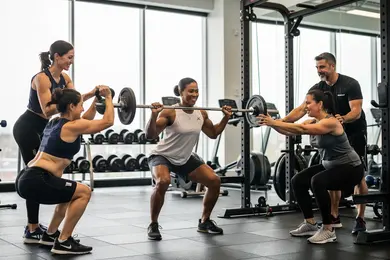
The fastest-growing exercise science career opportunities in North America reflect distinct demands and educational thresholds that impact employability and long-term stability. Personal trainers and fitness coaches dominate market growth, with the U.S. personal training sector valued at $11.9 billion in 2026.
However, sustaining competitiveness requires ongoing credential updates and digital proficiency for remote client engagement. Notably, specialization in areas like senior fitness or chronic disease management can markedly improve income potential.
Sports performance roles are expanding primarily in professional and collegiate athletics, emphasizing biomechanics, injury prevention, and quantified conditioning outcomes. Graduates in these roles often pursue advanced certifications in kinesiology or sports medicine to meet employer expectations for collaboration with medical professionals.
Such careers demand a practical balance between scientific expertise and hands-on program design, which is increasingly valued in this niche of fitness and performance careers growing fastest in the US.
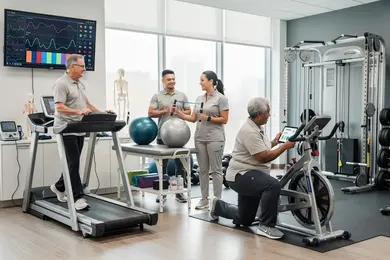
Rehabilitation-focused paths, including cardiac and pulmonary rehab, illustrate a distinct trajectory within exercise science, requiring graduate-level education and navigating complex, variable state licensure requirements. While these roles offer more job security and upward mobility inside healthcare systems, they also involve interdisciplinary coordination and insurance-based constraints.
For those weighing educational options, exploring accredited online kinesiology programs can provide flexible pathways toward meeting these rigorous standards while addressing practical workforce realities.
What degrees and majors prepare you for high-demand fitness and performance roles?
Degrees in exercise science and kinesiology offer decisive advantages for fitness and performance roles, especially when aligned with real-world employer expectations. The demand for professionals in this sector remains robust, but choices around educational pathways carry clear tradeoffs.
For example, bachelor's degrees for US fitness and performance careers typically cover injury prevention, program design, and performance assessment—competencies essential for clinical or athletic settings. In contrast, associate degrees or certificates, while accessible, often constrain upward mobility and limit access to specialized roles.
Employers prioritize candidates with evidence-based credentials, hands-on laboratory work, and internships that foster practical skills. Graduates without clinical practicum or relevant internship experience may face barriers despite academic achievements.
Additionally, combining exercise science with business or health promotion can broaden career options, allowing transitions into wellness program management or corporate fitness. Program accreditation further influences certification eligibility and employability.
The workforce outlook for fitness trainers and instructors projects 12% growth over a decade, reinforcing steady openings. For prospective students weighing options, logistical considerations such as program delivery matter; some may explore flexible alternatives like a sports management degree online to supplement or pivot their expertise efficiently.
What are typical salaries and earning potential in top fitness and performance careers?
Top fitness and performance careers in North America show a clear divide between traditional gym-based roles and digitally augmented coaching models, impacting earning potential and professional scalability. Entry-level personal trainers typically earn $40,000 annually, but this figure represents the lower bound within a saturated geographic market capped by hourly client limits.
In contrast, specialized strength and conditioning coaches working with collegiate or professional athletes can surpass $90,000, with elite exercise specialists in applied performance roles—especially in clinical rehabilitation or high-level sports—exceeding $100,000.
The ABC Trainerize 2026 report highlights that 48% of fitness professionals now adopt a hybrid in-person/online model, which broadens client reach and reduces overhead but requires additional skills in technology and marketing often absent from conventional exercise science curricula.
For example, a personal trainer integrating remote monitoring and digital subscriptions can potentially double earnings, though this growth demands upfront investment and strategic client retention.
Corporate wellness and physical therapy support roles start between $50,000 and $70,000, with niche certifications in sports nutrition or corrective exercise influencing salary variance. This landscape necessitates balancing credentialing costs against realistic client acquisition paths amid an evolving industry climate.
Prospective students exploring the exercise science field should consider flexible educational options that align with digital competence and market viability. One can explore affordable online library science degree programs to supplement knowledge relevant to managing information systems and client data within fitness environments.
For students seeking greater flexibility, an online exercise physiology degree can provide foundational knowledge in human performance, biomechanics, and health assessment while accommodating work or athletic commitments. When paired with industry certifications and hands-on experience, these programs can prepare graduates for careers in sports performance, rehabilitation, corporate wellness, and other rapidly growing areas of the fitness industry.
What education, certifications, or licenses are required for these careers in the U.S.?
A bachelor's degree in exercise science, kinesiology, or a related field remains the baseline credential for competitive fitness and performance careers in the U.S., particularly in corporate wellness roles where employer standards are rising.
Employers require candidates to supplement education with certifications recognized nationally, such as from the National Strength and Conditioning Association (NSCA) or the American College of Sports Medicine (ACSM), reflecting the critical role of certification and licensing for fitness careers in the United States. This dual credentialing verifies competency and safety, directly affecting employability.
Licensing demands vary dramatically by specialization and state jurisdiction. Clinical exercise physiologists typically must secure licensure and pass specialized exams like the ACSM's Certified Clinical Exercise Physiologist to practice in healthcare settings.
By contrast, purely corporate wellness roles may accept certified but unlicensed trainers, a tradeoff that limits scope but expedites entry. Market growth—such as the $55.1 billion valuation in corporate wellness noted by research—encourages cross-disciplinary certifications in occupational health or nutrition to improve salary prospects and job security.
Pragmatic assessment of education programs should prioritize those recognized by employers and offering practical internships with clinical or corporate partners for clear hiring pathways. Candidates without clinical licensure face limitations in insurance reimbursement and narrower job roles despite lower upfront training costs. Continuous education requirements reflect evolving industry standards and the need for long-term credential maintenance.
Prospective students may also explore programs emphasizing practical outcomes, including MS data science online options, which provide complementary analytical skills relevant to fitness data and performance optimization.
How do exercise science programs differ for personal trainers, coaches, and performance specialists?
Choosing among exercise science programs means confronting distinct tradeoffs in scope, depth, and job market alignment. Personal trainer curricula offer quicker, certification-based pathways focused on anatomy and client assessment, yet these roles often yield lower wages and stiff competition. Coaches engage with sport-specific biomechanics and psychology, demanding deeper knowledge and tactical skills to manage athletes effectively, but they must continuously upskill to stay relevant within competitive sports networks. Performance specialist programs require extensive study in advanced physiology, nutrition, and rehabilitation, aiming at clinical or elite athlete contexts and commanding higher salaries despite longer preparation times.
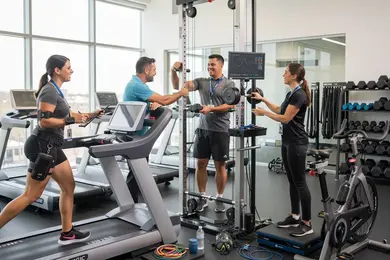
For instance, personal trainers aiming to work with older adults must extend beyond basic training by acquiring senior fitness certifications tailored to fall prevention and functional mobility. Coaches need proficiency in injury prevention and conditioning periodization beyond entry-level. Performance specialists combine technology-driven assessments like metabolic testing with clinical applications, demanding both scientific rigor and practical adaptability.
Key workforce considerations include balancing program length, affordability, and specialization against labor market demands. Notably, the ABC Trainerize 2026 report highlights robust client demand in senior fitness, weight loss, and sports performance—sectors that favor specialized expertise over generic fitness training.
Students targeting employability should align with these evolving demand areas while weighing the financial and temporal investment required for higher-level credentials.
Although they prepare students for a different profession, ASN programs online similarly reflect the growing demand for flexible, career-focused education that accommodates working adults and career changers. Both fields highlight the importance of selecting programs that balance affordability, hands-on skill development, and strong employment outcomes.
How do online exercise science programs compare with campus-based options for career preparation?
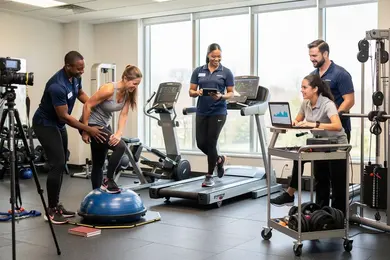
Online exercise science programs often compromise on the hands-on skill development employers demand, such as biomechanical assessments and equipment handling, which are central to campus-based education. These practical competencies matter profoundly in fitness and performance roles where on-site labs, in-person internships, and direct client interaction shape workplace readiness.
For instance, a Pilates instructor earning between $32 and $38 per hour or $67,000-$70,000 annually, according to IDEA Health & Fitness Association, requires tactile expertise gained best through supervised, real-world practice.
Without immediate access to physical facilities, online students frequently rely on virtual simulations or delayed clinical placements, which may weaken their employability in positions that call for instant proficiency. However, online formats present strategic advantages for working professionals constrained by geography or scheduling, as long as clinical requirements are fulfilled locally and internships meet industry recognition.
Prospective students should verify that external practicums in online programs hold equivalent value to campus-based training with employers to avoid credential skepticism. The decision hinges on one's career goals:
- High-contact roles demanding direct supervision and real-time client interaction favor campus programs.
- Those needing scheduling flexibility or geographic accommodation must ensure their online coursework incorporates verifiable, rigorous practical experiences.
Effective navigation of these tradeoffs depends on aligning educational delivery with both immediate job requirements and long-term skill mastery in exercise science.
What core courses and skills do exercise science students need for performance-focused careers?
Exercise science curricula that emphasize anatomy, physiology, biomechanics, and applied exercise physiology equip students with essential competencies for performance-driven roles but require balancing technical depth with practical application.
For instance, mastery of VO2 max and lactate threshold testing is indispensable for designing individualized training plans, yet such skills demand rigorous hands-on internships to meet employer expectations in sports and clinical settings.
Graduates entering strength and conditioning roles must also translate complex data into clear coaching strategies, illustrating the need for communication skills often overlooked in academic programs.
The integration of nutrition and kinesiology knowledge is a practical necessity rather than a theoretical luxury, directly influencing energy system management tailored to athlete or patient needs. Data analysis capabilities, including statistical proficiency, enable professionals to evaluate client progress objectively and adjust interventions in real time.
Workforce trends project 6-14% job growth in exercise-related fields through 2032, signaling expanding demand yet intensifying competition. Students must assess program accreditation rigor, internship access, and faculty expertise critically, as these factors affect both clinical certification eligibility and employability.
The choice of program frequently hinges on tradeoffs between theoretical breadth and applied readiness, with academic preparation intimately linked to real-world professional adaptability and multidisciplinary collaboration.
How long do exercise science degrees take, and what do they cost on average?
Pursuing an exercise science degree involves a strategic tradeoff between time investment, cost, and workforce readiness. Bachelor's programs typically span four years full-time, with accelerated or part-time paths extending timelines but offering schedule flexibility for working professionals. Associate degrees shorten this to about two years, functioning as practical entry points into technician roles with limited advancement unless supplemented by further credentials.
Costs vary markedly: public in-state tuition averages roughly $10,000 annually, whereas private or out-of-state options can double that figure. Beyond tuition, candidates must budget for essential expenses such as professional liability insurance, certification fees, and continuing education, all pivotal in meeting employer expectations focused on validated practical skills rather than just academic credentials.
Notably, while online and part-time formats provide accessibility, indispensable lab work and internships require local attendance, underscoring the challenge of fully remote study. Employers increasingly favor candidates pairing exercise science degrees with certifications like ACSM or NSCA, particularly as the market for sports-related roles grows—postings surge over 41% in countries like India, illustrating global demand for work-ready practitioners.
Graduates with a bachelor's degree typically qualify for broader roles such as clinical exercise physiologist or strength and conditioning coach, highlighting how extended investment correlates with greater career mobility compared to shorter associate routes.
How can you verify accreditation and program quality for exercise science and fitness schools?
Accreditation is a decisive factor in assessing the value of exercise science programs, as employers rely heavily on recognized institutional and programmatic credentials to gauge competence. Verification should extend beyond generic claims to include alignment with standards from bodies like the Higher Learning Commission and the Commission on Accreditation of Allied Health Education Programs (CAAHEP).
Programs without such validation risk producing graduates ill-prepared for nuanced tasks like biomechanics assessment or individualized nutrition planning.
Graduate employment data offers a tangible indicator of a program's real-world efficacy. For instance, hands-on internships with health clubs or clinics connect academic learning to the £6.5 billion UK fitness sector's operational demands and its 12.2 million members, a scale comparable to U.S. market segments. This immersion is critical given employer preference for candidates demonstrating applied experience.
Faculty expertise and current research output also influence program rigor and currency; programs with outdated syllabi may fail to equip students with essential, evidence-based skills. Applicants should actively verify federal student aid eligibility and seek syllabi details to validate institutional legitimacy.
Flexible learning formats and certifications recognized by industry associations provide working professionals a practical pathway to maintain relevance without interrupting employment, balancing skill advancement with labor market pressures. Skipping these due diligence steps risks investing in credentials with limited acceptance or practical utility.
What should students evaluate when choosing a reputable exercise science program for these careers?
Programs in exercise science must demonstrate alignment with industry standards and accreditation by recognized bodies such as CAATE or CAAHEP to ensure graduates receive training valued by employers in a competitive labor market. With a projected 14% growth in fitness-related roles through 2033 reported by IDEA's State of the Fitness Job Market in 2025, credential credibility is a decisive factor in employability.
Hands-on clinical experience through internships or partnerships with fitness facilities frequently determines whether graduates meet practical employer expectations. For instance, a candidate for personal training positions who lacks documented internship hours in client evaluation and program design often faces hiring disadvantages compared to peers who gained supervised field experience.
Graduate outcome transparency also reflects institutional quality. IDEA's data showing average annual earnings near $58,000 and typical hourly wages around $27 sets realistic benchmarks for students to assess program return on investment. Lack of current or specific employment statistics can indicate insufficient accountability.
Flexibility in course delivery and the inclusion of stackable credentials like ACSM or NASM certifications affect long-term career mobility. Professionals balancing work with study benefit from part-time or hybrid formats, while programs without integrated certification pathways may require graduates to pursue costly additional qualifications.
Faculty actively engaged in fitness science research or industry consulting offer curriculum relevance and valuable industry connections, a practical advantage when entering or advancing within the field.
Other Things You Should Know About Exercise Science
The most recognized credential is the NSCA Certified Strength and Conditioning Specialist (CSCS), which requires a bachelor’s degree and a passing score on the NSCA exam. For personal training roles, the ACSM-CPT and NASM-CPT are widely accepted by employers.
Employers prioritize hands-on experience alongside academic credentials. Internships, supervised clinical hours, and applied research projects carry more weight than coursework alone. Candidates with real-world practice in settings like sports teams, rehabilitation clinics, or wellness programs demonstrate readiness to manage complex cases, reducing onboarding time. Prioritizing programs with strong internship placements increases employability significantly.
Certifications and licenses are essential complements but never substitutes for formal degrees in exercise science. Degrees validate comprehensive academic knowledge, while certifications validate specific technical skills and compliance with regulatory standards. Combining both maximizes employment options and salary potential. Students should prioritize degree programs that prepare them to pass relevant certification exams promptly after graduation.
Early specialization can accelerate entry into niche fields like biomechanics or clinical exercise testing but risks limiting flexibility if job markets shift. A broad foundation maintains adaptability across multiple sectors, such as fitness, rehabilitation, and performance enhancement. Given the evolving nature of exercise science roles, students should prioritize broad training early with targeted specialization through electives or graduate study to balance employability and expertise depth.
References
- Accreditation https://www.sru.edu/academics/colleges-and-departments/cohp/departments/exercise-science/accreditation
- Fighting for Professional Relevance: Programmatic Accreditation Must Lead the Way https://acsm.org/fighting-for-professional-relevance/
- Kinesiologist vs Strength Coach vs Personal Trainer vs… - Vital Performance Care https://vitalperformancecare.com/trainer-vs-strength-coach/
- Important differences between different health professionals https://vectorhealth.com.au/some-of-the-important-differences-between-different-professionals-in-the-health-fitness-and-sports-performance-realms/
- Fitness Coach vs. Personal Trainer: The Important Differences | Anytime Fitness https://www.anytimefitness.com/blog/fitness-coach-vs-personal-trainer-which-is-right-for-you
- NASM CPT Salary Guide | Personal Trainer Earnings & Career Outlook https://www.nasm.org/resource-center/cpt-salary
- Exercise Sciences https://www.caahep.org/committees-on-accreditation/exercise-science
- What's the Difference Between a Personal Trainer and a Fitness Coach? https://sopa.tulane.edu/blog/whats-difference-between-personal-trainer-and-fitness-coach
- Exercise Science Degree Programs Lead to Rewarding Careers in Health and Fitness https://www.carrollcc.edu/articles/exercise-science-degree-programs-lead-to-rewarding-careers-in-health-and-fitness/
- Personal Trainer Salary in 2025: Comprehensive Guide to Earnings and Growth https://www.issaonline.com/blogs/business/top-personal-trainer-salary-by-sector-gym-and-state