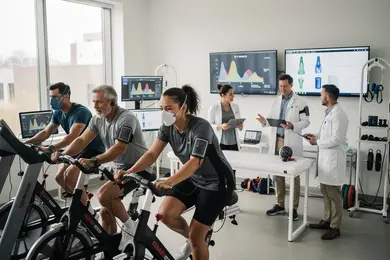
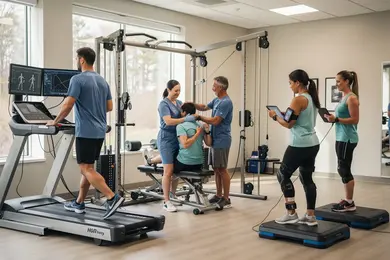
2027 Online Exercise Science Degrees With Human Performance Career Alignment

Co-Founder and Chief Data Scientist
Securing a flexible, reputable degree in exercise science while balancing work and family obligations presents a fundamental barrier for many aspiring professionals, especially when brick-and-mortar programs demand rigid schedules and physical attendance.
The U. S. Department of Education reports that over 40% of recent college enrollees opt for at least some online coursework, signaling a clear shift toward digital access that helps accommodate adult learners' complex time constraints. This movement reshapes how candidates can strategically align their education with career trajectories in human performance fields reliant on practical skills and certifications, where timing and program structure directly affect employability and advancement.
This article unpacks key online exercise science programs emphasizing human performance alignment, equipping readers with critical insights to navigate program selection, accessibility, and career outcomes amid evolving workforce demands.
Key Things You Should Know
- Online exercise science degrees often delay hands-on skill acquisition due to limited supervised practical labs, reducing early employability for clinical or performance roles that demand certified in-person competencies.
- Employers increasingly prioritize candidates with hybrid training, citing 2024 surveys from the National Strength and Conditioning Association that show 62% favoring applicants demonstrating both online theoretical mastery and verified offline practice.
- While online program costs average 15-25% less than traditional degrees per the Department of Education 2024 data, the extended time-to-certification required for some online students raises total career entry expenses and delays wage growth.
What is an online exercise science degree?
Choosing an online exercise science degree requires scrutiny beyond convenience, particularly regarding practical skill development and employer expectations. Accredited online exercise science degrees for human performance careers often combine anatomy, physiology, biomechanics, and nutrition with remote delivery, but hands-on experience is critical to bridge gaps inherent in virtual learning.
Consider a working professional targeting cardiac rehabilitation; they must verify their program includes applied kinesiology and cardiovascular exercise modules aligned with certification standards. Conversely, an aspiring sports performance coach should prioritize advanced biomechanics and strength conditioning to meet job market demands. These distinctions affect long-term employability and alignment with industry requirements.
The labor market outlook supports investment in these programs, with exercise-related occupations projected to grow between 6% and 14% by 2032, according to the U.S. Bureau of Labor Statistics. This growth reflects increased demand but also intensifies competition, making program accreditation, clinical hour prerequisites, and certification alignment critical evaluation factors.
Students should weigh the flexibility of online delivery against the necessity of securing internships or clinical placements to attain hands-on competencies comparable to traditional campus programs. For a detailed comparison of program structures and outcomes, prospective students can explore online degree in exercise science options to identify pathways matching their career goals and real-world requirements.
Employers increasingly prioritize applicants with verified credentials and experiential learning, so selecting programs with clear pathways to licensure or certification is imperative when practical experience significantly impacts career trajectories in exercise science.
Which accreditations matter for online exercise science programs?
Employers and licensing bodies prioritize accredited credentials when evaluating online exercise science program accreditation standards. Institutional accreditation through recognized regional bodies like the Higher Learning Commission is the baseline for federal aid eligibility and broad employer acceptance.
Beyond this, specialized accreditations or endorsements from CAAHEP or NSCA distinctly affect career trajectories in clinical exercise physiology and strength & conditioning. For example, strength coaches hired by collegiate athletic departments often require degrees aligned with NSCA-endorsed certifications rather than generic online exercise science degrees.
Graduate programs targeting clinical roles must meet CAAHEP or ACSM standards to ensure graduates qualify for board certification and licensure. The U.S. Bureau of Labor Statistics notes that clinical exercise physiologists with graduate credentials earn a median salary of $58,470 and face an 11% job growth rate through 2032, indicating a strong labor market advantage for accredited program completers.
However, convenience-focused programs lacking relevant accreditation can diminish a candidate's suitability in employer eyes, especially in clinical or insurance-driven environments where reimbursement depends on recognized qualifications.
Students evaluating the best accredited online exercise science degrees in the US should verify both institutional and program-specific accreditation early. Aligning these credentials with their intended career segment avoids barriers in certification access and employment.
Additionally, when comparing pathways for a strategic career pivot, it is useful to review complementary fields such as computer science degrees online, which may offer alternative or hybrid skill sets relevant to emerging job markets.
How do online and campus exercise science programs compare?
Choosing between online exercise science degree vs campus programs hinges on how students acquire essential clinical skills alongside theoretical knowledge. Campus-based formats embed students in labs and supervised internships, ensuring robust hands-on experience critical to employer hiring in human performance and rehabilitation.
By contrast, online students face a structural barrier: securing off-site clinical placements without institutional networks requires greater self-direction and may slow credentialing, especially where regional differences in exercise science education delivery affect licensure requirements.
For instance, applicants targeting roles such as cardiac rehabilitation specialists must document clinical hours often more seamlessly gained through campus immersion. Online learners must navigate externships independently, sometimes crossing state lines to satisfy practical mandates. This creates a tradeoff between convenience and immediate employer readiness.
Salary data from NutritionEd.org's 2026 Exercise Science Salary Guide indicates advanced professionals earn between $60,000 and $80,000+ annually, contingent on accumulated fieldwork accessible through campus programs. Working adults pivoting careers might favor online formats for geographic flexibility but must compensate with proactive clinical experience to remain competitive.
Key decision factors must weigh program accreditation, internship access, and career services focused on clinical placements. For those evaluating pathways, understanding these operational elements alongside your career goals is crucial. Students with existing clinical access or strong initiative can leverage online routes effectively, while others may benefit from campus-based clinical immersion.
Prospective students interested in more advanced or related fields might also explore options for an online PhD data science as a complementary skill set enhancing workforce versatility.
What courses are in an exercise science curriculum?
Curricula for an exercise science degree center on foundational disciplines-anatomy, physiology, biomechanics, and nutrition-to build competencies that align with explicit human performance career course requirements. The distinct challenge for students lies in balancing these theoretical components with practical skill development, which employers consistently prioritize in roles such as rehabilitation specialists or strength and conditioning coaches.
Core subjects include exercise physiology, where students learn to assess muscular and cardiovascular responses during physical activity, and biomechanics, which involves analyzing movement mechanics crucial for injury prevention and therapeutic protocols. Mastery of kinesiology complements this by enabling understanding of complex human movement patterns, a skill transferable across clinical and athletic workplace settings.
Nutrition courses focus on how dietary factors influence recovery and performance, equipping future fitness trainers with evidence-based strategies for personalized client plans.
Practical tradeoffs occur when programs integrate applied coursework in exercise testing and prescription, essential for tailoring regimens to clients with chronic health issues. Incorporating research methods and statistics reinforces the analytical rigor necessary for evidence-based decision making, a consistent expectation from employers in healthcare collaborations.
Additional psychology modules addressing motivation and behavioral change enhance client adherence, which can directly impact program success. The inclusion of internships or practicum placements remains a decisive factor in employability by providing real-world exposure that standard coursework alone cannot replicate.
Projected job growth exceeding 59,000 new exercise science-related positions by 2029 underscores the need for curricula grounded in current scientific practice and applied learning.
For professionals also weighing interdisciplinary pathways, comparing exercise science with fields such as data science may open further strategic advancement avenues; for a detailed look at intersecting options, consider reviewing data science degrees.
What admission requirements do exercise science programs usually require?
Admission requirements for exercise science programs highlight a balance between foundational science readiness and practical workforce demands. Applicants generally need a high school diploma with solid backgrounds in biology, chemistry, and math, and many programs expect a minimum GPA around 2.5 to 3.0 to ensure capability in rigorous science coursework. While standardized test scores may be required, some institutions waive them based on evolving admissions trends or relevant experience.
Prerequisite coursework typically includes anatomy, physiology, or general biology to prepare students for specialized content. Candidates pursuing clinical human performance licenses should anticipate additional demands such as CPR certification and healthcare volunteer hours, which represent necessary investments in practical competencies beyond classroom theory. By contrast, strength and conditioning tracks privilege applied skills and athletic experience, often valuing certifications and sports backgrounds more than strict academic metrics.
Hiring patterns reflect these distinctions: clinical roles command a median salary near $50,840 with 13% projected job growth, but require navigating licensure and layered credentialing involving time and cost. Strength and conditioning positions offer a slightly lower median salary ($46,010) and 12% growth but emphasize experiential qualifications, reducing some educational barriers.
Prospective students must weigh these tradeoffs-higher entry barriers with clinical rigor versus faster vocational entry with performance specialties-against individual career goals and resources. Admission interviews or personal statements further assess motivation and understanding of role demands, signaling the importance of informed program choice for meaningful employability outcomes.
How long does an online exercise science degree take?
Completing an online exercise science degree requires navigating a balance between program length, certification timelines, and real-world scheduling constraints. While a bachelor's typically spans 3 to 4 years full-time, accelerated tracks offer completion in as little as 2 to 2.5 years. However, these compressed formats demand intense time commitments and may not fit professionals working full-time or managing other responsibilities.
Part-time study commonly extends the process to 4 to 6 years, reflecting reduced course loads chosen by students juggling employment or certifications. Given that most exercise science roles now mandate credentials from bodies like ACSM, NSCA, NASM, or ACE, candidates should factor in additional months for certification coursework, exams, and hands-on experience requirements beyond the degree itself.
Integrating degree progress with certification scheduling is pivotal for timely workforce entry. For example, transferring prior credits or satisfying prerequisites online can shorten overall duration, but alignment with credentialing exam windows remains a practical constraint. Programs that embed prep for these certifications can reduce gaps between education and employment.
Employers prioritize candidates who secure both degree and certification without delay, directly impacting early employability and income generation. Therefore, prospective students must critically assess program formats, credit transfer options, and certification support to align education pathways with career timing realities, as emphasized by the 2026 Exercise Science Degree & Career Guide (NutritionEd.org).
How much do online exercise science degrees cost?
Costs for online exercise science degrees vary notably: bachelor's programs range from $15,000 to $40,000, while graduate tuition typically spans $10,000 to $30,000 depending on credit requirements and institution type. For working professionals, programs under $20,000 offer a strategic balance between affordability and curricular rigor aligned with human performance careers.
Tuition inflation is uneven across the sector. Liberty University's less than 5% increase in online graduate tuition over a decade contrasts with the national 3-7% annual rise, signaling potential institutional pricing strategies that favor long-term affordability without compromising educational quality.
Affordability rankings-such as Liberty's placement within the top 35%-indicate cost-effective options relative to programs charging over $1,000 per credit. However, candidates must weigh total expense against employer prerequisites, including required accreditation and practicum hours, which can add substantial costs if on-site or certification components are necessary.
Additional fees beyond base tuition are a critical consideration. Students should anticipate expenses related to technology access, labs, and professional certification exams-such as ACSM certification fees that can exceed $300. These factors influence net return on investment by affecting licensure readiness and career placement potential.
Which careers align with human performance in exercise science?
Career pathways in exercise science hinge on balancing educational investments with practical workforce demands, and this balance varies considerably by role. Health educators, commanding a median annual wage near $63,000 and a stable projected growth rate, offer broad applicability across community health and corporate wellness settings without necessitating advanced certifications.
However, roles like strength and conditioning coaches require specialized certifications such as CSCS along with hands-on experience in athletics or rehabilitation, making entry more demanding but offering focused career trajectories that emphasize applied biomechanics and injury prevention.
Support roles such as physical therapy assistants and occupational therapists present distinct educational tradeoffs: assistants typically need associate degrees and licensure, while occupational therapists require advanced degrees and a deeper clinical skillset. Both prioritize therapeutic interventions tailored to restoring function, underscoring different timelines and cost implications for students based on credential depth.
Sports scientists, often requiring graduate education, occupy a niche that combines data analytics with performance science in professional or academic environments. This role demands balancing rigorous research methodologies with real-time athlete monitoring, which can present both intellectual and operational complexity not found in more entry-level positions.
For prospective students or professionals pivoting into these fields, the critical evaluation point remains: aligning educational pathways with employer expectations around certification, experience, and demonstrated performance outcomes is essential to avoid underemployment or skill mismatches.
What salary can exercise science graduates expect?
Graduates with exercise science degrees in 2026 face a nuanced salary landscape, largely dictated by employment sector and geography. Hospital and clinical roles consistently offer the most competitive compensation, typically starting around $55,000 with growth potential up to $75,000 after gaining experience or specialized certifications.
These positions require navigating stringent credentialing and continuing education, which extend the time before entering the workforce but result in higher salaries and greater job security.
In contrast, fitness centers and corporate wellness programs present quicker routes to employment, but starting pay tends to be lower, often between $40,000 and $50,000, with less predictable advancement paths. Those targeting government or hospital jobs should prepare for a longer onboarding period driven by certification requirements, as this tradeoff yields a more stable career trajectory and superior earning prospects.
Key factors influencing long-term remuneration include acquiring advanced certifications in cardiac rehabilitation or clinical exercise physiology, which can elevate practitioners' salaries beyond $70,000 and transition them from technician roles to highly valued healthcare affiliates.
Graduates who prioritize salary optimization often benefit most from programs that integrate internships within healthcare settings, offering direct employer connections that enhance job market competitiveness.
What certifications or licenses may exercise science graduates need?
Obtaining specific certifications or licenses after completing an exercise science degree is often a decisive factor in employability, especially when differentiating between fitness, clinical, and athletic roles.
For instance, commercial gyms frequently require credentials such as the National Strength and Conditioning Association (NSCA) personal trainer certification or credentials from the American College of Sports Medicine (ACSM), both of which involve documented practical hours and passing rigorous exams. Without such certifications, even graduates with solid academic preparation may face limited hiring opportunities.
For those entering clinical or rehabilitation settings, becoming a Certified Exercise Physiologist (CEP) or a Registered Clinical Exercise Physiologist (RCEP) mandates accredited internships and board examinations, reflecting the profession's regulatory rigor. Athletic trainers must obtain state-mandated Athletic Trainer Certification (ATC), reflecting legal requirements that vary across jurisdictions.
Specializations like strength and conditioning rely heavily on credentials such as the NSCA Certified Strength and Conditioning Specialist (CSCS), where certification outcomes can significantly impact career trajectory and earning potential.
Cost remains an important consideration: tuition for human performance programs at Bemidji State University stands at $4,902 per semester for 15 credits, substantially below the average private college rate of $16,205 per semester, according to College Board data from 2022. However, credentialing expenses and mandatory continuing education units (CEUs) post-graduation require additional planning and investment.
Prospective students should weigh these upfront and ongoing costs against employer demands and long-term workforce requirements to avoid education-to-employment mismatches common in this field.
Other Things You Should Know About Exercise Science
Employers in exercise science-related roles typically value the degree's content and accreditation over whether it was earned online or on campus. However, programs that emphasize practical experience through internships or lab work-often harder to secure online-tend to produce graduates better prepared for hands-on roles. Choosing an online degree with structured fieldwork or partnered clinical experiences increases marketability and reduces the perceived gap between online and traditional credentials.
Programs with limited or no in-person internship components may leave graduates less prepared for roles requiring direct client interaction or lab techniques. This shortfall can slow entry into human performance or rehabilitation jobs where employers expect practical competency. Candidates should prioritize programs offering supervised internships or collaborate independently to gain experience, as absence of applied learning weakens both skill development and professional networks.
Yes, if the courses come from a regionally accredited program and cover required content such as anatomy, physiology, and exercise prescription. For the ACSM Certified Exercise Physiologist exam, candidates also need a bachelor’s degree and at least 400 hours of practical experience in a clinical, fitness, or human performance setting.
References
- Online Bachelor's in Exercise Science https://online.maryville.edu/online-bachelors-degrees/exercise-science/
- High School Exercise Science https://www.edmentum.com/course/high-school-exercise-science/
- Exercise science program accredited by national organization | Lipscomb University https://lipscomb.edu/news/exercise-science-program-accredited-national-organization
- Exercise Science | York College of Pennsylvania https://www.ycp.edu/academics/programs/exercise-science
- 2026 Best Online Exercise Science Degrees https://www.onlineu.com/degrees/exercise-science
- Exercise Physiologist https://acsm.org/certification/get-certified/exercise-physiologist/
- Online Exercise Science Program https://stmary.edu/online-programs/exercise-science.html
- Exercise Science and Human Performance https://mcm.edu/major/exercise-science-and-human-performance/
- Exercise Science | Columbia College https://www.columbiasc.edu/academics/undergraduate/exercise-science
- Online Exercise Science Degrees: Top School Review https://www.edumed.org/online-schools/exercise-science-degrees/