2027 Online Exercise Science Degrees for Performance-and-Rehab Hybrid Careers

Co-Founder and Chief Data Scientist
Mid-career professionals in exercise science confront a pressing dilemma: how to effectively balance advancing clinical rehabilitation expertise with performance training credentials without sacrificing income or time.
Traditional programs often demand on-campus attendance and fixed schedules, limiting accessibility for the majority—especially since the National Center for Education Statistics reports that 44% of postsecondary enrollments in 2024 comprise nontraditional adult learners seeking flexible modalities. This signals a wider transition toward hybrid careers requiring adaptable credentialing pathways that blend practical rehabilitation skills with performance optimization knowledge.
This article evaluates online exercise science degrees tailored to hybrid careers, equipping readers to make informed choices that reconcile professional demands with educational logistics.
Key Things You Should Know
- Hybrid degrees combining exercise science with performance and rehab emphasize cross-credentialing but often require extended time-to-completion, increasing average debt by 15% versus single-discipline programs, per NCES 2024.
- Employers prioritize candidates with integrated clinical and performance assessment skills; BLS data shows 22% faster placement rates for graduates from programs including therapy modalities over pure exercise science tracks.
- COVID-accelerated telehealth integration demands digital proficiency, yet 60% of hybrid curricula lag in delivering hands-on remote assessment training, creating a gap that can slow early career progression, according to APTA workforce analytics.
What is an online exercise science degree for performance-and-rehab hybrid careers?
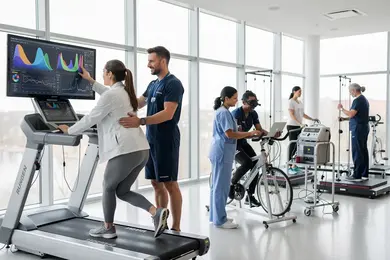
Online exercise science degrees for hybrid performance and rehabilitation careers are critical for practitioners seeking to function in both athletic and clinical environments. These programs combine exercise physiology with rehabilitation principles, demanding graduates demonstrate proficiency in evidence-based therapeutic exercise protocols alongside strength and conditioning methods.
For example, professionals working with cardiac rehab patients must skillfully integrate injury recovery mechanics with tailored cardiovascular exercise adaptations.
The coursework fuses biomechanics, kinesiology, therapeutic modalities, and clinical exercise testing through asynchronous online lectures, supplemented by local internships or clinical affiliations.
While this hybrid model suits working professionals needing flexible access to advanced knowledge, a key challenge lies in securing practicum placements that integrate performance and rehab, requiring proactive coordination and sometimes limiting options based on geographic location.
Employers increasingly value this dual expertise, anticipating a 9% growth in exercise physiologist roles between 2024 and 2034, with a median annual wage near $58,160. Graduates bring valuable adaptability to multidisciplinary teams focused on holistic patient-athlete care, reflecting evolving workforce needs.
Prospective students evaluating performance and rehab-focused exercise science programs online should consider these real-world implications, balancing the rigor of clinical competencies with demands for applied performance strategies.
For insight into program availability and structure, see this online exercise science degree resource from reputable institutions.
How do online exercise science programs compare to campus-based options for hands-on training?
Practical, hands-on training remains a critical differentiator in exercise science education, with campus-based programs offering more consistent access to supervised labs and clinical experiences than online counterparts. For students focusing on specialized skills like physical therapy rehabilitation, in-person instruction under expert faculty is often indispensable.
In contrast, online exercise science programs' hands-on training effectiveness hinges on students independently securing quality local internships or practicums, presenting a logistical challenge and potential variability in training outcomes.
Employers across performance and rehabilitation sectors prioritize verifiable clinical hours reflecting real-world competencies, which online learners must proactively obtain to remain employable. Campus programs typically integrate clinical hours more systematically, reducing the burden on students to coordinate off-site placements amid other responsibilities.
However, online formats provide significant flexibility, making them viable for working adults, provided they navigate off-campus practicum arrangements effectively.
Projected growth rates of 6-14% for exercise-associated occupations through 2032, as detailed by U.S. Bureau of Labor Statistics data in NutritionEd, intensify demand for graduates with real, applied experience. Prospective students evaluating a campus-based vs. online exercise science practical experience comparison should assess program reputation for clinical placement support and their own capacity to manage hands-on requirements independently.
For those considering related fields, exploring an online CS degree illustrates how modality influences practical learning and employment positioning in emerging disciplines.
Which accreditations and program approvals should online exercise science degrees have?
Accreditation is the linchpin for online exercise science program accreditations in the United States, directly shaping graduate employability and licensure eligibility. Programs must hold approval from bodies like the Commission on Accreditation of Allied Health Education Programs (CAAHEP) or the Accrediting Bureau of Health Education Schools (ABHES) to validate curriculum quality and clinical relevance.
Degrees recognized by performance-focused organizations such as the National Strength and Conditioning Association (NSCA) or the American College of Sports Medicine (ACSM) enhance pathways for certifications that employers actively prioritize, especially in hybrid roles combining rehabilitation and athletic performance.
For students targeting clinical roles, programmatic accreditation aligned with healthcare education standards is indispensable. Physical therapy or occupational therapy assistant tracks demand coursework and supervised clinical hours compliant with state laws, a requirement best guaranteed by accredited online programs. Without this, professional certification options narrow sharply, limiting career mobility beyond entry-level positions.
Employers expect candidates from online programs that integrate validated clinical practicum components, frequently partnering with local healthcare facilities for hands-on internships. This bridge between theory and applied skills is critical in rehabilitation settings where patient safety and evidence-based practice are non-negotiable. Cost and flexibility often motivate online study, but the ROI depends heavily on accreditation quality and resultant career opportunities.
According to NutritionEd's 2026 Exercise Science Career Guide, experienced professionals in clinical or specialized exercise science roles earn between $60,000 and $80,000 annually, contrasted with $35,000 to $40,000 in entry-level jobs. This gap underscores how selecting accredited programs influences long-term earnings and career progression.
Prospective students may also consider related fields for broader strategic options; programs like the library science masters offer alternative pathways worth investigating depending on individual career goals.
What exercise science degree pathways support combined performance and rehabilitation careers?
Programs combining athletic performance and rehabilitation must balance multidisciplinary content with applied skill development, yet many theoretical courses fall short in preparing graduates for hybrid roles.
Bachelor's degrees in exercise science with rehabilitation or human performance tracks often require additional certifications such as Certified Strength and Conditioning Specialist (CSCS) or Licensed Athletic Trainer to align with employer expectations.
Clinical internships and residencies are essential for developing competencies in injury assessment and functional movement analysis, especially in settings like collegiate sports or rehabilitation clinics.
Master's degrees presenting dual emphases on sports performance and rehabilitative care expand career flexibility in integrated health systems or specialized centers. Graduates typically engage in designing corrective exercise programs and managing high-intensity training, addressing complex cases such as post-ACL reconstruction or chronic musculoskeletal issues.
Workforce data shows that 13% of sport and exercise science alumni work as sports coaches, instructors, or officials, while 9% enter secondary education, roles that demand combining instructional abilities with injury prevention strategies.
Choosing online exercise science degree programs for performance and rehabilitation careers involves trading off convenience for the need to secure comprehensive clinical experience and multidisciplinary exposure. Programs lacking embedded practical components tend to limit earning potential and professional versatility.
For candidates evaluating hybrid exercise science pathways combining athletic performance and rehab, confirming opportunities for applied learning and relevant certifications is critical. Prospective students may also consider broader affordability metrics, such as those highlighted in the library degree cost analyses, to balance investment with expected outcomes.
What core courses and specializations do online exercise science programs typically include?
Exercise science programs that overlook the practical demands of employer expectations risk leaving graduates underprepared for the field's distinct career tracks in performance enhancement versus rehabilitation. For example, strength and conditioning pathways prioritize skills in applied kinesiology and training program design, aligning with a 19% projected job growth in athletic performance roles from 2021 to 2031, according to Point Loma Nazarene University's 2024 career outlook.
Conversely, rehabilitation-focused curricula intensify training in injury prevention, therapeutic exercise, and clinical assessment, addressing healthcare employer needs in outpatient and clinical environments.
Choosing a hybrid or online format often hinges on how effectively it integrates supervised practicum or internships, which are essential for certification and market credibility. Without these hands-on components, students risk delayed program completion or compromised skill acquisition, complicating entry into client-facing roles like strength coaching or rehab specialist positions.
Employers increasingly demand proficiency in data-driven exercise testing and personalized prescription, making such coursework indispensable.
Prospective students should weigh these nuances carefully, especially when considering the tradeoffs between flexible delivery and the rigors of practicum supervision. Successful pivots into personal training, clinical exercise physiology, or sports psychology depend not just on theoretical knowledge but verifiable applied competence that hybrid formats must explicitly incorporate.

What are typical admission requirements for online exercise science bachelor's and master's programs?
Admission into online exercise science bachelor's and master's programs reflects a balance of academic benchmarks with practical experience that aligns with employer expectations in clinical and athletic environments. Bachelor's applicants typically need a high school diploma or GED, a GPA near 2.5-3.0, and may have to submit SAT or ACT scores or complete prerequisite courses such as biology or anatomy. Transfer credits from prior college work can streamline degree completion, but students should evaluate how institutions handle these to avoid unexpected credit loss.
Master's candidates must hold a relevant bachelor's degree with a competitive GPA above 3.0, submit letters of recommendation, and articulate career goals tied to rehabilitation or performance outcomes. GRE requirements are increasingly optional, but demonstrated experience through certifications like CPR/AED or internships remains a strong factor in admission decisions and subsequent workforce readiness.
For example, a clinical exercise physiologist candidate faces deliberate tradeoffs: upfront costs and program prerequisites delay entry but lead to a median salary of $50,840 and a job outlook growing 13% over a decade, significantly faster than average, according to NutritionEd's 2026 synthesis of BLS data.
Programs' demands for background checks and immunization records add administrative barriers that candidates must plan for early to avoid delays in practicum placements.
How long do online exercise science degrees take and what do they cost?
Completing an online exercise science degree demands weighing time investment against employability outcomes. Most bachelor's degrees require 3 to 4 years and a minimum of 120 credit hours, including remote sciences coursework and local clinical placements. Accelerated or part-time pacing can shorten or lengthen this timeline but may impact income or debt levels.
Costs vary substantially: public in-state programs generally range from $6,000 to $15,000 annually, whereas private institutions often exceed $30,000 per year. Additional costs for labs, proctored exams, and certification attempts should factor into financial planning. Students aiming for roles in rehabilitation or performance must verify program accreditation to ensure eligibility for required licensing exams.
From a workforce perspective, practical experience through internships is essential to compete for jobs, especially in tactical, corporate, or wellness sectors. For example, corporate wellness nutritionists earn a median salary of roughly $66,450, with steady employment growth expected. This linkage demonstrates how exercise science education directly correlates with marketable skills but demands tangible experience beyond academics.
Tradeoffs are critical: full-time students face faster qualification but potentially higher debt, while part-time learners preserve current income but extend training duration. Navigating these factors with a clear-eyed assessment of employer expectations and regional job markets enhances strategic career pivot prospects.
What performance-and-rehab career roles can you pursue with exercise science degrees?
Exercise science degrees open direct pathways into roles that require an integrated understanding of human performance and rehabilitation, often blurring traditional fitness and medical boundaries.
For instance, strength and conditioning coaches operating within collegiate sports not only enhance athlete output but also implement injury prevention and recovery strategies tailored to complex biomechanics. This dual expertise is increasingly demanded across outpatient clinics, professional sports, and integrated healthcare teams.
Certification and specialization significantly affect employability and career mobility. Credentials such as Certified Strength and Conditioning Specialist (CSCS) or Rehabilitation Specialist mark candidates as capable across fitness and clinical environments, thus meeting employer demand for versatile professionals who bridge preventative and restorative care.
Job outlook data forecasts the growth of more than 59,000 new exercise science-related roles by 2029, driven by expanding needs in sports performance, preventive health, and rehabilitation sectors.
This emphasizes that graduates must navigate practical challenges, including clinical internships, licensing, and continuous education required for rehab positions, which contrast with often less regulated fitness-only tracks.
A strategic decision for prospective students involves balancing geographic flexibility and on-the-job readiness. Online exercise science degrees with applied practicum and certification support can mitigate licensing and internship barriers, offering wider access without compromising essential hands-on experience.
What are salary ranges and job outlook for performance-and-rehab exercise science careers?
Salary trajectories in performance and rehab exercise science diverge sharply based on setting and specialization, with entry points around $40,000 and peaks exceeding $85,000. For example, a clinical exercise physiologist in a hospital cardiac rehab unit typically begins near the lower spectrum but can scale into the mid-$70,000s through certifications and experience treating chronic diseases.
Meanwhile, cardiac rehab specialists working in outpatient clinics may command salaries between $60,000 and $80,000 due to ongoing patient management demands. Personal trainers with degrees hover around $40,000 to $50,000; however, those developing private clientele or operating in affluent urban areas can surpass $85,000 by leveraging marketing and sales skills.
Employment growth is robust but uneven. The U.S. Bureau of Labor Statistics forecasts 8%-11% expansion from 2024 to 2034 in health and fitness-related roles, with clinical and rehab positions leading due to population aging and chronic illness prevalence. Yet, personal trainers face stiffer entry competition where certification and proven results heavily influence job prospects and earning capacity.
Strategic credential stacking—combining an accredited online degree with targeted certifications and internships—remains essential to accessing higher salary brackets and more secure roles. Candidates prioritizing stable demand and advancement should consider clinical or cardiac rehab environments.
Conversely, personal trainers must navigate market dynamics tightly, requiring significant investment in marketing aptitude to achieve above-median incomes.
How do certifications and state licensing affect advanced performance and rehabilitation practice?
Licensing and certifications fundamentally shape the practical scope and legal standing of advanced exercise science professionals, with significant impacts on employability and career flexibility. For instance, a graduate holding an online exercise science degree who seeks rehabilitation work must secure state licensure—such as a physical therapist or physician assistant license—to lawfully diagnose and treat patients.
Without this, even advanced certifications like the Certified Strength and Conditioning Specialist (CSCS) limit one's ability to practice in regulated clinical environments.
Employers typically require a blend of credentials: licensure guarantees lawful practice boundaries, while certifications provide specialized skill differentiation in areas like biomechanics or sports nutrition. This combination influences access to specialized roles, especially in higher-stakes settings like collegiate athletics or clinical rehabilitation.
The complexity of state licensing regimes also imposes practical hurdles. Professionals crossing state lines may face licensing delays, complicating workforce mobility and delaying income streams. Prioritizing education pathways integrated with licensure preparation and recognized certifications aligns candidates with workforce expectations, mitigating these transition challenges.
Notably, employment growth projections from Canisius University and Calvin University summaries of BLS forecasts indicate a 14-15% increase in fitness trainer and instructor demand by 2032, yet those without proper licensure risk exclusion from clinical roles that typically offer higher compensation and stability.
Other Things You Should Know About Exercise Science
Many online exercise science programs offer a general curriculum but have limited depth in both performance enhancement and rehabilitation tracks when combined. Students seeking a hybrid focus should prioritize programs with explicit dual-track options or flexible electives allowing substantial coursework and practicum credit in both areas. Without this, graduates may face gaps in practical skills or theoretical knowledge that employers expect for hybrid roles.
Yes. Many programs require 100 to 200 supervised observation or practicum hours, usually completed in approved settings such as clinics, gyms, or sports medicine centers. These hours must be documented and signed by a qualified supervisor before graduation or practicum credit is awarded.
In 2027, ensure the online exercise science degree program is accredited by recognized bodies such as the Commission on Accreditation of Allied Health Education Programs (CAAHEP). This accreditation ensures the curriculum meets industry standards, enhancing career readiness in both performance enhancement and rehabilitation fields.
Yes. Programs with built-in internships or practicums aligned with both performance and rehabilitation sectors provide critical real-world exposure, which employers value over purely academic credentials. Prioritize programs that offer supervised field experiences in diverse settings, as they improve job placement rates and practical readiness. Without these, graduates risk entering the workforce with limited applicable skills.
References
- ESSA's career guide for Accredited Exercise Physiologists https://www.essa.org.au/Web/Web/Resources/Tools-and-templates/ESSA-AEP-Guide.aspx
- Online Exercise Science Degrees: Top School Review https://www.edumed.org/online-schools/exercise-science-degrees/
- Your Guide to PT Certifications and Specialties • OT Potential https://otpotential.com/blog/pt-certifications-and-specialties
- Online Exercise Science Program https://stmary.edu/online-programs/exercise-science.html
- The "Alphabet Soup" of Physical Therapy Certifications https://www.coremedicalgroup.com/blog/the-alphabet-soup-of-physical-therapy-certifications
- Exercise science program accredited by national organization | Lipscomb University https://lipscomb.edu/news/exercise-science-program-accredited-national-organization
- What is Certification? https://www.psychrehabassociation.org/certification/certification-and-licensure
- Exercise Science Degree Programs Lead to Rewarding Careers in Health and Fitness https://www.carrollcc.edu/articles/exercise-science-degree-programs-lead-to-rewarding-careers-in-health-and-fitness/
- Master Physical Therapy Continuing Education Requirements in 2026 https://www.highbarhealth.com/physical-therapy-continuing-education-requirements/
- What Can You Do with an Exercise Science Degree? https://www.cune.edu/news/what-can-you-do-exercise-science-degree