2027 Best Online Exercise Science Programs for Professionals Seeking Human Performance Careers

Co-Founder and Chief Data Scientist
Professionals aiming to enter human performance careers face a critical challenge: balancing rigorous academic requirements with ongoing employment and personal obligations.
The 12% annual growth in enrollment for online health science programs, reported by the National Center for Education Statistics in 2024, reflects a shift toward flexible learning but also highlights a market saturated with varying program quality. Selecting a program that offers not just accessibility but reputable outcomes, employer recognition, and relevant practical training becomes paramount.
This article evaluates top online exercise science programs tailored for career-driven individuals, focusing on how each supports timely completion, skill acquisition, and advancement opportunities in human performance fields.
Key Things You Should Know
- Only 35% of online exercise science graduates secure roles in human performance within two years, per 2024 Labor Dept. data, forcing candidates to weigh rapid entry against potential career delays from purely virtual credentials.
- Employers prioritize accredited programs with integrated internships; 72% favor candidates demonstrating applied experience, raising barriers for online-only learning lacking practical components.
- Average cost variation among top programs spans 40%, with unavoidable timing tradeoffs-longer part-time tracks limit immediate workforce reentry, demanding strategic balancing of tuition debt and income interruption.
What are the best online exercise science degree options for human performance careers?
Choosing the best online exercise science degree programs for human performance careers requires balancing curriculum rigor, practical exposure, and alignment with employer demands. Employment for exercise physiologists is projected to increase 9% from 2024 to 2034, highlighting the importance of programs that integrate biomechanics, kinesiology, and health promotion with hands-on experience.
Professionals targeting these roles should select programs offering synchronous labs or partnerships with local facilities rather than fully asynchronous formats, since practical skill development is critical for clinical assessments or performance testing.
For example, a working professional pursuing strength and conditioning coaching benefits from curricula that prepare students for certifications recognized by bodies like the NSCA or ACSM. These certifications carry weight alongside degrees in sports or rehabilitation sectors. An additional consideration involves credit transfer policies and prerequisites, which impact time-to-degree and educational costs.
Graduates from top accredited online exercise science options for human performance professionals also gain from strong career services tailored to job placement and employer networking, which directly affect hiring success in a competitive labor market driven by preventive health trends. Tradeoffs exist between flexibility and practical competency when evaluating fully asynchronous versus hybrid formats with on-site components.
Those researching pathways can refer to online bachelor's in kinesiology programs for a comparative perspective on curriculum design and career outcomes.
How do online exercise science programs compare to campus-based programs in quality and outcomes?
Online exercise science program quality comparison reveals a significant divergence in practical training despite equivalence in academic rigor. While campus-based programs integrate supervised labs and clinical internships as standard, online formats require students to independently arrange local hands-on experiences.
For career fields in human performance, this gap necessitates proactive fieldwork planning; employers emphasize verified physical skill demonstrations and real-time mentorship as decisive criteria beyond mere academic credentials.
Graduates pursuing campus-based vs online exercise science outcomes show comparable median earnings, about $52,790, with top performers exceeding $90,000, reflecting the labor market's openness to online degrees.
However, this parity depends heavily on candidates supplementing virtual instruction with credible offline practicum to meet industry expectations.
To navigate these realities, students should:
- Verify accreditation and explicit internship or lab hour requirements within their program.
- Forge partnerships with local sports organizations, clinics, or gyms to complete necessary hands-on training.
- Consider programs offering hybrid models or virtual labs as partial substitutes for physical experience.
- Leverage career services focused on placement and certification aligned with regional employer demands.
For those comparing pathways, balancing online flexibility against the practical demands shapes long-term career viability in exercise science. Additional program insights are available through the best online nutrition degree resource, reflecting overlapping considerations in health-related fields.
What accreditation should online exercise science programs have for credible human performance careers?
Accreditation from the Commission on Accreditation of Allied Health Education Programs (CAAHEP) directly determines eligibility for professional certifications such as the Certified Clinical Exercise Physiologist (ACSM-CEP) or Certified Exercise Physiologist (ACSM-EP).
Without this credential, candidates face significant barriers to entering specialized fields like cardiac rehabilitation, which limits access to more advanced, higher-paying roles. For working professionals, enrolling in an online exercise science program without both CAAHEP and recognized regional accreditation can mean spending additional time and money to repeat coursework or qualify for certification exams.
The distinction between accredited and non-accredited degrees affects career trajectory and labor market positioning. The U.S. Bureau of Labor Statistics data referenced by the University of Florida confirms that exercise physiologists reaching the top 10% in earnings make over $79,830 annually. This reinforces that program quality and accreditation correlate with employer recognition and salary outcomes.
Regional institutional accreditation also matters for credit transfer, graduate study options, and access to federal financial aid, factors critical for professionals balancing education with ongoing employment.
When evaluating options, prospective students should prioritize best accredited exercise science degrees for professionals that offer both CAAHEP and regional accreditation. For detailed considerations involving degree choices in related fields, explore is library science a good degree as a parallel example of accreditation's impact on employability.
What degrees and educational pathways prepare students for advanced human performance roles?
Advanced human performance educational pathways in exercise science hinge on demonstrated competence beyond foundational theory, especially when targeting specialized roles in sports performance or rehabilitation. For instance, strength and conditioning coaches working with professional athletes require not only a bachelor's degree but hands-on lab experience embedded in accredited curricula, an essential prerequisite for certification and employer trust.
A bachelor's degree typically meets entry-level job requirements, while master's degrees focusing on human performance or kinesiology enable progression into leadership, research, or clinical consulting roles. Postgraduate credentials are increasingly relevant for niche specialties like exercise physiology research or applied biomechanics, where evidence-based program development is critical.
Working professionals often turn to online exercise science degrees for human performance careers due to notable cost and scheduling flexibility advantages. Data from OnlineU's 2026 reports indicate accredited online bachelor's programs average around $9,000 annually, compared to over $13,000 for on-campus equivalents.
However, candidates must scrutinize program accreditation and quality of practical experience, as online formats vary widely in offering synchronous lab work or internships necessary for workforce readiness.
Audit programs for these essentials to bridge academics and practice:
- Accreditation by recognized bodies ensuring curriculum relevance
- Inclusion of internships or practicum components for real-world experience
- Coursework covering exercise testing, program design, nutrition, and performance technology
- Faculty expertise connected to current human performance research
- Flexibility that accommodates work schedules without compromising rigor
Tradeoffs between fully on-campus and online routes involve geographic restrictions versus independent effort to gain external practical exposure, both significant factors in career transitions or advancement.
For additional insight on affordability comparisons in relevant STEM fields, consider this affordable data science degree resource.
What courses and specializations do online exercise science programs typically include?
Graduates targeting roles in exercise science must confront distinct tradeoffs between broad versus specialized curricula, which directly affect employability and earning potential.
Programs focusing on strength & conditioning equip students with advanced athlete training techniques relevant to sports organizations, while clinical specializations emphasize disease management and therapeutic exercise crucial for healthcare environments. This differentiation impacts job eligibility and professional certification requirements.
Online programs increasingly blend theoretical coursework with interactive elements like remote labs and virtual practicums to meet employer expectations for evidence-based, practical skills. Nonetheless, students should anticipate additional in-person internships or certifications, such as the Certified Strength and Conditioning Specialist (CSCS), to satisfy licensure criteria, since online training alone rarely suffices.
From a workforce perspective, Concordia University Chicago data reveals a 15-20% salary uplift within two years for graduates of its strength & conditioning master's program, illustrating the financial advantage of performance-driven specializations over more generalist tracks.
Key considerations for prospective students include:
- Mapping program offerings against desired certification pathways and employers' competencies demands
- Evaluating logistical feasibility of required practical components when balancing work or remote study
- Weighing specialization benefits relative to longer-term career trajectory and labor market signals
These factors underscore the importance of aligning academic choices with concrete professional outcomes rather than relying on broad theoretical training alone.
What admission requirements and prerequisites do online exercise science programs expect?
Online exercise science programs demand a baseline of academic preparation that significantly shapes student trajectory and employability. Most require at least a high school diploma, but accelerated and graduate tracks commonly mandate a related bachelor's degree. Core prerequisite coursework in biology, anatomy, and physiology is non-negotiable, and insufficient scientific grounding often leads to remedial work that increases both time and financial investment.
Consider a mid-career physical therapist pivoting to exercise science. Their existing science background typically minimizes additional prerequisite coursework, expediting program progress. Conversely, students without prior science exposure face a steeper preparatory burden, which can disrupt workflow and heighten opportunity costs.
Applicants with healthcare or fitness certifications may receive course exemptions, though programs prioritize verifiable academic readiness over professional experience alone. This bifurcation forces a clear strategic choice between fulfilling stringent prerequisites upfront or committing to extended preparatory phases.
Program reputation and accreditation, especially regional accreditation and CAAHEP recognition, directly influence admissions competitiveness and employer perception, affecting long-term employability in sectors like sports medicine and rehabilitation. Flexible scheduling accommodates the majority of online students who juggle full-time employment, but candidates must still prepare for academic rigor and workforce demands.
How long do online exercise science degrees take, and what do they cost?
Time-to-degree and cost efficiency remain decisive factors for professionals pursuing an online master's in exercise science. A typical pathway involves completing about 30 credit hours over two to three years, with full-time enrollment accelerating potential salary gains but increasing short-term financial strain.
For example, pursuing a Master of Science in Applied Physiology and Kinesiology part-time can extend completion beyond three years, delaying workplace advancement and ROI.
Tuition at notable programs such as the University of Florida totals approximately $17,572.50 for 30 credits, inclusive of fees, allowing for transparent budgeting. However, students must also consider indirect costs, lost wages and living expenses, especially when opting for full-time study. While financial aid offsets some expense, net affordability varies.
Graduates with applied human performance focus typically recoup educational investment in under three years, which contrasts sharply with other graduate fields requiring longer payback periods. Nonetheless, alignment with employer-recognized credentials and practical skill development varies by industry segment, clinical, corporate wellness, or athletic training, which influences hiring and promotion outcomes.
Prospective students should carefully consider these actionable steps:
- Choose programs explicitly tied to target careers emphasizing applied kinesiology or physiology.
- Prioritize full-time enrollment if workplace flexibility and finances permit, to hasten income potential.
- Incorporate total cost of attendance, including opportunity costs, into decision-making.
- Verify credential acceptance among prospective employers to ensure practical value.
What careers can graduates of online exercise science programs pursue in human performance?
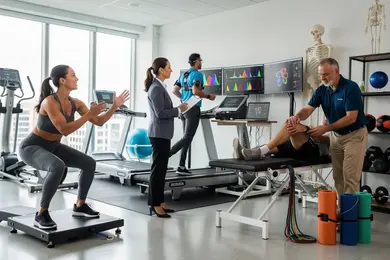
The effectiveness of online exercise science programs hinges on their integration of real-time performance technologies and simulation tools. Employers in clinical, athletic, corporate, and military sectors prioritize candidates who demonstrate proficiency with wearable devices and remote lab simulations, as these skills directly inform data-driven decision-making in practice.
For instance, strength and conditioning specialists working with collegiate or professional athletes depend heavily on performance data collected through wearable tech to customize training protocols. This reliance shapes workforce expectations. Over 80% of students in the University of Wisconsin Online's Human Performance program engage with such tech, indicating strong alignment with industry standards.
Clinical exercise physiologists apply personalized exercise prescriptions within the constraints of medical monitoring, requiring rigorous command of patient data and physiological metrics. Similarly, corporate wellness roles demand the ability to analyze ergonomics and behavioral data to prevent injuries and boost productivity, a focus often underemphasized outside tech-integrated programs.
Military performance positions combine operational demands with environmental and injury risk factors, making simulated training essential. Graduates lacking exposure to these applied technologies face significant challenges competing for elite roles where precision and outcome tracking are non-negotiable.
Prospective students should evaluate programs based on how comprehensively they embed hands-on digital fluency and data interpretation. This practical dimension impacts employability more than general theoretical knowledge.
What salary ranges and earning potential exist in exercise science and human performance fields?
Starting salaries in exercise science and human performance tend to range from $40,000 to $55,000 for entry-level roles such as exercise physiologists or fitness specialists. Mid-career professionals who specialize in clinical or sports performance usually earn between $60,000 and $80,000.
Advanced certifications or graduate-level qualifications can push earnings beyond $90,000, especially in private consulting or specialized rehabilitation capacities. For example, an exercise scientist moving into corporate wellness management might start near $50,000 but can surpass $85,000 after acquiring credentials and leadership experience.
Certification matters significantly. Employers highly value ACSM or NSCA credentials, and lacking them can reduce salary offers by about 15-20%. Geographic differences also influence earnings, with urban and coastal areas paying up to 25% more than rural regions, though higher local living costs often offset these gains.
Practical experience and continuous education are crucial to maintain upward salary mobility. Entry-level success can hinge on job placement rates. Eastern Oregon University's 95% placement or graduate acceptance rate within six months highlights how program quality directly affects workforce entry.
Conversely, careers in academic research or non-profits tend to offer lower compensation, requiring individuals to weigh income trade-offs against personal and professional goals.
What certifications and licensing are needed for exercise science and human performance professionals?
Certification through recognized bodies such as the ACSM or NSCA remains a baseline requirement for exercise science and human performance professionals, but market demands increasingly favor candidates who integrate technical skills with foundational knowledge.
For example, strength coaches lacking proficiency in data analytics derived from wearable technology risk professional stagnation compared to peers certified in sensor-based performance monitoring. This shift signals an essential tradeoff between traditional credentials and technology-driven competencies.
Licensing requirements impose further practical distinctions. Personal trainer certifications do not require state licensure but must be backed by accredited agencies for credibility, whereas exercise physiologists in clinical or medical settings often face mandatory state licensing governed by healthcare boards. Pursuing credentials like certified strength and conditioning specialist (CSCS) or certified exercise physiologist (CEP) remains relevant for alignment with employer expectations, particularly in sports performance and rehab contexts.
Professionals aiming for roles in human performance research or laboratory environments should supplement exercise science qualifications with data analytics and biomechanical software expertise to maintain competitiveness. Employers are increasingly valuing a hybrid skill set combining exercise science principles with AI-driven diagnostics, a combination that materially influences advancement and salary potential.
Prioritizing certifications that validate this dual competency addresses evolving workforce demands more effectively than traditional pathways, especially for those targeting influence and growth in collegiate, clinical, or applied research settings.
Other Things You Should Know About Exercise Science
Yes, practical experience is essential in exercise science despite the online format. Most quality programs require supervised internships, lab sessions, or clinical practicums to develop critical skills employers expect, such as client assessment and exercise prescription. When choosing a program, prioritize those with structured fieldwork components integrated into the curriculum to ensure your learning translates to real-world human performance settings.
Balancing work and an online exercise science program demands disciplined time management due to the program's combination of theoretical coursework and applied projects. Programs offering asynchronous content with flexible deadlines tend to support working students better than those with rigid schedules. If career advancement is your goal, select a program that allows gradual course loads per term and includes practical experiences scheduled to accommodate employed students.
An online degree is necessary but insufficient by itself for securing employment in competitive human performance fields. Employers expect candidates to demonstrate practical certifications, internships, and sometimes graduate education in addition to a degree. To improve placement rates, focus on programs featuring strong industry connections and career services that facilitate networking and practical credentialing beyond academics.
Many online exercise science programs do not require the GRE. When they do, schools usually set minimum scores in advance and may waive the exam for applicants with a 3.0 GPA, prior graduate coursework, or relevant professional experience. Check each program’s admissions page for exact thresholds.
References
- Become a Certified Performance & Sport Scientist | NSCA https://www.nsca.com/certification/cpss/
- Exercise Science and Human Performance https://mcm.edu/major/exercise-science-and-human-performance/
- Online Degree vs. Traditional: Choosing the Right Path https://beal.edu/online-degree-vs-traditional/
- A Comparison of Physical Activity Levels between On-Line and Campus University Students https://clinmedjournals.org/articles/ijsem/international-journal-of-sports-and-exercise-medicine-ijsem-5-141.php
- Online Exercise Science Degrees: Top School Review https://www.edumed.org/online-schools/exercise-science-degrees/
- Human Performance Bachelor's Degree https://northern.edu/degrees/human-performance-and-fitness-bachelors-degree
- Exercise Science Degree Careers, Jobs and Salaries - Peak Physical Therapy and Sports Performance https://peaktherapy.com/blog/exercise-science-degree-careers-jobs-and-salaries/
- Online Exercise Science Program https://stmary.edu/online-programs/exercise-science.html