2027 First Exercise Science Roles for Service-Oriented Health Professionals

Co-Founder and Chief Data Scientist
Facing a fragmented job market where hands-on experience and timely credentials dictate entry into expanding health sectors, prospective exercise science professionals must navigate critical choices around flexible program delivery and accelerated paths.
With the National Center for Education Statistics reporting a 20% increase in adult enrollment in online health-related degree programs since 2023, the shift toward accessible, career-compatible education directly influences when and how learners enter service-oriented roles.
This trend reflects broader workforce demands for adaptable credentials that align with employer expectations in rehabilitation, wellness, and clinical support settings. This article examines current first exercise science roles and guides candidates through selecting educational options that optimize career timing, practical skill acquisition, and employability outcomes.
Key Things You Should Know
- Entry-level exercise science roles require a minimum of a bachelor's, but 42% of employers prioritize certifications combined with internships, forcing candidates to weigh extended unpaid training against faster job entry, per 2024 NCCER labor data.
- Healthcare employers increasingly integrate exercise science professionals in multidisciplinary teams, with 35% reporting preference for candidates versed in patient data analytics, underscoring a shift toward tech fluency as an employment barrier.
- The median educational investment of 3.8 years and $45,000 tuition-equivalent often delays earnings growth by two years, challenging candidates balancing upskilling speed with workforce demand timing in 2026 projections.
What entry-level exercise science roles fit service-oriented health professionals starting their careers?
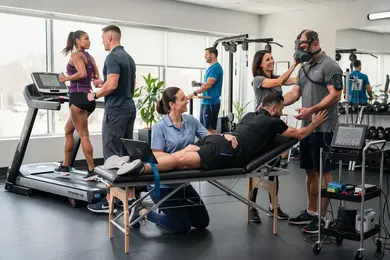
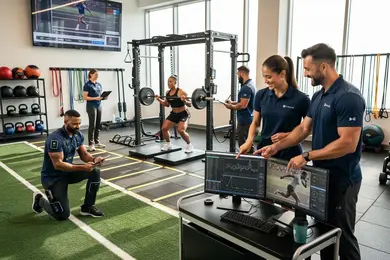
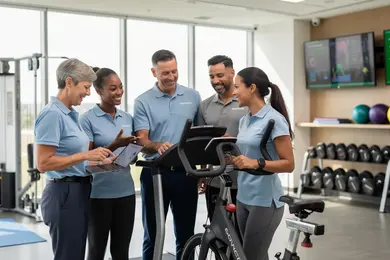
Entry-level exercise science careers for service-oriented health professionals reveal critical tradeoffs between hands-on patient care and credentialing demands. Positions such as exercise physiologist assistants, rehabilitation aides, and health coaching support staff require direct client engagement but differ in technical scope and certification needs.
For instance, exercise physiologist assistants often implement prescribed rehabilitation programs in clinical settings, working closely with patients managing chronic illnesses like diabetes or cardiovascular disease. This role demands both technical competence and empathetic communication, meeting employer expectations for dual skill sets.
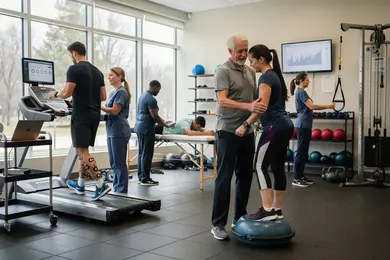
Rehabilitation aides provide practical support in hospitals or skilled nursing facilities, assisting physical therapists and ensuring safe patient handling. Certifications may be mandatory, presenting an upfront investment versus immediate workforce entry.
Health coaching roles, typically based in community wellness or corporate programs, emphasize lifestyle education and behavioral strategies without full clinical oversight, making them suitable for those prioritizing communication over medical credentials.
According to projections cited by Marshall University and the U.S. Bureau of Labor Statistics, employment for exercise physiologists is expected to grow by about 10% from 2023 to 2033, with roughly 1,600 openings annually.
This steady demand affirms the value of credential pathways like ACSM certification but also accentuates the need to weigh certification costs against entry-level wages and work schedules. Prospective candidates should evaluate these factors carefully when exploring the best beginner exercise science jobs focused on patient care.
For those seeking flexible learning to balance these career decisions, an exercise science degree online can provide adaptable academic options while maintaining exposure to essential clinical competencies.
How does exercise science training prepare you for patient-centered health and wellness work?
Exercise science training for patient-centered care demands more than theoretical knowledge; it requires graduates to translate assessments into tailored interventions within complex, resource-limited systems. In practical settings like rehabilitation clinics or corporate wellness programs, professionals must skillfully interpret biomedical data and chronic disease pathology to deliver adaptive, measurable wellness outcomes.
For example, a graduate working alongside physical therapists must dynamically adjust exercise prescriptions based on patient progress and compliance, reflecting the skills gained from exercise science for health and wellness professionals.
Employers increasingly expect evidence-based behavior change methodologies coupled with hands-on experience in patient education and motivational interviewing. Without this applied focus, graduates risk underperformance in roles where direct consumer engagement and interprofessional communication drive success.
Therefore, exercise science curricula emphasizing internships and targeted certifications enhance workplace readiness and align with industry credentialing demands.
Students face a critical tradeoff between broad foundational knowledge and specialization aimed at service roles such as wellness coaching or clinical support. Prioritizing programs offering applied components improves employability but may narrow career flexibility.
Those considering related fields might also evaluate a sports management online degree for alternative or complementary pathways within health and wellness infrastructure.
What degree or certificate in exercise science is best for service-focused health careers?
Employers in physical therapy clinics, cardiac rehabilitation centers, and community health programs prioritize candidates holding a bachelor's degree emphasizing clinical and practical expertise. This approach is essential because technician roles often filled by those with associate degrees or certificates generally lack the autonomy and decision-making expected of frontline clinicians.
Graduates combining core exercise science knowledge and applicable skills, such as patient assessment and exercise prescription tailored for special populations, meet employer demands for effective interdisciplinary collaboration.
Graduate certificates in specialized areas can supplement credentials but rarely substitute for the comprehensive foundation a bachelor's degree provides. For instance, a cardiac rehab coordinator role typically requires a bachelor's degree alongside national certification, illustrating employer insistence on deep clinical understanding and intervention proficiency focused on chronic disease prevention.
The labor market reflects these standards: the median wage for exercise physiologists is $58,160, with the top 10% earning approximately $77,680, according to Sacred Heart University data.
Candidates targeting rapid entry with limited education should anticipate constrained responsibilities and suppressed earning potential. Achieving recognized certifications like ACSM or NSCA is a critical factor influencing employability in service-oriented health careers.
Prospective students must also consider accredited program recognition aligned with top exercise science certifications for healthcare professionals, especially when planning a strategic career pivot. For those weighing further specialization options, pursuing an online data science doctorate can offer complementary skills applicable to emerging health analytics roles.
Which exercise science jobs offer the most direct client interaction and support?
Clinical exercise physiologists represent the most specialized exercise science roles with direct client support in medical settings, frequently managing patients recovering from cardiovascular events or chronic diseases.
Unlike fitness instructors or exercise technologists, these professionals require a deep understanding of clinical protocols, continuous patient monitoring, and adjustments based on real-time health data.
For example, in cardiac rehabilitation, physiologists must integrate patient vital signs and educational strategies within a highly regulated environment, reflecting employer demands for Band 6 competency levels, while assistants and trainees start at Bands 4 and 5.
Strength and conditioning coaches maintain direct client interaction but emphasize athletic performance, distinguishing their roles sharply from clinical counterparts focused on therapy and recovery.
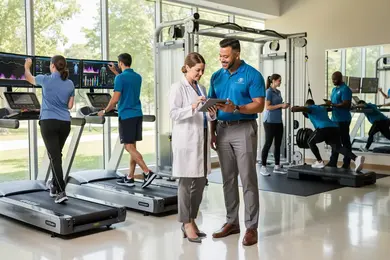
Service-oriented exercise science jobs involving client interaction in healthcare often require multidisciplinary collaboration and mastery of medical documentation, skills typically developed through assistant or trainee positions, which also offer incremental salary growth.
Choosing educational programs that include practicum components in clinical settings is critical, as hands-on patient interaction shapes practical decision-making essential for these roles. Prospective students should weigh employer expectations for certifications and clinical experience alongside personal career goals.
For individuals exploring a broader academic foundation before specializing, pursuing a MLIS degree or related credentials can complement exercise science skills in interdisciplinary environments.
How do online exercise science programs compare to campus options for new professionals?
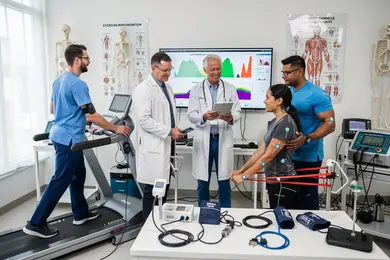
Practical training remains the defining factor separating online and campus exercise science programs. While online options offer unmatched flexibility vital for working professionals or caregivers, they lack integrated clinical internships and direct access to specialized lab equipment critical for skill mastery in biomechanics and rehabilitation sciences.
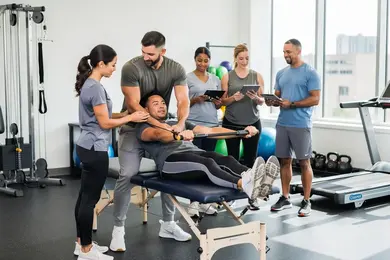
Employers, especially in healthcare and fitness sectors, prefer candidates with documented hands-on experience, which campus curricula systematically provide through embedded practicum opportunities.
For those targeting clinical rehabilitation or strength and conditioning careers, bypassing campus programs risks delayed competency development and lower initial employability.
In contrast, professionals aiming for corporate wellness or remote coaching roles might find theory-rich online programs sufficient, reducing relocation and commuting burdens. However, job placement remains 10-15% higher for campus graduates in clinical or institutional settings, per Department of Education data.
The average salary for a fitness consultant is $45,183 per year, reinforcing the market's demand for credentialed, practical experience. Online graduates should pursue local internships or additional certifications to mitigate hands-on training gaps and meet employer expectations.
Key considerations include:
- Campus programs integrate practicum experiences that expedite employer readiness.
- Online students must engage externally with clinical environments to achieve comparable competencies.
- Career outcomes vary significantly based on specialization within exercise science and practical training access.
What accreditation and professional standards should exercise science programs meet?
Accreditation in exercise science programs directly impacts employability and professional mobility by enforcing competency-based curricula aligned with industry demands such as applied anatomy and biomechanics.
Employers prioritize graduates who have completed programs accredited by bodies like the Commission on Accreditation of Allied Health Education Programs (CAAHEP) and the Commission on Accreditation for Rehabilitation Facilities (CARF), as these ensure practical readiness for roles ranging from clinical rehabilitation to community health.
For instance, a prospective strength and conditioning coach targeting collegiate positions must graduate from a program recognized by the National Strength and Conditioning Association (NSCA) to enhance certification eligibility and job competitiveness. Positions in this field are projected to grow roughly 20% through 2028, intensifying the need for validated credentials in a competitive job market.
Key program components employers expect include documented practicum hours and standardized competency assessments that foster direct experience in client management rather than solely theoretical knowledge. Students lacking these practical experiences often face difficulty meeting immediate job expectations.
Tradeoffs in choosing accredited programs include longer time commitments to fulfill clinical hours and potentially higher tuition costs but yield benefits such as higher entry-level salaries and reduced unemployment rates. Without meeting accreditation standards, graduates risk limited access to advanced certifications and professional networks crucial for sustained career progression.
What core courses in exercise science build skills for service-oriented health roles?
Core coursework in exercise science prioritizes anatomy, physiology, and biomechanics to equip students with foundational knowledge necessary for clinical and community health roles. However, graduates' employability hinges on practical skills-especially the ability to design exercise programs informed by kinesiology and therapeutic exercise principles. This is key in settings where tailored interventions support rehabilitation or chronic disease management.
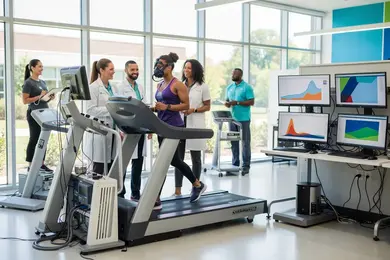
Training in metabolic and cardiovascular response interpretation through applied exercise physiology and VO2 max testing aligns closely with employer expectations in healthcare and sports performance. Yet, a tradeoff exists: programs heavy on theory but light on hands-on testing and prescription risk limiting job prospects.
Motor learning and neurophysiology courses enhance communication and motivational abilities, skills essential for engaging diverse populations effectively. For example, exercise professionals aiding older adults in recovery or athletes striving for performance gains rely on these competencies to translate science into actionable coaching.
Supplementing this, coursework in public health and nutrition fosters a holistic understanding of lifestyle impacts on client outcomes. Employers increasingly value graduates who integrate these diverse perspectives.
Data from Sacred Heart University show sport performance analysts average $75,000 annually, with top earners exceeding $118,000, reflecting the premium on specialized knowledge and data interpretation in the field.
What certifications help exercise science graduates work in clinical and community settings?
For graduates aiming to enter clinical environments, holding the Certified Exercise Physiologist (CEP) credential from the American College of Sports Medicine (ACSM) is often non-negotiable due to its focus on medical exercise prescription and clinical risk management.
Hospitals and outpatient clinics routinely require CEP certification, as alternatives limit access to medically supervised roles. For example, a graduate without CEP may struggle to secure a cardiac rehabilitation position despite relevant academic preparation.
In community health contexts-such as wellness programs or fitness centers-the Certified Personal Trainer (CPT) credential from ACSM or the National Strength and Conditioning Association (NSCA) provides baseline credibility but rarely suffices for clinical work. Combining CPT with specialty certifications, like the National Academy of Sports Medicine's Corrective Exercise Specialist (CES) or ACSM's Certified Clinical Exercise Physiologist, enhances employability and role flexibility.
Licensure as a clinical exercise physiologist, mandated in certain states, demands advanced degrees and clinical hours but corresponds with higher salary thresholds-Sacred Heart University data notes an average annual pay near $113,000 for clinically certified sports researchers. For practitioners targeting elder care or rehab settings, certifications such as Certified Rehabilitation Specialist (CRS) align closely with employer expectations in outpatient clinics and community centers.
Beyond credentials, employers prioritize continuing education units (CEUs) and demonstrable clinical experience. Certificate programs lacking integrated internships or hands-on patient exposure often leave graduates underprepared for regulatory and practical responsibilities.
Strategic certification planning should emphasize supervised clinical hours alongside technical skills to avoid stagnant career progression and credential redundancy in diverse employment landscapes.
What are typical starting salaries and long-term earning potential in exercise science careers?
Starting salaries in exercise science roles typically fall between $38,000 and $50,000 annually, with entry-level positions like fitness trainers and junior sports coaches usually near the lower range.
However, surpassing modest beginnings requires more than basic credentials; employers favor professionals who demonstrate quantifiable client outcomes and adaptability across diverse environments. Without targeted certifications such as ACSM or NASM, advancement often stalls, trapping individuals in lower-wage gym or community roles.
Practical growth opportunities stem from strategic credentialing and skill acquisition, especially for those aiming to pivot toward management, clinical exercise physiology, or performance analytics.
Clinical exercise physiologists-requiring at least a bachelor's degree plus certification-often enjoy more stable, higher incomes than trainers but must navigate the extended educational and licensing pathway. Conversely, lucrative contracts in professional or collegiate sports hinge on networking and demonstrated competitive success instead of formal education alone.
The exercise science sector's expansion, evidenced by Australian labor data showing 5,200 annual job growth among 66,400 professionals, signals rising demand paired with intense competition. For prospective U.S. professionals, this means proactive experience-building via internships and specialized certifications is essential to move beyond $40,000 starting points.
What is the current job outlook for exercise science and allied health support roles?
The exercise science labor market is marked by a significant prevalence of part-time roles, particularly in fitness instruction where 68% of approximately 35,900 Australian workers are part-time.
This structural characteristic translates into income variability and constrained career mobility for many professionals in allied health support positions. In the U.S., this means candidates must weigh educational investments against the likelihood of initially engaging in casual or contract work rather than stable, full-time employment.
Key practical considerations include prioritizing credentials that qualify candidates for diverse roles, such as clinical rehabilitation assistance or corporate wellness, beyond generic fitness instruction.
Employers often seek Applied Clinical Experience or the ability to navigate hybrid service delivery models, combining virtual and in-person interaction, especially in outpatient rehabilitation contexts. These roles demand multitasking skills, adherence to legal scopes of practice, and fluency in patient education and data management.
Professionals must also prepare for labor market realities shaped by fluctuating employer budgets and irregular patient volumes. Strategies such as cross-disciplinary networking, flexible service offerings, and strategic upskilling are essential. Those seeking stability should focus on certifications and training that enable transitions into multidisciplinary teams or higher-skill wellness sectors.
Other Things You Should Know About Exercise Science
In 2027, employers in the exercise science sector increasingly value continuous learning. After hiring, they often anticipate staff pursuing certifications like ACSM or NSCA to enhance skills and stay updated. This trend underscores the importance of further education beyond initial qualifications.
Employers in service-oriented exercise science roles prioritize hands-on experience more than academic credentials alone. Internships, clinical hours, and direct client contact during training substantially impact hiring decisions and readiness to perform. Early career candidates should weigh programs offering substantial practicum components over purely theoretical curricula, as practical skills predict better performance and faster progression.
Entry-level roles often demand variable hours, including early mornings, evenings, or weekends to accommodate client schedules and facility operations. Workload can be heavy, balancing one-on-one sessions, documentation, and program development, requiring strong time management. Prospective professionals should assess if their personal availability and stamina align with these practical demands, as burnout risk is high without clear boundaries.
New graduates should know the American College of Sports Medicine, the National Strength and Conditioning Association, and the National Academy of Sports Medicine. These bodies offer common certifications and continuing education used by employers in clinical, wellness, and community health exercise settings.
References
- Best Exercise Science Careers - Let's Find out! https://www.ptpioneer.com/personal-training/exercise-science-careers/
- Top 20 Careers With a Master’s in Exercise Science | PLNU https://www.pointloma.edu/resources/health-sciences/top-20-careers-masters-exercise-science
- Exercise science program accredited by national organization | Lipscomb University https://lipscomb.edu/news/exercise-science-program-accredited-national-organization
- Building Trust in Qualified Exercise Professionals: The Power of Alignment, Professional Competencies and Academic Accreditation https://acsm.org/building-trust-certified-pros/
- Exercise science: What exactly is it? https://www.scienceforsport.com/exercise-science/
- Exercise Science Standards and Course Development https://essa.secure-platform.com/course-accreditation/
- International Clinical Exercise Physiology Qualification Application Pathways https://icsesp.global/resources/international-clinical-exercise-physiology-recognition-opportunities/
- Exploring Careers in Health and Exercise Sciences: From Personal Training to Public Health - UNCF https://uncf.org/the-latest/improve-human-health-by-studying-public-health-and-nutrition
- Allied Health Professionals Careers https://explorehealthcareers.org/careers/allied-health-professions/
- Exercise Sciences https://www.caahep.org/committees-on-accreditation/exercise-science