2027 Online Exercise Science Degrees for Personal Training Roles

Co-Founder and Chief Data Scientist
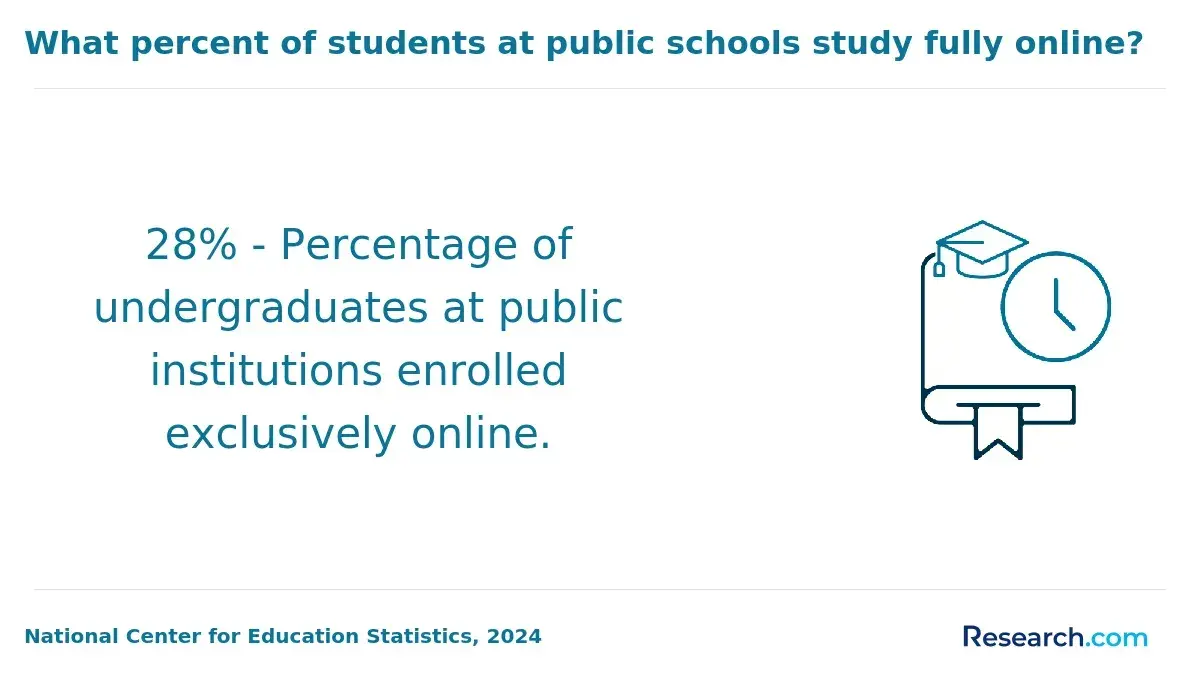
Balancing client schedules with ongoing certification requirements leaves many aspiring personal trainers scrambling for accessible education options that fit unpredictable timetables. Nationwide, 68% of higher education enrollees now choose online programs, a trend the National Center for Education Statistics links to increased access for working adults seeking career shifts.
This shift matters because flexibility influences not only program completion rates but also timely entry into a saturated personal training job market, where practical skills and credentials must align quickly with evolving employer standards. This article evaluates current online exercise science degree offerings tailored for personal training, guiding readers through critical factors that affect career readiness and mobility in this competitive field.
Key Things You Should Know
- Online exercise science degrees reduce geographic barriers but often extend time-to-completion by 20-35% due to limited hands-on practica access, pressuring candidates balancing workforce entry versus in-depth skill mastery.
- Employers increasingly demand verified practical competencies alongside online credentials; 58% of fitness centers report preferring candidates with hybrid or in-person clinical experience over 100% virtual education per 2024 ACSM workforce survey.
- Average program costs vary 40-60% less than on-campus degrees, yet uneven accreditation standards create credential recognition risks, complicating licensure preparation and post-graduate employer acceptance across states.
What is an online exercise science degree and how does it prepare personal trainers?
Online exercise science degree programs for personal trainer certification deliver essential theoretical knowledge in anatomy, physiology, biomechanics, and nutrition, but their remote structure limits practical skill acquisition. Employers favor graduates with applied competencies, meaning programs that incorporate accredited clinical practicums or internships align better with workforce demands.
For instance, candidates targeting rehabilitation roles require hands-on experience prescribing post-injury exercise regimens, a skill often underdeveloped in fully online curricula. How online exercise science programs prepare personal trainers varies by focus. Trainers entering corporate wellness or general fitness sectors may find online degrees adequate if paired with established certifications.
Still, students must supplement virtual labs and case studies with real-world training to bridge gaps in assessment and injury prevention techniques. Remote learners also confront challenges such as technology navigation, self-discipline, and fulfilling local clinical hours.
In practice, the proliferation of 164 distance-learning sport and exercise studies degrees worldwide in 2025 signals growing market options, yet it intensifies the need for discerning program selection. Quality programs grounded in current research and national certification standards enhance employability and reduce skill mismatches.
Graduates should anticipate pursuing mentorship or additional hands-on instruction post-degree due to common practical skill shortfalls in fully online tracks. Prospective students evaluating career pivots should also consider complementary pathways, as employers often prefer candidates who demonstrate both academic grounding and applied expertise. This balance impacts roles across the field, including leadership positions. For example, those researching what degree do you need to be an athletic director must weigh academic credentials alongside leadership and operational competencies gained beyond a straightforward exercise science degree.
Are online exercise science degrees respected by employers for personal training roles?
Online exercise science degrees recognized by personal training employers must combine accredited curriculum with practical experience to be valued. Employers commonly reject purely theoretical programs lacking supervised internships or hands-on practicum hours, as real-world applied skills are essential for client-facing roles.
For instance, a fitness center hiring personal trainers will favor candidates whose online degree included in-person practicum components, ensuring readiness to manage clients from day one. Alignment with industry certification standards such as NASM or ACE is another critical factor shaping the value of exercise science online degrees for fitness careers.
Programs that incorporate preparation for these certifications within the online framework minimize post-graduation credential gaps and accelerate employment opportunities. Conversely, graduates from programs without certification prep often face additional testing requirements, delaying entry into professional roles.
Given the U.S. Bureau of Labor Statistics projects a 12% growth rate in fitness trainer positions with roughly 74,200 annual openings through 2034, demand favors candidates who present verified credentials and hands-on experience. Prospective students should assess if their programs facilitate local internships or proctored skill evaluations to meet employer expectations.
Some tradeoffs of online exercise science programs include the personal effort required to arrange practical training locally. Bypassing this step frequently leads to limited employer trust and confinement to lower-tier support positions. For those considering broader health sciences education, an online bachelor's degree in nutrition may complement their exercise science expertise and diversify career options.
How do online exercise science programs compare to campus-based options for hands-on training?
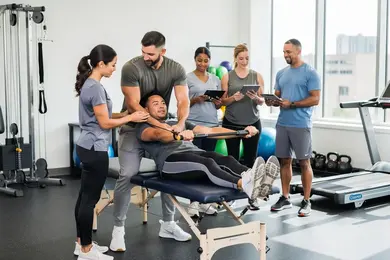
Online exercise science degree practical training comparisons reveal that digital programs frequently lack the supervised, hands-on experience campus-based options provide. The absence of integrated lab work and in-person practicums often means students must independently secure local internships, which can result in inconsistent training quality and delayed skill development.
For instance, a student completing remote exercise prescriptions may not regularly practice real-time client adjustments or emergency responses, competencies essential for safety and effectiveness in personal training roles. The distinction in hands-on training between online and campus exercise science programs significantly influences employability and confidence.
Employers prioritize candidates with documented practical experience, particularly in assessment methods and equipment use, which typically requires face-to-face interaction. Median salaries reflect the value placed on this proficiency, with personal trainers averaging $46,180 annually and exercise physiologists $58,160, per U.S. Bureau of Labor Statistics data.
Without these elements, transitioning from coursework to independent client care can create barriers in initial employment and ongoing professional growth. For those searching broadly for flexible options, comparing programs, including fields like library science degree online, may provide insight into balancing online education with practical career requirements.
What accreditation should online exercise science programs have for fitness and training careers?
Accreditation fundamentally determines the workforce viability of online exercise science degrees in the US, influencing certification eligibility and employer recognition. Programs vetted by agencies such as the Commission on Accreditation of Allied Health Education Programs (CAAHEP) or the Accrediting Commission of Career Schools and Colleges (ACCSC) are essential for mastering anatomy, physiology, and kinesiology with practical application tailored to personal trainers.
Without this validation, graduates may face barriers, especially in clinical or specialized settings. Students must prioritize programs that integrate clinical practicums or supervised internships, whether arranged virtually or locally, as experiential learning remains a certification prerequisite.
For example, a trainee intending to work with clinical populations needs hands-on exposure beyond coursework to meet professional standards. Programs lacking these components often restrict post-graduation employment options.
Cost considerations also weigh heavily. Accredited online degrees reduce typical expenses like room and board-public university costs averaging $19,370 annually versus $45,920 at private institutions according to National Center for Education Statistics-without compromising accreditation quality. Still, candidates should confirm state authorization for online delivery, as certain states enforce licensing restrictions that affect certification exam access and local employment.
Informed decisions demand scrutiny of accreditation, state approval, and practical training embedded in an masters in library science online program or exercise science program accreditation for personal trainers. Overlooking these factors risks investing in credentials that limit career mobility and professional legitimacy within fitness and allied health roles.
What courses and competencies are typically included in online exercise science curricula?
Online exercise science programs in 2026 navigate significant tension between theoretical rigor and hands-on skill acquisition. Students gain foundational knowledge in anatomy, physiology, biomechanics, kinesiology, and exercise physiology, but must critically assess how these translate into real-world training effectiveness.
For instance, graduates employed in cardiac rehabilitation must interpret exercise stress tests and tailor protocols around strict medical parameters, while those in commercial gyms require advanced client engagement skills and emergency readiness. Programs typically integrate nutrition, health promotion, and behavior modification to enable designing personalized plans for diverse populations, including older adults and athletes.
However, the online format often limits direct equipment interaction and supervision, necessitating verification of practicum access or facility partnerships to ensure practical competence. Core curriculum areas align closely with industry certification standards such as ACSM, NSCA, NASM, and ACE, which are pivotal credentialing bodies influencing employability and professional mobility.
Supplementary modules addressing professional ethics, communication, and business management reflect ongoing workforce demands for adaptability amid evolving client demographics and regulatory expectations. Key tradeoffs include balancing science depth with applied proficiencies; employers lean toward candidates who can transition seamlessly into client-facing roles while maintaining recognized certifications. Prospective students should weigh program delivery methods against their access to experiential learning to avoid gaps that hinder immediate workforce integration.
What admission requirements do online exercise science programs have for aspiring personal trainers?
Entry into online exercise science programs for personal training hinges on more than just a high school diploma; many programs demand demonstrated competency in biology, anatomy, and sometimes prerequisite college coursework like kinesiology. These requirements reflect the field's technical demands and the necessity for grounded knowledge in human physiology, which directly influences employability in increasingly competitive job markets.
Applicants must also satisfy non-academic criteria essential for remote learning, including reliable internet and digital proficiency, which become critical when training involves virtual labs or video demonstrations. Some programs further require physical fitness verification or health clearance, particularly when mandatory in-person internships tie theoretical learning to practical skill application.
Admissions expectations diverge significantly based on target roles: candidates pursuing strength and conditioning or clinical exercise physiology certifications face notably higher standards aligned with workforce demands and projected job growth of 12% and 11% respectively through 2032 (U.S. Bureau of Labor Statistics via NutritionED). Overlooking these differences can limit career trajectories and downgrade credentials' market relevance.
Strategic evaluation of programs' credentialing alliances and internship placements often determines how effectively students can overcome post-graduation barriers such as certification board entry and employer-preferred experience. A program's practical integration with industry expectations frequently trumps generic academic reputation for sustained career viability.
How long do online exercise science degrees take and what do they cost?
The typical duration for an online exercise science degree remains close to four years full-time, essential for covering the comprehensive knowledge employers in fitness and rehabilitation demand. Accelerated options often require prior credits or heavy workloads, making them less feasible for working professionals balancing personal training careers.
Those pursuing promotion into clinical rehabilitation, for example, often need extended time for specialized electives and mandated internships, extending completion to five or six years. Tuition costs vary widely: some fully online programs offer rates around $15,675, notably below the national average for traditional campus-based study, according to CSP Global's 2024 data.
However, programs with unusually low tuition may lack adequate clinical practicum experiences crucial for skill development and employer credibility. Conversely, higher tuition does not guarantee better alignment with credentialing standards such as ACSM or NSCA.
Students working simultaneously should anticipate longer program durations due to synchronous courses and in-person requirements. Key factors influencing time-to-degree and total costs include financing plans, employer tuition support, and program flexibility, which collectively impact long-term career outcomes.
What certifications can graduates pursue and are they required for personal trainers?
Exercise science graduates face a critical barrier: without industry-recognized certifications like NASM, ACE, or ISSA, their academic credentials rarely convert into personal training employment. Employers prioritize certifications because they confirm practical competence in client assessment, programming, and injury prevention-skills that degree programs may treat only theoretically.
For instance, a graduate with a bachelor's degree in exercise science but lacking NASM certification will often find limited access to high-tier gyms and lower starting salaries compared to certified peers. Specialized credentials, such as strength and conditioning or corrective exercise, further refine employability in niche markets but require additional investment.
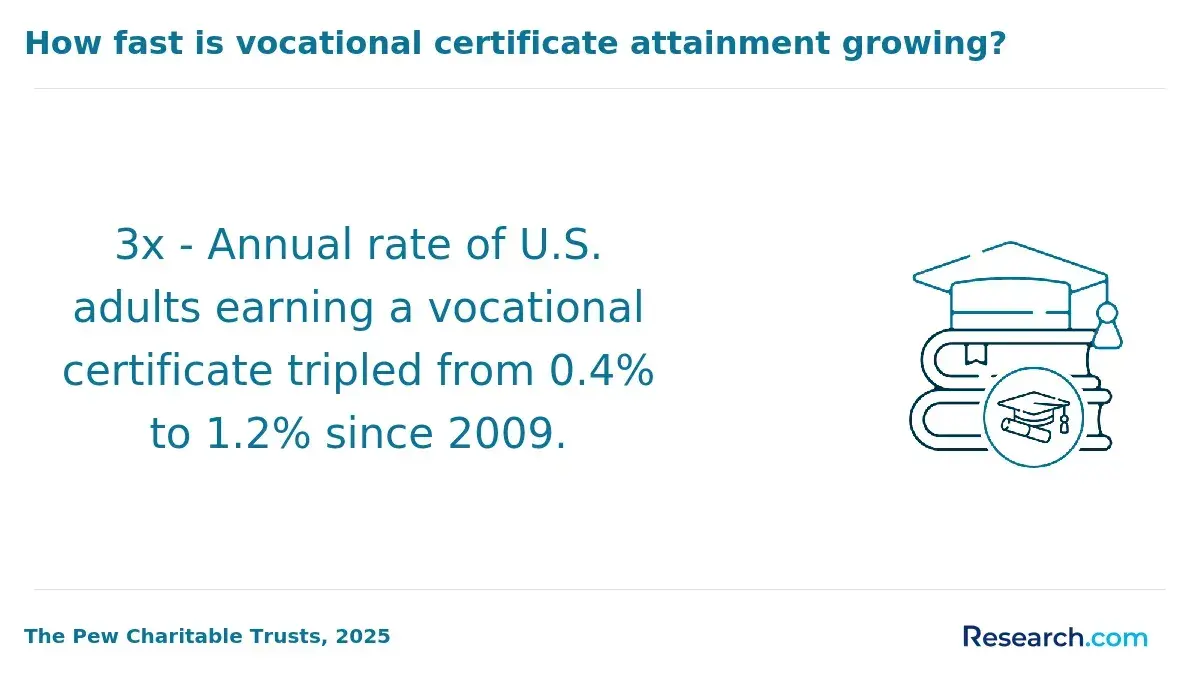
Certification expenses range from $500 to $2,000 per credential and often necessitate preparatory courses, which candidates must weigh against potential salary increases and job market accessibility. Full-time salaries for exercise scientists typically hover between $50,000 and $59,999 AUD annually according to data reported in the Journal of Clinical Exercise Physiology, suggesting a tangible return on investment when certifications complement academic study.
Pragmatically, graduates should align certification choices with their geographic job market demands and career focus. While multiple certifications can broaden opportunities, they also extend the timeline and financial burden before workforce entry.
What personal training careers, salaries, and job outlook follow an exercise science degree?
Exercise science degrees often cap entry-level earning potential near $40,000 annually, especially for those holding only a bachelor's degree working as personal trainers. Specializing in rehabilitation or elite athlete coaching can raise salaries to over $60,000, yet these cases are exceptions rather than the rule. E
mployers increasingly expect applied knowledge in biomechanics, exercise physiology, and client evaluation beyond mere certifications. For instance, a corporate wellness coordinator with a master's degree might manage fitness programs for large employee populations, earning between $70,000 and $85,000, while frontline trainers without advanced credentials frequently remain in the $45,000 to $55,000 range.
The occupational outlook for fitness trainers and instructors is robust, with a projected 19% growth over the next decade, driven by demographics like aging populations requiring specialized exercise guidance. Yet market demand alone doesn't guarantee advancement without graduate education or targeted certifications, which are now more critical in niches like medical fitness and sports performance analytics.
Given the expanding number of master's programs focused on exercise science and personal training worldwide, candidates must weigh graduate education costs against tangible career benefits. Community gym roles prioritize client engagement and broader skill sets, whereas sports organizations demand data-driven injury prevention expertise, indicating a clear divide in employer expectations and salary potential.
How can students evaluate and choose a reputable online exercise science program?
Accreditation and direct alignment with employer needs are immediate filters when assessing online exercise science programs. Without regional or specialized accreditation recognized by the U.S. Department of Education, students risk investing in credentials that limit federal aid and industry acceptance.
Programs that integrate internships or established partnerships with fitness organizations provide hands-on experience often required by employers, differentiating graduates in a job market expected to grow between 6% and 14% through 2032 according to BLS projections. Outcome transparency matters: graduates' placement rates and time to employment reveal a program's effectiveness in preparing students for relevant roles.
Equally important is whether curricula cover foundational subjects like anatomy, kinesiology, and exercise physiology comprehensively, while also building pathways to nationally recognized certifications that gatekeep entry-level eligibility. Flexible program delivery involves tradeoffs. Fully asynchronous formats suit working professionals but may limit supervised practice and networking opportunities essential to skill acquisition and job placement; hybrid models combining online coursework with on-site labs better equip graduates for employer expectations.
Cost evaluation must balance tuition against potential earnings within targeted labor markets. Programs that command higher fees may justify the investment through better employer connections or superior certification exam pass rates, supporting career trajectories aligned with the expanding demand in this sector.
Other Things You Should Know About Exercise Science
Students should consider accreditation, program flexibility, and opportunities for practical experience when choosing an online exercise science degree for a personal training career. Accredited programs ensure quality education, flexibility aids in balancing commitments, and practical experience is crucial for developing hands-on skills needed in personal training.
The intensity and workload of online exercise science degrees vary widely; less rigorous programs may leave graduates underprepared for demanding personal training roles that require quick decision-making and nuanced client assessment. Employers in competitive markets value candidates who demonstrate deep understanding and application of biomechanics, physiology, and program design. Prioritizing programs with evidence of sustained academic rigor and assessments aligned with industry standards enhances employability and earning potential.
Online programs demand strong self-discipline and time management, since the responsibility for consistent study rests entirely on the student without the immediate structure of in-person classes. Students juggling work or family must consider that courses involving technical content and practical assignments require regular, focused effort, which can be difficult to sustain over long semesters. Opting for programs offering flexible pacing or asynchronous components can reduce dropout risk but may also impair learning depth if not managed carefully.
Look for regional accreditation for the university and, ideally, programmatic accreditation from the Commission on Accreditation of Allied Health Education Programs if the curriculum aligns with allied health standards. Employers and graduate schools usually verify that the institution is accredited before considering the degree for fitness and personal training roles.
References
- Careers in Exercise Science – Jobs, Salaries, and Growth Opportunities https://www.pickmyuni.com/student-resources/careers-in-exercise-science-123
- Comprehensive Personal Trainer Courses | Fitness Mentors https://www.fitnessmentors.com/personal-trainer-courses/
- What kind of jobs can you get with an exercise science degree? - Personal Training Blog https://www.westrive.com/blog/exercise-science-degree-jobs
- PT Courses for Uni Graduates: Why They Need PT Qualifications https://create.fit/personal-training-courses-for-uni-graduates/
- How To Become A Personal Trainer | LearnHowToBecome.org https://www.learnhowtobecome.org/personal-trainer/
- Exercise Sciences https://www.caahep.org/committees-on-accreditation/exercise-science
- Personal Training Specialist - canfitpro Certification Course https://www.canfitpro.com/personal-training-specialist/
- Requirements for Exercise Science and Personal Training Programs https://catalog.bryanuniversity.edu/requirements-for-exercise-science-and-personal-training-programs
- What Certifications Do Most Personal Trainers Have? | ISSA https://www.issaonline.com/blogs/training-tips/what-certifications-do-most-personal-trainers-have
- Do I Need to Go to University to Be a Personal Trainer? https://whichpersonaltrainercourse.co.uk/view-blog/Do-I-Need-to-Go-to-University-to-Be-a-Personal-Trainer/18/