2027 Online Exercise Science Degrees With Strong Clinical Exercise Training

Co-Founder and Chief Data Scientist
Professionals aspiring to advance in exercise science face a critical bottleneck: accessing programs that combine rigorous clinical training with flexible scheduling.
As workforce data from the National Center for Education Statistics in 2024 reveals a 35% surge in adult enrollment in online health-related degrees, the rising demand signals a need for programs tailored to working students balancing clinical hours and coursework. Many online degrees lack robust experiential components, limiting graduates' clinical readiness and immediate employability.
This article evaluates online exercise science degrees emphasizing strong clinical exercise training, providing actionable analysis to help students select programs that align with professional standards and maximize career mobility.
Key Things You Should Know
- Online exercise science degrees with clinical training average 30-40% lower tuition yet extend completion time by 6-12 months due to limited onsite practicum availability, complicating accelerated workforce entry, per NCES 2024 data.
- Employers increasingly demand verified hands-on clinical hours; programs lacking robust partnerships correspond with 15% lower graduate job placement rates in clinical exercise roles, indicating critical employer preference shifts, according to SHAPE America 2024 survey.
- Balancing remote coursework with obligatory clinical internships creates access disparities: rural students face 22% fewer local clinical site options, raising cost and time burdens, highlighting geographic inequities in skill acquisition, per AHRQ workforce reports.
What is an online exercise science degree with strong clinical exercise training?
Employers in telehealth and rehabilitation increasingly require exercise science professionals who can navigate clinical exercise training within remote care models, reflecting the growth of the digital health market valued at $293.8 billion in 2024 and projected to surpass $996 billion by 2032. An online exercise science degree with clinical training addresses this need by integrating disease-specific physiology, exercise testing protocols, and tech-enabled patient monitoring skills.
The emphasis on virtual labs, simulations, and local clinical partnerships is not trivial: students must secure credible practicum placements independently, which can delay progress and affect skill acquisition.
For example, mastering remote cardiac rehabilitation demands familiarity with digital health compliance and real-time cardiac monitoring systems beyond traditional coursework. This practical challenge often distinguishes candidates for emerging roles that blend exercise science with wearable devices and telehealth platforms.
Students should critically assess programs for accreditation by authorities such as CAAHEP and confirm coursework rigor supports certifications like Clinical Exercise Physiologist. Balancing flexible online delivery with the reality of hands-on clinical competencies is vital to meeting evolving employer expectations in technology-driven healthcare.
For those comparing programs, kinesiology courses online offer varying degrees of clinical training depth, which impacts readiness for practice in digital and remote environments.
How do online exercise science programs compare to campus-based options for clinical training?
Online exercise science clinical training quality hinges on the ability of students to independently secure local clinical placements, a significant departure from the embedded, campus-based model where internships and labs are institutionally coordinated. This shift transfers logistical responsibility to the student, requiring early collaboration with program advisors and local healthcare providers to fulfill accreditation mandates.
While core clinical skills, such as exercise testing and rehabilitation protocols, can be developed remotely, the variability in community partnership supervision creates uneven practical outcomes compared to centralized campus labs.
Employers prioritize documented clinical hours validated by qualified supervisors regardless of program format. For example, an online graduate who completes over 400 hours of supervised local clinical practice can align closely with campus-trained peers in readiness for roles demanding hands-on patient care. Conversely, those without sufficient in-person experience risk diminished employability in clinical settings requiring direct physical interaction.
The labor market projects over 45,000 new fitness trainers and instructors plus 25,300 coaching and scouting roles from 2022 to 2032, reflecting diverse opportunities beyond strictly clinical pathways. Graduates who combine clinical credentials from online programs with flexible, remote learning are positioned to serve both healthcare and fitness sectors, though adaptability and licensure preparation remain critical.
Students should assess program accreditation rigorously, verify support for local clinical arrangements early, and prepare for the self-directed coordination of experiential hours when considering online tracks.
Those who navigate these challenges effectively can attain employability comparable to campus counterparts, especially in community health and telehealth-focused roles. Prospective students evaluating pathways can find useful insights at ASN nursing online.
Are online exercise science degrees respected and properly accredited in the United States?
Employers in clinical and fitness settings prioritize graduates with online exercise science degrees accredited in the United States that combine regional accreditation and adherence to standards from bodies like CAAHEP or CoAES. Programs lacking verified clinical practicum components or that rely solely on virtual simulations fall short of industry expectations.
For example, a candidate seeking a position in a hospital's cardiac rehab program must document hands-on clinical experience, making the presence of supervised practicum hours a critical hiring factor.
The spike in adult obesity rates to approximately 42% has intensified demand for exercise scientists proficient in clinical exercise training accreditation for US online programs. Without supervised practicum, graduates often encounter significant barriers entering fields that manage cardiometabolic diseases, limiting both certification eligibility and practical readiness.
Key considerations for prospective students include:
- Verifying if clinical placements require independent arrangements, which can extend degree timelines.
- Confirming that programs offer rigorous, evidence-based curricula tied to recognized certifications such as ACSM's Clinical Exercise Physiologist credential.
- Understanding that purely theoretical coursework will not fulfill employer or certifying body requirements.
For those comparing professional pathways, evaluating the logistical demands of clinical practicum is essential. Some explore flexible alternatives like an MLIS degree for different career pivots, but informed decisions rest on aligning educational rigor with real-world professional requirements.
What prerequisites and admission requirements do online exercise science programs typically have?
Admission to online exercise science degree programs demands more than baseline credentials; successful applicants often present college-level coursework in biology, chemistry, anatomy, and physiology, reflecting the clinical exercise training prerequisites for online programs.
Programs typically require a minimum GPA around 2.5 to 3.0 and evaluate official transcripts, although several have shifted to test-optional policies post-2024, reducing barriers for non-traditional candidates. Candidates with recent foundational science courses, completed within five years, fare better in program rigor and clinical practicums, which are key to workforce readiness.
Practical healthcare or fitness experience, especially internships or paid roles, significantly improves a candidate's prospects. Clinical placements are a demanding but indispensable part of most programs, enabling students to apply theory in real-world settings. For instance, exercise physiologists with such experience showed a median wage of $56,970 in May 2023, illustrating clear employer valuation of hands-on training. Applicants might also face essays or interviews assessing their understanding of professional responsibilities in clinical contexts.
Logistical considerations include reliable broadband for synchronous learning and access to approved clinical sites, which remain non-negotiable even in online formats. Candidates might enhance employability by selecting programs with strong clinical partnerships to overcome geographic constraints. Students seeking career pivots can benefit from programs that accept prior certifications or military experience.
For those comparing pathways in health-related fields, exploration of masters in library science provides a contrasting lens on affordability and career trajectory options beyond exercise science.
What courses and hands-on clinical experiences are included in these online programs?
Online exercise science degrees that emphasize clinical training respond directly to employer demands for hands-on competence and relevant certifications rather than purely theoretical knowledge. Core coursework in human anatomy, exercise physiology, kinesiology, biomechanics, and clinical nutrition builds a foundation for clinical assessments and targeted rehabilitation strategies.
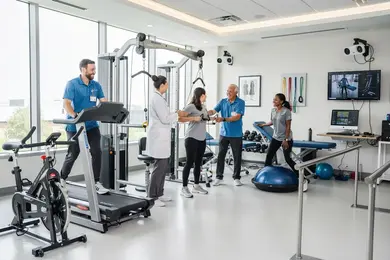
However, the distinction lies in applying this knowledge through significant supervised clinical hours, typically 300 to 500, done in environments such as hospitals or outpatient clinics.
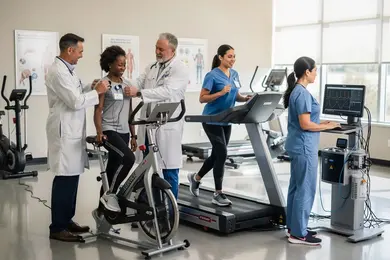
For example, working within a cardiac rehabilitation unit, students learn to monitor vital signs during exercise stress tests and adjust protocols in real-time, a skill indispensable for clinical exercise physiologists. This clinical immersion shapes graduates to meet workforce expectations for specific, actionable competencies over abstract theory, addressing a critical gap between academic preparation and employment requirements.
Programs also integrate credential preparation like ACSM Certified Clinical Exercise Physiologist, reinforcing employability by aligning certifications with employer preferences.
Cost considerations matter. Liberty University's online program increased tuition by less than 5% over a decade, positioning it as relatively affordable among its peers. Such pricing stability factors into long-term return on investment calculations for professionals aiming to pivot to clinical exercise roles without excessive financial burden.
Students evaluating these pathways should weigh not just curriculum but the tangible clinical exposure and certification alignment that define readiness in clinical exercise careers.
How long do online exercise science degrees take and what do they cost?
Choosing an exercise science degree requires balancing program length, cost, and clinical requirements against employment prospects, especially for specialties like cardiac or pulmonary rehabilitation. Associate degrees typically run about two years but may limit eligibility for advanced roles, while bachelor's degrees take four years full-time, offering deeper clinical experience valued by employers.
Cost structures vary widely: public in-state options average $6,000 to $12,000 annually, whereas private programs often exceed $20,000 per year, excluding additional fees for clinical placements and certification exam prep. Total expenses can range from roughly $24,000 for economical paths to upwards of $80,000 at tuition-heavy institutions.
Key workforce implications include the necessity of securing local clinical internships, which can constrain students pursuing online degrees geographically, and the critical role of hands-on practicum integration in enhancing employability.
For professionals shifting into cardiac rehabilitation, an accelerated bachelor's online route with robust clinical partnerships may better align with employer expectations compared to more affordable but longer associate programs lacking advanced clinical rigor.
What careers can you pursue with an online exercise science degree focused on clinical training?
Online exercise science degrees with clinical training focus meet specific employer demands by incorporating hands-on practicums, essential for roles in cardiac rehabilitation and therapeutic fitness coaching. These programs prepare graduates for environments where precise exercise testing and patient monitoring are prerequisites. Candidates lacking supervised clinical experience often face barriers entering medical and outpatient rehabilitation settings, where documentation accuracy and interaction protocols carry significant weight.
Positions as clinical exercise physiologists require grounded knowledge of medical terminology and outcome measurement tools to align with healthcare provider standards and reimbursement policies. Graduates must balance their academic foundation with certification requirements, especially in competitive healthcare teams or insurance-based care delivery.
Beyond clinical pathways, the market for sport-specific roles persists notably in regions like Minnesota, which forecasts over 900 coach and scout openings annually through 2030. These roles often compel additional credentialing beyond the degree for access to collegiate or professional environments.
Transitioning into allied health fields such as physical or occupational therapy assistance demands further licensing, creating a critical juncture where the online degree alone cannot guarantee eligibility. Students should prioritize programs offering authentic clinical practicum exposure and training on evolving healthcare technologies to maintain workforce readiness.
What salary ranges and earning potential are common in clinical exercise science careers?
Salary growth in clinical exercise science strongly depends on the integration of interdisciplinary skills and setting-specific expertise rather than general credentials alone. Professionals working in hospital or rehab environments typically see median wages around $53,000, while those in private clinical practices frequently exceed $65,000 annually.
Those combining exercise physiology with nutrition expertise, behavioral counseling, and technology application, such as digital health monitoring in cardiac rehab, can command salaries at or above the upper pay scale.
Employers increasingly prefer candidates who can deliver holistic patient care, blending clinical exercise protocols with dietary management and digital tools. Missing these capabilities often results in wage stagnation and limited upward mobility, especially in competitive urban regions like California and Texas, where healthcare employers pay premiums compared to rural areas.
Key considerations for professionals include:
- Specialized certifications that align with interdisciplinary clinical demands can increase earning potential by 20% or more.
- Transitioning into management or clinical research roles requires advanced graduate education but offers salary ceilings above $80,000.
- Geographic location significantly influences compensation and clinical exposure opportunities.
Given these factors, prospective clinical exercise scientists must weigh the time and financial costs of expanding technical skills against demonstrated salary growth and employability benefits.
What certifications or licenses might graduates of clinical exercise science programs need?
Graduates aiming for clinical roles in exercise science confront strict certification requirements that extend well beyond earning a degree. Certifications like the Certified Clinical Exercise Physiologist (CEP) from the American College of Sports Medicine (ACSM) demand a bachelor's degree coupled with supervised clinical experience, a gatekeeping step that employers use to verify competency and reduce liability.
In healthcare settings managing chronic diseases, the Registered Clinical Exercise Physiologist (RCEP) credential is often mandatory, reflecting the increasing precision required to work alongside medical professionals. Without these credentials, graduates typically find themselves confined to non-clinical fitness positions with limited advancement potential.
Ongoing continuing education is another practical consideration; maintaining certifications requires periodic credits and adherence to licensure renewal cycles that differ by state or credential type. This adds complexity to workforce entry and long-term employability, especially considering some states enforce additional licenses for exercise specialists or physical therapy assistants.
Cost is a relevant factor in choosing educational pathways. For example, online programs like Franklin University charge $398 per credit for standard students, whereas international students attending traditional campuses face up to $526 per credit. These differences influence access to critical clinical internships and exam preparation necessary for certification eligibility.
Evaluating these tradeoffs provides clearer insight for candidates deciding between online versus on-campus pathways or non-clinical versus clinical roles within exercise science.
How can prospective students evaluate and choose a reputable online exercise science program?
Programs lacking accredited clinical training aligned with workforce standards risk producing graduates unable to meet employer expectations, especially in health and rehabilitation sectors. Prioritize curricula incorporating hands-on practicums or internships, since theoretical knowledge alone often falls short during hiring evaluations.
Graduate employment data reveals important distinctions: programs with over 85% job placement rates in clinical or community health roles indicate stronger industry relevance.
This is critical given the projected 7% growth in community health professions and 4,000 new health educator roles by 2033, according to Eastern Oregon University citing BLS data. Graduates aiming to move beyond fitness-related roles toward population health must consider how well programs prepare them for this expanding job market.
Consider these operational factors:
- Flexibility of course delivery, balancing asynchronous online learning against requirements for local synchronous clinical hours
- Cost weighed against credential value, particularly as lower tuition programs may lack recognized licensure eligibility
- Direct feedback from alumni and regional employers to assess reputation and skill applicability specific to job markets
For example, metropolitan health systems often favor graduates from programs with strong clinical affiliations and research ties, while community providers might prioritize adaptability and population health knowledge. This distinction influences long-term career stability and advancement potential more than institutional branding.
Other Things You Should Know About Exercise Science
In 2027, online clinical hours in exercise science programs often include virtual simulations and remote mentorship. While these tools enhance theoretical understanding, in-person internships generally provide more hands-on experiences, leading to stronger practical skill development.
Online exercise science degrees with clinical components often demand significant time for synchronous labs, clinical site hours, and post-session assignments in addition to asynchronous coursework. The clinical training cannot be compressed easily, so students working full-time must plan for variable weekly commitments that often exceed 20 hours when including prep and commute to clinical sites. Selecting a program with flexible scheduling options and strong academic advising is crucial for managing both work and study without compromising clinical competency.
Employers focus primarily on the quality and relevance of clinical training rather than online delivery itself. Graduates from programs with comprehensive, supervised clinical experience meet employer expectations better than those from programs relying mostly on theoretical or simulated experiences. When evaluating programs, prospective students should verify clinical site rigor and employer connections, as these factors directly influence job placement and career advancement.
Yes. Most programs require a supervised practicum or internship of 100 to 600 hours in a hospital, clinic, rehab center, or wellness facility. The site is usually approved by the program, and students must complete background checks, immunization records, and liability coverage before placement.
References
- Clinicals and Fieldwork for Online Healthcare Students | EduMed.org https://www.edumed.org/resources/clinicals-for-online-students/
- Best Online Master's Programs in Exercise Science https://www.onlineu.com/degrees/masters-exercise-science
- Online Exercise Science Program https://stmary.edu/online-programs/exercise-science.html
- Exercise Physiologist https://acsm.org/certification/get-certified/exercise-physiologist/
- Academy’s Bachelor’s Degree in Strength and Conditioning Recognized by Learn.org | United States Sports University https://restore-ussa-edu.mystagingwebsite.com/news/academys-bachelors-degree-in-strength-and-conditioning-recognized-by-learn-org/
- International Clinical Exercise Physiology Qualification Application Pathways https://icsesp.global/resources/international-clinical-exercise-physiology-recognition-opportunities/
- Exercise Science Degree Careers, Jobs and Salaries - Peak Physical Therapy and Sports Performance https://peaktherapy.com/blog/exercise-science-degree-careers-jobs-and-salaries/