2027 Online Community Health Degrees for Community Program Specialist Roles

Co-Founder and Chief Data Scientist
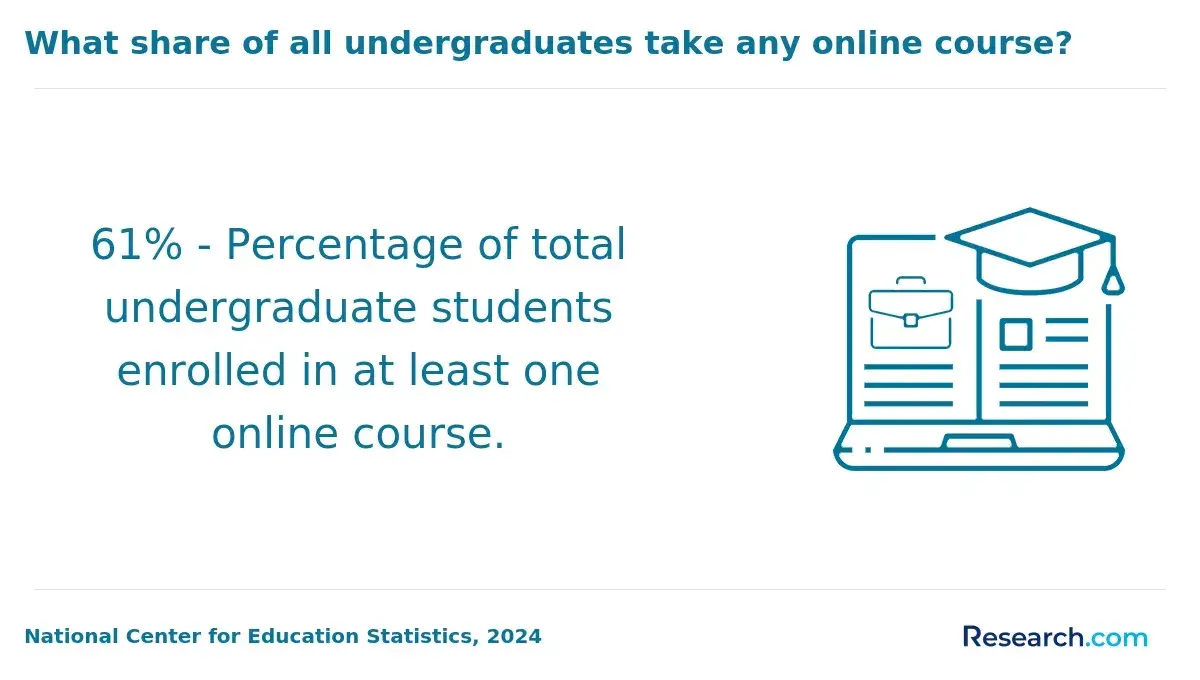
Balancing full-time work and family responsibilities while pursuing advancement as a community program specialist forces many professionals into a dilemma: find a flexible educational option that fits their hectic lives or risk stalling career progress. With the National Center for Education Statistics reporting a 19% uptick in adult online enrollment since 2023, the demand for programs that accommodate nontraditional schedules has never been sharper.
This shift reveals that accessibility and asynchronous learning are no longer perks but prerequisites for meaningful career mobility in community health. This article evaluates current online community health degrees designed specifically for aspiring community program specialists, focusing on practical factors like schedule flexibility, program credibility, and workforce relevance to guide informed decisions.
Key Things You Should Know
- The Bureau of Labor Statistics projects 12% growth in community health roles through 2031, yet only 45% of online degrees meet employer demand for field-specific practicum integration, signaling a critical tradeoff between program accessibility and hands-on readiness.
- Employers increasingly prioritize candidates with data literacy and policy navigation skills; 67% of job postings in 2024 specify these competencies beyond general community health knowledge, reshaping degree curricula and workforce expectations.
- Median tuition for accredited online community health degrees rose 9% from 2022 to 2024, outpacing average wage growth for specialists, indicating an access barrier that prolongs workforce entry and influences career pivot timing.
What is an online community health degree and how does it prepare community program specialists?
An online community health degree benefits for community program specialists by equipping them with applied skills that extend beyond theoretical knowledge. These programs focus on practical competencies such as data analysis of health trends, culturally competent outreach, and grant writing critical to managing initiatives in public, nonprofit, and healthcare settings.
Compared to broader health studies, such degrees emphasize socioeconomic determinants of health, enabling specialists to design and evaluate targeted interventions relevant to evolving community needs.
How online community health programs prepare specialists is evident in workforce impact. For example, a graduate working in a rural public health department applies behavioral health promotion and environmental health coursework to address opioid misuse through localized education campaigns.
However, students must weigh program formats carefully: asynchronous courses may restrict networking and practicum experience essential for some employers, while synchronous or hybrid options enhance hands-on learning without interrupting current employment.
The U.S. Bureau of Labor Statistics projects a 7% employment increase for health education specialists and community health workers by 2032, translating to about 6,600 new jobs. Meeting employer expectations requires skills to navigate policy shifts and data-driven program adjustments.
Those completing an online community health degree gain credentials aligned with these demands, positioning them strategically within a growing job market. Prospective students can also consider related online masters in mental health counseling programs.
Which types of online community health degrees qualify you for community program specialist roles?
Candidates targeting community program specialist roles must weigh the tradeoffs between associate and bachelor's degrees in community health, public health, health education, or social work. While an associate degree enables entry-level access, it rarely supports advancement or higher earning potential.
In contrast, bachelor's degrees align more closely with employer expectations for responsibilities like program development, grant writing, and data analysis, which demand comprehensive understanding of health behavior theories and community assessment methods.
Notably, online community health degrees for specialist roles that incorporate practica or capstone projects significantly boost employability by providing tangible, applied experience valued in hiring decisions.
Employers increasingly prioritize graduates who combine theoretical knowledge with hands-on practice. For instance, a bachelor's graduate who has completed internships managing vaccination outreach programs demonstrates readiness more convincingly than one without such experience, regardless of degree similarity.
Additionally, logistical factors such as part-time program formats geared toward working adults impact completion timelines and career entry speed, underscoring the need for program selection that matches personal discipline and availability.
Prospective students should also consider available electives focused on specific community needs-like chronic disease management or mental health-as these influence role specialization and effectiveness. Average national salaries for community health workers hover around $37,640, with top states like the District of Columbia reaching $64,750.
An estimated 45,800 professionals work in this sector nationwide, reflecting steady demand. Those evaluating qualifications for community program specialist careers may find it worthwhile to explore the online health admin degree options for flexible pathways complementary to core community health training.
How do online and on-campus community health programs compare for community program specialist careers?
Choosing between online vs on-campus community health degree benefits for community program specialists often hinges on real-world tradeoffs around accessibility, hands-on experience, and local networking. Employers consistently prioritize candidates who demonstrate documented fieldwork through practicums or internships, making on-campus programs more conducive to acquiring direct immersion and culturally nuanced communication skills in community settings.
Online programs offer flexibility crucial for working professionals who need to balance employment and study, minimizing opportunity costs by allowing continued income streams. However, this format may limit access to in-person practicums, which are integral to mastering practical skills required in specialist careers. For example, a student working full-time while enrolled online might face challenges securing comprehensive community engagement opportunities essential for certain roles.
On-campus programs facilitate structured internships and immediate access to faculty and peer networks-resources key to building professional relationships within specific localities. Such environments better support students pursuing careers necessitating face-to-face outreach and collaboration in diverse, localized populations.
Financially, both pathways lead to health education specialist roles with a median annual salary of $62,860 as of May 2023, representing a 35% premium over the median for all occupations according to the U.S. Bureau of Labor Statistics. Still, students must critically assess their self-motivation levels and tech proficiency alongside geographic and financial constraints.
Decision-makers should also consider resources like best RN to BSN programs for navigating online learning options when exploring a strategic community health career pivot.
What accreditation should online community health programs have in the United States?
Accreditation profoundly shapes employment prospects and educational value in online community health degree programs in the United States. Most notably, programs accredited by the Council on Education for Public Health (CEPH) are prioritized by public health agencies and large nonprofits, given their alignment with rigorous public health competencies essential for roles such as community program specialists.
These specialists rely on skills in health promotion, epidemiology, and program evaluation-areas explicitly validated through CEPH-accredited curricula.
Employers often view CEPH accreditation as a non-negotiable indicator of a candidate's readiness to implement data-driven interventions in complex community settings. Without recognized accreditation, graduates may face hurdles including limited employability, ineligibility for many federal financial aid programs, and challenges in transferring credits or obtaining professional credentials.
As demand for public and community health roles is projected to expand rapidly-with about 1.9 million openings annually by 2033 according to the U.S. Bureau of Labor Statistics-decisions about program accreditation carry long-term strategic weight.
When selecting a program, students should weigh how accreditation aligns with their specific career targets: CEPH accreditation aligns best with federal or statewide employers, whereas less recognized institutional accreditation might suffice for specialized or smaller community-based organizations.
Additionally, those considering allied healthcare pathways might explore options like an online RN to BSN for clinical career entry before pivoting to community health focus areas.
What classes and specializations are typically included in online community health curricula?
Community health degree programs balance foundational knowledge with targeted skills to meet the evolving demands of employers seeking program specialists. Core coursework includes epidemiology, biostatistics, health policy and management, social and behavioral health sciences, and environmental health. These subjects equip students with essential tools for data analysis, policy comprehension, and community health evaluation.
Specializations such as maternal and child health or healthcare informatics allow students to address specific workforce needs in sectors spanning public health agencies, nonprofits, and healthcare organizations. The practical focus on program planning, community needs assessment, grant writing, and evaluation reflects employer expectations for graduates who can design and lead measurable interventions.
For example, professionals working with underserved populations must combine expertise in social determinants of health with culturally competent communication to ensure program relevance and impact. Data tracking skills further support accountability to funders and stakeholders through outcome measurement.
Cost remains a significant variable: Southeastern Oklahoma State University offers an online Master of Science in Community Health for $14,025 total tuition (33 credits at $425 per credit). Such pricing under $15,000 can expand access for working adults but requires scrutiny of curriculum alignment with accreditation standards like those from the Council on Education for Public Health (CEPH).
Employers prioritize candidates demonstrating quantitative analysis, community engagement, and leadership. Programs lacking substantive training in these areas may limit graduates' advancement and role flexibility in competitive markets.
What are the usual admission requirements for online community health degree programs?
Admission criteria for online community health degree programs reflect a balance between academic preparedness and relevant experience, shaped by workforce demands and student realities.
Undergraduate applicants generally need a high school diploma or equivalent, while graduate applicants must hold a bachelor's degree with a typical minimum GPA around 3.0. Standardized test scores like the SAT or GRE are increasingly optional, though some programs still require them to gauge scholastic readiness.
Programs aimed at working professionals prioritize prior healthcare or social service experience, which can offset weaker academic records but require thorough documentation. Letters of recommendation and personal statements remain standard components, serving to verify candidate motivation and alignment with specialist roles. Graduate tracks often mandate prerequisite coursework in fields such as biology or statistics to ensure foundational knowledge critical for success.
In practice, balancing study and employment necessitates flexible program structures, including asynchronous coursework and adjustable deadlines. Background checks and immunization records may be mandatory given the frontline nature of community health work.
For example, a mid-career professional shifting from outside healthcare must either validate relevant experience or complete prerequisite courses before gaining admission, as institutions weigh these factors carefully against dropout risks and employment outcomes.
Securing entry to specialized tracks like biostatistics or health education can lead to higher earning potential beyond the $41,000 median for entry-level substance abuse counselors (University of San Diego data) but comes with intensified admission requirements. Prospective students must therefore evaluate these academic and experiential tradeoffs pragmatically.
How long do online community health degrees take and what do they cost?
Pursuing online community health degrees requires weighing time, cost, and program structure against career goals and current employment status. Associate degrees typically take 18 to 24 months, while bachelor's degrees extend to 3-4 years part-time, with some accelerated options reducing this to about 2 years.
Master's programs generally span 1 to 2 years but may approach $50,000 in tuition-significant investments that vary widely depending on institution and delivery method.
For working professionals, flexible pacing often trumps speed, enabling steady skill acquisition without sacrificing income or job stability. In contrast, recent graduates or those with tuition support may prioritize accelerated tracks to enter the workforce faster. Ancillary expenses such as software tools, practicum travel, and technology fees add to the financial and logistical considerations beyond tuition.
Employers increasingly require community health specialists to merge analytic competencies with program design, as noted by Georgia State University's response to "high-demand skills gaps." This intersection drives the need to balance theory with applicable data analysis, potentially extending study time but improving strategic relevance in data-driven decision-making roles.
When selecting community health programs, critically evaluate accreditation, course formats, and employer recognition to ensure the credential advances both practical workforce entry and long-term career adaptability. Opportunity costs from reduced work hours should also factor into financial planning.
What does a community program specialist do and where can they work?
Community program specialists face a complex balancing act between theoretical knowledge and applied skills to meet employer expectations in diverse public health settings. Their work spans government agencies, nonprofits, hospitals, and schools-each demanding tailored approaches to prevention, education, or patient engagement aligned with local needs and resource constraints.
A significant workforce shift arises from the growing share of online-trained graduates; about 15% of master's degrees in public health were earned fully online in 2023, doubling the 2019 figure. This trend introduces practical challenges, as remote learning may limit hands-on experience, compelling graduates to secure internships or practicum placements to demonstrate field readiness.
Employers increasingly prioritize specialists who can produce measurable outcomes, such as improved vaccination rates or reduced chronic disease incidence, while navigating shifting funding streams and adapting programs for digital delivery.
For instance, state health agencies may emphasize scalable surveillance and prevention campaigns, while nonprofits focus on grassroots educational outreach in underserved areas.
Key competencies reflect this operational complexity and include:
- Data-driven decision-making and outcome evaluation.
- Cultural competence to engage diverse populations.
- Cross-sector collaboration with clinical, educational, and community stakeholders.
Understanding these tradeoffs between educational format, practical experience, and context-specific employer demands is essential for candidates shaping a strategic career path in community health specialization.
What are the salary ranges and job outlook for community program specialist positions?
Community program specialists' salaries exhibit meaningful variation based on employer type, geography, and experience, typically ranging from $40,000 to $65,000 annually. Entry-level roles with local governments or small nonprofits often start near the lower end, while positions in larger healthcare systems or state agencies can exceed $60,000. This disparity underscores the importance of strategic job targeting for candidates seeking both competitive pay and career growth opportunities.
The projected 10% employment growth in related community and social services through 2032 suggests ongoing demand but also rising expectations for advanced competencies.
Professionals who specialize in data analysis, grant writing, and culturally competent program design-skills emphasized in accredited online community health degree programs-position themselves for supervisory roles and increased earning potential.
Financial feasibility significantly influences education choices. At public 4-year institutions, 72% of undergraduates accessed financial aid in 2022-23, reducing average net costs to approximately $14,200 after grants. This aid mitigates debt risk, an essential consideration given that salary gains may be incremental and often tied to skill acquisition and role advancement.
Prospective students must carefully weigh net educational costs against realistic salary trajectories. Selecting programs with practical, employer-relevant curricula can facilitate entry into jobs paying $45,000 or more, while less recognized credentials may limit upward mobility and wage growth.
How can you choose the best online community health program for your career goals?
Programs in community health that lack integration of telehealth coordination and practical digital skills risk leaving graduates underprepared for a hybrid care environment where telehealth use is now 38 times higher than pre-pandemic, according to McKinsey & Company's 2024 telehealth update.
Employers increasingly expect candidates who combine expertise in electronic health record systems, culturally competent communication, and data analytics with experience in both virtual and in-person community initiatives.
A health department hiring a community program specialist will prioritize candidates with documented, real-world competencies over those from programs focused solely on theory or broad curricula.
Practical elements such as case management simulations or partnerships with local agencies demonstrate readiness more than abstract knowledge. Meanwhile, insufficient focus on digital health tools can delay career entry or advancement in this competitive field.
Key decision factors include:
- Accreditation confirming curriculum rigor and employer recognition.
- Flexible pacing for working professionals without sacrificing depth of study.
- Graduate employment outcomes and employer feedback over program cost.
- Strong alumni networks and career services tailored to fast-evolving telehealth demands.
Programs emphasizing these areas align with workforce realities shaping community health roles through 2026, helping professionals navigate evolving employer expectations and the complexity of hybrid care delivery.
Other Things You Should Know About Community Health
Most accredited online community health degrees require some form of internship or practicum to meet employer expectations and ensure applied skills. Programs without a fieldwork component may limit your ability to gain hands-on experience valued by hiring managers in community program specialist roles. Prioritize programs that integrate local or virtual practicum options, as they improve job readiness and increase networking opportunities with potential employers.
Online degrees vary widely in how deeply they embed cultural competence and community engagement training within their curricula. Employers prioritize candidates who demonstrate practical skills in working with diverse populations, not just theoretical knowledge. When choosing a program, focus on those that require community-based projects or case studies, as these provide measurable preparation for real-world challenges faced by community program specialists.
Online community health programs typically demand significant self-discipline due to asynchronous learning and the integration of project-based assignments. Unlike traditional classroom settings, students must independently balance coursework, fieldwork, and often professional responsibilities, which can extend completion times if poorly managed. Prospective students should assess their personal time management skills and choose programs with structured schedules or cohort models if consistent pacing and peer support are priorities.
References
- What does a Health Program Specialist do? Career Overview, Roles, Jobs | ALAN https://careers.alabamanonprofits.org/career/health-program-specialist
- Community Health Career - Public Health https://www.publichealthonline.org/community-health-career/
- Schools of Public Health https://www.apha.org/professional-development/public-health-careermart/schools-of-public-health
- Faculty of Graduate and Postdoctoral Studies | University of Manitoba - Community Health Sciences (MPH) https://umanitoba.ca/graduate-studies/admissions/programs-of-study/community-health-sciences-mph
- Top 25 Online MPH Community Health Degree Programs - MPH Online https://www.mphonline.org/best-online-mph-community-health/
- What Can You Do With a Community Health Degree | CUNE https://www.cune.edu/news/what-can-you-do-with-community-health-degree
- Online Public Health Degrees: Find Your Program https://www.degreesforgood.org/online-degrees/public-health-programs/
- How to Choose the Right Health and Social Care Course for You https://uk.hfonline.org/how-to-choose-the-right-health-and-social-care-course-for-your-career-goals/
- Online Bachelor’s Degree in Community Health and Wellness https://www.monroeu.edu/academics/undergraduate-programs/school-allied-health-professions/online-bachelors-degree-community
- Nationally Accredited - Public Health - Dayton & Montgomery County https://www.phdmc.org/about/nationally-accredited