2027 First Community Health Roles for Service-Oriented Professionals

Co-Founder and Chief Data Scientist
Faced with balancing full-time jobs, family commitments, and rapidly evolving health crises, prospective professionals struggle to enter community health roles without prolonged educational interruptions. The National Center for Education Statistics reports that nearly 45% of postsecondary enrollees in recent years are adults returning to education, reflecting a shift toward flexible, affordable pathways that accommodate work-life constraints.
This shift demands careful selection of programs offering online or hybrid formats aligned with employer expectations for practical skills and timely credentials. This article provides a detailed guide to identifying first community health positions suited for service-oriented individuals navigating these complexities, focusing on actionable strategies to optimize career entry and advancement.
Key Things You Should Know
- Annual wage premiums for community health roles show a 12% gap favoring candidates with associate-level credentials over certificates, per 2024 Bureau of Labor Statistics data, forcing a cost-benefit analysis between expedited entry and future earnings.
- Employers increasingly demand bilingual competencies alongside technical skills, with 46% of job listings requiring targeted language abilities in 2025 National Labor Market Survey, necessitating strategic language training investments for competitive positioning.
- Program completion times averaging 18 months for accredited two-year tracks contrast with 6-month certificate courses, impacting workforce reentry timing and eligibility for federal student loans, per Department of Education 2024 reports.
What are entry-level community health roles and why are they important in local communities?
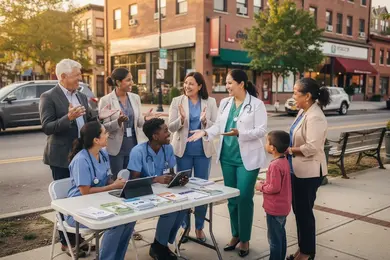
Entry-level community health jobs in local communities demand balancing immediate workforce needs against long-term professional development tradeoffs. These roles-ranging from community health workers to peer supporters-serve as critical connectors in medically underserved areas, exemplified by rural outreach programs that boost vaccination rates through direct engagement. The importance of community health roles for service-oriented professionals lies in their foundational position bridging healthcare access gaps and social determinants of health.
Typically requiring a certificate or associate degree, these positions offer relatively fast employment yet come with constraints such as limited initial earnings and a narrower scope of practice. Employers prioritize cultural competency and communication skills over advanced clinical credentials, which creates pressure on educational pathways to deliver practical experience. Programs featuring internships in diverse community contexts improve readiness by exposing candidates to systemic inequities and resource navigation challenges.
Prospective students should critically assess how pathways align with regional health priorities and employer networks to maximize credential value in targeted areas. Career advancement often necessitates further education in fields like social work or public health. Those considering a pivot or progress in community health careers should weigh practical employability against professional growth demands. For individuals exploring options that intersect with health information management, the HIM degree can complement foundational community health skills and enhance marketability.
What education and skills do you need for your first job in community health?
Securing an entry-level role in community health today involves more than a basic diploma; a postsecondary certificate or an associate degree in public health, social work, or related fields increasingly aligns better with employer expectations. This education blends foundational knowledge with practical skills in health promotion, program planning, and outreach techniques-essential for immediate workplace applicability.
Employers emphasize interpersonal and cultural competence because connecting with diverse populations is a daily operational reality. For instance, a community health worker in an urban hospital must overcome language barriers and customize health education, making communication skills and lived experience with varied communities indispensable.
The essential skills for a first community health job extend into technical areas, including data collection, accurate documentation, and proficiency with electronic health records. These abilities respond to growing demands for accountability and measurable outcomes in health programs. Practical exposure through internships or on-the-job training often bridges the gap between theory and community realities, especially in resource-limited settings where problem-solving and adaptability are critical.
As workforce growth projections stand at 11% through 2034, producing around 7,800 annual openings, prospective candidates should also consider pathways beyond initial credentials. Evaluating advanced degrees like the doctorate of healthcare administration can shape long-term career trajectories and leadership potential in this evolving field.
Which community health degrees and certificates best prepare you for starter roles?
Associate degrees in community health or behavioral sciences paired with certificates in psychiatric or mental health support align closely with employer expectations for entry-level roles in 2026. These educational pathways cover foundational topics such as human development, counseling basics, and case management. Candidates choosing certificates that prepare you for community health starter positions may benefit from a shorter timeframe and lower upfront costs, enabling faster labor market entry. However, associate degrees in community health degrees for entry-level roles generally offer wider career flexibility and stronger eligibility for supervisory positions.
Hands-on clinical experience remains a critical component; many employers require 300-500 hours of practicum or fieldwork embedded within accredited programs. Lacking this experience often limits advancement beyond initial roles like psychiatric aides or community health workers. Prospective students must verify program connections to clinical sites to ensure practical readiness.
The Department of Health and Human Services forecasts 13-16% growth for related jobs between 2023 and 2033, confirming sustained demand for starter credentials connected to mental health and substance use services. While certificates can open immediate job opportunities, wage growth may stagnate without further qualifications. Conversely, associate degree holders stand better positioned for states' licensure or employer-supported advancement.
Prospective students weighing faster credentialing against the value of comprehensive academic training should also consider program transparency-graduation rates, job placement data, and employer partnerships-to avoid non-transferable or low-value certificates. For those exploring continued study options, the easiest RN to BSN program online can offer a relevant pathway in health credentials expansion.
How do online community health programs compare to campus-based options for beginners?
Choosing between online community health programs vs campus-based courses for beginners means weighing accessibility against clinical experience. Online programs are flexible, ideal for working adults or those with family commitments, enabling asynchronous learning across geographies without relocation. However, they often lack embedded clinical practicums, requiring students to independently seek internships for supervised exposure-an essential component for mastering patient care and communication skills that employers explicitly value. This gap can delay employment or necessitate supplementary certifications.
Campus-based courses provide direct access to labs, faculty, and integrated fieldwork through partnerships with local health providers. This hands-on training accelerates practical skill development, especially crucial in rural and underserved areas facing a projected shortage of 139,000 physicians by 2036. Graduates familiar with team collaboration and chronic disease management are in higher demand in these settings.
For professionals seeking rapid transitions into care coordination or chronic disease support roles, hybrid models combining online theory and local clinical practice may optimize job prospects. Yet, this depends on the availability of nearby clinical sites and rigor of program outcomes.
Employers increasingly expect competencies in electronic health records and telehealth, areas where online community health training for new professionals can excel but must be paired with real-world experience. Those exploring pathways might review direct entry MSN programs online as a focused option balancing accessibility with practical skill acquisition.
What does the curriculum look like in community health programs focused on first jobs?
Programs targeting first jobs in community health prioritize applied competencies closely linked to entry-level functions, such as health promotion and prevention. For employers, immediate readiness in communication, community outreach, and digital health education tools often outweighs theoretical depth. For instance, graduates entering public health departments must coordinate multidisciplinary outreach campaigns efficiently, while nonprofit positions may demand additional skills like grant writing and volunteer management embedded within the same curriculum.
The university of Minnesota's data revealing a 14% workforce growth in community-oriented roles from 2021 to 2024 underscores rising demand, but also raises hiring standards. Employers seek candidates who not only grasp social determinants of health and policy frameworks but can demonstrate verifiable field experience through practicum placements. This experiential component addresses common employment bottlenecks yet requires students to negotiate challenges such as securing diverse sites and balancing unpaid internships with financial constraints.
Curricula intentionally blend classroom instruction with real-world assessment and intervention design, equipping students to tackle specific community health issues like chronic disease prevention or substance abuse. However, this dual focus on grassroots initiatives and systems-level thinking intensifies interdisciplinary workload, demanding early planning and sustained commitment from students.
How can you verify accreditation and program quality for community health training?
Accreditation status and measurable employment outcomes are pivotal when assessing community health training programs, especially given employer preference for candidates demonstrating both foundational and telehealth competencies. For instance, ambulatory health services accounted for nearly two-thirds of net health sector job growth from early 2020 through late 2024, revealing where demand concentrates in practice. Graduates lacking validated field experience or curricula aligned with telehealth modalities risk falling short of employer expectations in an increasingly digital care environment.
Effective evaluation involves confirming accreditation through recognized agencies such as the Council on Education for Public Health (CEPH) or appropriate state boards. Scrutinize programs that offer transparent data on employment placements, particularly in ambulatory clinics or roles like digital health navigators, since these reflect current sector needs.
Other key considerations include how rigorously a program aligns with competency frameworks set by groups like the National Association of Community Health Workers, and whether it mandates internships or fieldwork in relevant ambulatory or virtual settings. Such exposure is often decisive for real-world readiness and integration into evolving care models.
Lastly, independent outcome reports or alumni surveys quantifying job acquisition timelines, salary ranges, and employer satisfaction provide critical insight into long-term career viability. Programs with structured continuing education or certification pathways recognized by state and federal public health agencies tend to sustain workforce adaptability amid ongoing sector transformations.
What are typical admission requirements and program lengths for community health majors?
Admission into community health programs typically demands a high school diploma or equivalent, with GPA requirements around 2.5 to 3.0 and prerequisite courses in biology, statistics, and social sciences. Some programs also require letters of recommendation, personal statements, or relevant volunteer/work experience, reflecting employer emphasis on practical skills. Competitive urban programs might add interviews or standardized tests, though test-optional policies are increasingly common to reduce barriers.
Program lengths vary substantially based on career goals. Associate degrees (2 years) prepare students for entry-level roles, while bachelor's degrees (4 years) focus on research skills and leadership. Graduate certificates and master's degrees add 1-2 years of specialization or advanced practice training. For example, maternal and child health tracks may require clinical internships extending 6 to 12 months to meet rural licensure standards.
Practical workforce realities are critical in planning. Non-metro areas foresee a 14% shortage of registered nurses by 2036, intensifying demand for community health professionals who can alleviate staffing gaps. Students must weigh shorter credentials that enable quicker entry against longer programs that broaden certification scope and improve salary potential, especially in underserved regions.
Those seeking career pivots should consider accelerated or part-time options, which usually necessitate proof of prior learning or experience. Understanding these tradeoffs ensures alignment between educational pathways and tangible employability outcomes.
What starting salaries and benefits can new community health professionals expect?
Starting pay for new community health workers varies significantly depending on the employer's size and funding, which often forces candidates to weigh initial wages against job stability and benefits. For example, federally funded programs and larger health systems typically offer salaries near or above the median of $33,530 for home health and personal care aides, accompanied by benefits such as health insurance and paid leave. In contrast, smaller agencies or private employers may offer lower pay and fewer benefits, which can affect long-term financial security and career trajectory.
This dynamic makes it essential for candidates to consider the costs and time required for certification against expected earnings, especially since horizontal mobility within aide roles is limited. Advancement often requires additional education or credentials, underscoring practical tradeoffs between entry-level accessibility and pathways to supervisory or specialized positions. Workers shifting from other fields should target programs that clearly articulate how to progress beyond basic care roles to avoid stagnation in both income and responsibility.
What certifications or licenses help you qualify for early-career community health roles?
Certifications like Certified Nurse Assistant (CNA), Certified Health Education Specialist (CHES), and CPR/First Aid are practical entry points for early-career roles in community health, directly aligning with employer demands for baseline competence. For example, CNAs validate clinical skills essential to positions involving home health or senior care outreach, where direct patient contact is routine. CHES certification signals proficiency in health promotion and education, preferred in non-clinical community health settings. During urgent public health expansions, CPR/First Aid credentials enable immediate frontline participation when hiring seasoned staff isn't feasible due to budget limits.
Hiring trends reflect these realities. Despite a 7% drop in earnings, community-oriented roles in local and state health departments increased by 21% from 2019 to 2023, according to the University of Minnesota. This growth emphasizes demand for candidates who hold accessible certifications rather than advanced licenses like Licensed Social Worker (LSW) or Registered Health Information Technician (RHIT), which require longer training and delay employability.
Candidates should balance time-to-entry against sector-specific credentials:
- CNA and CHES credentials generally require under 12 months of training.
- Advanced licensure often entails multi-year programs and higher costs.
- Pre-application certification boosts competitiveness by reducing onboarding time and meeting budget-driven employer expectations.
This pragmatic credentialing strategy fits the operational pressures of local health departments prioritizing effective contribution from day one.
How can you choose the right community health pathway for your long-term career goals?
Choosing an educational path in community health demands a clear understanding of how credential levels influence employability and wage trajectory. Employers typically favor candidates with recognized certifications or degrees aligned to their sector needs-urban public health agencies require data analytics skills, whereas nonprofits prioritize grant writing and coalition building. Median wages stand near $51,030 annually, with employment growth projected to exceed overall occupational averages, pointing to tangible opportunity if credentials align with practical job requirements.
Opting for certificate programs often means quicker entry into the workforce but limited advancement, especially where supervisory or policy roles require associate or bachelor's degrees. For example, a student pursuing a bachelor's degree may unlock positions in program management or research that a certificate alone won't provide. This tradeoff highlights the importance of evaluating upfront time and financial costs against realistic long-term earnings and career progression.
Practical considerations-such as availability of accredited online programs, financial aid, or employer tuition reimbursement-serve as key determinants for many learners balancing work and study. Certifications like CHW training or chronic disease management frequently represent employer preferences that can impact hiring and retention.
Strategic planning guided by labor market data helps avoid stagnation common among those with minimal qualifications by ensuring clear pathways toward leadership roles and wage increases within community health careers.
Other Things You Should Know About Community Health
In 2027, entry-level community health professionals may face challenges such as adapting to digital health technologies, addressing diverse community needs, and working within interdisciplinary teams. Balancing these responsibilities while navigating evolving healthcare policies will require strong organizational and communication skills.
Certification can enhance credibility and foundational knowledge but does not replace hands-on experience, which employers consistently value. When choosing between investing time in certification programs or working directly, prioritize opportunities that provide practical exposure alongside education. Employers often favor candidates who demonstrate applied skills in community settings, so combining both elements strategically tends to yield better job prospects.
Employers prioritize candidates with applicable skills relevant to their community demographics and program goals over theoretical knowledge alone. Training programs that incorporate fieldwork, case management, and communication skills align more closely with employer needs. Students should select programs offering practical components and local community engagement to meet these expectations and improve immediate job readiness.
New community health workers benefit more from developing broad, adaptable skills before pursuing specialization. Early-career roles require versatility to handle diverse community needs and program demands. Specializing too soon can limit job opportunities and flexibility, especially in smaller organizations where workers must cover multiple roles. Prioritize building core competencies, then assess specialization options based on evolving career goals and workplace needs.
References
- Top 11 Medical Certifications You Can Earn in a Year (or Less) https://www.careerstep.com/blog/career-advice/top-medical-certifications/
- Are Online Courses Better Than Community College? https://www.straighterline.com/blog/online-courses-better-than-community-colleges
- How To Become A Community Health Worker? A Guide for Beginners – ILCHWA https://ilchwa.org/become-a-community-health-worker/
- Advancing the Profession of Community Health Workers - CHRT https://chrt.org/publication/advancing-profession-sustainability-community-health-workers/
- Online Bachelor’s Degree in Community Health and Wellness https://www.monroeu.edu/academics/undergraduate-programs/school-allied-health-professions/online-bachelors-degree-community
- Top 10 Skills Employers Look for in Community Services Professionals https://www.dptraining.com.au/top-10-skills-employers-look-for-in-community-services-professionals/
- Community Health Worker https://explorehealthcareers.org/careers/allied-health-professions/community-health-worker/
- Accreditation & Recognition - Public Health Accreditation Board https://phaboard.org/accreditation-recognition/
- Training for Health Care Jobs in California: Opportunities for Workers without a Four-Year Degree - Public Policy Institute of California https://www.ppic.org/publication/training-for-health-care-jobs-in-california-opportunities-for-workers-without-a-four-year-degree/
- How to Become a Community Health Worker in 3 Steps https://www.edumed.org/how-to-become/community-health-worker/