2027 Psychology Degree Oversupply or Undersupply? Student Volume vs Employer Demand

Co-Founder and Chief Data Scientist
Facing a decision about pursuing a psychology degree or advancing within the field requires careful examination of labor market realities. While psychology programs produced nearly 110,000 graduates in 2023, the U. S. Bureau of Labor Statistics projects only 6% job growth for psychologists through 2032, signaling tighter competition. Regional disparities further complicate this picture-some states report double the number of graduates to available psychology-related roles, increasing underemployment risk. Additionally, many employers demand specialized credentials or interdisciplinary skills beyond a general psychology degree. Understanding how graduate supply aligns with actual vacancies, employer expectations, and geographic hiring patterns is essential.
This article analyzes psychology student volume against employer demand, job growth, industry needs, regional conditions, and skill gaps to clarify whether the field offers sustainable opportunities or rising competition.
Key Things to Know About Psychology Graduate Supply and Employer Demand
- Psychology graduate completions rose 12% since 2020, intensifying entry-level competition; this tradeoff necessitates strategic specialization or advanced credentials to differentiate candidates in a crowded market.
- Employer surveys reveal a mismatch: 60% of openings demand applied skills in neuropsychology or data analytics, yet most graduates focus on generalist theory, signaling workforce implications for curriculum redesign.
- Geographic disparities persist as job growth concentrates in urban health centers, limiting rural access and raising costs for graduates unwilling or unable to relocate, affecting timely career entry and credential payback.
- Key Things to Know About Psychology Graduate Supply and Employer Demand Key Things to Know About Psychology Graduate Supply and Employer Demand
- Is There an Oversupply or Undersupply of Psychology Graduates? Graduate Oversupply or Shortage
- How is Psychology Degree Enrollment Changing? Degree Enrollment Trends
- How Many Psychology Graduates Enter the Workforce Each Year? Annual Graduate Workforce Entry
- Does Job Growth Support the Rising Supply of Psychology Graduates? Job Growth Versus Supply
- How Competitive is the Entry-Level Market for Psychology Graduates? Entry-Level Market Competition
- Which Industries Have the Greatest Demand for Psychology Graduates? Top Hiring Industries
- Where are Psychology Graduates Most in Demand? Top Geographic Demand
- Which Psychology Specializations and Degree Levels Face the Strongest Demand? Which Psychology Specializations and Degree Levels Face the Strongest Demand?
- Are Employer Skill Gaps Affecting Demand for Psychology Graduates? Are Employer Skill Gaps Affecting Demand for Psychology Graduates?
- What is the Future Supply-and-Demand Outlook for Psychology Graduates? Future Supply-Demand Outlook
Is There an Oversupply or Undersupply of Psychology Graduates?
The supply of psychology graduates, particularly at the bachelor's level, currently outpaces the availability of entry-level job openings, creating a competitive environment for those holding only undergraduate credentials. Despite approximately 140,000 bachelor's degrees awarded annually, employment growth projections for psychologists hover around 14% over the next decade, which, while faster than average, is insufficient to absorb the full volume of new graduates immediately. This imbalance means many bachelor's holders must pursue further education or certifications to access roles aligned with their training, as the market favors advanced degrees for clinical, research, and specialist positions.
Regional oversupply and undersupply of psychology graduates further complicate this landscape, with stronger demand concentrated in urban centers and states investing heavily in mental health services. In more rural or generalist contexts, hiring remains limited, and competition is intense, pushing many graduates toward adjacent industries or roles requiring applied data and research skills. The dynamic between graduate volume and employer demand is influenced not only by degree level but also specialization and credentialing, underscored by employer expectations documented in the latest workforce analyses.
Those evaluating psychology degrees should weigh these realities carefully, especially when considering the field's nuanced geographic disparities and the fact that graduates with advanced degrees and licensure generally face fewer barriers to employment than bachelor-level holders competing for limited spots.
Prospective psychology students interested in navigating these challenges may also consider the broader labor market trends in related fields, where certain qualifications can improve positioning. Evidence from workforce insights aligns with findings on college degrees that pay well, emphasizing the need for strategic planning around credentials and regional job markets. This approach helps reconcile the apparent disconnect between growing graduate numbers and available employment, avoiding simplistic assumptions about oversupply while clarifying realistic career pathways that reflect employer demand patterns across the psychology graduate job market in the US.
How is Psychology Degree Enrollment Changing?
Rising enrollment in psychology programs, particularly at the bachelor's and master's levels, signals a growing graduate supply that may intensify competition in certain job markets, rather than uniformly easing employer shortages. Expansion of online education-accelerated by the pandemic-has increased access for working adults and diverse populations, but this growth may mask uneven demand by specialization and geography. For example, while counseling and clinical psychology master's programs align with heightened mental health care needs, doctoral programs face enrollment declines tied to funding constraints and longer completion times, limiting the pipeline for advanced academic and licensed positions. Using aggregate national enrollment to estimate labor market opportunities risks overgeneralizing, as local demand and credential requirements vary widely, impacting the ease of job placement or licensure success.
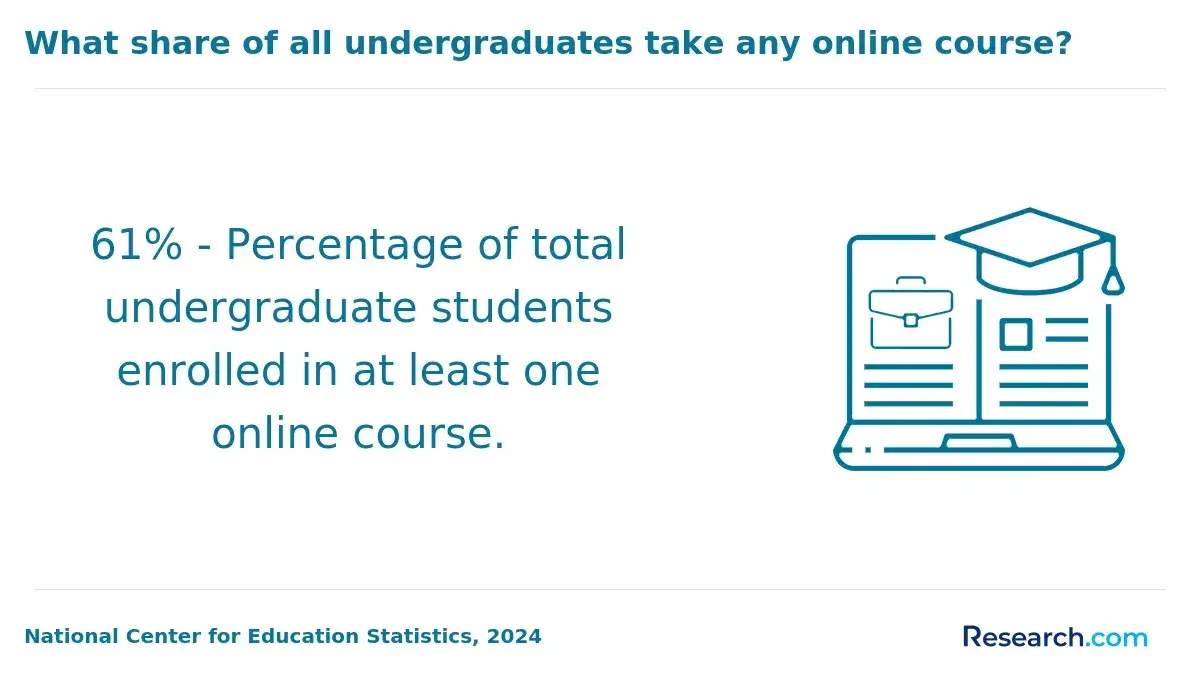
Data from the National Center for Education Statistics indicates steady increases in undergraduate psychology enrollment through 2024, reflecting broad interest rather than direct employer demand forecasting. This diverging pattern means students must weigh the tradeoffs between program format, credential levels, and regional employment landscapes to avoid under- or oversupply scenarios in their chosen fields. Graduates concentrated in popular applied master's tracks might encounter saturation in certain urban markets, while others specializing in niche or underserved areas could benefit from less competition but fewer program options. Recognizing these nuanced realities is essential for making informed decisions that balance educational investment against realistic career trajectories.
A recent graduate shared that her psychology cohort expanded noticeably over just a few years, driven in part by newly available online courses accommodating nontraditional students. While she appreciated the flexibility, she also noticed increased competition for internships and practicum sites critical for licensure preparation. Conversations with alumni revealed mixed perspectives: some viewed rising enrollment as a sign of a robust profession, others as a caution about crowded entry points and the need to differentiate through specialized skills or geographic mobility. This experience highlights how enrollment growth can bring both opportunity and challenge, underscoring the importance of strategic planning amid evolving labor market signals.
How Many Psychology Graduates Enter the Workforce Each Year?
Raw graduate numbers alone do not clarify whether psychology faces an oversupply or undersupply in the workforce, as degree completions measured by sources like NCES and IPEDS often include individuals who do not immediately enter psychology-specific roles. For instance, while approximately 75,000 to 85,000 bachelor's degrees in psychology are awarded annually, many holders pursue jobs outside the field, diluting direct workforce competition for psychology-focused positions. Graduate completions-around 15,000 to 20,000 annually-include those advancing through master's and doctoral programs, but immediate licensure and certification requirements frequently delay labor market entry, complicating traditional supply-demand assessments.
Data from employment surveys, such as those by the American Psychological Association, indicate roughly 10,000 new doctorates enter psychology-related employment annually, filling specialized roles in clinical, counseling, school, research, and academic settings. Hiring patterns vary regionally and by employer expectations, with skill sets required in licensed practice differing from broader labor market demands for psychology graduates possessing only bachelor's degrees. Misinterpreting aggregate graduate output as job market capacity risks overestimating available psychology positions, potentially influencing students toward degree paths without clear alignment to workforce openings or extended timelines for credentialing.
This dynamic highlights that surplus or shortage analyses must integrate credentialing hurdles, alternative career trajectories, and actual job availability rather than relying solely on enrollment or degree production statistics. Employers often seek candidates with advanced qualifications and practical experience, constraining opportunities for immediate bachelor's-level entry into psychology-specific roles. Prospective students and workforce planners benefit from recognizing these nuances to make informed decisions amid shifting market conditions and the diverse career pathways psychology graduates pursue beyond the traditional clinical or research tracks.
Does Job Growth Support the Rising Supply of Psychology Graduates?
Job growth projections for psychologists appear positive but fail to fully accommodate the surge in Psychology graduates, particularly at the bachelor's and master's levels. Though the U.S. Bureau of Labor Statistics estimates a 9% increase in psychologist employment through 2032, much of this growth is concentrated in specialized clinical and counseling roles that often require licensure, advanced degrees, and relevant experience. Consequently, many recent graduates face intense competition for limited openings, pushing them toward allied fields where Psychology expertise is valued but employer demand and specialization are more diffuse. This imbalance highlights regional demand trends for psychology graduates, showing important variation based on local workforce needs and sector-specific turnover rather than uniform opportunity expansion nationwide.
For instance, a graduate may struggle to secure entry-level clinical jobs despite strong overall growth rates, due to replacement demand and the predominance of experienced candidates. Roles such as behavioral health technicians or research assistants offer alternative pathways but typically require different credentials and provide variable career trajectories. Employers increasingly emphasize practical skills and internships to differentiate applicants amid rising graduate supply. Students must critically assess whether investing time and resources into a Psychology degree aligns with their career goals and the realities of the labor market, especially considering evolving employer expectations and geographic pockets of demand. For those seeking broader options, understanding alternatives like construction management courses or related fields may also inform strategic decisions about workforce transitions.
How Competitive is the Entry-Level Market for Psychology Graduates?
The entry-level job market for psychology graduates in 2024 shows significant imbalance between graduate supply and employer demand, underscored by persistent competition and limited expansion of entry-level roles. Although projections from the U.S. Bureau of Labor Statistics indicate about 6% growth in psychology-related employment over the next decade, opportunities remain concentrated and uneven, particularly for those holding only bachelor's or master's degrees. This results in many graduates competing over a relatively static number of positions, creating a supply-demand misalignment shaped by factors beyond sheer graduate volume.
Key dynamics influencing competition include:
- Applicant Volume Pressure:The number of psychology graduates entering the market outpaces new job creation in many entry-level segments, inflating candidate pools and driving intense competition. Graduates should assess local labor market saturation before committing to specific roles.
- Experience Prerequisites:Many roles demand prior internships or relevant hands-on experience, filtering out applicants without practical exposure even before hiring. Securing internships during studies significantly impacts employability.
- Industry Demand Variation:Demand is concentrated in clinical, counseling, and industrial-organizational psychology sectors, often favoring doctoral-level credentials and limiting openings for bachelor's or master's holders in other specializations.
- Skills and Certifications:Employers increasingly prioritize applicants with specialized skills such as data analytics, psychometrics, or clinical certifications, raising barriers for generalist degree holders.
- Geographic Factors:Job availability varies widely by region, with some metropolitan areas experiencing heavier competition or more remote-work applicants, influencing strategic job search approaches.
- Underemployment Risk:Many psychology graduates initially accept unrelated positions, reflecting limited alignment between credentials earned and available jobs.
- Remote Work Competition:Increasing employer openness to remote hires broadens the applicant pool beyond local markets, intensifying competition even for region-specific roles.
Marrying these pressures, one recent graduate recounted applying across multiple states, targeting behavioral health technician positions with years of internship experience but still facing 50-or-more applicants for each opening. They often met rejection despite multiple interviews, largely due to local employers' preference for clinical certifiers or candidates with niche data skills. This graduate eventually shifted focus to smaller community health programs in underserved regions, where competition was lighter, and practical experience carried more weight than specialization, permitting a tentative foothold despite early discouragement and uncertainty about the field's entry-level landscape.
Which Industries Have the Greatest Demand for Psychology Graduates?
Employer demand for psychology graduates continues to concentrate primarily in sectors that both structurally rely on psychological expertise and offer varied role advancement tied to credentials or specialized skills. This uneven distribution signals a labor market where high graduate supply does not equate to uniformly strong hiring odds across all fields. Graduates considering where to apply should weigh volume of job postings, competition levels, credential requirements, and long-term growth prospects. For example, a bachelor's degree holder may find abundant entry-level jobs but intense competition in healthcare, whereas roles in corporate consulting demand advanced data skills but offer more selective hiring. The following outlines the psychology graduate demand by industry sectors, showing where the top industries hiring psychology graduates in the US currently lie.
- Healthcare and Social Assistance: This sector generates the largest employer demand driven by expanded mental health awareness and services. Entry-level roles include behavioral specialists and counselors, but clinical psychologists typically require advanced degrees and licensure. Sustained government and private funding support ongoing hiring.
- Education Sector: Schools and universities employ psychology graduates in counseling, special education, and academic research, but many positions mandate specialized certifications or graduate-level qualifications, raising barriers for recent graduates despite steady demand.
- Corporate and Consultancy: Industrial-organizational psychology roles are growing in firms focused on workforce optimization. Employers seek candidates with business acumen and analytics skills, limiting openings mostly to those with graduate training and relevant experience.
- Government and Non-Profit Organizations: These entities hire psychology graduates for program evaluation and policy analysis with a focus on community outreach. Hiring volume is lower and subject to budget constraints, requiring adaptability and niche expertise.
- Research Institutions: Although fewer in number, research roles demand advanced degrees and often postdoctoral experience. This path suits psychology graduates prioritizing academic or applied research careers but offers limited immediate employment opportunities.
Despite modest growth in psychology-related jobs overall, those with only bachelor's degrees often face a supply surplus, necessitating consideration of further education or specialization to enhance employability and wage potential. Prospective students can benefit from integrating their career planning with realistic appraisals of these industry dynamics. Additionally, alternative educational routes may complement psychology foundations, such as combining related skills through an online hospitality management course, broadening career adaptability in complementary service sectors.
Where are Psychology Graduates Most in Demand?
National employment statistics for psychology graduates often mask significant regional disparities shaped by local industry clusters, employer densities, and economic structures. For example, while metropolitan hubs with diverse healthcare, educational, and corporate sectors generate substantial job openings, these areas also feature intense competition that can depress starting salaries and prolong job searches. Graduates targeting markets like New York or California must weigh high living costs and saturated applicant pools against abundant roles in clinical counseling, behavioral health, and organizational psychology. Conversely, states with fewer opportunities frequently experience a disconnect between the number of local graduates and available positions, forcing students to consider relocation or complementary skill development to remain competitive.
In regions dominated by hospitals and social assistance providers, practical experience and specialized credentials strongly influence hiring outcomes, emphasizing pathways that integrate internships or certifications alongside academic credentials. Emerging demand in technology and research companies similarly rewards graduates who align clinical psychology expertise with data analytics or digital innovation skills. However, less populous states often offer lower job volume, limiting entry points despite requiring similar qualification levels. Remote work options may mitigate some geographic constraints but rarely offset the advantage held by candidates within concentrated labor markets with extensive employer networks.
Prospective psychology graduates should critically assess local labor market structures rather than rely on headline job counts. Understanding the balance between job availability, competition, cost of living, and field specialization enhances strategic decision-making about where to study or work. For current degree holders, flexibility in geographic mobility and ongoing skill acquisition can improve employability in both traditional mental health roles and emerging interdisciplinary positions. According to the U.S. Bureau of Labor Statistics 2024 data, regions with dense healthcare and research institutions remain strong but require navigating tradeoffs that affect practical outcomes beyond superficial demand metrics.
Which Psychology Specializations and Degree Levels Face the Strongest Demand?
Employer demand within psychology is unevenly distributed, often concentrated among specialized areas and advanced degree holders rather than broadly across all graduates. For example, a doctoral-level clinical psychologist might find stronger hiring prospects in treatment settings compared to a master's-level graduate aiming for a generalist position without certification. Data from the U.S. Bureau of Labor Statistics underscores growth for clinical, counseling, and school psychology due to persistent mental health service needs. Below are key specializations and degree tiers exhibiting the most robust demand.
- Clinical and Counseling Doctorates: These roles require PhD or PsyD credentials and state licensure, with demand driven by healthcare, schools, and community mental health organizations needing licensed practitioners for direct care.
- Industrial-Organizational Psychology Graduate Degrees: Employers in corporate settings prioritize master's and doctoral graduates applying evidence-based strategies for workforce productivity, organizational development, and employee wellness.
- Neuropsychology Doctoral Specialists: Increasing interest in healthcare systems for neurological assessment and rehabilitation fuels demand, but hiring favors candidates with advanced credentials and certifications.
- Forensic Psychology Doctoral Level: Legal and criminal justice sectors seek psychologists with specialized training and doctoral qualifications to provide expert testimony and assessment services.
- Master's Level Behavioral Health Technicians and Case Managers: These roles offer entry pathways but face high competition and frequently require supplementary certification or post-degree training to improve hiring odds.
- School Psychologists with Advanced Degrees: Continued emphasis on student mental health supports stable demand for credentialed professionals holding master's or doctoral degrees who meet state licensing requirements.
Workforce patterns reveal that supply-demand imbalances often reflect credential and specialization alignment rather than overall psychology graduate volume. A findings overview from LinkedIn Workforce Insights further indicates that targeted skills and formal licensure remain critical differentiators in employment outcomes.
Are Employer Skill Gaps Affecting Demand for Psychology Graduates?
The perceived shortage in psychology graduate demand often stems not from the number of degree holders entering the market but from a deficit in candidates possessing the specialized competencies employers require. Hiring managers prioritize applied experience, digital proficiency, certifications, and familiarity with industry tools, particularly in roles demanding data analytics or evidence-based clinical techniques. Consequently, positions can remain unfilled despite a healthy graduate volume, as many lack demonstrated real-world skills or licensure that ensure immediate practical contribution. Misinterpreting this dynamic risks oversaturation in generalist degree holders who face intense competition for fewer specialized roles, particularly across regional employer needs for psychology degree holders.
This disjunction between graduate supply and employer demand underscores the strategic value of targeted internships, skill development projects, and aligning educational choices with employer expectations. Programs that incorporate interdisciplinary approaches combining psychology with technology or healthcare tend to improve employability by meeting evolving workplace demands. Prospective students and current degree holders should weigh program curricula critically, considering credentials and certifications aligned with sector-specific requirements rather than relying on broad academic credentials alone. Those focusing on generalist degrees may benefit from exploring complementary pathways, including a well-selected online degree in photography or other fields that enhance practical marketability and diversify skill sets.
Skill mismatches not only distort demand perceptions but also influence hiring competition, especially in entry-level positions where immediate impact is essential. Employers increasingly seek candidates who can demonstrate communication ability and technical proficiency, which reduces onboarding time and training costs. Recognizing these realities helps students and educators make informed decisions, balancing volume of graduates with the quality of relevant competencies that translate into tangible career opportunities within the evolving labor market.
What is the Future Supply-and-Demand Outlook for Psychology Graduates?
Targeted job searches consistently outperform broad, unfocused applications because they concentrate effort on roles where a psychology graduate's qualifications align closely with employer demand. For example, a recent psychology graduate focusing exclusively on entry-level clinical or counseling assistant positions in urban centers with demonstrated hiring needs will likely see better conversion rates than one applying broadly to diverse job titles across unrelated locations. Prioritizing clear entry-level job titles and tailoring resumes to reflect exact employer language and required competencies-such as telehealth skills or data analytics-strengthens candidacy and demonstrates practical readiness beyond academic credentials.
Market research and timing also influence outcomes. Graduates who identify industries with increasing demand, like mental health or organizational development, and invest in relevant internships or certifications improve their placement chances. Conversely, flooding the market with generic applications often results in extended joblessness due to oversupply, especially when many programs graduate candidates without sufficient licensure or experience. According to labor data, regions differ markedly in employer demand, underscoring the need to prioritize geographic locations with stronger openings and to focus on demonstrating relevant skills through projects or targeted experience, which employers value highly in competitive fields.
Understanding the psychology graduate supply and employer demand outlook involves recognizing that evidence-informed decisions trump volume-based strategies. For insight into specific career expectations and compensation, it is useful to explore resources such as the FBI criminal profiler salary overview. This approach equips candidates to allocate effort efficiently and navigate the nuanced future job market trends for psychology graduates more effectively.
References
- 10 Entry-Level Psychology Jobs | Psychology.org https://www.psychology.org/careers/entry-level-psychology-jobs/
- Top 5 Highest-Paying Psychology Careers - Rivier Academics https://www.rivier.edu/academics/online/resources/program-resources/top-5-highest-paying-psychology-careers-rivier-university/
- What Employers Actually Want From Graduates https://bodyswaps.co/resources/blog/what-employers-actually-want-from-graduates
- What is the future job outlook for careers in psychology? https://www.bestmastersinpsychology.com/faq/what-is-the-future-job-outlook-for-careers-in-psychology/
- Skills of a Psychology Major - Psychology Department https://wagner.edu/psychology/skills/
- Major Proposed Changes to Psychology Education and Training https://www.aapi.org.au/Web/Web/About-AAPi/News/Articles/2026/April/Major-Proposed-Changes-to-Psychology-Education-and-Training.aspx
- 48 Jobs You Can Get with a Psychology Degree - Mid-Atlantic Christian University https://www.macuniversity.edu/48-jobs-you-can-get-with-a-psychology-degree/
- Psychology Entry Level Jobs (with Salaries) - SEEK https://au.seek.com/psychology-entry-level-jobs
- 14 Exciting Psychology Careers in High Demand https://www.ucumberlands.edu/blog/14-exciting-psychology-careers-high-demand
- The State of Psychology Education https://www.parinc.com/learning-center/par-blog/detail/blog/2024/07/09/the-state-of-psychology-education
Other Things You Should Know About Psychology
In fields like psychology where graduate supply often outpaces employer demand, program reputation and networking can significantly impact employability. Degrees from institutions with strong clinical training, research opportunities, and established professional networks offer better pathways into competitive roles. Prioritizing programs that connect students to internships and professional associations can mitigate market saturation by differentiating candidates beyond the degree itself.
General psychology degrees provide broad foundational skills but may face tougher competition for limited entry-level roles, especially in clinical or applied settings that increasingly value specialization. Specialized tracks, such as industrial-organizational psychology or neuropsychology, often require additional targeted coursework or certifications but can lead to higher employability and niche roles with less direct competition. Prospective students should weigh whether early specialization aligns with their career goals to optimize long-term job prospects.
Research-oriented psychology programs typically prepare students for academic, clinical research, or doctoral studies, which require significant further education and involve fewer direct job openings. Applied programs often provide practical skills and field placements that align more closely with workforce needs in counseling, human services, or organizational roles. For students prioritizing immediate employability over an academic pathway, applied programs usually offer a more direct route, albeit sometimes with lower initial earnings potential.
Gaining relevant work experience prior to graduate study can enhance a psychology graduate's market readiness and clarity on specialization areas, thereby increasing the return on invested educational time and costs. Employers value candidates who combine academic credentials with practical skills and demonstrated workplace competencies. Students uncertain about career focus should consider entry-level roles or volunteer positions in psychology-related settings before committing to advanced degrees, to better align education with labor market realities.