2027 A Second BS in Business Administration After a Bachelor's in History: Credits, Cost, and Alternatives
Audited and Verified:
Our Editorial and Data Verification Process
Research.com uses government datasets, official education statistics and primary institutional information to support its career and degree guides. Our review process checks factual accuracy, occupational definitions, source dates and the requirements associated with the credentials discussed.
How This Article Was Fact-Checked
Our editorial team verifies salary estimates, employment projections, education requirements and program information against original data providers and official organizations. Salary figures are checked against the relevant occupational definitions and reporting periods. Information about licensure, accreditation and required in-person training is reviewed separately.
Fact-checked and verified on:

Co-Founder and Chief Data Scientist
A history degree may have fulfilled much of your undergraduate general education, but it does not automatically shorten a second bachelor's in business administration by the same amount. If you want to change careers, the decision turns on which credits satisfy the new degree, what business courses remain, and whether the credential is worth more than a targeted alternative.
This guide explains how to obtain a usable degree audit, estimate your full cost, and compare a second BS with faster routes into your intended business role.
Key Things You Should Know
- A second bachelor's usually does not require repeating every undergraduate course, but accepted history credits may count only as electives; the school's official degree audit determines what remains.
- Compare programs by required business courses, residency rules, course availability, and total remaining cost - not by the number of credits a school says it will accept.
- For context, the U.S. median wage for market research analysts was $78,760 in May 2025, with 7% employment growth projected for 2025-2035; those occupation-wide figures are not a starting salary or a return-on-investment estimate for a second degree.
What Is a Second Bachelor's in Business Administration After History?
It is a separately awarded undergraduate degree earned after your history bachelor's, not a retroactive change of major. A BS in Business Administration typically combines business fundamentals with quantitative work, electives or a concentration, and sometimes an applied capstone. A school may instead award a BBA or BA in Business; the title alone does not establish how many courses you need or how employers will assess your skills.
Your history training can be useful in research, evidence evaluation, writing, and explaining decisions to different audiences. The second degree is most defensible when the jobs you want call for sustained undergraduate business preparation and you can use the program to build relevant work samples or experience. If speed is the main attraction, compare the actual remaining requirements - not just advertised calendars - when considering undergraduate programs with faster pacing.
How Many Credits Transfer Toward a Second Business Administration Bachelor's?
There is no reliable credit total based solely on having a history bachelor's. Schools may recognize the first degree as satisfying general education while still requiring most of the business major. Others apply individual courses to requirements. The distinction is between credits accepted by the university and credits applied to the second degree.
The following categories show where a history graduate's prior work might land. They are possibilities, not transfer guarantees.
| Prior coursework | Possible treatment | Question for the degree audit |
| History and humanities | General education or elective credit | Does the completed bachelor's waive remaining general education requirements? |
| Statistics, mathematics, or economics | Possible quantitative or business prerequisite credit | Does the exact course satisfy the required equivalent, including any recency rule? |
| Business courses taken as electives | Possible business-core credit | Does the business school approve them for the major rather than free electives? |
| Previously earned upper-level credits | Possible elective credit | Must upper-level business courses still be taken at the new institution? |
Send official transcripts and, where requested, syllabi to the transfer office. Then ask a business adviser for a written audit showing unmet core, concentration, upper-level, capstone, and institutional residency requirements. Confirm that each remaining course is offered when you can take it. Accelerated online pathways for business students are only faster for you if those requirements and course schedules actually permit a shorter sequence.
How Much Does a Second Business Administration Bachelor's Degree Cost?
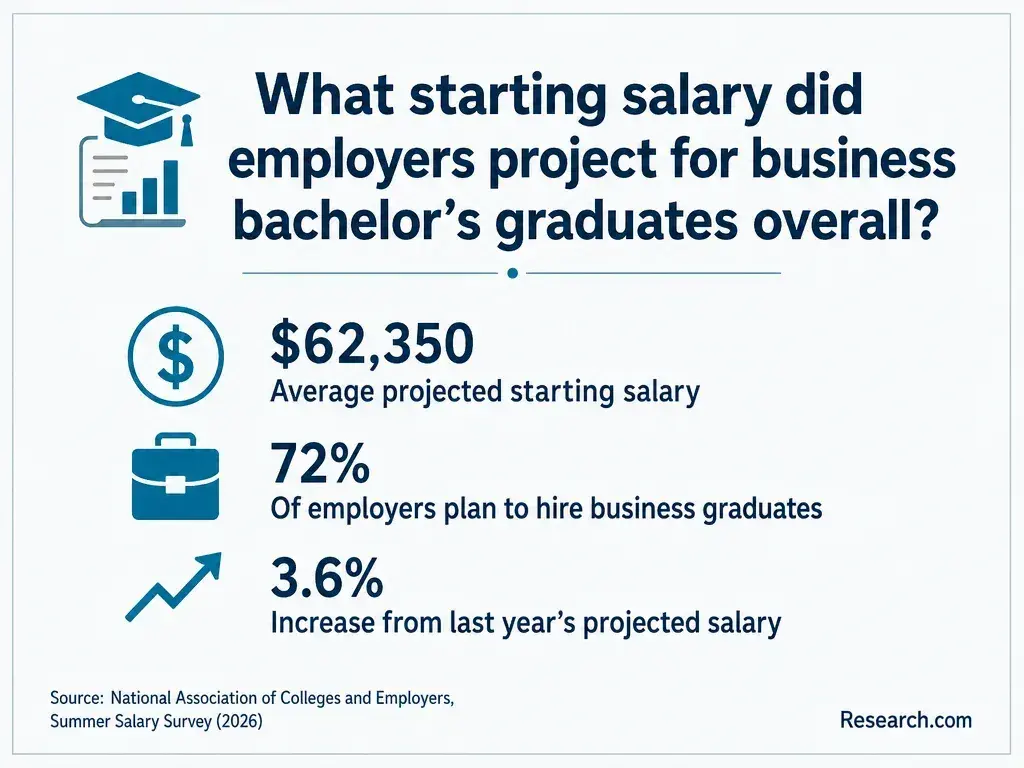
There is no dependable second-degree price without an approved audit and a school-specific tuition schedule. For each program, multiply the required credits or terms by the applicable rate, then add mandatory fees, books, software, any travel or campus visits, and financing costs. Ask whether tuition is charged per credit, course, or term; a shorter calendar does not necessarily mean a smaller bill.
Compare remaining cost, not the advertised cost of a full bachelor's. A low tuition rate can lose its advantage if a school requires extra prerequisite courses, a large number of its own credits, or an additional term because a required course is unavailable. Lost work hours and delayed entry into your target role also matter, although neither can be estimated responsibly without your circumstances. Use budget-conscious online business administration education as a starting point, then request an individualized, itemized estimate.
A prior bachelor's generally makes you ineligible for a federal Pell Grant. Federal student loans may still be possible, subject to your eligibility and applicable limits; employer assistance and institutional aid depend on their own rules. Ask the financial-aid office what you can actually receive as a second-degree student before treating any aid offer as a discount.
Expect the degree audit to focus on the business core rather than your prior major. Depending on the curriculum, that may include financial and managerial accounting, economics, statistics, finance, marketing, organizational behavior, operations, business law, and strategy. A concentration can add a prerequisite chain; an analytics or finance track, for example, may require quantitative courses before upper-level electives.
Your research and writing background may help with case analysis and presentations, but it does not substitute automatically for accounting or statistical methods. Compare course descriptions and prerequisites with the work you want to do. For an operations role, an applied process-analysis assignment may be more useful than an unrelated elective; for marketing research, look for survey design, data interpretation, and ethical data use.
The school decides whether prior coursework meets formal requirements. Its catalog and entry conditions for prospective business administration students can help you identify questions to put to the adviser, but only the school can approve an equivalency or waiver.
Neither format is inherently better for a history graduate. Online study may protect work hours or widen your choice of schools; campus study may make scheduled collaboration, recruiting events, and local employer contact easier. The deciding issue is whether you can complete the remaining courses and gain relevant experience in that format.
Ask about live sessions, proctored exams, group presentations, internship or capstone requirements, and whether required courses run every term. An online class with fixed meetings is not necessarily compatible with a full-time job. Conversely, a campus program with evening courses might be workable if its business core is offered consistently. Use US rankings of online business degree programs to identify candidates, then verify each candidate's second-degree policies and actual course schedule yourself.
Schools commonly require proof of your completed bachelor's and official college transcripts, but admission standards vary. A university may admit you while its business school separately reviews prerequisites or imposes requirements before you enter upper-level courses. Prior grades, application deadlines, and eligibility to pursue a second degree at the same institution can also affect the route.
Before applying, ask admissions whether it accepts second-bachelor's applicants into the intended business program and whether you need math, economics, accounting, or statistics before enrollment or before advanced courses. Ask the transfer office for the credit evaluation and financial aid for a second-degree eligibility assessment; these offices answer different questions. A list of accredited affordable business administration colleges with aid options can narrow your search, but a college's participation in federal aid programs does not mean you personally qualify for every form of aid.
First, confirm the institution's accreditation and status through the accreditor and the U.S. Department of Education's accreditation records. Then check whether any advertised AACSB, ACBSP, or IACBE accreditation covers the relevant business school or program; institutional and business accreditation are different claims. Accreditation alone does not tell you how your history credits will apply or whether graduates enter your target occupation.
For this decision, quality evidence includes a written second-degree audit, access to required courses, faculty support, applied assignments, and career services available to second-degree students. If a school reports employment outcomes, ask which graduates were counted and how the information was collected. When comparing lower-priced college options for business majors, check those details alongside the price rather than assuming the least expensive published tuition produces the least expensive path to graduation.
Start with your existing experience and a specific function. History graduates who can research, write clearly, and explain evidence may be well positioned to seek coordinator or assistant roles in marketing, operations, fundraising, recruiting, or administrative work. Business coursework can add budgeting, customer analysis, process improvement, or accounting knowledge, but hiring still depends on demonstrated skills and the employer's requirements.
For example, a marketing coordinator may help organize campaigns and report results, while a market research analyst interprets customer or market data and may need stronger statistical skills. An HR assistant may maintain records and support hiring processes; an HR specialist typically handles broader recruiting or employee programs.
If HR is your aim, compare the business curriculum with understanding human resources degree levels and the requirements in actual job postings. Neither degree makes a new graduate an experienced manager. Use internships, relevant employment, or an approved applied project to show work you can discuss with employers.
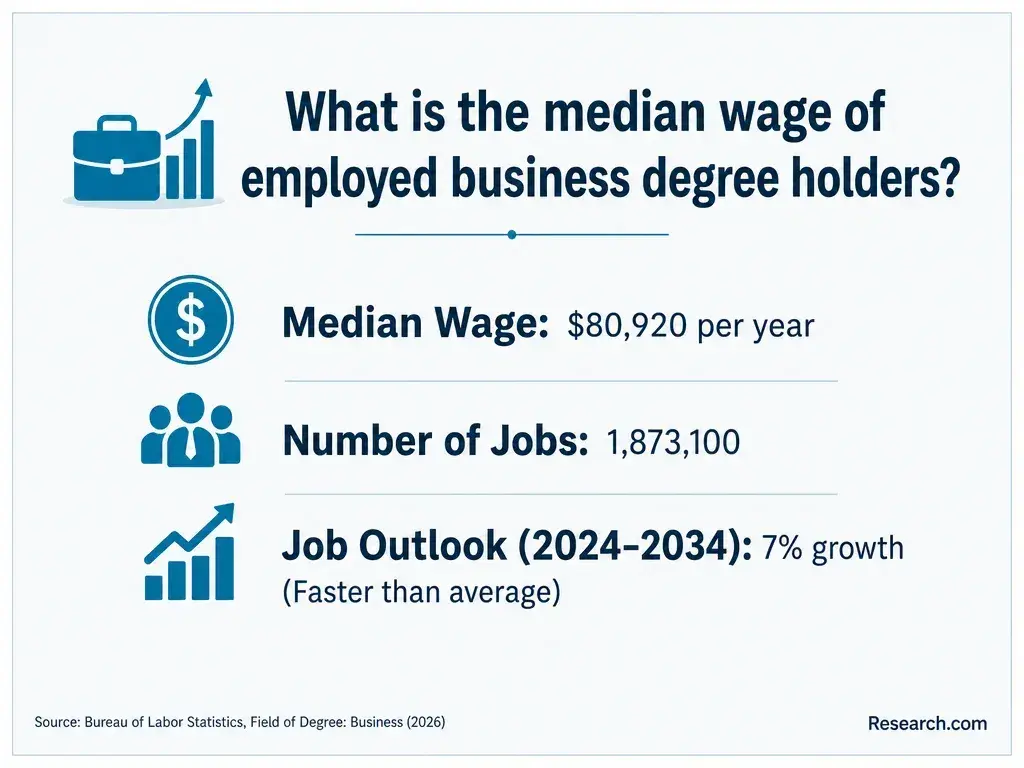
There is no single salary or growth rate for "business administration graduates." The U.S. Bureau of Labor Statistics reports occupation-wide figures, which include workers with different degrees and experience. For market research analysts, the median annual wage was $78,760 in May 2025, and employment is projected to grow 7% from 2025 to 2035. That may make the occupation worth investigating if you enjoy research and build quantitative skills, but its median is not a forecast of your first offer.
Assess return on investment against a realistic entry role, local openings, your current earnings, and the degree's remaining cost. A second bachelor's is a weak financial bet if the job you want accepts your history degree plus targeted skills and experience. Comparisons of business administration degrees by cost, duration, and outlook can provide context, but your approved audit and target occupation must drive the calculation.
What Alternatives to a Second Business Bachelor's Degree Should You Consider?
The best alternative depends on the gap between your history degree and your target role. If postings accept any bachelor's, targeted accounting, spreadsheet, analytics, or marketing coursework plus a relevant project or entry-level job may be more direct. A business certificate can provide structured study without awarding another degree; check its course depth and whether credits would count if you later pursue a bachelor's.
If you want a specialized function, compare a focused degree or graduate pathway against the second BS. Some master's programs admit non-business majors but require preparatory coursework, so compare actual prerequisites and total costs. For project coordination, experience and targeted training may be more useful than another broad undergraduate degree; online degree options in project management at lower cost offer a comparison, not a shortcut to managerial responsibility or certification.
Request degree audits and itemized costs from the strongest second-BS candidates, then compare them with the cheapest credible route to the skills and experience your target employers request. Enroll in the second bachelor's when its required coursework, applied opportunities, and credential value justify the additional time and expense - not simply because your first major was history.
Other Things You Should Know About Business Administration
No. A second bachelor's is awarded after the first degree; adding a major before graduation is governed by your current school's double-major or dual-degree rules.
Schools may use prior grades for admission while calculating a separate institutional or major GPA after enrollment. Ask which GPA appears on your new transcript and determines academic standing.
Possibly, if the school accepts the relevant exam or offers prior-learning assessment for that requirement. Approval, documentation, fees, and limits vary; work experience by itself does not award credit.
Not by itself. CPA eligibility is set by state boards and includes specific education and other requirements. Check the board in the state where you plan to seek licensure before choosing courses.
- Student Eligibility for Pell Grants | ed.gov https://fsapartners.ed.gov/knowledge-center/fsa-handbook/2024-2025/vol7/ch1-student-eligibility-pell-grants
- Eligibility Requirements | Federal Student Aid https://studentaid.gov/understand-aid/eligibility/requirements
- Second Bachelor's Degree Requirements | UIC Admissions https://admissions.uic.edu/undergraduate/requirements-deadlines/second-bachelors-degree-requirements
- Estimated Cost of Attendance | csueastbay.edu https://www.csueastbay.edu/financialaid/prospective-students1/cost-of-attendance.html
- Degree Credit and Residency Policy | SUNY Empire https://sunyempire.edu/policies/degree-credit-and-residency-policy.html
- Undergraduate Transfer Credit and Credit for Prior Learning | charlotte.edu https://provost.charlotte.edu/policies-procedures/academic-policies-and-procedures/undergraduate-transfer-credit-credit-for-prior-learning/
- Online Bachelor's Degree in Business Administration | Purdue Global https://www.purdueglobal.edu/degree-programs/business/bachelor-business-administration/
- What kind of aid am I eligible for as a second-degree student? | unc.edu https://studentaid.unc.edu/faq/what-kind-of-aid-am-i-eligible-for-as-a-second-degree-student/
- Second Bachelor's - UF Online - University of Florida https://ufonline.ufl.edu/apply/admissions-requirements/second-bachelors/
- How Do Transfer Credits Work When You Go Back to School? | Whitworth Online https://online.whitworth.edu/news-articles/how-do-transfer-credits-work-when-you-go-back-to-school/