2027 Organizational Leadership vs. International Business for a Business Administration BS: Which Fits?
Audited and Verified:
Our Editorial and Data Verification Process
Research.com uses government datasets, official education statistics and primary institutional information to support its career and degree guides. Our review process checks factual accuracy, occupational definitions, source dates and the requirements associated with the credentials discussed.
How This Article Was Fact-Checked
Our editorial team verifies salary estimates, employment projections, education requirements and program information against original data providers and official organizations. Salary figures are checked against the relevant occupational definitions and reporting periods. Information about licensure, accreditation and required in-person training is reviewed separately.
Fact-checked and verified on:

Co-Founder and Chief Data Scientist
Choosing between organizational leadership and international business changes what you study beyond the business core - and which early-career opportunities you can prepare for. Organizational leadership focuses on helping people and teams work effectively; international business focuses on decisions across countries and markets. If you are selecting a concentration for a Business Administration BS, this comparison will help you match courses and applied experience to your target work, assess the added time and cost, and avoid mistaking either concentration for a guaranteed management job or overseas career.
Key Things You Should Know
- Choose organizational leadership for people, training, and organizational-change interests; choose international business for cross-border operations, sourcing, and market interests.
- Neither concentration guarantees a manager title or an international posting. Relevant projects, language ability, industry knowledge, and work experience can matter more than the concentration name.
- Compare the credits each concentration adds to your degree. For context - not a graduate salary - the U.S. median annual wage for human resources specialists was $75,940 in May 2025.
What Is the Difference Between Organizational Leadership and International Business?
Both concentrations sit within a broader Business Administration BS, which typically includes accounting, finance, marketing, operations, and quantitative coursework. A concentration is a defined set of courses within that degree, not a separate degree or professional credential. Schools may use different names and requirements, so compare their official catalogs rather than assuming identical curricula.
The distinction is the problem each concentration helps you examine. Organizational leadership addresses how an organization motivates people, develops teams, communicates change, and makes responsible decisions. International business addresses how firms operate when customers, suppliers, regulations, currencies, and business practices cross borders.
Leadership coursework may touch on hiring and employee development, but it is not interchangeable with specialized HR preparation. If HR is your target function, compare it with a human resources degree subject guide before deciding how much HR-specific study you need.
Which Business Administration Concentration Matches Your Career Goals?
Start with the work you want to do, not the appeal of a concentration title. The table connects common goals to the better starting point and the experience that would make your choice more useful to employers.
| Target work | Stronger starting fit | Experience to seek |
| Employee development or team coordination | Organizational leadership | Training support, team projects, or documented process improvements |
| Import, export, sourcing, or multinational operations support | International business | Supply-chain, market-research, or cross-border customer projects |
| Project coordination | Either, depending on the projects | Schedules, budgets, stakeholder updates, and completed project records |
| Specialized finance, accounting, or analytics | Neither necessarily | Compare function-specific courses and employer requirements |
If you already work in a company, leadership may help you build on actual responsibility for training or improvement. International business may fit better if you can work with suppliers, customers, or market information across borders. For a substantial move into project management, compare the concentrations with economical project management education online; a leadership elective may offer too little scheduling or risk-management depth for your goal.

What Courses Do Organizational Leadership and International Business Include?
Organizational leadership commonly emphasizes organizational behavior, leadership theory, conflict resolution, change management, and employment-related topics. International business may include global strategy, international marketing, trade, cross-cultural management, and international finance or supply chains. A school might offer a language course, but do not assume one is required - or available within the concentration.
Look beyond course titles. A change-management case and a supervised workplace improvement project offer different evidence of ability; so do a trade-policy lecture and an analysis of a market-entry decision. Ask whether a course requires prerequisites, runs in your intended term, and counts toward the official concentration.
If you will study while employed, check the sequence before choosing accelerated business education for working adults. Shorter terms can make a course available sooner, but they can also compress group assignments, presentations, and quantitative work into a tighter schedule.
Organizational leadership can strengthen communication, stakeholder analysis, conflict handling, and evidence-based recommendations about teams or change. International business can strengthen comparison of markets, assessment of cross-border risks, cultural awareness, and coordination across locations. Both should build on the business core's financial and analytical basics rather than replace them.
To judge practical depth, inspect graded assignments: Does a student analyze a staffing challenge using appropriate evidence, or assess a sourcing decision with costs, currency assumptions, and regulatory constraints? A classroom case demonstrates reasoning, not authority to manage employees or conduct trade compliance independently.
If your real goal is to build project schedules, budgets, and risk plans, compare those assignments with accredited project management programs with low tuition. More specialized study is worthwhile only if its additional coursework and cost address skills your target roles actually require.
Admission usually depends on the institution's undergraduate policies, while entry into a business major or concentration may have separate rules. Schools may review prior transcripts, academic standing, and preparation in mathematics or introductory business subjects. Do not assume that a non-business background rules you out - or that admission means previous courses satisfy concentration requirements.
For a useful decision, request an official degree audit showing which prior credits apply to general education, the business core, and each concentration. Ask an adviser about prerequisites, minimum grades, and whether changing concentrations would leave credits usable only as electives. A more detailed overview of prerequisites for a business administration degree can help you prepare those questions, but the enrolling institution determines its requirements.
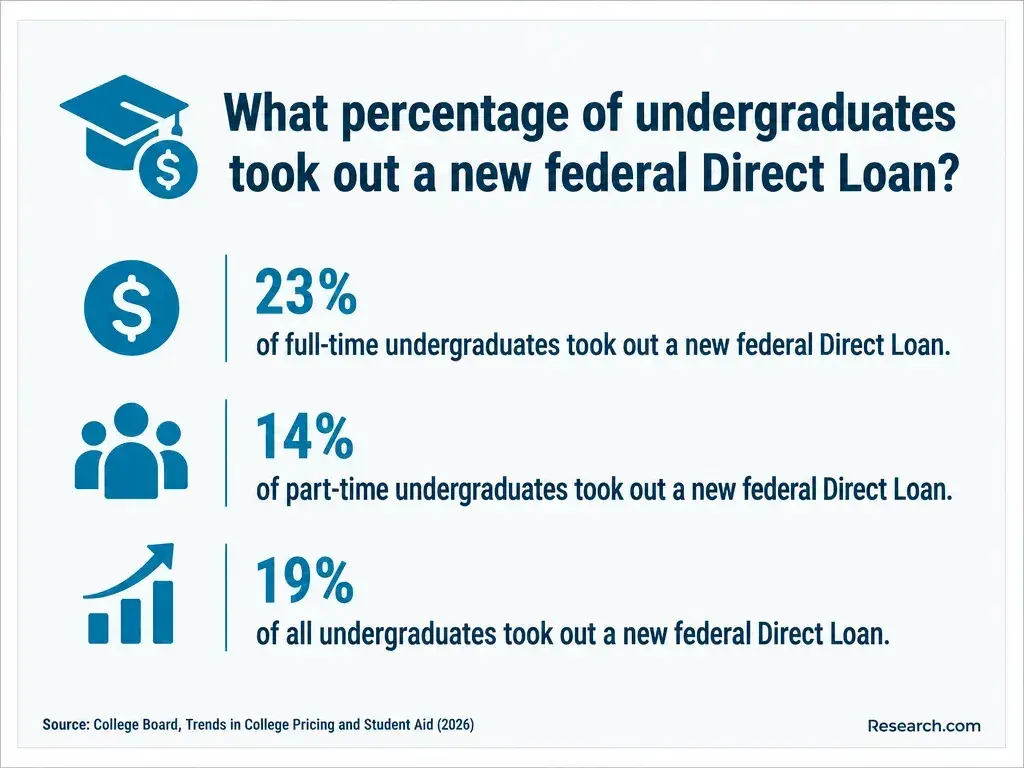
When both options are concentrations in the same BS, they may have the same published degree length and tuition rate. Your remaining time and cost can still differ if one requires extra credits, has prerequisites you lack, or offers required courses less often. Transfer students should compare credits applied to requirements, not merely credits accepted by the university.
Ask each school for a term-by-term plan and an estimated total based on your evaluated credits. Include tuition, mandatory fees, books or software, travel for any required activities, and the cost of an added term if a course is unavailable. Financial aid changes what you pay, not what the program costs; compare eligibility and charges at business administration colleges participating in federal aid programs rather than assuming either concentration receives more aid.
Neither format is inherently better for these concentrations. Online study may make it easier to keep a job while completing leadership cases or international market analyses. Campus study may offer more convenient access to in-person teams, faculty, language practice, and local employer events. Access to internships or global experiences depends on the particular program, not its delivery label.
Check live-session times, group-work expectations, exam arrangements, and any campus visits or travel requirements. International business students should also ask whether global projects involve real partner interaction or only classroom simulations. If speed matters, compare online degrees with accelerated terms against your actual weekly availability; accelerated does not mean self-paced.
Organizational leadership can support applications for HR assistant, training coordinator, operations coordinator, or administrative roles when your coursework and experience match the tasks. International business can support applications for import/export support, supply-chain coordination, international sales support, or market-research roles. Employers may require industry knowledge, language ability, software skills, or prior experience for particular positions.
Look at job descriptions before committing: identify the tasks you can already perform, the gaps a concentration would address, and the evidence you could show through an internship, current job, or approved project. Management positions generally require demonstrated responsibility beyond an undergraduate concentration.
If the roles you find chiefly involve delivering projects rather than leading teams or coordinating cross-border work, a specialized degree is another option. Compare its full financing - not just advertised tuition - using guidance on grants versus loans for project management bachelor's study before switching paths.
There is no single U.S. salary or employment-growth figure for either concentration. Federal labor statistics track occupations, not the concentration printed on a graduate's record. The following related occupations provide context, but their medians include workers at different experience levels and are not starting-salary estimates.
| Related U.S. occupation | May 2025 median annual wage | Projected employment change, 2025-2035 |
| Human resources specialist | $75,940 | +6% |
| Training and development specialist | $69,280 | +11% |
| Logistician | $82,320 | +18% |
| Market research analyst | $78,760 | +7% |
These Bureau of Labor Statistics figures suggest opportunities in functions adjacent to both concentrations, not an earnings advantage caused by either one. For example, logistician growth says more about projected demand for that occupation than about the value of an international business concentration. Compare local openings and your qualifications alongside business administration college costs and potential career outcomes before estimating whether additional study is worthwhile.
How Can You Choose an Accredited and Reputable Business Program?
First, confirm the institution holds recognized institutional accreditation. Then verify the exact BS title, whether each concentration is officially offered in your delivery format, and which catalog requirements apply to you. AACSB, ACBSP, or IACBE recognition, where present, has a defined scope; do not assume it covers the named program without checking.
Ask for the concentration course list, a degree audit, course schedules, applied-learning rules, and career-service details. If a school publishes employment outcomes, check which students were counted and whether the results distinguish concentrations. Application-fee savings may help you compare schools - see accredited online colleges without application fees - but they should not outweigh curriculum fit, remaining cost, or the likelihood of finishing on your schedule.
Choose organizational leadership if you can connect its people-focused work to responsibilities you want to earn. Choose international business if you can connect cross-border study to a specific market, operations, or customer-facing function. If neither fills your main skill gap, use electives - or consider a more targeted qualification - instead of choosing a concentration for its name.
Other Things You Should Know About Business Administration
Possibly. Some schools allow a second concentration or electives from both areas. Confirm whether the courses fit your remaining elective space and whether the school formally records both concentrations.
That depends on the institution. It may appear on a transcript rather than the diploma. Ask the registrar how the completed concentration is recorded.
No. A concentration does not provide a visa, work authorization, or a country-specific professional license. Check the destination country's requirements separately.
Only if your school offers an applicable prior-learning or course-substitution process and approves your evidence. Relevant experience can strengthen your career case even when it earns no academic credit.
- Maximizing the Impact and ROI of Leadership Development | nih.gov https://pmc.ncbi.nlm.nih.gov/articles/PMC11505461/
- Annual Earnings by Educational Attainment - COE https://nces.ed.gov/programs/coe/indicator/cba/annual-earnings
- Benefits of Organization Leadership Degrees in Management | UMass Global https://www.umassglobal.edu/blog-news/benefits-organization-leadership-degrees-management
- How to Leverage Your International Business Concentration | Career Management Center Colorado State University https://bizcareers.colostate.edu/resources/how-to-leverage-your-international-business-concentration/
- Business Administration vs. Management: Key Differences and Career Fit | post.edu https://post.edu/blog/business-administration-vs-management/
- Organizational Leadership vs. Business Management | Cal Lutheran https://www.callutheran.edu/programs/articles/organizational-leadership-vs-business-management/
- MBA Concentrations: Types, Skills, and Career Paths | SCU https://www.scu.edu/business/blog/mba/mba-concentrations/
- After Everything: Projections of Jobs, Education, and Training Requirements through 2031 - CEW Georgetown https://cew.georgetown.edu/cew-reports/projections2031/
- What is the difference between a B.A. and B.S. in business administration? | Concordia University, Nebraska https://www.cune.edu/news/what-difference-between-b-and-bs-business-administration
- 5 Organizational Leadership Careers | Claremont Lincoln https://claremontlincoln.edu/news-blog/organizational-leadership-careers/