2027 Choosing a BS in Business Administration: How to Check a Finance Track Marketed Alongside Financial Planning Credentials
Audited and Verified:
Our Editorial and Data Verification Process
Research.com uses government datasets, official education statistics and primary institutional information to support its career and degree guides. Our review process checks factual accuracy, occupational definitions, source dates and the requirements associated with the credentials discussed.
How This Article Was Fact-Checked
Our editorial team verifies salary estimates, employment projections, education requirements and program information against original data providers and official organizations. Salary figures are checked against the relevant occupational definitions and reporting periods. Information about licensure, accreditation and required in-person training is reviewed separately.
Fact-checked and verified on:

Co-Founder and Chief Data Scientist
A finance track can look like a direct route from a business administration degree to a financial planning credential. That impression may depend on details the advertisement does not explain: the track's official status, whether its courses satisfy CFP Board education requirements, and what remains after graduation. For students comparing programs or finishing a bachelor's degree, those distinctions affect course choices, cost, and career plans. This guide shows you how to check the claims, compare preparation for finance and planning work, and ask for the evidence you need before enrolling.
Key Things You Should Know
- Confirm the exact degree and track in the catalog, then check whether the specific financial planning curriculum is CFP Board-registered; neither a finance concentration nor institutional accreditation proves that it is.
- A bachelor's degree does not award CFP® certification or permission to conduct regulated advisory work. Education, examinations, experience, ethics, and any applicable registration or licensing are separate steps.
- The Bureau of Labor Statistics reports a $102,740 May 2025 median wage for financial and investment analysts, not for new business graduates or financial planners. Compare programs using verified outcomes for the roles you actually want.
What is a business administration finance track with financial planning credentials?
It is typically a BS in Business Administration with finance courses and, sometimes, a defined sequence of financial planning courses. The school awards the degree; an outside organization awards any professional certification. A brochure's "track" may mean an official concentration recorded on the transcript, an elective cluster, or simply suggested courses. Ask which it is.
Start with the intended job. If you want to help households with investments, retirement, taxes, and estate-planning considerations, examine the planning sequence. If you want corporate budgeting or valuation work, examine finance and analytical depth instead. If your goal is personnel work rather than either finance function, human resources college study options may be a more direct comparison than a planning-oriented track.
The strongest claim to verify is not that a school "prepares students for credentials," but which credential, which required coursework the track covers, and what additional steps remain.
How does CFP Board registration differ from institutional accreditation?
Institutional accreditation concerns the college or university and is an essential check on the degree-granting institution. Business-specific accreditation, if advertised, has its own scope: confirm whether AACSB, ACBSP, or IACBE covers the relevant business unit or program. Neither type establishes that a financial planning curriculum meets CFP Board education requirements.
CFP Board registration applies to an education program designed to satisfy the coursework component of CFP® certification. Check the program's listing with CFP Board and ask the school which degree, campus or online format, catalog year, and course sequence the listing covers. Confirm how the school reports completion; do not assume that taking one planning elective qualifies.
An application fee is a separate shopping consideration, not a quality signal. If you are comparing no-application-fee online college choices, still check institutional accreditation and the planning program's registration independently.
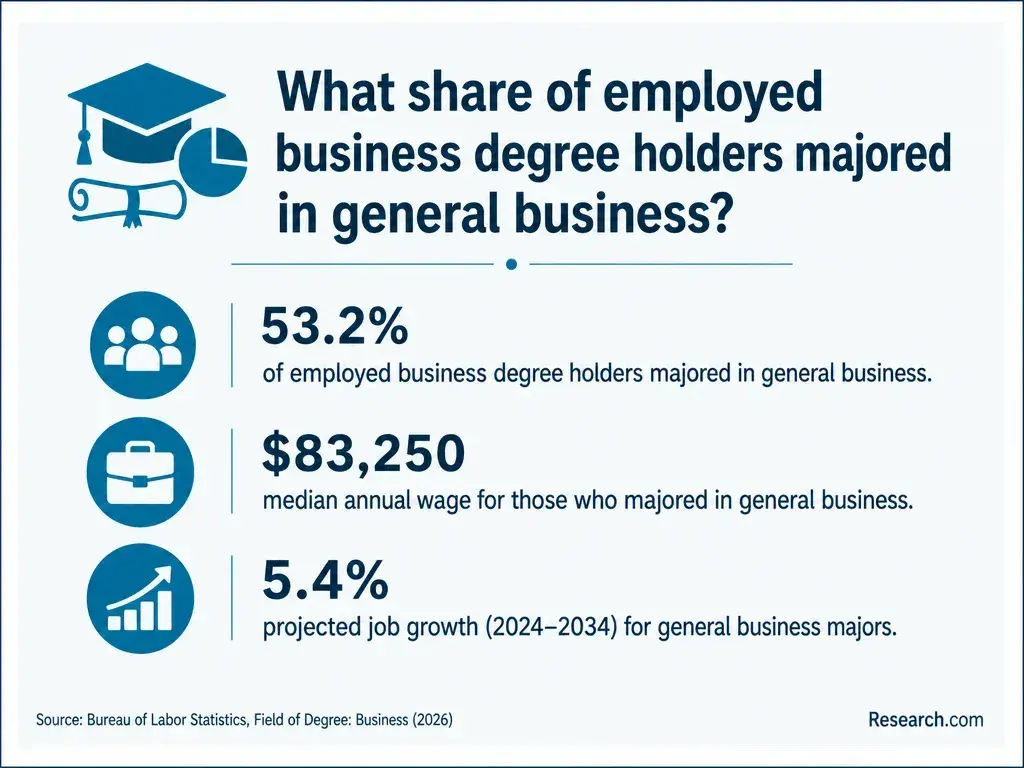
What careers can a finance-focused business administration degree prepare you for?
For an early-career student, plausible starting points include financial planning associate or paraplanner roles, financial services operations, and junior positions supporting budgeting or financial analysis. A planning associate may gather client information and prepare materials under supervision; an analyst may build forecasts and evaluate business or investment information. Employers can require different software skills, experience, and credentials even when job titles sound similar.
As a labor-market reference, the Bureau of Labor Statistics reports a $102,740 median annual wage in May 2025 and 7% projected employment growth from 2025 to 2035 for financial and investment analysts. Those occupation-wide figures are not starting pay, program outcomes, or a proxy for personal financial advisors. Use them to identify a distinct career path, not to predict the return on a particular degree.
Compare the track with a specialized finance degree if you want more valuation or investment coursework. If your interests are in purchasing and movement of goods rather than advising clients, you can compare supply chain degrees by cost and length instead. For any path, internships, supervised work, spreadsheets, communication, and ethical judgment provide evidence beyond the degree title.
Some tracks are designed around the education component of CFP® certification; others offer finance courses without a complete registered planning sequence. CFP Board sets additional certification requirements, including an examination, qualifying experience, and ethics standards. Completing a registered program is not the same as becoming a CFP® professional.
Schools may also mention other designations, certificates, or exam preparation. Request a credential-by-credential statement showing the awarding organization, the exact courses that meet its requirements, remaining prerequisites, examination and experience obligations, and fees. A claim that coursework is "aligned with" an exam is weaker than confirmation that it fulfills an organization's stated education requirement.
Compare the whole pathway, not just tuition. For example, an estimate of the cost of accredited project management study addresses an academic program, not financial planning certification costs. The same distinction applies here: budget separately for the degree and any external credential steps.
The business core commonly includes accounting, economics, statistics, management, and business law. Finance-track requirements may add corporate finance, investments, financial statement analysis, or financial modeling. A planning-oriented sequence needs a different emphasis, potentially covering risk and insurance, retirement, tax planning, estate planning, and an integrated planning assignment. Check the current catalog rather than assuming every track offers all of these subjects.
The useful test is whether you can move from concepts to a defensible work product: for example, explain assumptions in a spreadsheet model or prepare a supervised, hypothetical client plan without treating it as professional advice. Ask about prerequisites, course rotation, planning faculty, software access, and whether an internship or capstone is required.
If you are transferring, have the school classify previous courses against each core, finance, and planning requirement. Transfer rules can differ substantially across business fields; a resource to compare HR bachelor's transfer policies illustrates why an accepted business credit should never be assumed to satisfy a specialized track.
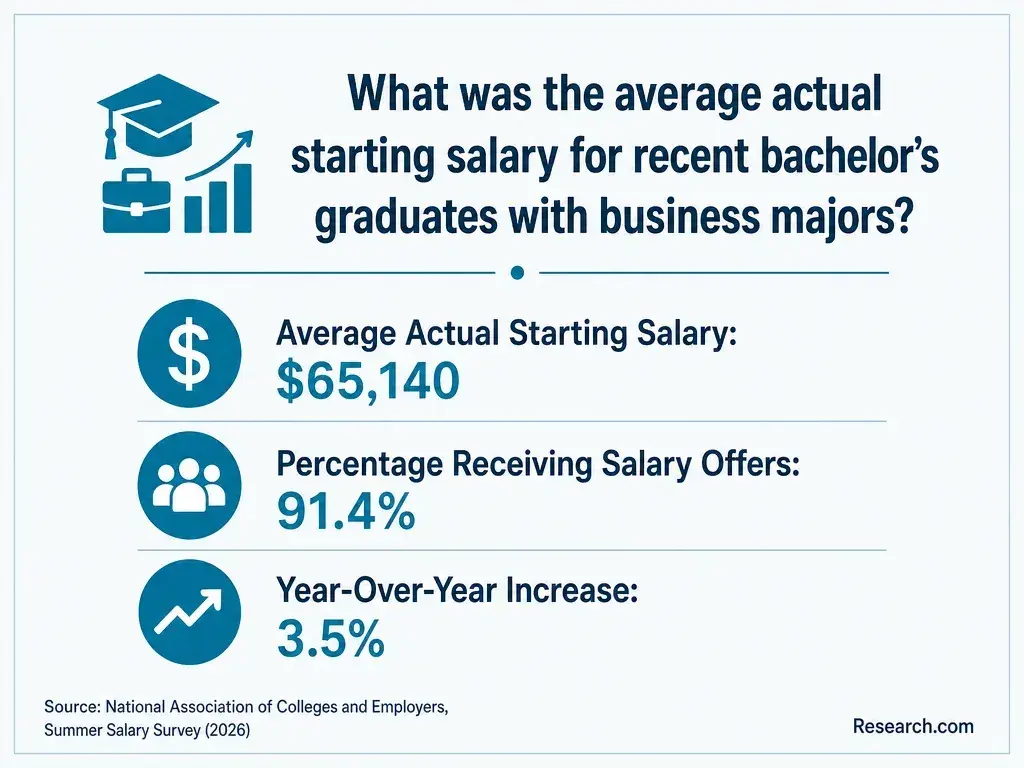
Sometimes. The answer depends on the activities, products, compensation arrangement, employer, and jurisdiction - not simply the degree title. Securities-related work may involve investment adviser representative registration, broker-dealer registration, examinations, and supervision under applicable federal or state rules. Selling insurance can require a state insurance license. A CFP® designation is a certification, not a substitute for required registration or licensing.
Before accepting a client-facing position, ask the prospective employer or compliance team which activities you may perform before registration, who sponsors or supervises required steps, and who pays related fees. Do not present classroom plan preparation as authorization to give individualized advice.
Keep education financing separate from professional authorization. Guidance on grants versus loans for project management bachelor's study explains a general college-cost distinction, but it does not establish that aid will cover your planning credential examinations or licensing expenses; confirm eligible charges with the school and aid office.
Either format can teach the necessary material, but delivery mode and credential coverage are separate checks. Ask whether the online sequence is included in the school's CFP Board-registered program, whether every required course is offered online, and whether students can complete them in order without waiting for an infrequent offering.
Online students should verify live meetings, group client-plan assignments, exam proctoring, software, deadlines, advising, and access to internships or supervised experience. Campus students should compare commute and scheduling demands with opportunities for in-person practice and employer contact. Neither format automatically supplies the professional experience required for certification.
For a transfer student, format can also affect which courses are available after credits are applied. The questions used to assess transfer-friendly project management bachelor's degrees - accepted credits, applied credits, and remaining course availability - are useful here, but request a finance-track-specific degree audit.
Admission to the university, entry to the business major, and permission to declare a finance concentration may involve different decisions. Schools may evaluate prior transcripts and require introductory accounting, economics, mathematics, statistics, or a minimum academic standing before advanced finance courses. The current program catalog and admissions office determine the actual rules.
Submit transcripts early and request a written evaluation showing whether prior courses satisfy general education, business-core, concentration, or planning-sequence requirements. If a required course does not match, ask the appropriate academic department about an equivalency or approved substitution before planning your graduation date. The business administration admissions preparation guide can help organize questions, but the receiving institution has final authority over admission and credit application.
A bachelor's degree is conventionally planned around four years of full-time study, but a transfer student's remaining time depends on applied credits, prerequisite chains, required course availability, and residency rules. Adding a planning sequence may require electives you can fit within the degree - or additional courses. Get both versions of the degree audit before choosing.
Compare the total remaining bill rather than an advertised per-credit rate: required credits, tuition, mandatory fees, books and software, possible travel or proctoring, and financing costs. Add examination or certification expenses as separate estimates. If you are comparing online business programs for cost-conscious students, ask each school for a personalized remaining-course plan; the lowest advertised tuition need not produce the lowest completion cost.
How can you evaluate a reputable finance track and its job outcomes?
Use a short evidence check before paying a deposit. Request the current catalog and degree audit; independently confirm institutional accreditation and any claimed business accreditation; verify the exact CFP Board-registered program if CFP® education is part of your goal; and ask who advises students through the planning sequence. A reputable school should be able to distinguish verified requirements from career marketing.
For outcomes, ask whether reported placement or earnings figures cover the whole business degree, the finance track, or planning-sequence completers. Check the graduation period, number of students represented, response rate, job types, and whether internships and full-time jobs are counted separately. A small or undisclosed sample is weak evidence for predicting your result.
Finally, compare a realistic course schedule with your target role and budget. Ranked programs for finishing a business bachelor's sooner may help you identify options, but verify that a faster plan still includes the specific finance and planning courses you need. Choose the track only if its documented curriculum, remaining credential steps, cost, and opportunities for relevant experience fit your goal.
Other Things You Should Know About Business Administration
Not necessarily. Schools may record a concentration on the transcript, diploma, both, or neither. Ask the registrar how the official credential will appear.
Often, but required courses and declaration deadlines may delay completion. Have an adviser compare degree audits before changing tracks.
Only if the school approves it under its academic requirements. Ask what duties, supervision, documentation, and assessment are required before assuming it earns credit.
Not automatically. Compare the remaining cost and time of a second bachelor's degree with a CFP Board-registered certificate or other education pathway that fits your goal; verify eligibility and prerequisites directly with the provider.
- Cost of Attendance (Budget) | 2025-2026 Federal Student Aid Handbook https://fsapartners.ed.gov/knowledge-center/fsa-handbook/2025-2026/vol3/ch2-cost-attendance-budget
- Steps to Earning Your CFP® Certification - Financial Planning https://financialplanningonline.bu.edu/articles/how-to-become-a-financial-planner-cfp/
- Finance (FINN) - catalog.uark.edu - University of Arkansas https://catalog.uark.edu/undergraduatecatalog/collegesandschools/sammwaltoncollegeofbusiness/finance/
- Search Accredited Schools | AACSB https://www.aacsb.edu/accredited
- Choosing the Right Financial Certification | The American College of Financial Services https://www.theamericancollege.edu/knowledge-hub/insights/choosing-the-right-financial-certification
- Become a trusted advisor with a financial planning degree | Franklin University https://www.franklin.edu/degrees/bachelors/financial-planning
- University of San Diego Career Outcomes https://www.sandiego.edu/outcomes/careers/
- Tuition & Fees | National University https://www.nu.edu/admissions/tuition/
- Financial Planning | College Of Business https://business.oregonstate.edu/programs/21111/curriculum
- College for Financial Planning | CFFP | A Kaplan Company https://www.cffp.edu/