2027 Choosing a BS in Business Administration for Business Roles in Recruiting Agencies
Audited and Verified:
Our Editorial and Data Verification Process
Research.com uses government datasets, official education statistics and primary institutional information to support its career and degree guides. Our review process checks factual accuracy, occupational definitions, source dates and the requirements associated with the credentials discussed.
How This Article Was Fact-Checked
Our editorial team verifies salary estimates, employment projections, education requirements and program information against original data providers and official organizations. Salary figures are checked against the relevant occupational definitions and reporting periods. Information about licensure, accreditation and required in-person training is reviewed separately.
Fact-checked and verified on:

Co-Founder and Chief Data Scientist
Recruiting agencies need people who can find candidates, win clients, manage accounts, and keep placements moving. A BS in Business Administration can prepare you for the commercial side of that work, but it is not the only route into recruiting.
If you are choosing a degree or trying to move into an agency role, this guide connects coursework to actual responsibilities. It also explains where experience matters more than a credential, how to evaluate programs, and what salary data can, and cannot, tell you about your prospects.
Key Things You Should Know
- A BS in Business Administration is most useful for agency roles that combine recruiting with sales, client relationships, operations, or financial decisions; it does not replace placement experience.
- Many entry-level agency jobs do not universally require a bachelor's degree. Compare actual postings for your target role before paying for one.
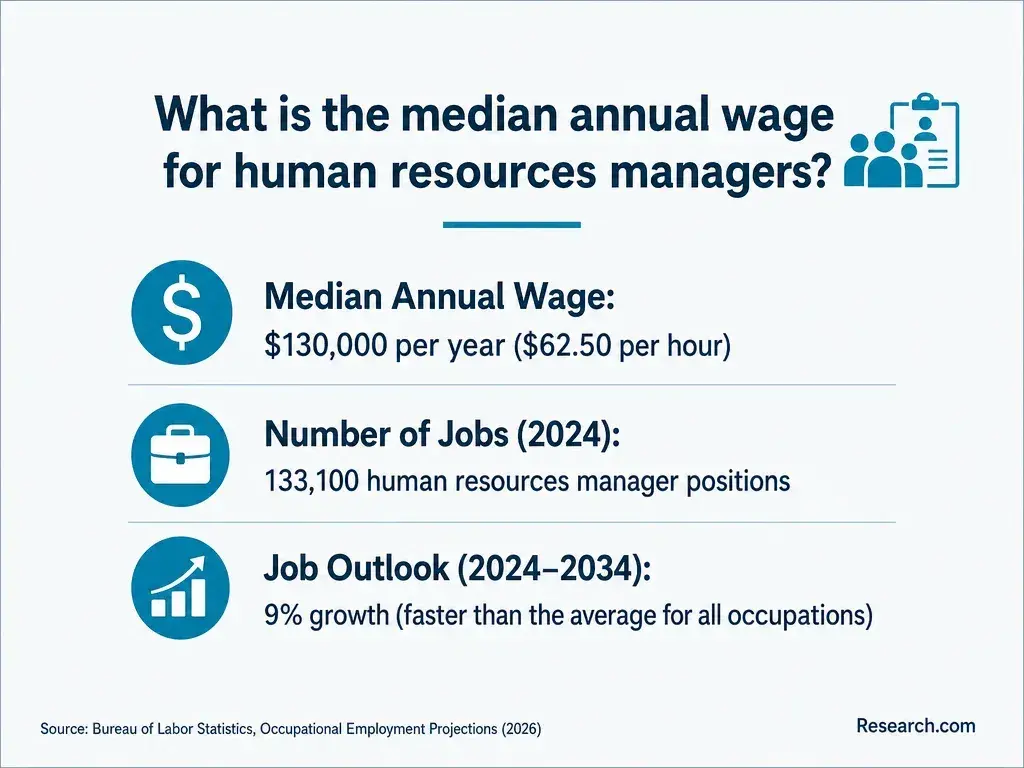
- The U.S. median annual wage for human resources specialists was $75,940 in May 2025, with 6% employment growth projected for 2025-2035; that occupation-wide figure is not an agency recruiter's starting salary.
What is a business administration degree for recruiting agency careers?
A BS in Business Administration is an undergraduate degree covering how organizations manage people, customers, money, information, and operations. In a recruiting agency, those functions meet: a recruiter must understand a client's staffing need, engage candidates, coordinate a hiring process, and often work toward revenue or placement goals.
The degree is a stronger fit when you want options beyond sourcing candidates - for example, account management, recruiting operations, or eventual agency leadership. A BBA may offer similar preparation, but degree titles do not establish identical curricula. Compare required courses and applied work rather than assuming either credential is more valuable to agencies.
If your primary goal is coordinating large internal initiatives rather than recruiting or client development, compare the business curriculum with transfer-friendly project management bachelor's degrees. Check which pathway accepts your existing credits and teaches the tasks in your target postings.
What careers can a business administration graduate pursue in recruiting agencies?
Agency job titles vary, so compare responsibilities before applying. The table separates common functions from the experience usually needed to take them on; a degree alone does not establish readiness to supervise staff or own a client portfolio.
| Agency role | Typical responsibilities | Usual entry point |
| Recruiting coordinator or sourcer | Schedule interviews, research candidates, maintain records, and support outreach | Often an accessible starting role |
| Agency recruiter or staffing specialist | Screen candidates, manage searches, communicate with clients, and coordinate placements | Entry-level openings exist; sales or service experience can help |
| Account manager or business development representative | Develop client relationships, clarify hiring needs, and negotiate service terms | Often favors demonstrated sales or client-facing results |
| Recruiting operations or branch manager | Improve workflows, monitor performance, and direct teams or budgets | Generally experience-dependent |
An early-career candidate can show readiness through customer service, sales, scheduling, spreadsheet, or CRM experience alongside coursework. For later leadership ambitions, online leadership bachelor's programs with compressed schedules are another educational option, but neither a leadership degree nor a business degree substitutes for managing agency work successfully.
Is a bachelor's degree required to work in recruiting?
No universal bachelor's-degree requirement governs agency recruiting. Employers set their own qualifications, and some hire for sourcing, coordination, or sales potential without a degree.
Other postings prefer a bachelor's, particularly for corporate clients, specialized recruiting, or advancement tracks. Specific industries may also expect familiarity with the occupations being filled.
If you already have relevant customer-facing or agency experience, apply to suitable jobs while assessing whether a degree removes a real barrier. If postings consistently require one, compare completion options instead of assuming you must restart college.
Applicants who want to test the market before committing to application costs can compare accredited schools with no application charge; verify each school's current policy before applying.
Most programs combine general education with accounting, marketing, management, economics, finance, operations, and quantitative coursework, though requirements vary.
For an agency career, the value lies in applying that foundation to staffing decisions: interpreting a client's business needs, managing relationships, tracking a recruiting pipeline, and understanding costs and revenue.
Prioritize communication and negotiation; sales or services marketing; human resource management and employment-law fundamentals; spreadsheets and data interpretation; and operations or process improvement.
An HR concentration may deepen people-related study, while marketing or sales electives can better support client acquisition. Confirm whether a concentration is officially awarded and whether it adds credits or delays graduation.
Look for an internship or approved project where you can analyze a recruiting workflow using permitted, appropriately protected information. If you are comparing a specialized project-management degree, review project management program fees explained alongside the curriculum; paying for a specialization makes sense only if its added depth serves the work you want.
Choose the format that lets you complete relevant work consistently. Online study can accommodate an agency schedule, but classes may still have live sessions, fixed deadlines, group presentations, proctored exams, or internship requirements.
Campus study may make it easier to meet employers and collaborate in person, but commuting and class times can conflict with work.
Ask both programs when required courses run, whether attendance is synchronous, how projects are supervised, and whether career services connect students with staffing firms.
US rankings of online business degree programs can help build a shortlist, but confirm the current curriculum and scheduling policies directly with each school.
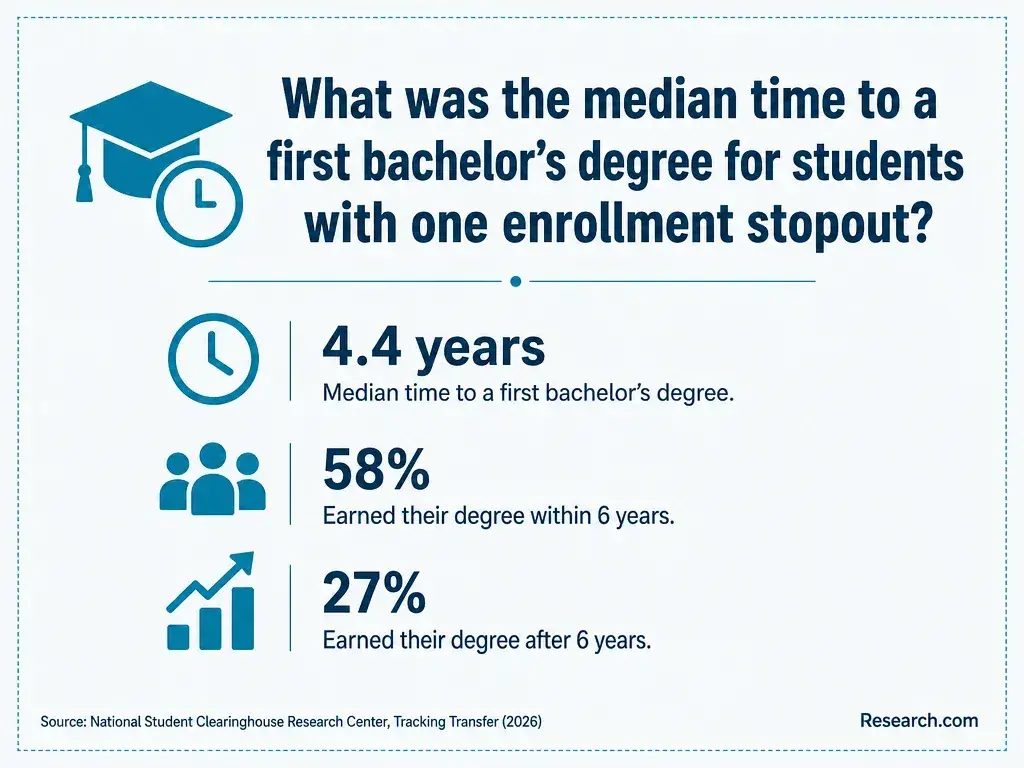
A bachelor's degree commonly takes about four years of full-time study from the start; transfer credits, part-time enrollment, course sequencing, and required residency credits can change your completion date. An accelerated calendar does not necessarily reduce the number of courses or the workload.
Request a written degree audit and estimate the full remaining cost: tuition and mandatory fees, books or software, commuting or technology, and any earnings lost by reducing work hours. Subtract only aid you are actually eligible to receive.
Low-tuition pathways to a business administration degree are worth comparing, but the lowest advertised tuition may not be the lowest cost to finish if fewer of your credits apply.
First-year applicants typically provide secondary-school records; transfer applicants provide transcripts from previous colleges. Schools may set GPA or prerequisite requirements, and admission to the institution may differ from admission to its business major.
Mathematics, statistics, accounting, or economics courses may need to be completed before certain upper-level classes.
Ask admissions which documents establish eligibility, then ask an adviser or transfer office how previous coursework applies to the degree - not merely whether credits are accepted.
For financial planning, FAFSA-accepting colleges for business administration students can be a starting point; admission, federal-aid eligibility, and a particular aid award are separate decisions.
Check the institution's current accreditation with its accreditor and confirm that the degree and delivery format you intend to use are offered by that institution.
Business-school accreditation from AACSB, ACBSP, or IACBE is a separate question: verify the accreditor's scope and whether the relevant school or program is covered. Accreditation is an important quality check, not proof of agency placement or graduate earnings.
Then examine course availability, faculty access, career support, internship rules, and any published outcomes, including who was counted and when.
Use those checks before relying on online business administration program cost-and-time comparisons. Ask the school for a degree audit and written answers to policies that could affect your completion plan.
Certifications can document knowledge, but they are separate from a BS degree and are not a general license to recruit. HR credentials such as SHRM-CP or HRCI's aPHR and PHR may be relevant to roles involving HR practices; eligibility, exam content, and experience requirements differ.
Training in a recruiting platform or sourcing method may be more immediately useful for a candidate entering agency work.
Choose a credential only after checking target job postings and the certifier's current eligibility rules and fees. If you mainly need a specific skill now, a course or employer training may be more direct than enrolling in accelerated online business degree programs. If a bachelor's requirement repeatedly blocks advancement, revisit the degree decision.
What salaries and job outlook can business graduates expect in recruiting?
The U.S. Bureau of Labor Statistics reports a May 2025 median annual wage of $75,940 for human resources specialists and projects 6% employment growth from 2025 to 2035.
This is a useful labor-market benchmark, but the occupation includes jobs outside recruiting agencies. It does not represent starting pay for business graduates or account for an agency offer's commission structure.
Compare actual agency offers by base pay, how commission is earned and paid, benefits, location, and the type of clients served. A management title or degree does not justify using manager-wide median wages as an entry-level expectation.
If faster graduation is part of your financial plan, ranked US colleges for faster business degree completion can suggest schools to investigate; confirm your personal completion timeline and total cost before treating speed as a return on investment.
Other Things You Should Know About Business Administration
Not necessarily. General staffing roles can provide a starting point. An industry specialty becomes more valuable when you can understand its job requirements and speak credibly with clients and candidates.
Ask what triggers payment, when it is paid, whether placements must remain in the job for a set period, and what happens if a client does not pay. Get the compensation terms in writing.
Only if the academic program approves it under its internship rules. Ask about supervision, learning objectives, required hours, and whether your existing duties qualify before relying on the job for credit.
Check employer permission and data-use rules first. Use approved, anonymized descriptions of your process and contributions rather than exposing client terms or candidate information.
- Students & Recent Graduates | U.S. Office of Personnel Management https://www.opm.gov/policy-data-oversight/hiring-information/students-recent-graduates/
- Jobs You Can Get With a Business Administration Degree | AUM Online https://online.aum.edu/resources/article/what-jobs-can-you-get-with-a-business-administration-degree/
- How to Become a Recruiter | SNHU https://www.snhu.edu/about-us/newsroom/business/how-to-become-a-recruiter
- What Degree Do You Need for Human Resources? - Campus https://campus.edu/blog/business/what-degree-do-you-need-for-human-resources
- Student internships and employment opportunities after graduation: A field experiment - ScienceDirect https://www.sciencedirect.com/science/article/pii/S0272775721000601
- Recruiting Timelines - Center for Career Development https://careerdevelopment.princeton.edu/internships-jobs/recruiting-timelines
- What is an applicant tracking system? Definition, benefits & how it works - Gem https://www.gem.com/blog/applicant-tracking-system
- What Degree Do You Need for a Human Resources Career? | indeed.com https://www.indeed.com/career-advice/career-development/what-degree-for-human-resources
- Recruiting Coordinator vs Recruiter Feb 2026 - Dover https://www.dover.com/blog/recruiting-coordinator-vs-recruiter-differences
- What Is a Recruiter? Types, Tasks, and How to Become One | Coursera https://www.coursera.org/articles/recruiter