2027 Online BS in Business Administration vs. a Bachelor of Applied Business: Which Route Fits Your Career Plan?
Audited and Verified:
Our Editorial and Data Verification Process
Research.com uses government datasets, official education statistics and primary institutional information to support its career and degree guides. Our review process checks factual accuracy, occupational definitions, source dates and the requirements associated with the credentials discussed.
How This Article Was Fact-Checked
Our editorial team verifies salary estimates, employment projections, education requirements and program information against original data providers and official organizations. Salary figures are checked against the relevant occupational definitions and reporting periods. Information about licensure, accreditation and required in-person training is reviewed separately.
Fact-checked and verified on:

Co-Founder and Chief Data Scientist
A business bachelor's degree can help you move toward a new role or build on work you already do - but the degree title alone will not tell you which program gets you there. An online BS in Business Administration often emphasizes a broad business foundation, while a Bachelor of Applied Business may place more weight on using that knowledge at work. Actual curricula and transfer policies vary. This comparison is for prospective students, especially working adults and transfer students, who need to weigh career preparation against remaining coursework, scheduling, and total cost before enrolling.
Key Things You Should Know
- Choose the program whose required courses and projects match your target role; "applied" does not guarantee more hands-on learning, and "BS" does not guarantee greater quantitative depth.
- For transfer students, the decisive number is credits applied to graduation requirements, not merely credits accepted by the institution.
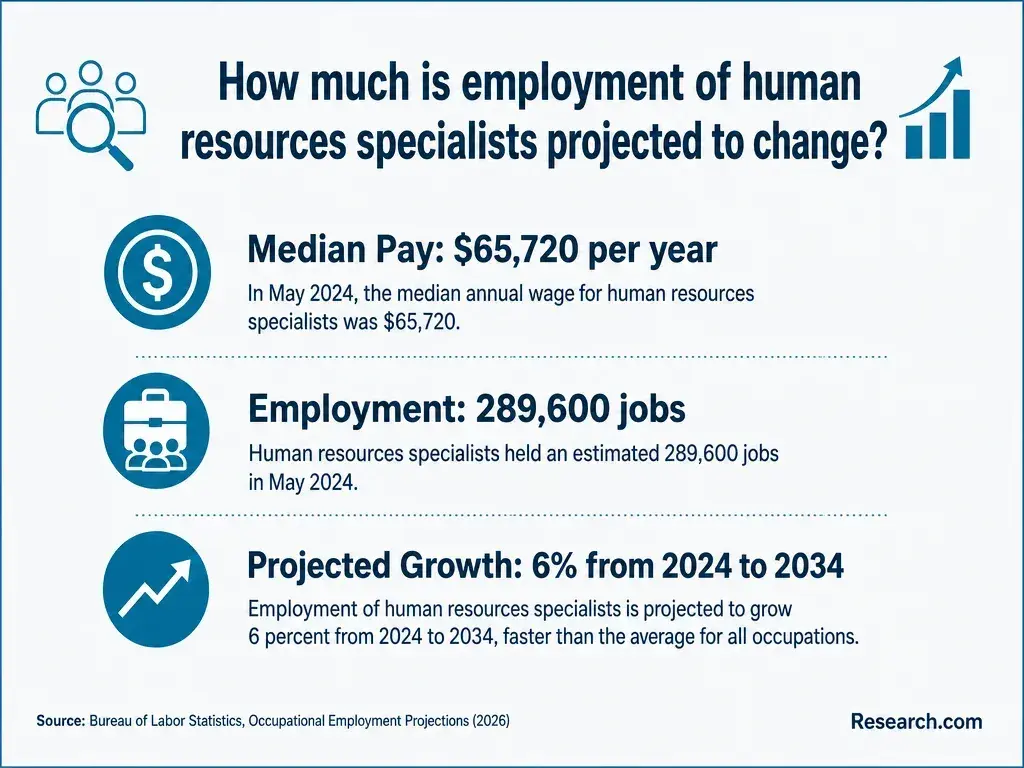
- Neither degree promises a particular salary: the U.S. Bureau of Labor Statistics reports a May 2025 median of $75,940 for human resources specialists, an occupation-wide figure that is not a starting salary for business graduates.
What is the difference between an online BS in Business Administration and a Bachelor of Applied Business?
A BS in Business Administration (BSBA) is a bachelor's degree generally organized around business functions such as accounting, finance, marketing, management, and operations.
A Bachelor of Applied Business is also a bachelor's degree, but its design may emphasize workplace applications, professional or technical electives, and pathways for students with prior applied study. These are descriptions, not uniform national standards: each school defines its own requirements.
The comparison has two separate dimensions. "Online" describes how a program is delivered; it does not define its subject matter. "Applied" describes a program's educational orientation; it does not mean every assignment uses a real employer's data. Either degree could include simulations, an internship, or a capstone, depending on the catalog.
At some schools, an applied bachelor's offers a more direct continuation from an Associate of Applied Science than a conventional BSBA. At others, the apparent transfer advantage disappears when business-core or general-education requirements are counted.
If your goal is specifically supervisory development rather than a broad business foundation, organizational leadership bachelor's routes of three years or less provide another comparison - but evaluate their coursework and transfer rules, not just their advertised duration.
Which degree better fits your career goals: a BSBA or Bachelor of Applied Business?
Start with the work you want to perform, then compare the programs' required courses and assessed work. The table shows useful starting hypotheses, not promises about every school with either degree title.
| Career plan | Potentially stronger fit | What to verify |
| Explore several business functions or change industries | BSBA with a broad core and relevant electives | Depth in accounting, data analysis, operations, and the target function |
| Advance from a technical or operational role | Applied Business program that builds on prior study and work | How prior credits apply and whether projects develop the needed business skills |
| Enter a specific function, such as HR or marketing | Whichever degree offers stronger function-specific courses and experience | Official concentration requirements, internships, and entry-level recruiting support |
| Enter a regulated or highly specialized profession | Possibly neither general business degree | Whether a specialized degree, prescribed courses, or separate credential is required |
A career changer with customer-service experience targeting marketing, for example, may benefit more from research methods, campaign analysis, and a supervised project than from a broadly labeled "applied" degree.
An experienced operations employee may instead prioritize a program that accepts relevant prior coursework and allows an approved process-improvement project. Neither path alone establishes readiness to manage staff or budgets.
If project coordination is the specific goal, compare relevant courses, documented project experience, and compare lower-priced project management degrees before assuming a general business degree is the most direct route.
Are online BSBA and Bachelor of Applied Business degrees accredited?
Either type of degree can be offered by an accredited institution; neither is accredited merely because of its name or online format. Check the institution's current accreditation with an accreditor recognized by the U.S. Department of Education or the Council for Higher Education Accreditation, then confirm that the online offering belongs to that institution.
Business-specific accreditation is a separate question. AACSB, ACBSP, and IACBE have different scopes, and an institution's claim may cover a business school or designated programs rather than every business degree it offers.
Ask which accreditor covers the exact degree and campus or delivery unit you are considering. Business-specific accreditation can be a useful quality signal, but it does not establish transfer acceptance, employer preference, or employment outcomes on its own.
Apply the same checks when reviewing affordable business education options online. A low advertised price should be compared only after you confirm the credential and your likely remaining requirements.
Both programs may cover financial and managerial accounting, economics, finance, marketing, management, business law, statistics, and operations. A BSBA may require a wider general business core or particular quantitative courses; an applied program may devote more room to technical electives or workplace-oriented assignments. Those patterns are worth investigating, not assuming.
For an accurate comparison, read the degree map rather than the course list alone. Identify required prerequisites, the order in which courses are offered, and whether an internship, simulation, or capstone is mandatory. A capstone based on your job may require faculty approval and employer permission; being employed does not automatically earn academic credit.
Look especially closely at courses tied to your intended function. Someone considering HR, for instance, should distinguish general management from employment law, staffing, and employee relations; compare HR curricula and career directions to judge whether broader business study offers enough depth. An elective in a subject is not necessarily an official concentration.
Online and campus-based study can lead to the same type of bachelor's credential, but the learning arrangements may differ substantially. An online program might use recorded lessons yet still require live presentations, scheduled exams, group meetings, or an in-person internship. Campus study may make face-to-face recruiting and collaboration easier but require commuting and fixed attendance.
If you work or care for family members, request a sample course schedule - not just a statement that classes are "flexible." Confirm weekly deadlines, live-session times, proctoring, group-work expectations, software needs, campus visits, and whether required courses are available part-time.
An accelerated calendar compresses the schedule; it does not make assignments disappear. Compare these details when considering accelerated online business degree programs.
Requirements depend on the institution and whether you enter as a first-year, transfer, or degree-completion student. Schools commonly request prior academic records and may set GPA or prerequisite rules.
Some applied bachelor's pathways are designed for applicants with an associate degree or substantial prior college credit; others are open to a wider range of applicants. Do not assume an AAS is required - or that it automatically satisfies admission and graduation requirements.
Ask admissions about eligibility, then ask the appropriate academic or transfer office for a written evaluation showing where each accepted course applies: general education, business core, concentration, elective, or no requirement.
Confirm any mathematics, accounting, or statistics prerequisites separately. If application charges affect which schools you can compare, you can reduce upfront college application expenses without treating a fee policy as a measure of program quality.
There is no reliable program-wide price or completion time for either degree title. Your remaining credits, required course sequence, enrollment pace, tuition rate, fees, and transfer evaluation determine the answer.
An applied program may be faster for a student whose technical credits satisfy requirements, while a BSBA may be faster for someone whose prior accounting and general-education courses align with its core.
Get a term-by-term graduation plan and an itemized estimate from each school. Compare remaining tuition and mandatory fees, not just the price per credit; include books, software, proctoring or travel costs, and any earnings you would give up to attend. Ask whether employer reimbursement arrives after you pay and whether your planned enrollment maintains financial-aid eligibility.
For a like-for-like price comparison, use the same transfer-credit assumptions when you explore cheaper business administration college programs. A lower rate can still produce a higher total if more courses are required.
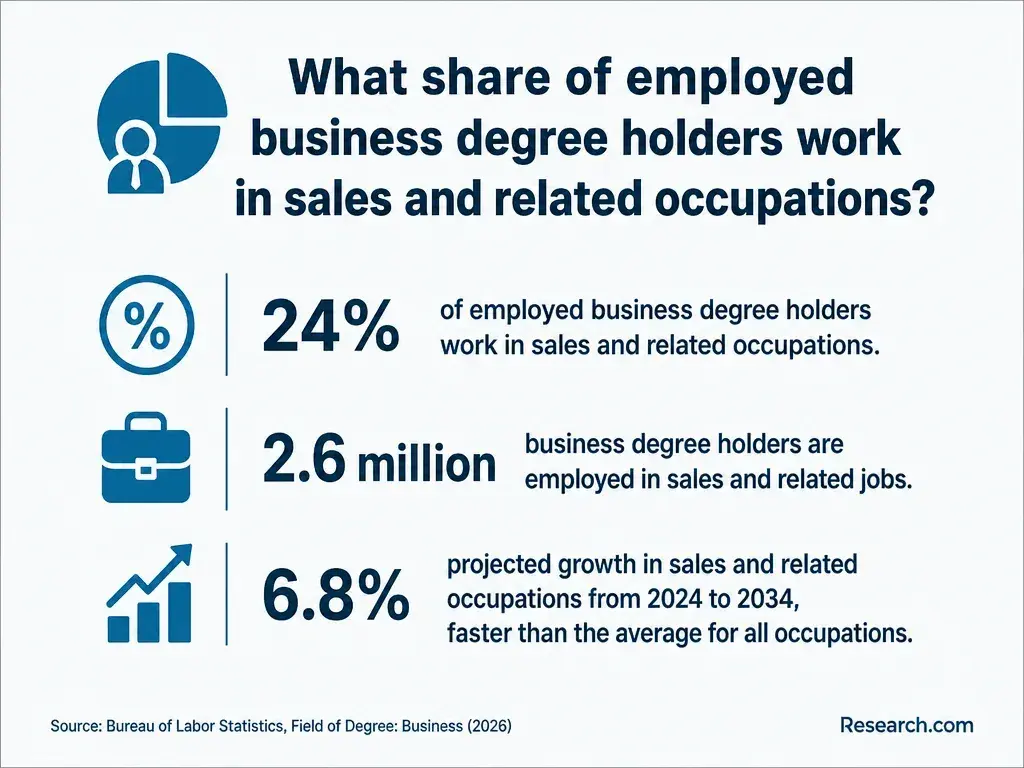
Both degrees can support applications for business roles, but employers hire for specific tasks and experience - not degree titles alone. Depending on coursework and prior work, graduates may pursue operations or project coordinator, marketing coordinator, HR assistant or specialist, purchasing support, or administrative roles. Analyst positions may require stronger statistics, accounting, software, or industry preparation than a general business curriculum provides.
Match the job posting to evidence you can show: a spreadsheet model for budgeting support, a documented workflow analysis for operations, or an approved campaign analysis for marketing. Relevant employment, internships, and carefully scoped projects can help demonstrate those skills. Management positions generally require a record of responsibility beyond completing a bachelor's degree.
For project-focused roles, compare specialized preparation as well as general business coursework. A student with substantial prior college study can also investigate how to use prior college credits in a project management bachelor's; the receiving institution must determine which credits actually satisfy its requirements.
National labor data do not establish a salary premium for a BSBA over a Bachelor of Applied Business. The U.S. Bureau of Labor Statistics tracks occupations, not earnings by these two degree names.
For context, it reports a May 2025 median annual wage of $78,760 for market research analysts and projects 7% employment growth from 2025 to 2035. Those figures describe the occupation across experience levels; they are not a new graduate's expected pay or a prediction that either degree will secure that job.
For a personal return-on-investment comparison, focus on the roles you can realistically pursue, local job requirements, likely borrowing, and time until completion. Finishing sooner may reduce some costs or bring forward a job search, but it is not automatically better if the schedule prevents relevant work experience.
Evaluate shorter routes to an online bachelor's against course availability and your actual time budget, rather than assuming an accelerated program produces higher earnings.
Do business degree graduates need licenses or professional certifications?
Most general business coordination and administrative roles do not require a license simply because they involve business work. Requirements change when the occupation is regulated or an employer specifies a credential. A business bachelor's degree does not itself qualify someone as a CPA, authorize regulated financial-services activity, or award an HR or project-management certification.
If a credential matters to your target role, check its issuing board or organization for the exact coursework, experience, examination, and jurisdictional rules before choosing a degree. The business administration applicant eligibility checklist can help you separate prerequisites for entering a program from the distinct requirements for a later professional credential.
Other Things You Should Know About Business Administration
Potentially, yes. MBA programs set their own admission standards and may require particular preparation or experience. Confirm that the school accepts your institution and degree, then check for any prerequisite courses.
That depends on the institution's diploma and transcript policies. Ask for the exact degree title that appears on each document before enrolling.
Possibly, but a change can alter which completed courses satisfy the new major. Request a new degree audit before switching so you can see any added courses or delay.
Not automatically. Compare the target job's requirements with your existing degree and experience. Targeted courses, a certificate, or supervised work may address a specific skills gap with less additional study.
- Credit for Prior Learning | Transfer Credit Ohio https://transfercredit.ohio.gov/students/student-programs/Prior-Learning-Assessments
- Cost of Attendance (Budget) | 2025-2026 Federal Student Aid Handbook https://fsapartners.ed.gov/knowledge-center/fsa-handbook/2025-2026/vol3/ch2-cost-attendance-budget
- Accreditation in the U.S. | ed.gov http://www.ed.gov/laws-and-policy/higher-education-laws-and-policy/college-accreditation/accreditation-in-the-us
- How Do Transfer Credits Work When You Go Back to School? | Whitworth Online https://online.whitworth.edu/news-articles/how-do-transfer-credits-work-when-you-go-back-to-school/
- Bachelor of Arts in Applied Business | CSUSB https://catalog.csusb.edu/colleges-schools-departments/business-public-administration/sb-applied-bus-ba/
- Tuition in Detail - One Stop Student Services https://onestop.utk.edu/billing-payments/tuition-detail/
- Undergraduate and Graduate Tuition and Fees | Purdue Global https://www.purdueglobal.edu/tuition-financial-aid/undergraduate-graduate-tuition-and-fees/
- Effects of Business Internships on Job Marketability | wcupa.edu https://digitalcommons.wcupa.edu/cgi/viewcontent.cgi
- B.S. in Applied Business Courses | Wilmington University https://www.wilmu.edu/business/applied-business-curriculum.aspx
- BBA vs. BS in Business Administration | National University https://www.nu.edu/blog/bba-vs-bs-business-administration/