2027 Choosing a BS in Business Administration When You Have Several Unfinished College Programs
Audited and Verified:
Our Editorial and Data Verification Process
Research.com uses government datasets, official education statistics and primary institutional information to support its career and degree guides. Our review process checks factual accuracy, occupational definitions, source dates and the requirements associated with the credentials discussed.
How This Article Was Fact-Checked
Our editorial team verifies salary estimates, employment projections, education requirements and program information against original data providers and official organizations. Salary figures are checked against the relevant occupational definitions and reporting periods. Information about licensure, accreditation and required in-person training is reviewed separately.
Fact-checked and verified on:

Co-Founder and Chief Data Scientist
Several unfinished college programs can leave you with substantial coursework but no clear path to a degree. A BS in Business Administration may bring that work together - if the right credits satisfy its requirements rather than merely transfer as electives.
This guide is for returning students comparing completion options. It explains how to document your academic history, obtain useful degree evaluations, and judge programs by the courses, time, and cost still ahead of you. The goal is to choose a workable route to graduation, not simply the school that accepts the most credits.
Key Things You Should Know
- Choose by credits applied to degree requirements and remaining course sequence, not by the largest advertised transfer allowance.
- Send records from every college attended; admission, transfer-credit acceptance, admission to the business major, and graduation eligibility are separate decisions.
- Request a written degree audit and a term-by-term cost estimate before committing. Neither a preliminary credit estimate nor a short advertised timeline guarantees graduation.
What Is a Business Administration Bachelor's Degree and Who Is It For?
A BS in Business Administration is an undergraduate degree combining general education with subjects such as accounting, economics, marketing, management, finance, and business analysis. It can suit someone whose previous studies span several fields and who wants broad business preparation rather than a narrowly specialized major.
The label alone does not predict which old courses will count. A BS, BBA, and BA in Business can have different quantitative requirements, business cores, and transfer rules. If you already work in an organization and need a degree for a specific advancement opportunity, compare the missing coursework with the job's actual requirements.
Flexible online study for business administration career growth may be worth exploring, but flexibility does not resolve a poor transfer fit. If your goal requires substantial accounting, technical, or sector-specific preparation, a specialized degree or targeted training may serve you better - even if the general business degree appears easier to enter.
How Can You Transfer Credits From Unfinished College Programs?
Start by separating credit acceptance from credit application. A school may accept a course yet place it among free electives while you still need its required statistics or accounting course. Work completed toward an AA, AS, AAS, or unfinished bachelor's program can therefore have very different value in a BS degree audit.
Use this sequence to turn a collection of transcripts into a comparable completion plan:
- Request official transcripts from every institution attended, including programs you left early; collect course descriptions or syllabi for courses whose equivalents are unclear.
- Ask each prospective school's transfer office for a course-by-course evaluation, then ask a business adviser to show where each credit applies in the degree audit.
- Flag possible obstacles: quarter-credit conversion, minimum grades, repeated courses, older quantitative coursework, major prerequisites, and credits that exceed elective limits.
- Request written review or an appeal for courses that appear equivalent but were placed as electives; confirm who can approve substitutions.
- Check the remaining business courses, their prerequisites, residency requirements, and the terms in which they are offered.
A specialized alternative can change the result. If earlier coursework is in personnel administration or psychology, compare credit acceptance at online HR schools as well as at general business programs. The receiving institution makes the final credit decision; no outside course list can promise an equivalency.
How Do You Choose an Accredited Business Administration Program?
Confirm that the institution holds recognized institutional accreditation and that the accreditation covers the institution awarding your degree. AACSB, ACBSP, and IACBE accreditation concern business education at the scope each accreditor specifies; do not assume a particular online program is covered without checking its status.
For a returning student, accreditation is a starting screen, not the deciding factor. Compare official evaluations for the same prior coursework, then examine advising access, required-course frequency, substitution procedures, and support for students returning after an enrollment gap. US business college rankings for online learners can help identify schools to investigate, but a ranking cannot tell you which will apply more of your credits.
Ask for the catalog and degree requirements that would govern your enrollment term. A promising verbal estimate should be followed by a written evaluation and a feasible course schedule.
Online study can remove a commute, while campus study may offer easier access to in-person advising, recruiting, or a predictable class routine. Neither format is inherently faster. For someone combining school with work or caregiving, the decisive issue is whether required courses are available when - and how - you can take them.
Ask about live meetings, exam proctoring, group presentations, internship or capstone requirements, and deadlines that cannot be shifted. Also confirm whether the last required courses run every term; an otherwise convenient program can be delayed by one infrequently offered class. Use fastest online business bachelor's programs in the US to generate questions about pacing, not to assume that your transferred credits will produce the advertised completion time.
Most programs combine general education, a business core, electives or a concentration, and often an integrative final course. Accounting, economics, statistics, finance, marketing, operations, management, and business law are common subjects, but each school sets its own requirements and prerequisite sequence.
This matters when your unfinished programs are unrelated to business: prior humanities or health courses may cover general education, while business-core courses remain. Conversely, an old introductory accounting course might need a separate equivalency review. A concentration is useful only if its required courses fit your goal and schedule; a few related electives do not necessarily constitute an official concentration.
If earlier study points toward logistics or procurement, compare the general business core with shorter supply chain degrees and career value. Greater specialization may be worthwhile, but verify whether it adds prerequisites or leaves more of your prior credits unused.
Requirements vary by institution and sometimes by stage. Admission to the university does not necessarily mean admission to its business major. A school may evaluate prior college grades, require specific prerequisite courses, or set separate standards before you enter upper-level business coursework.
Disclose every previous institution and ask admissions how enrollment gaps, repeated courses, and prior academic difficulty are treated. Then ask the business department which mathematics, statistics, accounting, or economics courses must be finished before major admission - not just before graduation.
If you are also considering faster undergraduate completion pathways, check whether their entry rules and prerequisite schedules actually suit your record. An admission offer answers whether you can enroll. Only a degree evaluation can show how much of the BS remains.
Your remaining time depends on requirements still unmet, prerequisite order, course availability, enrollment pace, and institutional residency rules - not simply the number of credits you have earned. Compare schools using the same planned pace and a written audit. Include tuition and mandatory fees for remaining courses, books or software, travel or proctoring, and any change in earnings caused by your schedule.
Financial aid deserves a separate check. Ask the financial-aid office how transferred credits and repeated courses affect satisfactory academic progress and eligibility, and confirm whether an employer reimburses tuition only after a qualifying grade. If a project-management degree is a serious alternative, tuition and aid questions for project management students can help you compare its financing terms with the business degree's.
The cheapest price per credit may not be the cheapest completion route. An additional required course or a delayed final term can change the total; do not commit based on a transfer estimate that has not been applied to the degree.
A business administration degree can support applications for roles in operations coordination, sales support, marketing coordination, HR support, or administrative and project work. Your prior employment and the evidence you can show - such as spreadsheet work, customer communication, budgeting assistance, or process documentation - will shape which roles are realistic. Graduation alone does not confer a management position.
Choose a target role before selecting electives or an internship. If you already have experience in inventory, purchasing, or transportation, a specialized supply chain route may offer a closer match than broad business study. If you need a degree sooner to qualify for an employer's bachelor's-degree requirement, compare lower-priced accredited business administration study options against the work experience and skills that employer also expects.
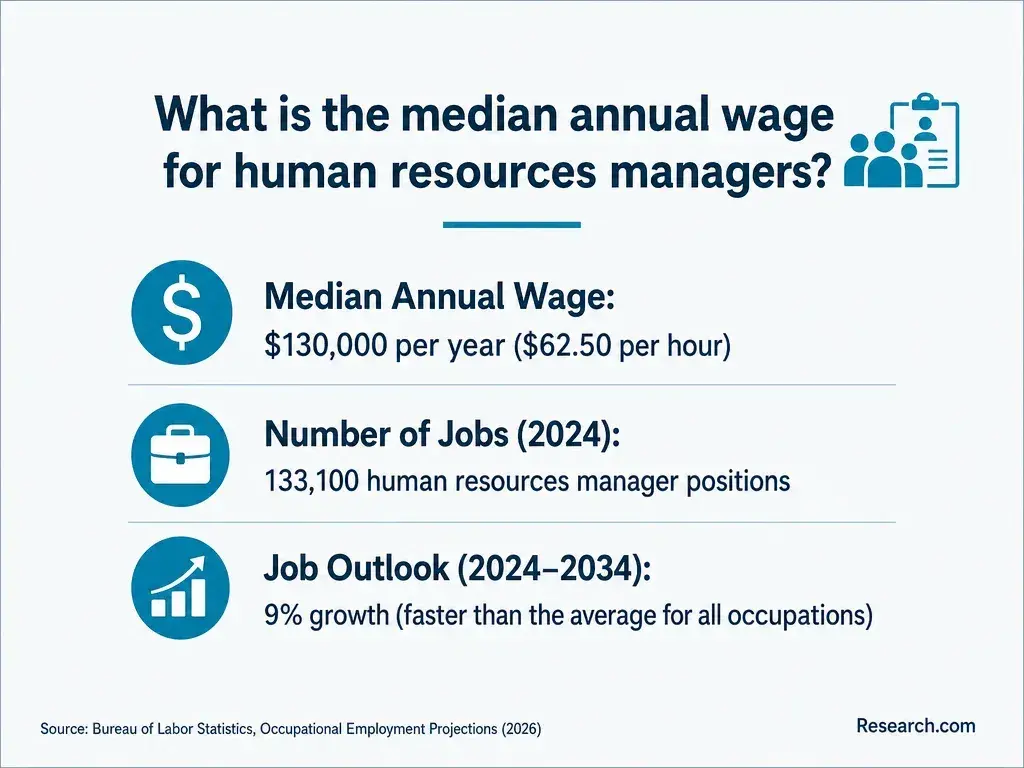
There is no single salary for BS in Business Administration graduates. Pay depends on the occupation, experience, location, industry, and responsibilities - not the degree title alone. For context, the U.S. Bureau of Labor Statistics reports a May 2025 median annual wage of $75,940 for human resources specialists. That occupation-wide median includes experienced workers and is not an expected starting salary for a new graduate.
Assess the financial case using roles you could plausibly pursue after finishing, rather than a manager's median wage. Compare the cost and remaining time shown in your audits with your current earnings and relevant local job postings. Shorter affordable business administration degree pathways may improve that comparison, but only when their actual credit evaluations and course schedules support the shorter route.
Do Business Administration Graduates Need Licenses or Certifications?
A general business administration degree does not itself require an occupational license. Particular jobs may have separate rules: regulated accounting or financial-services work, for example, can require qualifications beyond a general business curriculum. Voluntary HR or project-management credentials also have their own eligibility standards; completing one related course does not award a certification.
If your intended role has a named credential, check its issuer's education and experience requirements before choosing the BS. A student aiming specifically at project work might also explore transfer-friendly undergraduate project management schools. Compare those degrees with the general BS on applied credits and role-specific preparation, without assuming either degree grants professional certification.
Other Things You Should Know About Business Administration
Possibly, but obtain written approval before taking an outside course you expect to transfer. Confirm its equivalency, how concurrent enrollment affects aid, and where the final transcript must be sent.
Look for its designated transcript custodian through the relevant state higher-education agency or records holder. Ask the receiving school what documentation it will accept if a standard transcript is unavailable.
Some schools admit second-degree students, but they may limit aid or impose a separate set of residency and major requirements. Compare those rules with a certificate or another targeted qualification before applying.
It need not, but tell admissions about every name used on your academic records. Follow its instructions for documenting the change so transcripts from different schools are matched to your application.
- Staying Eligible | Federal Student Aid https://studentaid.gov/understand-aid/eligibility/staying-eligible
- Transfer Credit Evaluation | Office of Admissions https://admissions.tc.umn.edu/admissions/transfer-admission/transfer-credit-evaluation
- Transfer Credit Evaluation - TXST Admissions https://www.admissions.txst.edu/future-students/transfer-credit-evaluation.html
- Transfer Credit Policies and Processes - The College | UVA College of Arts & Sciences https://college.as.virginia.edu/transfer-credit-policies-and-processes
- Transfer Equivalencies - UK Admissions https://admission.uky.edu/transfer/equivalencies
- Transcripts - The City University of New York https://www.cuny.edu/about/administration/offices/registrar/transcripts/
- Transfer Credit | University of Maryland Catalog https://academiccatalog.umd.edu/undergraduate/registration-academic-requirements-regulations/transfer-credit/
- Transfer Credit Evaluation | University of Arizona Office of the Registrar https://registrar.arizona.edu/records-enrollment/transfer-credit/transfer-credit-evaluation
- Degree and Graduation Policies | Texas State University https://mycatalog.txstate.edu/undergraduate/general-information/academic-policies/degree-graduation/
- General Education and Common Curriculum Requirements | UConn School of Business https://undergrad.business.uconn.edu/academics/cc-gen-ed/