2027 Most Affordable Online Nursing Programs: Tuition, Coursework & Credit Requirements

Co-Founder and Chief Data Scientist
Note from the author, Imed Bouchrika, PhD, career planning expert:
Healthcare demand continues to outpace the global availability of nurses, emphasizing the need for affordable online nursing programs to meet the growing necessity. It stands out as one of the best college majors, producing approximately 7,000,000 individuals with an active RN license worldwide as of 2024 (World Health Organization, 2024).
Drawing from my extensive experience of over 10 years as an expert in career planning and advising, I understand the importance of guiding individuals toward lucrative career paths.
So, to help you in your search for a program, I have meticulously analyzed data from government reports, statistics, and academic publications to create this guide exploring the most affordable online nursing programs. I also include pertinent details on the expected program cost, duration, financial aid options, courses, and specializations to aid you in this endeavor.
What are the benefits of getting a degree in online nursing programs?
- Graduates of online nursing programs earn as much as $89,010 each year.
- Nursing online programs help you save up on upfront costs, such as housing, commuting, and relocation expenses, that are usually found in on-campus programs.
- Pursuing an online nursing program enables you to progress at your own pace due to its flexible and accessible nature.
What can I expect from an online nursing program?
Completing an online nursing program widens your career prospects and equips you with valuable skills for various roles in healthcare. In my research, I found that universities offering nursing programs online usually utilize the following:
- Synchronous and asynchronous delivery methods
- Remote services such as personal consulting, academic advice, and tutoring programs
- Digital materials like ebooks, audio clips, videos, and academic databases
- Productivity apps, learning management systems, communication and messaging apps, and collaborative tools
- State-of-the-art technology, such as virtual simulations and telehealth, in hands-on activities
- On-site clinical training at a local healthcare facility (varies per school)
Where can I work with an online nursing degree?
After consulting experts and professionals, I discovered that your qualifications position you in various healthcare settings. Most graduates work in hospitals, which employ around 59% of RNs (U.S. Bureau of Labor Statistics, 2023a).
Some nurses travel or visit patients’ homes to provide care. Moreover, you can extend your reach to communities, contributing to health education and preventive care initiatives. Others find jobs in legal institutions, serving as consultants or case managers. Meanwhile, nurses with specific skills attend to patients in the sports industry, mental health centers, rehabilitation facilities, airports, or the military.
The flexibility of online education prepares you for a dynamic career and allows you to make a meaningful impact in different healthcare environments.
How much can I make with an online nursing degree?
The earning potential of students who graduate from online nursing programs varies based on factors like educational attainment, level of expertise, specialization, employer type, and location. The latest report from BLS reveals the following RN income data (2023b):
- Median annual salary: $89,010
- 10% percentile salary: $61,250
- 90% percentile salary: $129,400
- California RN salary (top-paying state): $133,340
- South Dakota RN salary (lowest-paying state): $64,500
Specializing or pursuing advanced degrees, such as becoming a nurse practitioner or nurse anesthetist, can significantly impact income. Therefore, you need to keep these elements in mind as you search for the best online nursing school.
- List of the Most Affordable Online Nursing Programs for 2027 Program List
- How long does it take to complete an affordable online nursing program? Completion Time
- How does an affordable online nursing program compare to an on-campus program? How does an affordable online nursing program compare to an on-campus program?
- What is the average cost of an affordable online nursing program? Program Cost
- What are the financial aid options for students enrolling in an affordable online nursing program? Financial Aid
- What are the prerequisites for enrolling in an affordable online nursing program? Program Prerequisites
- What courses are typically in an affordable online nursing program? What courses are typically in an affordable online nursing program?
- What types of specializations are available in online nursing programs? Specializations
- How to choose the most affordable online nursing program? How to choose the most affordable online nursing program?
- What career paths are available for graduates of affordable online nursing programs? Career Paths
- What is the job market for graduates with an affordable online nursing degree? Job Outlook
- How do online nursing programs combine academic learning with clinical practice? How do online nursing programs combine academic learning with clinical practice?
- What are the emerging trends in online nursing education? What are the emerging trends in online nursing education?
- What are the technology requirements for online nursing programs? What are the technology requirements for online nursing programs?
- How can you leverage your online nursing degree for career advancement? How can you leverage your online nursing degree for career advancement?
- Exploring Affordable Psychiatric Nurse Practitioner Programs Exploring Affordable Psychiatric Nurse Practitioner Programs
- Can online nursing programs effectively prepare you for a career as a Family Nurse Practitioner? Can online nursing programs effectively prepare you for a career as a Family Nurse Practitioner?
- How accreditation affects your career prospects How accreditation affects your career prospects
- How do online nursing programs enhance diversity in healthcare? How do online nursing programs enhance diversity in healthcare?
- Comprehensive Student Support in Online Nursing Education Comprehensive Student Support in Online Nursing Education
- What role does an accelerated DNP program play in elevating your nursing career? What role does an accelerated DNP program play in elevating your nursing career?
- What additional certifications can amplify your online nursing degree? What additional certifications can amplify your online nursing degree?
Most Affordable Online Nursing Programs for 2027: How to Compare Cost, Quality, and Career Value
If you are trying to become a nurse, move from RN to BSN, or choose a graduate nursing path without taking on unnecessary debt, the real question is not just “Which program is cheapest?” It is “Which affordable online nursing program gives me the best mix of price, accreditation, flexibility, and career outcomes?” That decision matters now because nursing demand remains strong, online options are more common than ever, and tuition alone does not tell you whether a program will actually fit your licensure, schedule, and long-term goals.
This guide breaks down the most affordable online nursing programs, how much they cost, what they require, how long they take, and what to check before you apply. It also explains the trade-offs between online and campus-based study, common mistakes students make, and the factors that matter most when you are comparing programs.
Quick Answer: What is the best affordable online nursing program for you?
The best affordable online nursing program is the one that is accredited, licensure-aligned, and financially manageable for your current credentials and career goals. For many working nurses, an online RN-to-BSN program offers the strongest value because it is often shorter and less expensive than starting over in a new degree path. If you are pursuing advanced practice, an online MSN or DNP may be worth the higher cost if it matches your specialty and licensure goals.
In most cases, you should compare programs by total cost, credit requirements, clinical placement support, state authorization, accreditation, and completion time—not tuition alone.
How we rank schools
We know that choosing a nursing program is a major financial and career decision. To make this list useful for prospective students, we rely on a structured methodology designed to highlight programs that combine affordability with academic credibility.
Our research draws on data from the methodology, the Integrated Postsecondary Education Data System (IPEDS), Peterson’s Data, including the Distance Learning Licensed Data Set, College Scorecard, and the National Center for Education Statistics (NCES). We focus on program affordability, format, accreditation, and the information students need to make a practical choice.
Top Affordable Online Nursing Programs in 2027
The programs below are presented as affordable online options for nursing students and working nurses who want a flexible route to a degree. Always confirm current tuition, admission requirements, and state authorization directly with the school before applying.
1. University of Louisiana at Monroe
The University of Louisiana at Monroe offers an accelerated RN to BSN pathway for students who want to expand their practice and prepare for graduate study. The curriculum includes topics such as pharmacology, information management systems, and other upper-division nursing subjects that support broader clinical and leadership responsibilities.
- Program Length: 14 months
- Tracks/Concentrations: RN-BSN, LPN-BSN, MSN
- Cost per Credit: $200
- Required Credits to Graduate: 120
- Accreditation: Commission on Collegiate Nursing Education (CCNE), Southern Association of Colleges and Schools Commission on Colleges (SACSCOC)
2. McNeese State University
McNeese State University offers an RN-BSN program designed for working nurses from partner and non-partner healthcare organizations. Its coursework emphasizes community health and evidence-based practice while also covering informatics, patient care technology, and the business side of nursing.
- Program Length: 10 months
- Tracks/Concentrations: MSN, DNP-Psychiatric Mental Health Nursing
- Cost per Credit: $233-$300
- Required Credits to Graduate: 120
- Accreditation: CCNE, SACSCOC
3. Tallahassee Community College
Tallahassee Community College supports RNs who want to move into stronger clinical, leadership, and management roles. The program is designed for licensed nurses who already hold an ADN and want a BSN foundation that also supports future master’s or doctoral study. Coursework builds on prior nursing and clinical experience so students can transition efficiently.
- Program Length: Four years
- Tracks/Concentrations: N/A
- Cost per Credit: $100.83-$128.51
- Required Credits to Graduate: 120
- Accreditation: Accreditation Commission for Education in Nursing (ACEN), SACSCOC
4. Florida SouthWestern State College
Florida SouthWestern State College offers an online RN to BSN option for nurses with a diploma or Associate of Science in Nursing. The program expands on foundational nursing preparation with advanced coursework in leadership, multicultural nursing, research, pathophysiology, health assessment, pharmacology, informatics, community health, and a capstone experience.
- Program Length: Four terms
- Tracks/Concentrations: ASN
- Cost per Credit: $125.71 (in-state), $795.34 (out-of-state)
- Required Credits to Graduate: 120
- Accreditation: ACEN, SACSCOC
5. Broward College
Broward College’s RN-BSN program is available in hybrid and fully remote formats. It builds on lower-division AA and AS coursework and focuses on upper-division nursing study that prepares students to use current technology, apply evidence-based knowledge, and grow into leadership roles in modern healthcare settings.
- Program Length: 1218 months
- Tracks/Concentrations: N/A
- Cost per Credit: $122.90 (in-state), $243.30 (out-of-state)
- Required Credits to Graduate: 123
- Accreditation: CCNE, SACSCOC
6. Georgia Southwestern State University
Georgia Southwestern State University offers a flexible online RN-BSN program for students who already hold a diploma or associate degree in nursing. Learners usually finish quickly, though the school also allows up to three years for standard completion and up to five years in special circumstances. Students work with an advisor to build an individualized plan of study.
- Program Length: One to two years
- Tracks/Concentrations: MSN
- Cost per Credit: $159-$199
- Required Credits to Graduate: 120
- Accreditation: CCNE, SACSCOC
7. University of Central Florida
The University of Central Florida offers an online BSN pathway for students in the Florida College System Concurrent ASN to BSN degree completion program and for currently licensed RNs. The curriculum includes pathophysiology, nursing research, health assessment, and related upper-division nursing content that supports advancement into leadership and graduate study.
- Program Length: One to three years
- Tracks/Concentrations: RN-BSN, MSN, DNP, PhD
- Cost per Credit: $179.19 (in-state), $715.80 (out-of-state)
- Required Credits to Graduate: 120
- Accreditation: CCNE, SACSCOC
8. Columbus State University
Columbus State University created its online RN to BSN program for registered nurses who want a faster, more convenient route to a bachelor’s degree while continuing to work. All classes are asynchronous and taught by faculty with a range of nursing backgrounds. The program is approved by the Georgia Board of Nursing and accredited by the Commission on Collegiate Nursing Education.
- Program Length: One year
- Tracks/Concentrations: MSN
- Cost per Credit: $199
- Required Credits to Graduate: 123
- Accreditation: CCNE, SACSCOC
9. Cleveland State University
Cleveland State University offers RN to BSN study in both online and blended formats. The curriculum builds on prerequisite coursework and the professional background of licensed nurses, with topics ranging from clinical data analytics to palliative care.
- Program Length: One year (online), two years (blended)
- Tracks/Concentrations: MSN
- Cost per Credit: $237.30 (in-state), $240.30 (out-of-state)
- Required Credits to Graduate: 120
- Accreditation: CCNE, Higher Learning Commission (HLC)
10. Florida International University
Florida International University offers an RN to BSN Online Track within its Bachelor of Science in Nursing program. The curriculum emphasizes community health, cross-cultural care, nursing leadership, evidence-based learning, nursing research, and global healthcare systems to help prepare nurses for broader responsibility.
- Program Length: One year
- Tracks/Concentrations: DNP
- Cost per Credit: $235.57 (in-state), $648.87 (out-of-state)
- Required Credits to Graduate: 120
- Accreditation: CCNE, SACSCOC
11. SisuCare Education
SisuCare Education offers a comprehensive hybrid Certified Nursing Assistant (CNA) training program designed to prepare students for entry-level careers in healthcare. The program provides online theory with both synchronous and asynchronous modes in CA and an asynchronous mode in TX, along with hands-on clinical experience. This gives students the flexibility to learn in a format that fits their needs while building the practical skills and knowledge required to begin their CNA careers in California and Texas.
California Certified Nursing Assistant (CNA) Program
- Program Length: 6–8 weeks
- Program Cost: $1,900
- Total Training Hours: 172.12 hours
- Approval: California Department of Public Health (CDPH)
Texas Certified Nursing Assistant (CNA) Program
- Program Length: 4–6 weeks
- Program Cost: $1,100
- Total Training Hours: 105 hours
- Approval: Texas Workforce Commission (TWC), Texas Health and Human Services Commission (HHSC)
What graduates say about online nursing programs
- Miriam: "Finishing my nursing degree online made it possible to keep up with school while handling a demanding schedule. The flexible format and interactive coursework helped me stay engaged, and I came away with both a degree and skills I use in practice."
- Jeffrey: "Online nursing study removed location barriers for me and connected me with classmates from different backgrounds. The virtual classroom format made collaboration easier than I expected, and the self-paced structure improved my learning experience."
- Taylor: "I chose an online nursing program because I needed a more affordable route that still offered quality. The format let me keep my education on track, and the experience strengthened my adaptability and confidence for a changing healthcare environment."
Why affordable online nursing programs matter now
Affordable online nursing programs matter because nursing education is both a career investment and a licensing decision. Students want lower tuition, but they also need a program that supports clinical learning, meets accreditation standards, and prepares them for the next step in practice. The best option is not always the lowest-priced one. It is the one that keeps you eligible for licensure, minimizes unnecessary costs, and fits your timeline.
For many working adults, online formats reduce the need to relocate or stop working. That flexibility can make a major difference in whether a degree is realistic at all.
How long does it take to complete an affordable online nursing program?
Completion time depends on your starting point, the degree level, whether you study full time or part time, and whether the program is accelerated. Some online pathways are designed for first-time students, while others are completion or bridge programs for licensed nurses.
| Program Type | Typical Completion Time | Who It’s For |
| Associate Degree in Nursing (ADN) | One and a half to two years | Students beginning nursing preparation |
| Bachelor of Science in Nursing Program (BSN) | Four years | Students seeking an entry-level bachelor’s pathway |
| RN-BSN Bridge Program | One to two years | Licensed nurses with an ADN or diploma |
| Master of Science in Nursing Program (MSN) | One and a half years to three years | Nurses pursuing advanced practice or leadership roles |
| Doctor of Nursing Practice Program (DNP) | Two to six years | Advanced nurses seeking doctoral-level practice or leadership |
Some schools also offer accelerated pathways such as BSN-MSN, MSN-DNP, and BSN-DNP programs. These can shorten the overall route, but they usually demand more intense scheduling and a stronger academic commitment.
Online nursing vs. on-campus nursing: which one fits your situation?
Online and campus-based nursing programs both aim to prepare students for professional practice, but they work differently. The right choice depends on your schedule, your learning style, and whether you need maximum flexibility.
| Factor | Online Program | On-Campus Program |
| Schedule | Often more flexible, especially with asynchronous classes | Usually fixed by class meeting times |
| Best for | Working nurses, commuters, and students balancing family responsibilities | Students who want a traditional classroom structure |
| Learning format | Digital coursework, virtual discussions, simulations, and online resources | In-person lectures, labs, and face-to-face instruction |
| Clinical work | May use local placements, simulations, or occasional campus intensives | Usually tied more directly to campus resources and schedules |
| Support access | Relies heavily on technology and remote advising | Immediate in-person access to faculty and campus services |
| Convenience | Strong option for students who cannot relocate | Better for students who want a central physical campus experience |
If you need flexibility and already have work or family responsibilities, online study is often the better fit. If you learn best through direct in-person interaction or want frequent hands-on campus access, an on-campus option may be worth the extra time and cost.
What does an affordable online nursing program cost?
Tuition varies widely by degree level, institution type, residency status, and credit requirements. The overall price can also change based on fees for clinical tools, technology, uniforms, testing, and other required expenses. In nursing, the true cost is usually higher than the advertised tuition rate.
Typical cost ranges include:
- ADN: $6,000$30,000+
- BSN: $40,000$80,000+
- MSN: $35,000$70,000+
- DNP: $40,000$80,000+
Public schools often charge less than private ones, but that is not always true for online programs. Some institutions offer the same rate to in-state and out-of-state online students, while others use different tuition tiers. Many nursing degrees online require 30 to 120 credits, depending on the credential.
Besides tuition, budget for expenses such as IT fees, digital course materials, scrubs, insurance, vaccines, travel for any required in-person sessions, and simulation or lab kits if your program uses them.
What financial aid options can lower the cost?
Even an affordable nursing program can become difficult to pay for without planning. Before you commit, check what assistance you qualify for and compare the total out-of-pocket cost, not just the sticker price.
- Federal aid: Eligible students may use loans, grants, and work-study programs.
- Scholarships and grants: Schools and outside organizations may offer need-based or merit-based funding for nursing students.
- State programs: Some states provide loan repayment help or loan forgiveness for graduates who work in underserved or high-need areas.
- Nursing associations: Professional organizations often fund scholarships, fellowships, or grants for future nurses and current practitioners.
If you are comparing return on investment, nursing often remains a practical major because it can lead to stable employment and multiple advancement paths. Still, the smartest approach is to keep borrowing as low as possible and use every aid option available.
What are the usual admission requirements?
Admission rules vary by school and degree level, but most online nursing programs ask for some combination of the following:
- High school diploma or equivalent for ADN or BSN entry
- Baccalaureate degree for MSN entry
- Master’s degree for DNP or PhD entry
- Minimum GPA, often 2.0+ for BSN or 3.0+ for MSN/DNP
- Official transcripts
- Prerequisite courses such as biology, chemistry, anatomy, physiology, or psychology
- Nursing entrance exam
- Letters of recommendation
- Relevant work experience for some advanced programs
- Vaccination or health records
Always read the school’s admissions page carefully. Meeting minimum requirements does not guarantee acceptance, especially in competitive nursing programs.
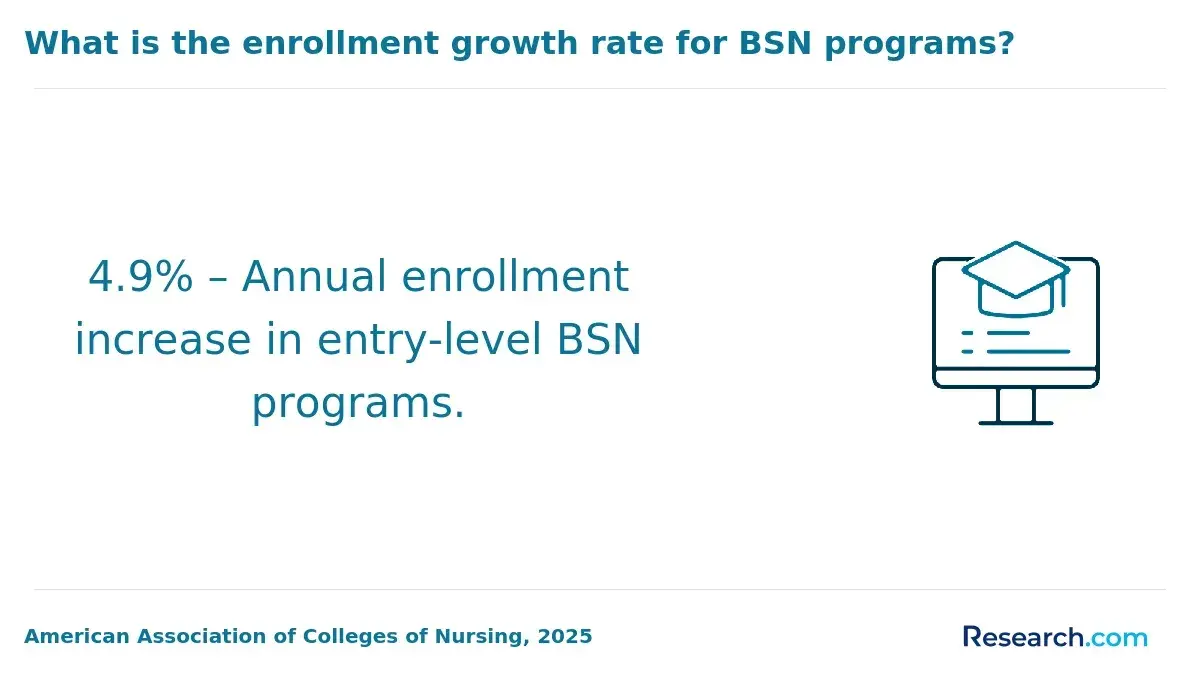
From 2024 to 2024, enrollment in RN to BSN programs declined by 16.9%. This was the fourth year in a row of declining enrollment, even though BSN completion remains important for many employers and graduate nursing pathways.
What courses are usually included?
While course titles vary by school, many online nursing programs include a similar academic core because they build the clinical judgment and evidence-based skills nurses need in practice.
- Pharmacology: Covers drug classes, medication safety, administration, and side effects
- Health Assessment: Teaches physical assessment techniques across patient populations and life stages
- Evidence-Based Practice: Focuses on using research to improve care and professional standards
- Nursing Informatics: Introduces healthcare technology, data use, and digital record systems
- Anatomy and Physiology: Explains body systems and how they affect health and disease
These courses are common across many nursing pathways, including RN-BSN programs that help ADN-prepared nurses meet bachelor-level expectations. According to AACN, 2023b, there are 747 RN-BSN programs in the US, with more than 650 offered online.
Which specializations are available?
Specialization matters because it can shape your salary potential, licensure path, and job options. Most advanced nursing specializations are available at the MSN or DNP level, although some programs may introduce specialty tracks earlier.
- Family Nurse Practitioner: Provides primary care for patients across the lifespan with a focus on prevention and chronic disease management
- Adult-Gerontology Nurse Practitioner: Works with adult and older adult populations
- Nurse Anesthetics: Delivers anesthesia care during procedures and surgeries
- Nurse Educator: Prepares nurses for teaching, curriculum design, and academic support roles
- Leadership and Administration: Centers on management, finance, operations, and healthcare policy
- Nurse Midwifery: Focuses on pregnancy, childbirth, postpartum care, and reproductive health
These paths are typically pursued through best online master’s nursing programs or DNP programs, where the curriculum is specialized enough to support advanced practice preparation.
How to choose the right affordable online nursing program
The cheapest program is not always the best value. Use a wider lens and check the details that affect completion, licensure, and employment after graduation.
| What to Check | Why It Matters | What Good Looks Like |
| Accreditation | Impacts quality, transferability, graduate study, and licensure eligibility | CCNE, ACEN, or NLN Commission for Nursing Education Accreditation recognition |
| Clinical placements | Shows how the school handles hands-on training | Clear placement support and local clinical coordination |
| Licensure pass rates | Helps you gauge how well the program prepares students for the exam | Published, understandable outcomes data |
| Faculty support | Affects feedback, mentoring, and academic guidance | Accessible instructors and advising |
| Technology platform | Online learning depends on reliable systems | Easy-to-use LMS, stable tech support, and required software access |
| Networking options | Can influence job leads and career development | Alumni access, partnerships, and professional connections |
Before enrolling, ask whether the program is authorized in your state, whether clinical hours can be completed where you live, and whether the degree meets your state board and employer expectations.
What career paths can an affordable online nursing degree support?
An online nursing degree can lead to entry-level practice, advancement, or specialization depending on the credential you earn. The degree alone does not determine your job title; your license level and scope of practice do.
| Career Path | Typical Role | Best Fit For |
| Registered Nurse | Provides direct patient care in hospitals, clinics, and long-term care settings | Students entering practice or expanding clinical responsibility |
| Nurse Practitioner | Evaluates, diagnoses, and treats patients in advanced practice settings | Nurses pursuing prescriptive and diagnostic authority where allowed |
| Clinical Nurse Specialist | Offers specialty clinical expertise, teaching, and leadership | Nurses who want advanced clinical influence |
| Emergency Room Nurse | Delivers urgent care in fast-paced acute care settings | Nurses who work well under pressure |
| Travel Nurse | Takes temporary assignments in different locations | Nurses seeking flexibility and variety |
RNs also work outside hospitals. Common employers include ambulatory healthcare services (18%), nursing and residential care facilities (6%), government healthcare clinics (5%), and educational services (3%).
What does the job outlook look like for nursing graduates?
Nursing continues to show steady demand, and the long-term outlook remains favorable for many roles. According to BLS projections for 2024 to 2034, expected employment growth is:
- Certified Nursing Assistants: 4%
- Licensed Vocational/Practical Nurses: 5%
- Registered Nurses: 6%
- Nurse Practitioners, Midwives, and Anesthetists: 38%
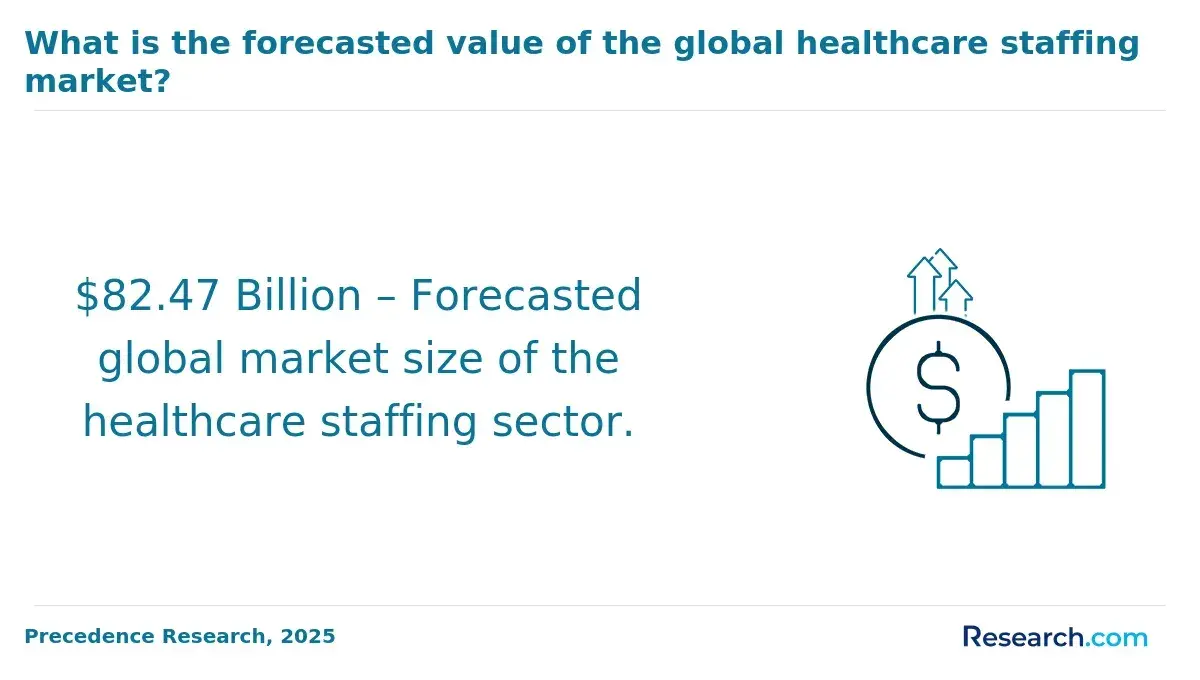
The broader workforce context also matters. Healthcare systems continue to face staffing pressure, and the nursing shortage has remained a major concern across the U.S. and globally. The nurse shortage has been widely discussed since 2012 and is expected to continue through 2030. The World Health Organization’s State of the world’s nursing 2024 and HRSA reporting both point to sustained workforce demand, including over a million more nurses required by 2030.
That does not guarantee a job in every market, but it does mean qualified nurses and especially advanced practice nurses are likely to remain in demand across many settings.
How do online programs handle clinical practice?
Online nursing programs do not eliminate hands-on training. Instead, they usually blend digital coursework with supervised clinical hours, simulation tools, local placements, or limited campus visits. The exact structure depends on the degree level and state requirements.
Some programs arrange clinical experiences through approved sites near your home, while others expect you to help secure a placement. A strong program should explain this process clearly before you enroll.
What are the current trends shaping online nursing education?
Online nursing education is changing in response to technology, workforce pressure, and the growing need for flexible training. Programs are using more simulation, telehealth exposure, and digital learning tools to help students develop practical judgment in a remote format.
- Virtual simulation is becoming more common for skills practice and clinical decision-making.
- Telehealth training is more relevant as remote care expands in healthcare delivery.
- Accelerated pathways continue to attract working nurses who want faster completion.
- Competency-based expectations are increasing as employers look for practical readiness, not just credentials.
- Specialty-focused programs are growing in popularity for students targeting roles such as family practice, psychiatric care, and leadership.
These trends do not replace clinical training, but they do make online nursing programs more practical and career-relevant than they were in the past.
What technology do you need for an online nursing program?
Because online nursing courses depend on digital delivery, you should plan for the following before enrolling:
- Reliable internet for class meetings, uploads, and simulations
- A current laptop or desktop that can handle video conferencing and school software
- Webcam and microphone for discussions, proctoring, or virtual meetings
- Access to the school’s learning management system such as Canvas, Blackboard, or Moodle
- Simulation software if your curriculum uses virtual clinical tools such as Shadow Health or SimChart
If your program includes proctored testing or virtual skills demonstrations, make sure your device and internet setup meet the school’s technical standards before classes begin.
Can an online nursing program prepare you for Family Nurse Practitioner study?
Yes, but only if the program is structured for that pathway and meets the licensure and clinical requirements needed for advanced practice. Family Nurse Practitioner study usually expects advanced pharmacology, assessment, and evidence-based coursework, plus supervised clinical hours.
Online delivery can work well for FNP students because it allows working nurses to keep employment while completing graduate coursework. The key is not the format itself; it is whether the program is accredited, state-authorized, and built to meet advanced practice requirements.
If you are comparing budget-friendly options, see the cheapest FNP programs online for programs that balance cost with specialty preparation.
Why accreditation should never be overlooked
Accreditation is one of the most important filters you can use when comparing online nursing programs. A lower tuition price is not worth much if the program does not meet professional or licensure expectations.
Two major nursing accreditors are especially important:
- Commission on Collegiate Nursing Education (CCNE): Accredits baccalaureate, master’s, and doctoral nursing programs
- Accreditation Commission for Education in Nursing (ACEN): Accredits nursing programs at associate, bachelor’s, master’s, and doctoral levels
Some employers prefer accredited programs, and many licensure or graduate-school pathways depend on it. If accreditation status is unclear, treat that as a warning sign and verify the school directly with the accreditor and your state board of nursing.
If you want a shorter route into advanced practice, you may also want to compare the easiest nurse practitioner specialty programs to get into, but only after confirming the accreditation and clinical requirements.
How can an online nursing degree help you advance your career?
An online nursing degree can open doors, but career growth usually depends on how intentionally you use the program. The strongest students take advantage of advising, career services, professional organizations, and mentorship while they are enrolled.
- Use career services for resumes, interview practice, and job search support
- Join professional associations to build connections and stay current in the field
- Ask about alumni networks and employer partnerships before enrolling
- Consider specialty certifications after graduation to strengthen your resume
- Plan your next credential early if you want to move into leadership or advanced practice
For students comparing schools with strong support systems, resources such as easy nursing schools to get into can help you identify programs that may be more accessible, but you still need to evaluate quality, not just admissions ease.
What support services should online nursing students expect?
Good online nursing programs do more than deliver content. They also help students stay enrolled, stay organized, and stay on track for licensure or completion. The most useful services usually include:
- Academic advising to help with course selection and progression
- Technical support for learning platforms, software, and access problems
- Career services for resume help, interview practice, and job search planning
- Tutoring and writing support for challenging subjects like pharmacology and anatomy
- Mental health and wellness resources for stress management and support
- Disability services to ensure accessibility and accommodations when needed
Strong support services can make the difference between finishing a program and dropping out. They are especially important for students balancing full-time work, family obligations, and clinical requirements.
How can supplemental certifications strengthen your nursing degree?
Additional certifications can help you stand out after graduation, especially if you want to move into a specialty area. These credentials do not replace a degree, but they can deepen your expertise and signal commitment to employers.
Examples include certifications in pediatric care, critical care, or informatics. The best choice depends on the type of patients you want to serve and the roles you want to pursue.
If you are building from a foundational credential, programs such as easy RN to BSN degrees to obtain can provide a practical starting point before you pursue specialty training.
Common mistakes students make when choosing an affordable online nursing program
- Choosing based on tuition alone and ignoring fees, travel, and technology costs
- Skipping accreditation checks and later discovering licensure or transfer problems
- Assuming every online program supports licensure in their home state
- Ignoring clinical placement logistics until after enrollment
- Relying on marketing language instead of outcomes data
- Not verifying transfer credit policies before moving credits from a prior school
- Assuming salary or job placement is guaranteed after graduation
Questions to ask before you enroll
- Is the program accredited by CCNE, ACEN, or another recognized accreditor?
- Is the program authorized in my state?
- How are clinical placements arranged?
- What is the total estimated cost, including fees and supplies?
- How many credits can I transfer?
- What is the expected completion time for a student like me?
- What licensure or certification outcomes does the program support?
- What advising, tutoring, and technical support are available?
- Are courses asynchronous, synchronous, or a mix of both?
- What kinds of jobs do graduates typically pursue?
Frequently asked questions about affordable online nursing programs
Are cheap online nursing programs worth it?
They can be, but only if the program is accredited, meets licensure requirements, and fits your goals. The lowest price is not always the best value if it limits your future options.
Do online nursing programs still include hands-on training?
Yes. Most credible programs include clinical hours, simulations, or both. A nursing degree cannot be completed through theory alone.
Can I work while earning an online nursing degree?
Many students do, especially in RN-to-BSN and some graduate programs. That said, clinical requirements, exams, and heavy reading loads can still make the program demanding.
Is an online nursing degree respected by employers?
Employers generally care more about accreditation, licensure eligibility, and academic quality than whether the program was online or on campus. The degree must still meet professional standards.
Should I choose an RN-to-BSN or go straight into graduate school?
If you already hold an ADN or diploma and want to expand your job options, RN-to-BSN is often the logical next step. If you already have a BSN and want advanced practice or leadership, an MSN or DNP may be the better fit.
References:
- AACN. (2025). 2024-2025 Enrollment and Graduations in Baccalaureate and Graduate Programs. https://www.aacnnursing.org
- Precedence Research. (2025). Healthcare Staffing Market Size to Hit USD 82.47 Bn. https://www.precedenceresearch.com/healthcare-staffing-market
- U.S. Bureau of Labor Statistics. (2025). Occupational Outlook Handbook: Registered Nurses. https://www.bls.gov/ooh/healthcare/registered-nurses.htm
- World Health Organization. (2024). State of the world's nursing 2024. https://www.who.int/publications/i/item/9789240062374
Key Insights
- The best affordable online nursing program is not the cheapest one; it is the one that balances cost, accreditation, clinical support, and licensure fit.
- RN-to-BSN programs often deliver the strongest value for working nurses because they are usually shorter and more flexible than starting a new degree path.
- Always verify accreditation, state authorization, and clinical placement plans before you enroll.
- Tuition is only part of the price. Fees, uniforms, technology, vaccines, and travel for clinical or campus requirements can raise the true cost.
- Online nursing programs can be a smart choice for students who need flexibility, but they still require discipline, planning, and reliable technology.
- Advanced degrees such as an MSN or DNP may cost more, but they can support higher-level roles if they match your career goals.
- If you want the best return, compare total program value, not just advertised tuition or rankings.
Other Things You Should Know About Affordable Online Nursing Programs
Yes, many affordable online nursing programs in 2027 require students to complete clinical hours in a local healthcare facility. These can range from 500 to 1,000 hours, depending on the program, and are crucial for gaining hands-on nursing experience under supervision.
Many RN-to-BSN and MSN programs require an active, unencumbered RN license for admission, while pre-licensure tracks do not. Some schools also require a license in the state where clinical hours will be completed, because placement sites must follow state board and clinical agency rules.
In 2027, some of the most affordable online nursing programs include the University of Central Florida, with tuition around $179 per credit, and Georgia Southern University, with tuition approximately $182 per credit. It's vital to compare programs for additional fees.