2027 Switching from General Business to Nonprofit Management During a BS in Business Administration: Credits and Timing
Audited and Verified:
Our Editorial and Data Verification Process
Research.com uses government datasets, official education statistics and primary institutional information to support its career and degree guides. Our review process checks factual accuracy, occupational definitions, source dates and the requirements associated with the credentials discussed.
How This Article Was Fact-Checked
Our editorial team verifies salary estimates, employment projections, education requirements and program information against original data providers and official organizations. Salary figures are checked against the relevant occupational definitions and reporting periods. Information about licensure, accreditation and required in-person training is reviewed separately.
Fact-checked and verified on:

Co-Founder and Chief Data Scientist
Switching from general business to nonprofit management can sharpen your career preparation - or leave you with extra courses just as graduation approaches. If you are already pursuing a BS in Business Administration, the key question is not whether your completed credits still count, but which requirements they satisfy under the proposed program. This guide explains how to compare degree audits, identify scheduling and cost risks, and decide whether a formal concentration offers enough value over nonprofit-focused electives and experience.
Key Things You Should Know
- A change within the same BS may preserve the business core, but completed general-business electives may not satisfy nonprofit concentration requirements; compare official degree audits before changing.
- Accepted credits, credits applied to specific requirements, and credits still needed are different totals. Course availability and prerequisites can delay graduation even when few additional credits are required.
- Choose the formal concentration when its courses and applied opportunities justify any added time or cost; otherwise, approved electives and nonprofit experience may be the more direct route.
How can you switch from general business to nonprofit management during a bachelor's degree?
First, establish what the school actually offers. Nonprofit management might be a concentration within the BS in Business Administration, a separate major, a minor, or simply a group of electives. Those choices have different approval processes and graduation requirements; taking nonprofit-related classes does not by itself award a concentration.
Ask your academic adviser for an official audit under both your current catalog and the proposed program. Confirm which catalog applies to you, whether changing programs changes that catalog, and whether the nonprofit option appears on your transcript. If you would need to change institutions, request a transfer evaluation before leaving your current school. Students comparing a new institution can also explore fee-free online university applications, but a waived application fee says nothing about credit applicability.
Make the change only after the adviser or authorized department confirms the required form, effective term, remaining courses, and any approvals. Keep the written audit: an informal assurance that "your credits should count" is not a graduation plan.
How many credits transfer when changing to a nonprofit management program?
There is no universal number. Within the same institution, previously earned credits generally remain on your record, but their application can change. At a different institution, its transfer office determines which credits it accepts; the receiving business department and registrar determine how those credits meet degree requirements.
The distinction below explains why a transcript total alone cannot tell you whether switching extends your degree.
| Where a completed course lands | Effect on the new degree plan |
| General education or business core | Usually the least disruptive if the requirement is shared and the course is approved as equivalent. |
| Nonprofit concentration | Counts only if it meets an approved concentration requirement or receives an authorized substitution. |
| Open elective | May count toward total credits without replacing a required nonprofit course. |
| Unapplied or excess credit | Remains on the record but may not reduce the work needed to graduate. |
At another school, also check transfer-credit limits, residency rules, course recency, and whether accounting, statistics, or other prerequisites have accepted equivalents. A related concentration can pose the same problem: students considering HR bachelor's programs with flexible transfer pathways should likewise distinguish transferred electives from credits that satisfy the new specialization.
Can switching majors delay graduation or increase your degree costs?
Yes, even if your total credit requirement barely changes. A nonprofit course may require a prerequisite, be offered only in certain terms, or conflict with your final business-core course. A required internship may also need advance approval and a site whose schedule you can meet. Conversely, a switch made while you still have open electives may fit without extending your planned completion date.
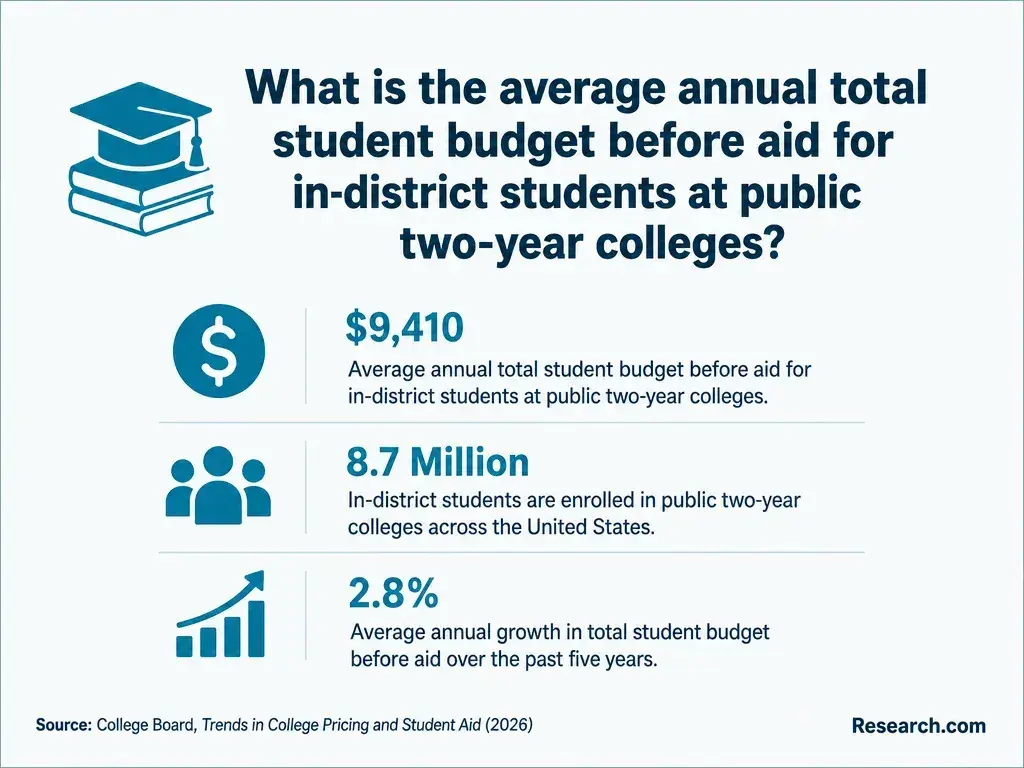
Compare both audits term by term - not just their remaining-credit totals. Identify the first term each new required course is available and ask what approved alternative exists if a course is canceled. Then calculate added tuition and fees using the school's actual charging method, plus books, travel, and any earnings affected by a later finish. Ask financial aid how the change could affect eligibility, satisfactory academic progress, and aid for courses that no longer apply to your degree.
An explore fast-track online business programs comparison may help if you are considering a transfer, but an accelerated calendar is not a solution unless the nonprofit requirements, accepted credits, and course sequence actually permit a faster finish.
Requirements vary by institution. A nonprofit concentration may add courses in governance and boards, fundraising, grant development, nonprofit finance, program evaluation, volunteer management, or community partnerships to the existing business core. Some programs require an internship or capstone; others allow electives instead. Verify the current catalog rather than assuming every nonprofit-focused course satisfies the concentration.
Pay particular attention to how the curriculum adapts business skills. Financial accounting and budgeting matter in nonprofits, but restricted funding, donor reporting, and accountability to beneficiaries create decisions that differ from conventional sales-driven planning. A supervised project can help you demonstrate those distinctions, provided the school approves it and the organization permits use of its information.
If your goal is primarily logistics or purchasing rather than nonprofit fundraising or governance, compare those courses with planning an affordable supply chain education route. The better choice is the one that closes your actual skill gap without adding unrelated requirements.
Choose by the requirements you can complete reliably, not by delivery label. Online study may reduce commuting, but live meetings, group assignments, proctored exams, and internship hours can still constrain a work schedule. Campus study may make local nonprofit connections easier, while an online program may let you complete an approved project with an organization near home.
Request a recent course schedule and confirm whether required nonprofit courses are available in your preferred format, how often they run, and whether internships or residencies require travel. If you are balancing a job with coursework, business administration education for employed professionals offers a useful comparison point - but verify the nonprofit concentration's own scheduling rules separately.
Verify the institution's recognized accreditation first, especially before transferring schools or relying on federal financial aid. Then determine whether any advertised business accreditation - such as AACSB, ACBSP, or IACBE - covers the school or program offering the BS. An institution's accreditation and a business accreditor's program-specific scope are not interchangeable.
Accreditation does not establish that a nonprofit concentration is offered online, that your credits will apply, or that graduates obtain particular jobs. When you evaluate American online business school options, check the accreditor's own listing alongside the school's current catalog and written transfer evaluation.
For a concentration change within your current BS, the process may be a declaration or departmental approval rather than a new university application. A separate nonprofit management major, a different business school, or a transfer to another institution may have distinct GPA, prerequisite, application, or deadline requirements. Ask whether any requirement must be met before the change or can be completed afterward.
Gather your transcript, current degree audit, proposed catalog requirements, and syllabi for courses whose equivalence is uncertain. The school's business administration degree entry requirements can help frame questions about preparation, but only the receiving institution can confirm your admission and course substitutions. Admission to a program is not approval of every prior credit toward graduation.
Relevant starting points include development or fundraising coordinator, program coordinator, operations assistant, volunteer coordinator, and events coordinator. Responsibilities can involve tracking budgets, maintaining donor records, arranging services, supporting grants, or reporting program activity. Employers may value spreadsheet skills, clear writing, stakeholder communication, and familiarity with the communities they serve.
A concentration can strengthen your preparation, but it does not make you a nonprofit director on graduation. Seek a supervised internship, part-time role, or volunteer assignment that produces evidence of work you can discuss without disclosing donor or beneficiary information. If the work you want is primarily scheduling and delivery of projects across sectors, explore economical project management degree programs before committing to a nonprofit-specific switch.
Pay depends on the job, employer budget, location, and experience; there is no single salary for "nonprofit management graduates." As one occupation-specific reference, the U.S. Bureau of Labor Statistics reports a $61,160 median annual wage for meeting and event planners in May 2025. That figure includes workers across industries and experience levels, so it is not an expected starting salary for a new graduate or a nonprofit-only estimate.
Compare actual openings for the roles and locations you would pursue, then weigh any additional degree cost against the skills and experience the switch provides. If a transfer is under consideration, compare tuition for online business colleges only after establishing how many required credits each school would apply; a lower advertised rate may not mean a lower completion cost.
Which certifications support a career in nonprofit management?
Certifications are optional and should follow the role you want, not substitute for experience. Fundraising credentials may require documented professional practice; project-management or HR credentials have their own eligibility rules. Check the issuing organization's current requirements before paying for preparation, and do not assume a nonprofit course or BS concentration automatically qualifies you.
For an early-career student, targeted training in donor systems, grant writing, budgeting, or volunteer coordination may be more useful immediately than pursuing an experience-based designation. If you are considering leaving your current school mainly to obtain a credential, compare that expense with cheapest online business administration degrees and with staying in your existing BS while adding approved electives or practical experience. Verify which option actually appears on your transcript and meets your goal.
Other Things You Should Know About Business Administration
Not necessarily. Schools differ in whether they print concentrations on diplomas, record them on transcripts, or list them only in degree records. Ask the registrar what your completed credential will show.
Only if the department approves the site, duties, supervision, and assessment under its internship policy. Prior volunteering alone does not automatically earn internship credit.
No. They are different academic designations with school-specific requirements. Compare their required courses, transcript notation, and fit with your remaining electives.
Often a student can request another change, but catalog rules and completed-course applicability may differ. Obtain an updated audit before switching back so you know whether the change affects graduation.
- Eligibility Requirements | Federal Student Aid https://studentaid.gov/understand-aid/eligibility/requirements
- Updating Application Information | 2025-2026 Federal Student Aid Handbook https://fsapartners.ed.gov/knowledge-center/fsa-handbook/2025-2026/vol2/ch5-updating-application-information
- Recommended Course Sequence | Texas Higher Education Coordinating Board https://www.highered.texas.gov/data-submission-reporting/recommended-course-sequence/
- Nonprofit Management Graduate Certificate (Online) | Harvard Extension School https://extension.harvard.edu/academics/programs/nonprofit-management-certificate/
- Bachelor of Business Administration: Nonprofit Management Emphasis | University of Missouri-Kansas City Academic Catalog https://catalog.umkc.edu/colleges-schools/henry-w-bloch-management/undergraduate-programs/bachelor-of-business-administration/nonprofit/
- Master of Nonprofit Management | uoregon.edu https://pppm.uoregon.edu/grad/master-of-nonprofit-management
- Nonprofit Management (Bachelor's) | Missouri Valley University https://www.moval.edu/program/nonprofit-management-bachelors/
- 2026-2027 Nonprofit Management (BA or BS) - UCF Connect https://connect.ucf.edu/degree-mapping
- Careers in Nonprofit Management: Tips for Success | Fairfield University https://www.fairfield.edu/news/insights/arts-sciences/careers-in-nonprofit-management-tips-for-success.html
- What is a Business Administration Degree? | jefferson.edu https://www.jefferson.edu/news/2025/09/what-is-a-business-administration-degree.html