2027 Choosing a BS in Business Administration for Business Roles in Employee-Owned Companies
Audited and Verified:
Our Editorial and Data Verification Process
Research.com uses government datasets, official education statistics and primary institutional information to support its career and degree guides. Our review process checks factual accuracy, occupational definitions, source dates and the requirements associated with the credentials discussed.
How This Article Was Fact-Checked
Our editorial team verifies salary estimates, employment projections, education requirements and program information against original data providers and official organizations. Salary figures are checked against the relevant occupational definitions and reporting periods. Information about licensure, accreditation and required in-person training is reviewed separately.
Fact-checked and verified on:

Co-Founder and Chief Data Scientist
A business role at an employee-owned company calls for the usual financial, operational, and communication skills, but also an understanding of how decisions affect fellow employee-owners. If you are choosing or finishing a BS in Business Administration, the useful question is whether its courses and applied work prepare you for the function you want, not whether the degree mentions employee ownership.
This guide connects programs to realistic roles, explains the ownership structures you may encounter, and shows what to verify before committing your time and money.
Key Things You Should Know
- Choose coursework for a target function, such as operations, HR, finance, or marketing, and seek evidence of practical work; a general business degree does not itself qualify you to manage an employee-owned company.
- Employee ownership can mean an employee stock ownership plan (ESOP), a worker cooperative, or another arrangement. Ask how ownership, voting, and financial information actually work at a prospective employer.
- For one relevant occupation, the U.S. Bureau of Labor Statistics projects 18% employment growth for logisticians from 2025 to 2035; that is an occupation-wide projection, not a forecast of openings at employee-owned firms.
What is a business administration degree, and why is it useful for employee-owned companies?
A BS in Business Administration is an undergraduate degree combining core business subjects with general education and, depending on the school, electives or a formal concentration. Its breadth can help an employee understand how purchasing, staffing, customer commitments, and cash flow affect one another. That perspective matters when business decisions also affect colleagues who have an ownership stake.
The degree is not an employee-ownership credential. A BBA or another business bachelor's degree may offer similar preparation, while a specialized accounting or supply chain degree may provide more depth for a defined role. Compare actual courses and applied opportunities rather than relying on the degree title. If you are weighing several schools, value-focused online business college choices can be a starting point, but verify each program's curriculum and your remaining requirements.
What jobs can you get with a business administration degree at employee-owned companies?
Start with responsibilities you can demonstrate, then look for those functions at employee-owned employers. The table distinguishes plausible entry routes from positions that usually call for more experience or specialized preparation; company titles and requirements vary.
| Business function | Potential starting work | Evidence that strengthens an application |
| Operations or supply chain | Coordinate orders, schedules, inventory, or vendors | Spreadsheet analysis, process mapping, and documented logistics work |
| Human resources | Support recruiting, onboarding, and personnel records | Clear communication, HR coursework, and careful handling of confidential information |
| Finance or administration | Track budgets, prepare reports, or support accounting processes | Financial-statement literacy and accurate spreadsheet work |
| Marketing or customer operations | Coordinate campaigns, research customers, or report service measures | Writing samples, ethical data analysis, and relevant project work |
An operations coordinator might later move into project responsibility, but completing a project management course does not confer a management title. If project delivery is your specific goal, compare business coursework with affordable online project management degrees and the experience required in actual job postings.
How do employee-owned companies differ from traditional businesses?
"Employee-owned" describes a range of arrangements, not one management model. An ESOP generally holds company shares for eligible employees through a retirement-plan trust; a worker cooperative typically gives members a more direct governance role. Other companies may offer employee share purchases or equity awards. Eligibility, voting rights, distributions, and access to financial information depend on the arrangement and its governing documents. Employees do not necessarily vote on everyday operating decisions.
For business staff, the practical difference is often the need to explain trade-offs clearly: a purchasing decision may affect costs, customers, and fellow owners' long-term interests. Ownership does not erase cash constraints, reporting duties, or management authority. In a supply-chain role, strong procurement and inventory skills may matter more than a general discussion of ownership; compare a broad BS with supply chain bachelor's degrees in three years or less if that function is your clear destination.
Most programs cover accounting, finance, marketing, management, economics, operations, and quantitative reasoning, but course depth differs. For employee-owned workplaces, look particularly for financial-statement interpretation, budgeting, process improvement, organizational behavior, and communication. These subjects support informed discussions about performance without implying that every employee can access confidential company accounts.
Choose electives or a formal concentration around the role you want. An HR path may benefit from employment practices and compensation; operations may call for supply chain and analytics. An approved capstone could examine a public-data case or an employer-authorized process question. Do not assume a current job supplies capstone credit or permission to publish company information. If speed affects your choice, explore fast-track online business programs while checking prerequisite sequences and whether the courses you need are actually offered when you need them.
Neither format is inherently better for an employee-owned-company career. Online study may fit an existing work schedule and allow a current employee to connect assignments to approved workplace problems. Campus study may make in-person recruiting, group work, and local employer relationships easier. Both can provide strong applied learning, or little of it.
Request sample course schedules before choosing. Check live attendance, group meetings, exam proctoring, internship rules, campus visits, and access to faculty and career services. "Online" does not mean self-paced. For an employee seeking advancement without leaving work, flexible business administration programs for career progression are worth comparing against the hours you can consistently devote to study.
Requirements depend on whether you enter as a first-year or transfer student and whether the school separately admits students to its business major. Schools commonly request prior academic records; some business majors also require specified mathematics, statistics, accounting, economics, or GPA preparation. Professional experience can strengthen an application without automatically replacing a required course.
If you have prior college work, ask for an official evaluation showing which credits satisfy general education, the business core, concentration requirements, and institutional residency rules. A credit accepted as an elective may not shorten the sequence to graduation. Use business administration degree prerequisite planning to prepare questions, then confirm answers with the admissions and advising offices responsible for your program.
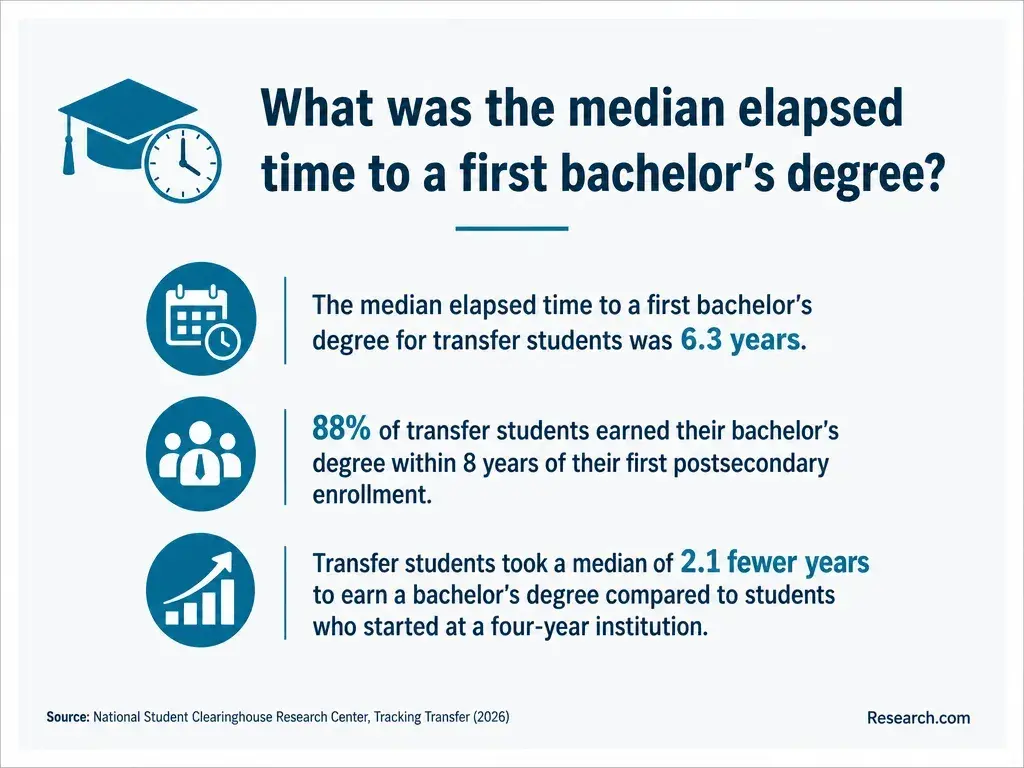
A full bachelor's pathway commonly spans four academic years, but your remaining time depends on applicable transfer credit, enrollment pace, prerequisites, and course availability. An accelerated calendar does not necessarily reduce the amount of coursework. A returning student should obtain a degree audit and a term-by-term course plan before relying on an advertised completion time.
Compare the cost of finishing, not just tuition per credit, include required fees, books or software, travel or proctoring, borrowing costs, and earnings affected by your schedule. If an employer offers education assistance, check eligibility, payment timing, grade conditions, and any repayment obligation. To frame a comparison, compare business administration tuition and completion time, then request school-specific estimates based on your approved credits.
Confirm the institution's current accreditation through the accreditor's own records and verify that the accreditor is recognized by the U.S. Department of Education. Separately, check whether any claimed AACSB, ACBSP, or IACBE business accreditation covers the particular school or program you are considering. Institutional accreditation and business-specific accreditation have different scopes; neither guarantees employment.
Quality for this goal also means usable courses and support: ask about operations, HR, finance, and analytics electives; employer-approved projects; internship assistance; and outcomes reported for a clearly defined student group. A low advertised price is less valuable if required courses delay completion. When you compare the least expensive business administration schools, check accreditation, course availability, and the total cost of your own degree plan.
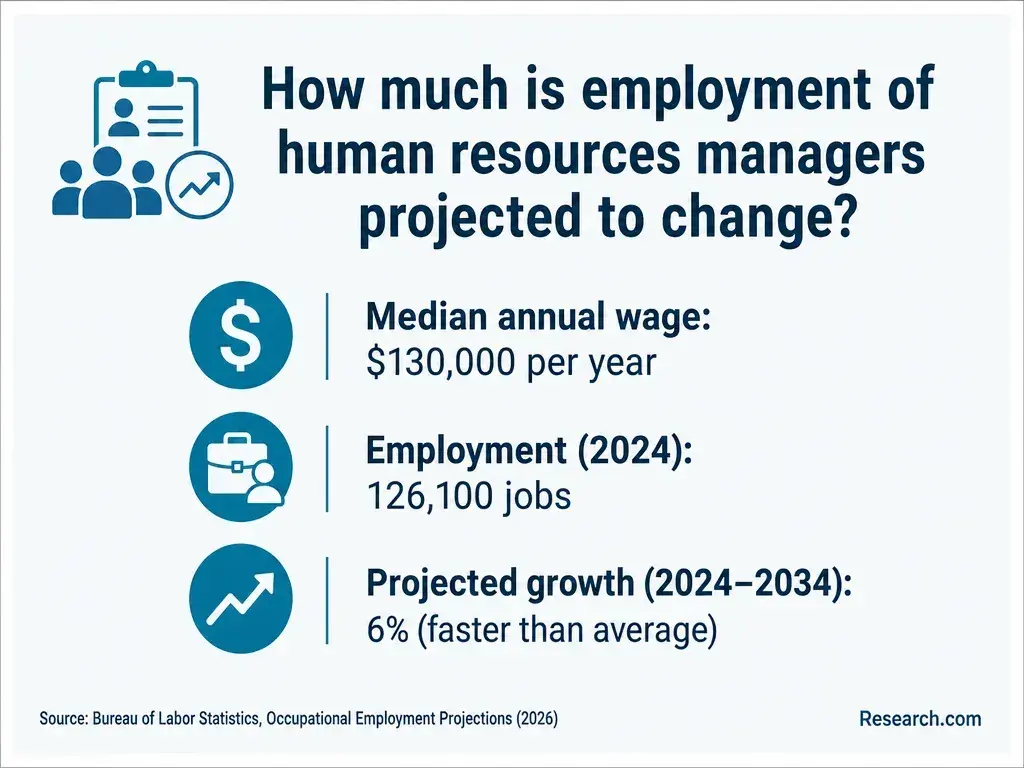
There is no single salary for a business administration graduate or an employee-owned-company job. Pay depends on occupation, experience, location, and employer. The U.S. Bureau of Labor Statistics reports a May 2025 median annual wage of $75,940 for human resources specialists and projects 6% employment growth for that occupation from 2025 to 2035. The median covers workers across experience levels and employers; it is not an entry-level offer or an employee-owned-firm pay estimate.
Judge a degree's potential return against the roles you can realistically pursue now and the experience needed for later advancement. Faster completion may reduce time before you can apply for degree-preferred jobs, but it does not guarantee a wage increase. If timing is decisive, use business bachelor's rankings focused on completion speed as an initial screen and verify your personal graduation timeline with each school.
Do employee-owned company careers require certifications or professional licenses?
Employee ownership itself usually does not create a license requirement for an operations, HR, marketing, or administrative role. Requirements follow the occupation and its duties: certain accounting, financial-services, or other regulated work can require separate credentials. Voluntary HR or project management certifications have their own eligibility rules; a BS in Business Administration does not award them automatically.
Read target job postings before paying for an additional credential. If you want HR work, compare the HR depth of a general business degree with transfer pathways into online human resources programs. If you already hold a bachelor's degree and need one specific skill, employer training, a focused course, or supervised experience may be more direct than another full degree.
Other Things You Should Know About Business Administration
Not necessarily. Eligibility depends on the company's ownership arrangement and plan or membership rules. Ask when participation begins and what conditions apply.
No. Ownership value and distributions vary by structure and company circumstances. Do not treat a possible payout as guaranteed compensation when comparing offers.
Possibly, with faculty approval and the company's permission. Agree on the project scope and data access first, and use public or properly authorized information.
Ask how employees participate, how the arrangement is explained to new hires, and what information staff receive. Save detailed questions about eligibility and benefits for the appropriate HR or plan representative.
- Soft Skills: The Competitive Edge | dol.gov https://www.dol.gov/agencies/odep/publications/fact-sheets/soft-skills-the-competitive-edge
- Employee Ownership Initiative Report to Congress - DOL https://beta.dol.gov/research-data/surveys-reports-publications/employee-ownership-initiative-report-congress
- What Do You Learn in a Business Administration Degree? | Rowan Blog https://rowanblog.com/2026/07/what-do-you-learn-in-business-administration-degree/
- A Comparison of Forms of Employee Ownership | nceo.org https://www.nceo.org/what-is-employee-ownership/comparison-of-forms-of-employee-ownership
- Employee Stock Ownership Plan (ESOP) FAQs | BDO https://www.bdo.com/insights/tax/frequently-asked-questions-related-to-employee-stock-ownership-plans-esops
- Ask Co-op Cathy: What's the Difference Between a Worker Co-op and an ESOP? - Cooperative Development Institute https://cdi.coop/coop-cathy-worker-coops-esops-difference/
- Business and Financial Literacy | CO- by US Chamber of Commerce https://www.uschamber.com/workforce/new-hire-readiness-report-2025/business-and-financial-literacy
- Co-ops /Employee Ownership | nonprofitquarterly.org https://nonprofitquarterly.org/series/co-ops-employee-ownership/