2027 Choosing a BS in Business Administration for Business Roles in Behavioral Health Service Providers
Audited and Verified:
Our Editorial and Data Verification Process
Research.com uses government datasets, official education statistics and primary institutional information to support its career and degree guides. Our review process checks factual accuracy, occupational definitions, source dates and the requirements associated with the credentials discussed.
How This Article Was Fact-Checked
Our editorial team verifies salary estimates, employment projections, education requirements and program information against original data providers and official organizations. Salary figures are checked against the relevant occupational definitions and reporting periods. Information about licensure, accreditation and required in-person training is reviewed separately.
Fact-checked and verified on:

Co-Founder and Chief Data Scientist
A behavioral health provider needs people who can manage staffing, budgets, scheduling, and reporting - but a business degree does not prepare someone to deliver clinical care. If you work in a clinic, community mental health organization, or substance use treatment program, a BS in Business Administration may help you move into nonclinical operations. The useful question is whether a particular program builds the skills your target role requires. This guide compares career routes, coursework, experience requirements, program formats, and costs so you can choose a degree - or a more direct alternative - with a clear purpose.
Key Things You Should Know
- A BS in Business Administration can support nonclinical roles in behavioral health, but employers commonly look for relevant operational experience before assigning management responsibility.
- Prioritize accounting, HR, operations, and data courses that you can apply to provider work; a healthcare elective alone does not establish an official specialization.
- The U.S. median annual wage for human resources specialists was $75,940 in May 2025, but that occupation-wide figure is not a starting salary or a behavioral health pay estimate.
What is a business administration degree for behavioral health providers?
A BS in Business Administration is an undergraduate business degree, not a clinical behavioral health qualification. Its accounting, management, finance, operations, and analytical coursework can be applied to the organizations that deliver mental health or substance use services. Those organizations may be nonprofit, for-profit, hospital-affiliated, or publicly funded, and their administrative needs differ.
Some schools offer a healthcare management concentration; others offer only individual healthcare electives or a general business curriculum. Check the catalog for the exact degree and concentration awarded, rather than assuming that an appealing course title changes your credential. A BS, BBA, or specialized healthcare administration degree may each be suitable, depending on the courses and the role you want.
For someone already handling scheduling, purchasing, payroll support, or program coordination, the degree's value lies in connecting that experience to broader business decisions. If completing a bachelor's degree while employed is the main obstacle, accelerated business education for working adults may be worth comparing - but faster terms will not replace sector experience or lighten the work in each course.
What careers can a business administration graduate pursue in behavioral health?
Start with the work you have done, then target a business function. A graduate with front-desk and scheduling experience may be closer to an operations coordinator role than to HR specialist or finance analyst work. The table distinguishes plausible paths from the evidence an employer may expect.
| Target role | Typical provider-side work | Useful evidence beyond the degree |
| Operations or program coordinator | Track schedules, vendor requests, service capacity, and administrative workflows | Documented process improvements and dependable coordination across teams |
| HR assistant or specialist | Support recruiting, onboarding, personnel records, and workplace policies | HR systems experience and knowledge of applicable employment practices |
| Revenue cycle or finance coordinator | Monitor billing workflows, payments, expenses, and reports | Accounting skills and familiarity with the provider's payer arrangements |
| Project coordinator | Organize timelines and stakeholders for a new service, system, or workflow | Work samples showing planning, follow-through, and clear communication |
Job titles vary by employer. An internship or supervised workplace project can help an early-career applicant show these skills; an experienced employee can use approved, nonconfidential examples of work already performed. If project coordination is your primary goal rather than broad provider administration, compare the business degree with credit mapping for online project management programs before committing existing credits to either path.
Is a BS in business administration enough for behavioral health management?
Usually not by itself. A BS can establish business knowledge and satisfy a bachelor's requirement for some jobs. Responsibility for staff, budgets, compliance-sensitive workflows, or multiple sites generally also calls for demonstrated judgment and experience. Requirements depend on the employer and position.
Behavioral health managers must understand how administrative decisions affect access to care. For example, a staffing plan cannot be judged only by labor cost; clinical coverage, employee capacity, contracts, and patient needs matter. Business graduates should learn those constraints from qualified clinical and compliance colleagues, not assume authority over clinical decisions.
If you already supervise a small team, ask whether advancement is blocked by the absence of a bachelor's degree or by a narrower skill gap. For a project-focused position, online degree options in project management at lower cost offer a comparison; employer training or a focused course may be more direct if you do not need another degree. A business bachelor's does not grant a clinical license or qualify its holder to practice therapy.
Course names differ, but a general business core commonly covers accounting, finance, management, marketing, economics, quantitative methods, and business law. For provider-side roles, the most useful distinction is between learning concepts and using them responsibly in a service organization.
Managerial accounting can inform a program budget; operations can help examine appointment or purchasing workflows; HR courses can support staffing decisions; and statistics can help interpret service reports. Look for assignments that require you to explain assumptions and limitations, not just produce a spreadsheet. Patient and employee information should be used only with appropriate permission and safeguards; a simulated or public-data case can be a better classroom option.
Compare the required core with the additional courses in any advertised concentration. If your goal is purchasing or supply chain work across healthcare organizations, a specialized route such as three-year supply chain undergraduate degree routes may provide greater functional depth than a general business elective. Confirm prerequisites, course availability, and whether the specialization adds credits or time.
First, verify the institution's recognized accreditation and that the degree is offered under the catalog and enrollment terms that will apply to you. Then check whether any claimed AACSB, ACBSP, or IACBE accreditation covers the relevant business school or program; institutional and business-specific accreditation have different scopes. Neither alone proves that graduates obtain behavioral health jobs.
Compare programs using evidence that bears on your intended role: required courses, available healthcare or nonprofit electives, faculty access, approved internship or workplace-project rules, career services, and the employers those services reach. For a returning student, obtain a written evaluation showing where accepted credits apply - not merely how many transfer. A national guide to ranked online business colleges can help identify schools to investigate, but the school's current catalog, accreditation record, and degree audit should govern the decision.
Choose the format that lets you complete relevant work consistently. Online study may suit an employed provider staff member, especially when assignments can draw on approved workplace problems. Campus study may make regular faculty contact, local recruiting, or a structured schedule easier. Neither format automatically provides a behavioral health internship.
Before enrolling, ask about live sessions, group meetings, proctored exams, presentation times, internship hours, and any campus visits. An accelerated online term can concentrate deadlines rather than reduce total work; explore accelerated online degree programs with your actual work schedule in hand. If you need to reduce course load during a demanding period at work, check part-time sequencing and leave policies as carefully as the advertised format.
Requirements vary by school and by whether you apply as a first-year or transfer student. Institutions may request prior transcripts and evidence of secondary-school completion or college study; some business majors have separate entry standards or courses that must be finished before upper-level work. Do not mistake admission to the university for admission to every business course.
If you have clinical, social science, or other non-business coursework, ask for an official review of general education credits, business prerequisites, and remaining degree requirements. Experience in a provider office may strengthen your preparation but does not automatically earn academic credit. For a closer look at questions to raise before applying, see understanding business administration entry standards. The admissions office can confirm eligibility; an adviser or registrar should confirm how credits apply.
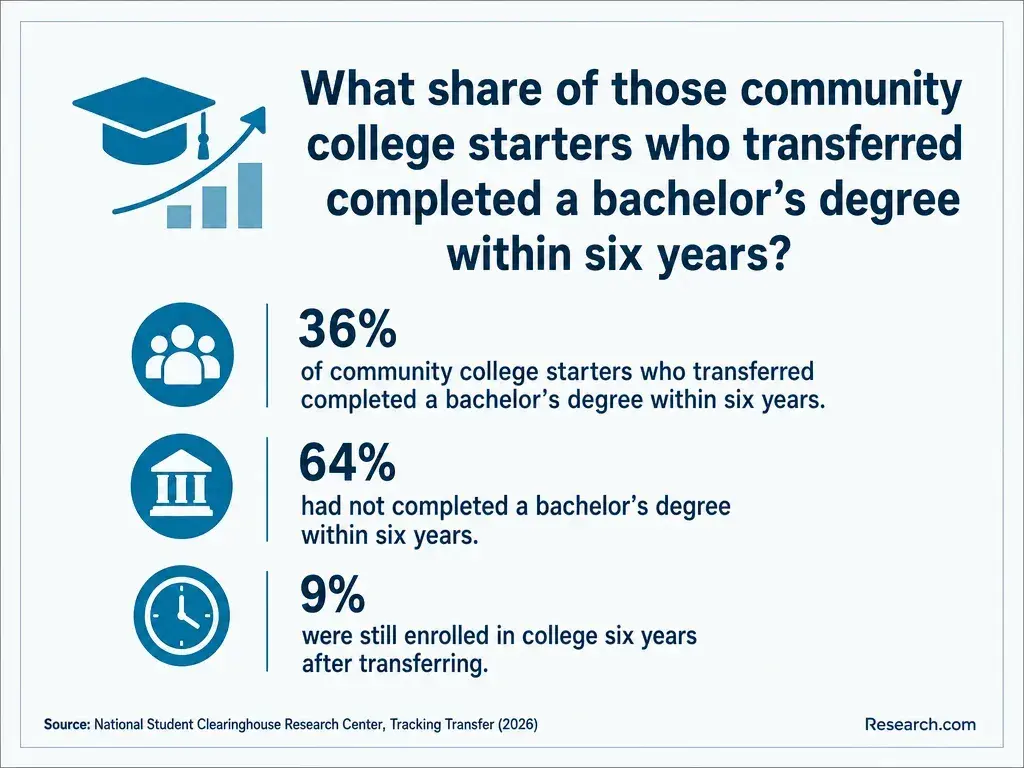
A full-time bachelor's pathway is commonly planned over four academic years, while transfer credit or part-time enrollment changes an individual's timeline. The useful measure is remaining required coursework, including prerequisites, courses offered infrequently, and any credits the institution requires students to complete there. An accepted transfer course that counts only as an elective may do little to shorten the degree.
Request a term-by-term completion plan and an itemized cost estimate. Include tuition, mandatory fees, books and software, possible travel, and the cost of taking fewer work hours. Ask when employer tuition reimbursement is paid and what grades or employment conditions it requires. To compare financing choices, use business administration college affordability and FAFSA participation as a starting point, then confirm each school's current charges and aid eligibility. Without your official credit evaluation and aid offer, a program's advertised price is not your total completion cost.
There is no single salary for a behavioral health business administration graduate. Pay depends on the occupation, location, employer, experience, and scope of responsibility. As one benchmark, the U.S. Bureau of Labor Statistics reports a $75,940 median annual wage for human resources specialists in May 2025. That figure covers the occupation across industries and experience levels; it is not the expected pay for a new graduate or a behavioral health HR employee.
Compare local job postings for the duties you can credibly perform now, not just jobs with an attractive title. If a degree would require borrowing, weigh its likely usefulness for those jobs against the full cost of finishing it. Business administration online programs with competitive tuition can broaden a cost comparison, but lower tuition alone is not a good trade if required courses or support do not fit your goal.
What is the job outlook for behavioral health business administration careers?
Outlook figures describe occupations across the U.S. economy, not guaranteed openings at behavioral health providers. The Bureau of Labor Statistics projects 6% employment growth for human resources specialists from 2025 to 2035. That suggests opportunities in a relevant business function, but it cannot tell you how many local providers are hiring or whether they require sector experience.
Use the outlook to choose a transferable function, then test it against current local openings: compare duties, software, education, and experience requirements. If speed is important, compare ranked accelerated undergraduate business schools only after confirming that their schedules and remaining requirements are realistic for you. A faster degree is most useful when it helps you qualify for a defined next role while you continue building relevant experience.
Other Things You Should Know About Business Administration
Employees who handle protected health information generally need training appropriate to their duties under their employer's privacy policies. A business degree is not a substitute for workplace-specific training.
Both need sound budgeting and operations. A nonprofit role may place more emphasis on grant restrictions and funder reporting; a private practice role may focus more heavily on payer contracts and cash flow. Check the actual job duties.
Possibly. Clinical experience can be valuable in program coordination or operations, but the employee may need to demonstrate budgeting, staffing, or reporting skills. Compare job requirements before enrolling in another degree.
Not without the appropriate organizational authorization and privacy safeguards. Ask faculty and the provider about permitted data; an invented, simulated, or properly de-identified case may be more suitable.
- Understanding Confidentiality of Substance Use Disorder (SUD) Patient Records or "Part 2" | HHS.gov https://www.hhs.gov/hipaa/part-2/index.html
- Revenue Cycle Management: The Art and the Science - PMC https://pmc.ncbi.nlm.nih.gov/articles/PMC11219169/
- What Jobs Can You Get With a Business Degree? | snhu.edu https://www.snhu.edu/about-us/newsroom/business/what-jobs-can-you-get-with-a-business-degree
- Bachelor of Science in Health Services Administration | CUNY SPS https://sps.cuny.edu/academics/undergraduate/bachelor-science-health-services-administration
- Revenue Cycle Management in Health Care Explained | Tulane University https://online.tulane.edu/public-health/blog/revenue-cycle-management-health-care
- Health Services Administration: Bachelor Of Business Administration | Strayer University https://www.strayer.edu/online-degrees/bachelors/bachelor-of-business-administration/health-services-administration/
- 5 Careers in Healthcare Administration | Warner Pacific University https://www.warnerpacific.edu/blog/careers-in-healthcare-administration/
- Roles, Settings and Career Paths - Behavioral Health Careers https://behavioralhealth.careers/blog/careers-in-behavioral-health-guide/