2027 BS in Business Administration and Real Estate: How to Check Whether a Job Needs a Separate Credential
Audited and Verified:
Our Editorial and Data Verification Process
Research.com uses government datasets, official education statistics and primary institutional information to support its career and degree guides. Our review process checks factual accuracy, occupational definitions, source dates and the requirements associated with the credentials discussed.
How This Article Was Fact-Checked
Our editorial team verifies salary estimates, employment projections, education requirements and program information against original data providers and official organizations. Salary figures are checked against the relevant occupational definitions and reporting periods. Information about licensure, accreditation and required in-person training is reviewed separately.
Fact-checked and verified on:

Co-Founder and Chief Data Scientist
A business administration degree with real estate coursework can prepare you to analyze properties, budgets, and markets, but it does not automatically authorize you to sell homes, arrange mortgages, or appraise property. That distinction matters before you choose courses, accept a job offer, or pay for a credential. This guide is for prospective students and career changers comparing real estate roles. It shows how to identify the authority behind a job requirement, where a BS can help, and when a license, supervised experience, or a more direct path should come first.
Key Things You Should Know
- Check the duties, property location, and responsible state regulator before assuming a degree qualifies you to practice.
- Sales, property management, appraisal, and mortgage work can trigger different rules; an analyst or coordinator role may instead depend mainly on employer requirements.
- If your goal is licensed sales alone, a bachelor's may not be the shortest route; if you want broader finance or operations options, its business coursework may add value.
What Is a BS in Business Administration With a Real Estate Focus?
It is a bachelor's degree built around a business core - typically including accounting, finance, economics, management, and quantitative work - with real estate courses added through a formal concentration, major requirement, or electives. Those arrangements are not interchangeable.
Confirm the exact degree title and whether the real estate focus appears on the transcript; a few electives do not necessarily constitute an official concentration.
The degree can suit someone interested in property investment analysis, brokerage operations, or management of a real estate business. It offers broader business preparation than prelicensing training, but less occupational specificity than some specialized programs.
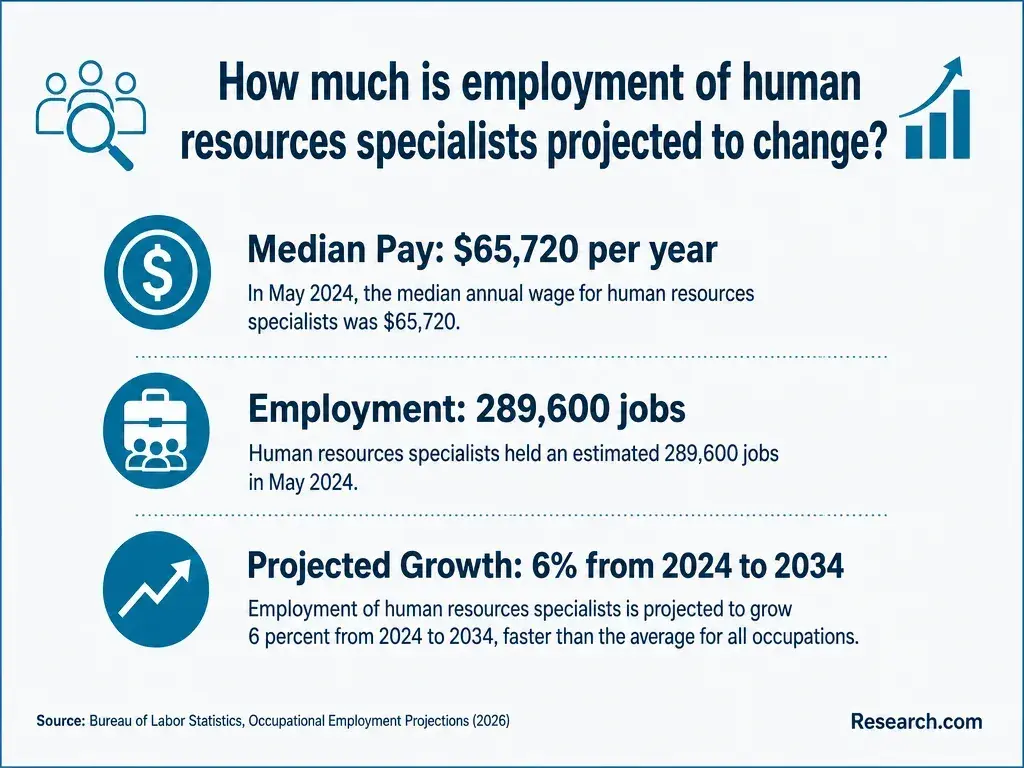
If your actual goal is personnel work at a property company, compare the curriculum with human resources degree requirements rather than assuming a real estate focus is the better fit.
Does a Real Estate Degree Qualify You for State Licensure?
State agencies, not colleges, decide eligibility for real estate salesperson and broker licenses. Requirements can include approved prelicensing education, examinations, applications, background checks, and experience or supervision, depending on the license and state. A degree course counts toward a licensing requirement only if the responsible regulator recognizes it for that purpose.
Start with the work, not the job title. Identify the state where the property or regulated activity is located, write down the tasks you would perform, and check that state regulator's rules for the relevant license.
Then ask the school whether any specific course is approved for that state and obtain confirmation from the regulator before relying on a claimed exemption or substitution. Separately, check prerequisites before applying to business administration programs; academic admission and occupational licensure are different decisions.
What Careers Can You Pursue With a Business Administration Real Estate Degree?
The useful dividing line is whether you analyze or support a transaction, perform activities regulated by a state, or manage people and assets with substantial responsibility. These examples show why the same degree can lead to different credential checks.
| Target role | Typical work | What to verify |
| Real estate analyst or research assistant | Review market data, property financials, and investment assumptions | Employer expectations for modeling skills and experience; whether the position includes regulated activity |
| Brokerage operations coordinator | Support records, scheduling, marketing, and transactions | Which tasks unlicensed staff may perform in the relevant state |
| Property management assistant | Help with budgets, vendors, tenants, and records | Whether proposed leasing or management duties require a license or licensed supervisor |
| Real estate salesperson | Represent clients in transactions | State licensing and brokerage affiliation rules |
For an early-career applicant, spreadsheet work, customer communication, and an internship or supervised project may demonstrate readiness more clearly than a concentration name alone. If the appealing part of a property role is coordinating warehouses or distribution rather than transactions, explore lower-cost supply chain completion routes as an alternative before committing to real estate electives.
Offerings vary. Common subjects include real estate principles, property finance, valuation, investment analysis, development, property management, and real estate law, alongside the business core. Review syllabi and prerequisites: a course titled "investment" might teach introductory deal analysis rather than the modeling depth an analyst employer expects.
Look for assignments that match the intended job, such as a documented property cash-flow model for analysis or a vendor-budget exercise for property operations. Ask whether an internship or capstone is required, available in your location, and approved for credit before building your graduation plan around it.
If construction or development coordination is the target, a project management bachelor's transfer planning guide can help frame an alternative degree-completion comparison; project coursework does not itself grant a real estate license.
An online program may make lectures easier to fit around work, while a campus program may make local networking and property-related events easier to attend. Neither format automatically supplies an internship, licensing-approved courses, or access to local employers. Compare actual syllabi, assessment schedules, group meetings, and any required campus visits rather than relying on a "flexible" label.
For working students, confirm whether real estate electives run often enough to finish on schedule and whether an internship can be completed near home. Online business study with accelerated terms may shorten the calendar, but compressed deadlines do not reduce the work required. If licensure is your immediate goal, separately confirm whether the state accepts the program's relevant instruction for its education requirement.
First, confirm the institution's accreditation through the accreditor and check that the accreditor is recognized by the U.S. Department of Education or the Council for Higher Education Accreditation. Then verify any advertised business-school accreditation - such as AACSB, ACBSP, or IACBE - and its actual scope. Institutional accreditation, business accreditation, and state approval of a licensing course answer different questions; none substitutes for the others.
Ask the school to identify the accreditor, the business program covered, and any course it claims is approved for licensure in your state. A comparison of financial aid at low-cost project management schools illustrates why accreditation and affordability belong in a degree comparison, but neither establishes eligibility for real estate practice.
Requirements depend on the institution and whether you are applying as a first-year or transfer student. Schools may request prior transcripts and evidence of readiness for quantitative business courses; admission to the university may also differ from entry into a business major or concentration. Ask which accounting, economics, mathematics, or statistics courses must be completed before upper-level real estate work.
Transfer students should request a written evaluation showing credits accepted and where they apply: general education, business core, real estate requirements, or electives. A student considering people-operations roles instead could compare online HR bachelor's programs accepting transfer credits, but only the receiving institution can determine how prior courses apply to its degree.
A full-time bachelor's is commonly planned over four academic years, but the time left for a transfer or part-time student depends on applied credits, course sequencing, residency rules, and elective availability. Do not estimate completion from accepted credits alone: a missing prerequisite or infrequently offered real estate course can extend the schedule.
To compare costs, request the current tuition and fee schedule and a degree audit, then account for remaining required courses, books or software, travel, and any separate prelicensing or examination expenses.
A lower advertised tuition rate does not establish a lower total completion cost. Online business degrees with lower tuition can provide comparison candidates, but verify each program's real estate offerings and your individual credit evaluation before deciding.
No single salary describes graduates of this degree. Pay depends on the occupation, experience, location, employer, and - in some sales roles - commissions. For context, the U.S. Bureau of Labor Statistics reports a May 2025 median annual wage of $102,740 for financial and investment analysts, with employment projected to grow 7% from 2025 to 2035.
That is an occupation-wide measure, not a starting salary or forecast specifically for real estate degree holders; property analysis jobs may have different requirements and pay.
Compare postings for the exact entry role and location you want, including their required modeling skills, licenses, and experience. If your aim is general organizational leadership rather than property work, compare completion times for organizational leadership degrees as well; neither degree makes a new graduate automatically eligible for a management position.
Which Certifications or Credentials Do Real Estate Careers Require?
The required credential follows the activity. Real estate sales and brokerage are state-licensed. Appraisal has its own state credentialing pathway, and residential mortgage loan origination has separate licensing or registration rules.
Property-management duties may also fall under state real estate licensing rules. By contrast, a voluntary industry designation may help demonstrate specialized knowledge without being legally required for a particular job.
Before paying for training, use this sequence to separate a legal requirement from an employer preference:
- Copy the job posting's duties and identify the state or states where the work would occur.
- Check the responsible regulator's eligibility, education, examination, experience, and renewal rules for those duties.
- Ask the employer which credential is mandatory at hire, which can be earned later, and which is merely preferred.
- Confirm whether a degree course earns recognized licensing credit before paying for both programs.
If comparing a property career with project coordination, remember that certification expenses and eligibility differ from degree expenses. Guidance on financial aid packages for online project management bachelor's students concerns degree funding, not automatic funding or eligibility for a real estate license or professional designation.
Other Things You Should Know About Business Administration
Not automatically. Check the other state's regulator for its rules on out-of-state licensees, additional applications, and where you may perform licensed work.
Do not imply that you are licensed when you are not. Check state rules on protected titles and advertising before describing your services publicly.
Buying property for your own account is different from representing others for compensation. Confirm the rules before offering brokerage or management services to someone else.
A degree generally does not restore an inactive or expired license. Ask the licensing authority about renewal, reinstatement, continuing education, and whether you may work while the license is inactive.
- Property Management FAQs | tn.gov https://support.commerce.tn.gov/hc/en-us/articles/33540808558355-Property-Management-FAQs
- Licensing FAQs | ncrec.gov https://www.ncrec.gov/Licensing/Licensingfaq
- Professional Licensure | U.S. Department of Education http://www.ed.gov/about/initiatives/international-affairs/professional-licensure
- Experience Requirements for the Broker Examination - DRE https://www.dre.ca.gov/examinees/brokerexperience.html
- Frequently Asked Questions on the Appraisal Regulations and the Interagency Appraisal and Evaluation Guidelines https://www.federalreserve.gov/frrs/guidance/frequently-asked-questions-on-the-appraisal-regulations-and-the-interagency-appraisal-and-evaluation-guidelines.htm
- Real Estate Salesperson Frequently Asked Questions | ny.gov https://dos.ny.gov/real-estate-salesperson-frequently-asked-questions
- Appraiser Licensing / Minnesota Department of Commerce | mn.gov https://mn.gov/commerce/licensing/list/real-estate/appraiser/index.jsp
- Professional Licensure - State Authorization Network https://wcetsan.wiche.edu/resources/professional-licensure
- Launch a Real Estate Career With a Business Degree | Purdue Global https://www.purdueglobal.edu/blog/business/launch-real-estate-career-bachelors-business-administration/