2027 BS in Business Administration Program Choice: A Capstone That Does Not Require Launching a Real Business as a Capstone Option
Audited and Verified:
Our Editorial and Data Verification Process
Research.com uses government datasets, official education statistics and primary institutional information to support its career and degree guides. Our review process checks factual accuracy, occupational definitions, source dates and the requirements associated with the credentials discussed.
How This Article Was Fact-Checked
Our editorial team verifies salary estimates, employment projections, education requirements and program information against original data providers and official organizations. Salary figures are checked against the relevant occupational definitions and reporting periods. Information about licensure, accreditation and required in-person training is reviewed separately.
Fact-checked and verified on:

Co-Founder and Chief Data Scientist
A business administration capstone can ask you to solve a business problem without asking you to become a business owner. That distinction matters if you want applied experience but cannot fund a startup, recruit customers, or take on an enterprise's legal and financial responsibilities.
This guide explains which capstone formats avoid a real launch, how to confirm a program's requirements before enrolling, and how to choose a project you can complete ethically and usefully. It is for prospective students and degree completers who want a credible final project - not an obligation to start a company.
Key Things You Should Know
- A real launch is not inherent to a BS in Business Administration. Case analyses, simulations, research-based plans, and approved organizational projects may satisfy a capstone, but the school's catalog and course rubric decide.
- Verify the required deliverable before enrolling. Ask whether you must form a company, spend money, obtain customers, access employer data, or complete an internship; "entrepreneurship capstone" alone does not answer those questions.
- Compare the entire degree, not just its final course. A bachelor's program commonly requires around 120 credits, but your remaining credits, project approvals, course availability, and total cost determine whether a particular option is practical.
What is a BS in Business Administration capstone that does not require launching a business?
It is a culminating academic assignment that integrates business coursework into a decision-ready analysis or proposal. The student might evaluate a fictional case, model a proposed venture, or recommend an improvement for an existing organization. Proposing a business is not the same as operating one: a plan can contain assumptions and financial projections without company registration, sales, outside funding, or implementation.
The distinction depends on the assessed output. A course might grade a written report, spreadsheet model, presentation, and reflection rather than revenue or customer acquisition. Even a startup-themed assignment may be compatible with your goal if all activities remain hypothetical. Obtain the current syllabus or rubric: catalog descriptions can leave this boundary unclear.
If your aim is to practice schedules, budgets, and risk registers rather than study broad business functions, online project management programs for smaller budgets may be worth comparing. A specialized degree is not necessary simply to avoid a startup capstone, however; first check the business program's other project options.
What are common alternatives to launching a real business for a business administration capstone?
The best alternative matches the evidence you can legitimately obtain and the decision you want your work to inform. These formats differ in their data needs and in whether anyone outside the classroom must authorize the project.
| Capstone format | Typical deliverable | Main feasibility check |
| Published case or simulation | Strategic recommendation with stated assumptions | Does the course provide usable data and assess decisions rather than simulated results as real outcomes? |
| Research-based business plan | Proposed product, market assessment, budget, and risks | Is planning alone sufficient, with no sales or company formation? |
| Organizational improvement proposal | Process map, options, measures, and implementation plan | Will the organization permit the work and the intended use of its information? |
| Public-data analysis | Dashboard or market analysis with recommendations | Are sources, limitations, and data-use rules acceptable to faculty? |
A useful scope is one decision, one intended decision-maker, and a manageable set of measures. For example, a proposed inventory-process review could compare fulfillment time, stockouts, and costs using an approved case dataset. It should label estimated improvements as forecasts, not achieved savings. If that work points toward a supply chain specialization rather than a general business degree, you can compare supply chain degrees by cost and length.
How do you choose an accredited BS in Business Administration program with the right capstone?
Start by confirming the exact degree title and the institution's recognized accreditation, then examine the business program itself. Institutional accreditation and business-school or programmatic accreditation - such as AACSB, ACBSP, or IACBE - have different scopes. Check whether a claimed business accreditation actually covers the program and location or delivery format you are considering; neither type of accreditation proves that a no-launch capstone is available.
Ask the program director or capstone instructor for the current catalog requirement, a recent syllabus, and the grading rubric. The answer you need is whether every student has an approved non-launch route, not whether a student once completed one. Confirm who approves topics, whether group work or an external client is mandatory, how often the course runs, and whether a change of instructor could change available projects.
When you compare ranked online business schools in America, use the list to find candidates, not as evidence of capstone fit. Before committing, request a written explanation of the option available under your expected enrollment catalog and ask how a student proceeds if a proposed topic is rejected.
A strong capstone asks students to connect analysis with an actionable choice. Depending on the assignment, that may mean interpreting financial statements, estimating a budget, assessing customers, mapping a process, comparing strategic options, and explaining operational or ethical risks. The work also tests whether a student can communicate uncertainty instead of treating a projection as a proven outcome.
For a non-launch project, a compact structure is useful. The sequence below turns a broad topic into an assessable deliverable without implying that an organization has approved or implemented it.
- Identify the decision-maker, the business question, and what is outside the project's scope.
- Document permitted sources, baseline measures, assumptions, and missing information.
- Compare feasible options using relevant costs, benefits, risks, and stakeholder effects.
- Present a recommendation, implementation conditions, limitations, and a way to evaluate results later.
For example, a leadership-focused student might analyze a scheduling problem rather than propose a new company. If leadership is the primary goal, three-year organizational leadership bachelor's options provide a separate curriculum comparison; check their own final-project requirements rather than assuming they match a business administration capstone.
Requirements vary by institution and by whether you enter as a first-year or transfer student. Schools commonly request evidence of secondary-school completion or previous college study and official transcripts. Some admit students to the university first and require additional prerequisites or a separate application for the business major. Mathematics, accounting, economics, and statistics preparation may affect course placement or progression even when they are not conditions of initial admission.
If you already have college credits, ask for an official evaluation showing what satisfies general education, business core, electives, and residency requirements. Accepted credit does not necessarily replace a required capstone or shorten its prerequisite sequence. Students weighing a more focused HR path can also investigate using existing credits in a human resources degree, but should compare written degree audits rather than advertised transfer limits.
A bachelor's degree commonly totals around 120 credits and takes about four years of full-time study from the beginning. A transfer student's timeline depends on credits applied to requirements, prerequisites, residency rules, course scheduling, and whether the capstone is offered every term. A shorter advertised calendar does not necessarily mean fewer required credits.
No single price reliably describes this choice. Request a term-by-term estimate covering remaining tuition, mandatory fees, books or software, possible proctoring or travel, and any extra term caused by capstone scheduling. Include borrowing costs and lost work time where relevant. For a starting point in comparing aid-eligible options, see business administration tuition budgets using federal student aid; financial-aid eligibility and your net cost require confirmation with each school.
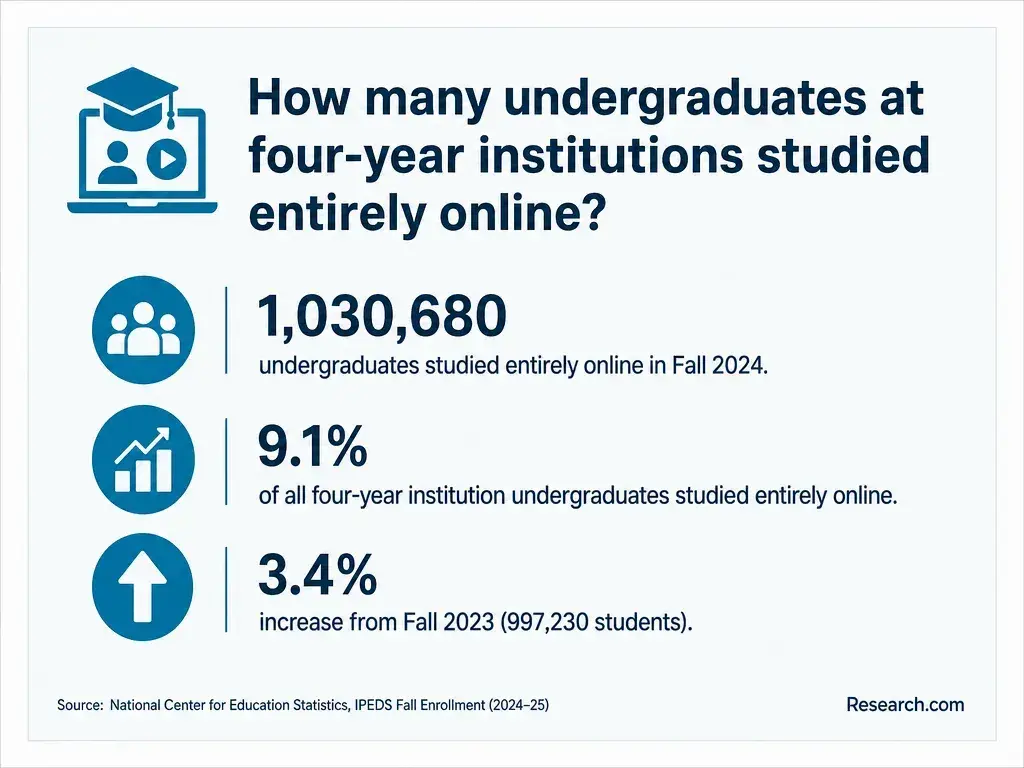
The learning objective may be similar, but the logistics can differ. An online course may use remote presentations, shared documents, virtual simulations, and scheduled team meetings. "Online" does not mean self-paced: live defenses, fixed deadlines, group coordination, exam proctoring, or a required campus visit can matter more than the location of lectures.
Ask for the capstone's weekly schedule and assessment rules, particularly if you work or provide care. Confirm whether remote students can use the same non-launch topics as campus students and whether any client project requires access to a local organization. When reviewing online colleges with accelerated business programs, check whether a compressed term leaves enough time for topic approval, feedback, and revision.
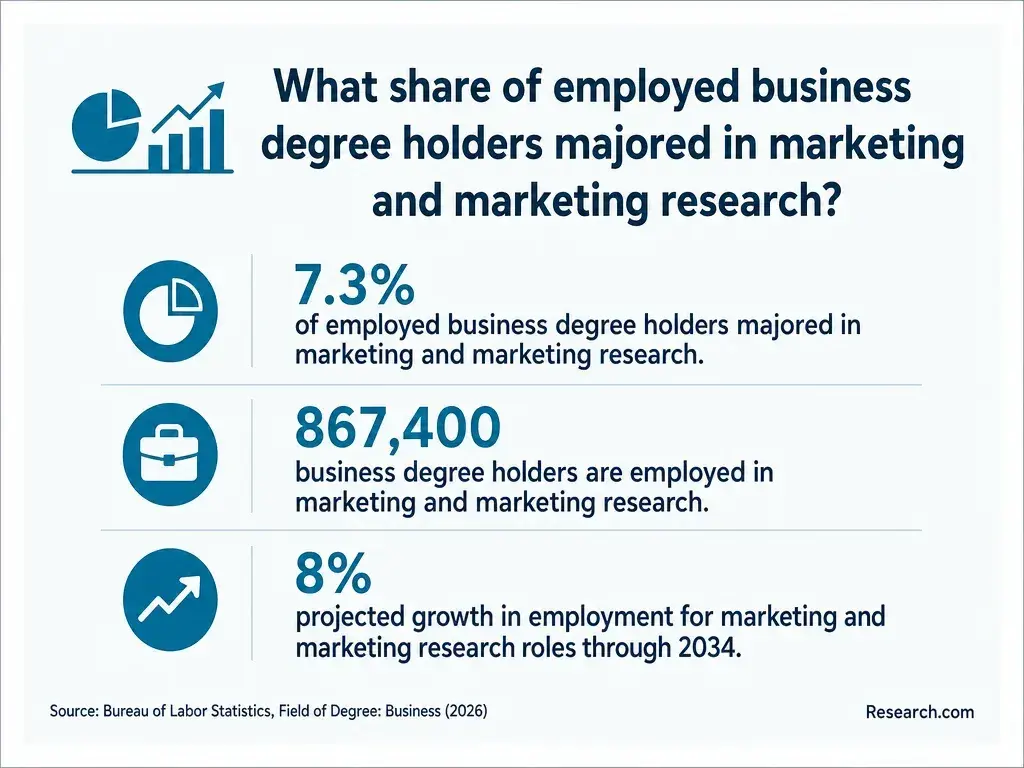
The degree can support applications for business operations, marketing coordination, HR support, procurement, project coordination, and related roles. Which path is realistic depends on prior work, the concentration or electives completed, and evidence of functional skills. A capstone can supply a work sample - such as a redacted process analysis or public-data dashboard - but it is not a substitute for employer experience or proof that a recommendation produced results.
Match the project to the work you want: a hiring-process analysis may demonstrate HR reasoning, while a project schedule and risk assessment may be more relevant to coordination roles. If project management is your main target, compare the roles and total education investment, including financial aid at low-cost project management schools. A specialized degree may offer deeper coursework, but it does not automatically lead to a project manager position.
There is no reliable salary figure for everyone holding this degree; pay follows the occupation, experience, employer, and location. As one occupational reference, the U.S. Bureau of Labor Statistics reports a May 2025 median annual wage of $78,760 for market research analysts and projects 7% employment growth from 2025 to 2035. That median covers workers across experience levels and educational backgrounds; it is not an entry-level offer or a BS in Business Administration graduate outcome.
Use a target role's duties and local job postings to judge whether your courses and capstone demonstrate relevant skills. If you are considering American fast-paced business bachelor's degrees to enter the workforce sooner, compare their full costs and scheduling demands; an earlier graduation date does not establish a salary gain.
Does a BS in Business Administration require a license or professional certification?
Completing a general BS in Business Administration ordinarily does not require an occupational license or voluntary professional certification. Your school can still require its own courses and approved capstone for graduation. Separate occupations have separate rules: a business degree alone does not qualify someone for CPA licensure or confer an HR or project-management designation.
Check the requirements of a target occupation or credential directly before choosing electives or a project. If you are considering a separate project management bachelor's degree instead of general business study, grants versus loans for project management bachelor's study is a financing comparison, not a certification requirement. Neither funding choice nor a capstone substitutes for an awarding body's eligibility rules.
Other Things You Should Know About Business Administration
Usually, if course and intellectual-property rules permit it. Label the work as hypothetical, identify public or simulated data, and do not present projected results as actual business outcomes.
Only with the necessary employer permission and faculty approval. Check confidentiality, personal-data, and intellectual-property rules before collecting information or submitting it to a course platform.
Ask the instructor which learning objective or evidence requirement it misses. Keep a backup case or public-data topic that you can complete within the course timeline.
Not necessarily. A classroom plan can describe a proposed venture without forming or operating one. Confirm the course's deliverables and the school's intellectual-property policy before developing an idea you intend to pursue later.
- School-Determined Requirements - FSA Partner Connect https://fsapartners.ed.gov/knowledge-center/fsa-handbook/2026-2027/vol1/ch1-school-determined-requirements
- Partnering with Students to Develop a Capstone for a... - PMC https://pmc.ncbi.nlm.nih.gov/articles/PMC11732519/
- 11.3.8 Allowable and Unallowable Costs | nih.gov https://grants.nih.gov/grants/policy/nihgps/HTML5/section_11/11.3.8_allowable_and_unallowable_costs.htm
- BS in Business Administration | Online Bachelor's Degree | Capella University https://www.capella.edu/online-business-degrees/bs-business-program/bachelors-business-administration/
- Honors College Capstone Project https://honorscollege.rutgers.edu/academics/curriculum/capstone-project
- Capstone Project - Finance - Duke University https://finance.duke.edu/capstone-project/
- Capstone Requirement - Undergraduate Studies - Mizzou https://undergraduatestudies.missouri.edu/students/academics/capstone-requirement/
- College of Business Administration - Academic Catalog https://catalog.uic.edu/ucat/colleges-depts/business-administration/
- Capstone Courses & Research Expectations | ucla.edu https://casb.ucla.edu/major-2/capstone-courses/
- What is a Capstone Project in College? | snhu.edu https://www.snhu.edu/about-us/newsroom/education/what-is-a-capstone-project