2027 Choosing a BS in Business Administration: How to Check a Business Degree from a Private Nonprofit University
Audited and Verified:
Our Editorial and Data Verification Process
Research.com uses government datasets, official education statistics and primary institutional information to support its career and degree guides. Our review process checks factual accuracy, occupational definitions, source dates and the requirements associated with the credentials discussed.
How This Article Was Fact-Checked
Our editorial team verifies salary estimates, employment projections, education requirements and program information against original data providers and official organizations. Salary figures are checked against the relevant occupational definitions and reporting periods. Information about licensure, accreditation and required in-person training is reviewed separately.
Fact-checked and verified on:

Co-Founder and Chief Data Scientist
A private nonprofit university may advertise a respected business degree, flexible classes, and strong career support. Those claims matter only if they apply to the BS in Business Administration you would actually enter. This guide is for prospective and transfer students comparing programs. It explains how to verify accreditation, examine the degree audit and course schedule, calculate likely completion costs, and assess career evidence—so you can choose on documented fit rather than an institution's name or marketing.
Key Things You Should Know
- Verify the university's recognized institutional accreditation and check whether any advertised business accreditation covers the specific school or program you are considering.
- Request a program-specific degree plan, transfer evaluation, course schedule, and written cost estimate; accepted credits may not satisfy business requirements.
- Judge career claims against the roles you want: the May 2025 median wage of $78,760 for market research analysts is an occupation-wide figure, not a starting salary for business graduates.
What Is a BS in Business Administration?
A Bachelor of Science in Business Administration is an undergraduate degree combining general education with business subjects such as accounting, finance, marketing, management, operations, and quantitative analysis. The BS label does not guarantee a particular amount of math or technical coursework; the university's catalog and degree audit determine what students must complete.
A BBA or BA in Business may cover similar ground, while a specialized bachelor's degree can offer more depth in one function. Compare required courses and applied work rather than assuming one title is stronger. If your goal is specifically supervising teams, organizational leadership degrees with faster completion options may be worth comparing—but check whether their business foundations meet your intended role's needs.
"Private nonprofit" describes institutional control, not an accreditation level, tuition promise, or employment outcome. A university may also offer concentrations, but an elective cluster is not necessarily an officially recorded concentration. Confirm the exact credential that will appear on your transcript.
How Do You Verify Accreditation for a Private Nonprofit University?
Start with the university's legal name and the campus or online unit that will award your degree. Search the U.S. Department of Education's accreditation database and the listed accreditor's own directory; compare the institution, current status, effective dates, and any limitations. Ask the university which accreditation applies to your enrollment location and term.
Two different kinds of accreditation can appear in business-program advertising. The distinction matters because a university-level approval does not establish that its business school has a separate accreditation.
| Check | What it establishes | What to confirm |
| Institutional accreditation | The institution is accredited by a recognized accreditor. | The degree-granting university and applicable location or delivery unit are covered. |
| Business accreditation | An accreditor such as AACSB, ACBSP, or IACBE has accredited a defined business school or set of programs. | The accreditor's listing actually covers the school and degree in question. |
| Nonprofit status | The university is classified as privately controlled and nonprofit. | Its institutional-control listing matches the school you are evaluating; this status is not accreditation. |
Recognized accreditation is important, but it is not proof that every credit will transfer or that federal aid is available for every program. Confirm the institution's aid participation and your eligibility with its financial-aid office. If aid is central to your choice, FAFSA-eligible online business administration colleges provide a starting comparison, not a substitute for checking each school's current status.
Finally, ask for outcomes specific to business students in your delivery format. A placement or completion claim is more useful when the school identifies the cohort, measurement period, response rate, and whether students who did not respond were excluded.
What Can You Do With a Business Administration Degree?
The degree can support applications for roles in operations coordination, sales support, marketing coordination, procurement, and human resources, depending on your experience and coursework. Compare job postings by tasks, not just titles: an operations role may call for scheduling and spreadsheet analysis, while an HR role may require recruiting systems and knowledge of employment practices.
For example, a student interested in employee support should compare the business program's HR courses and internship access with human resources qualifications and degree routes. A general business degree can be relevant, but an employer may prefer function-specific experience. Graduation alone does not confer a management position, professional license, or authority to supervise staff.
Before enrolling, choose two target roles and examine local postings. If they consistently require a specialized qualification you lack, determine whether the program provides it or whether targeted training and relevant work would be a more direct route.
Expect a mix of general education, introductory business courses, upper-level requirements, and possibly electives or a concentration. Common subjects include financial and managerial accounting, economics, business law, marketing, organizational behavior, finance, operations, statistics, and strategy. The school's catalog—not a generic course list—controls the sequence and graduation requirements.
Read beyond course titles. An analytics course might emphasize spreadsheet interpretation rather than programming; a strategy capstone might use cases rather than an employer-approved project. Ask to see learning outcomes, prerequisites, sample assignments, and the terms in which required courses are offered. For a concentration, confirm whether it appears on the transcript and adds credits or delays graduation.
Transfer students should check how prior courses apply to the business core, not merely whether the credits are accepted. If HR is your intended focus, human resources bachelor's credit transfer options offer a useful comparison; the receiving university must still decide each course's equivalency.
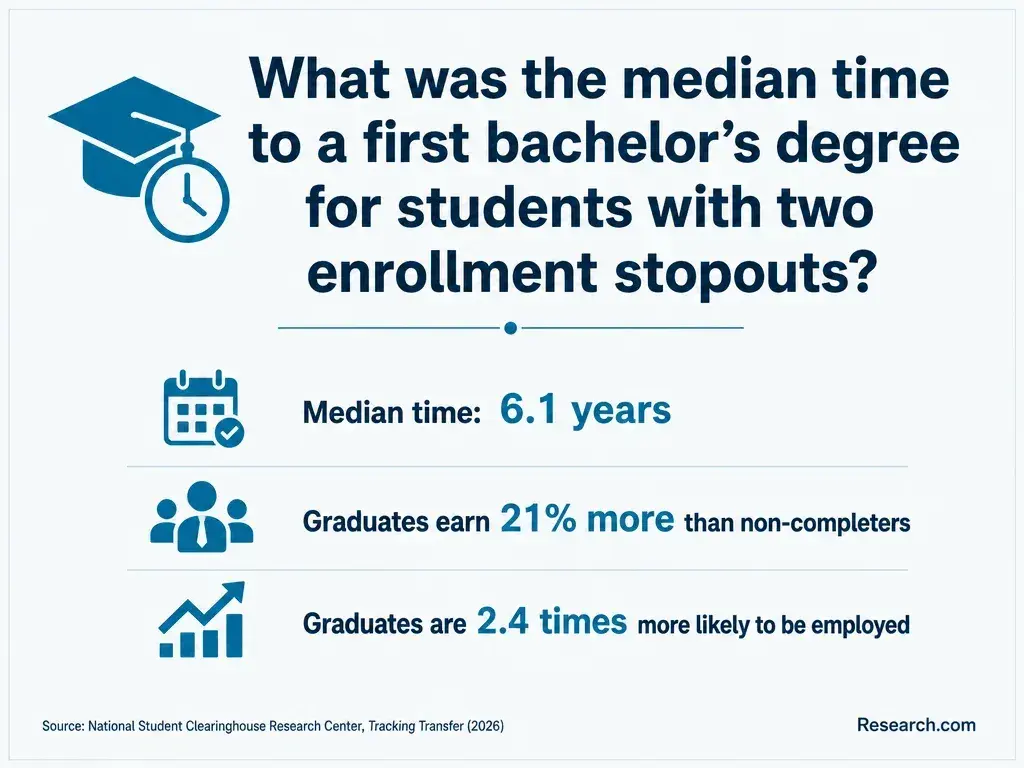
Completion time depends on applicable transfer credit, enrollment pace, prerequisites, course availability, and residency rules. A student who arrives with many accepted credits can still face delays if accounting or statistics must precede upper-level courses, or if a required capstone runs infrequently.
Ask an adviser for a term-by-term plan based on your evaluated record, including any remaining general education, business core, concentration, and in-residence requirements. Confirm whether that schedule is realistic for someone taking classes alongside work. When you compare accelerated business programs, distinguish a shorter calendar from fewer required credits or less total coursework.
There is no reliable price for "a private nonprofit business degree" without a school, enrollment plan, and credit evaluation. Compare the cost to finish, not the advertised per-credit rate alone: include remaining required courses, mandatory fees, books and software, possible campus visits, and interest if you borrow. A course that transfers only as an elective may leave an expensive business requirement outstanding.
Request a written estimate showing charges by term under your proposed schedule, then subtract only grants and scholarships you have been offered. Check renewal conditions, aid eligibility at your intended pace, refund deadlines, and when any employer reimbursement arrives. A business administration degree tuition savings guide can help identify options, but your approved degree audit and aid offer determine the meaningful comparison.
If a less expensive program requires extra terms away from full-time work—or an apparently faster program requires more borrowing—include those trade-offs before deciding.
Choose the format that lets you complete required work and access the support you need. Online does not necessarily mean self-paced: live presentations, group projects, proctored exams, internship requirements, and fixed deadlines may still shape your week. Campus study can make in-person recruiting and collaboration easier, but commuting and scheduled attendance add constraints.
Ask each school for recent syllabi and a sample term schedule. Check live-session times, assessment rules, technology needs, access to faculty and career services, and whether every required course is offered in your chosen format. Employees comparing business administration programs supporting continued employment should test those obligations against actual work shifts, not the program's "flexible" label.
Requirements vary by university and by entry point. First-year applicants may need secondary-school records; transfer applicants generally submit records from previous colleges. A school may set separate conditions for admission to the business major or for enrollment in upper-level courses, including specific math, accounting, or economics preparation.
Ask admissions to distinguish eligibility to enter the university from eligibility to take required business courses. Submit official records early, then obtain a formal transfer evaluation and degree audit before relying on a completion estimate. For a closer look at possible academic preparation, review required credits before entering business administration study and confirm the rules for your chosen institution.
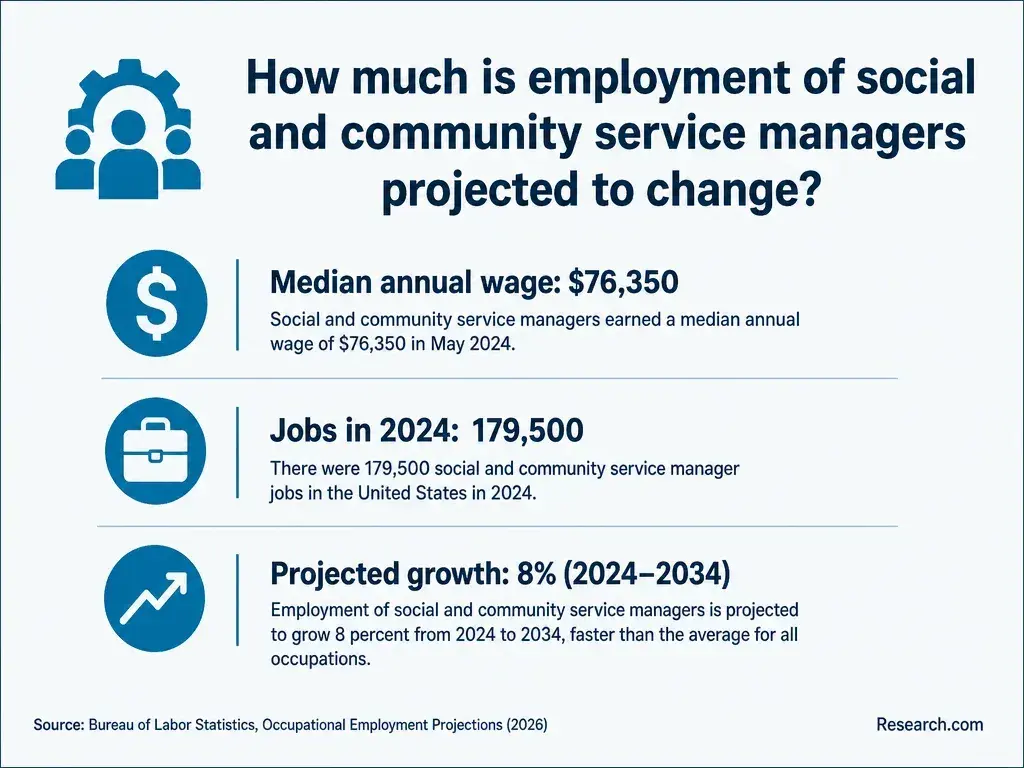
There is no single salary attached to this degree. Pay depends on the occupation, location, industry, responsibilities, and prior experience. The U.S. Bureau of Labor Statistics reports a $78,760 median annual wage for market research analysts in May 2025. That figure covers workers across experience levels and education backgrounds; it is not an expected starting offer for a new business graduate.
Use occupation-specific wages only after checking whether the program helps you meet that occupation's requirements. For a practical return-on-cost assessment, compare local entry-level postings with your likely borrowing and compare tuition for online business colleges. Do not use manager salaries to justify a degree intended to help you enter a coordinator role.
Which Certifications and Skills Complement a Business Degree?
Choose additional training for a documented gap in your target role. Spreadsheet modeling, clear business writing, financial-statement interpretation, data visualization, and project coordination are useful to demonstrate through supervised work or well-explained samples. A certificate of course completion is not the same as a professional certification, and certification bodies may impose experience or examination requirements.
If project coordination is your goal, compare the required skills in local postings with what your business courses and current work already cover. A focused credential or mentored project may be enough; if a separate degree is genuinely necessary, investigate project management bachelor's tuition assistance options before committing to further study. Verify eligibility and costs rather than assuming the BS grants certification.
Other Things You Should Know About Business Administration
Check its institutional-control classification in federal education records and match the listed legal name to the university awarding the degree. Nonprofit status alone says nothing about program quality.
It may, but requirements vary. Review the current general-education catalog and ask whether those courses are required for your degree and whether transfer work can satisfy them.
Ask about its published teach-out and transcript-access policies. If closure occurs, contact the school, its accreditor, and your financial-aid provider about the options that apply to your record and loans.
Possibly, if faculty approve the project and your employer permits the work and data use. A current job does not automatically satisfy capstone requirements, and confidential records should not be submitted without authorization.
- Accreditation in the U.S. | ed.gov http://www.ed.gov/laws-and-policy/higher-education-laws-and-policy/college-accreditation/accreditation-in-the-us
- Cost of Attendance (Budget) | 2025-2026 Federal Student Aid Handbook https://fsapartners.ed.gov/knowledge-center/fsa-handbook/2025-2026/vol3/ch2-cost-attendance-budget
- Understanding U.S. Accreditation | EducationUSA https://educationusa.state.gov/understanding-us-accreditation
- Types of Financial Aid: Grants, Work-Study, and Loans | studentaid.gov https://studentaid.gov/understand-aid/types
- Tuition Assistance Program (TAP) - HESC - NY. Gov https://hesc.ny.gov/find-aid/nys-grants-scholarships/tuition-assistance-program-tap
- 2024 - 2025 Annual Report - Illini Success - University of Illinois https://illinisuccess.illinois.edu/24-25-annual-report
- Transfer Credit | umich.edu https://admissions.umich.edu/apply/transfer-applicants/transfer-credit
- Accreditation Process | AACSB https://www.aacsb.edu/educators/accreditation/accreditation-process
- 17 types of business degrees and the jobs they can lead to | ASU Online https://asuonline.asu.edu/newsroom/online-learning-tips/types-business-degrees-jobs/
- What Can You Do With a Business Administration Degree? | snhu.edu https://www.snhu.edu/about-us/newsroom/business/what-can-you-do-with-a-business-administration-degree