2027 BS in Business Administration for Municipal Government: Which Business Courses Should You Prioritize?
Audited and Verified:
Our Editorial and Data Verification Process
Research.com uses government datasets, official education statistics and primary institutional information to support its career and degree guides. Our review process checks factual accuracy, occupational definitions, source dates and the requirements associated with the credentials discussed.
How This Article Was Fact-Checked
Our editorial team verifies salary estimates, employment projections, education requirements and program information against original data providers and official organizations. Salary figures are checked against the relevant occupational definitions and reporting periods. Information about licensure, accreditation and required in-person training is reviewed separately.
Fact-checked and verified on:

Co-Founder and Chief Data Scientist
A city budget, purchasing decision, or service improvement project calls for business skills - but it also operates under public rules and scrutiny. If you are planning a BS in Business Administration for municipal work, your course choices should reflect both sides.
This guide prioritizes the classes most useful in city and town government, explains where public administration electives add value, and shows how to assess programs, costs, and likely roles. It is especially useful if you already work in local government and want your remaining courses to support a specific next step.
Key Things You Should Know
- Prioritize accounting, budgeting and financial analysis, statistics, operations, and organizational management; use assignments to apply them to public services rather than private-sector sales alone.
- Add public budgeting, procurement, and local-government administration where available. A business elective is not automatically a formal municipal-government concentration.
- Match courses to the job posting: the U.S. median annual wage for budget analysts was $91,640 in May 2025, but that occupation-wide figure is not an expected starting salary for a new graduate.
What Is a BS in Business Administration for Municipal Government?
A BS in Business Administration is an undergraduate business degree. In this context, "for municipal government" describes a career-focused course plan, not necessarily an official degree title or concentration. A student might combine the required business core with public administration electives, a relevant internship, or an approved project involving city operations.
The distinction matters because a municipality is not a business whose primary goal is profit. Staff must work within appropriated budgets, procurement rules, elected-official oversight, public records obligations, and service commitments. Business methods can improve scheduling or cost analysis, but a recommendation also has to be lawful, equitable, and accountable.
Choose the degree around your intended function. General business can suit administrative or operations work; a specialized accounting degree may provide more depth for accounting positions. Likewise, explore fast-track supply chain bachelor's programs if purchasing and logistics - not broad administration - are your clear target. Compare actual curricula and municipal job requirements before choosing either route.
Which Business Courses Best Prepare You for Municipal Government?
Start with the courses that help you explain where resources go, whether a process works, and what a proposed change would require. The priorities below distinguish broadly useful foundations from courses whose value depends more heavily on your target job.
| Course area | Municipal application | Priority |
| Financial and managerial accounting | Read financial information, understand costs, and distinguish spending from available funding. | High across finance and operations roles |
| Statistics and spreadsheet-based analysis | Interpret service measures, forecast assumptions, and uncertainty without mistaking correlation for impact. | High across analytical roles |
| Operations and project management | Map permit, maintenance, or purchasing workflows; plan work with time and resource constraints. | High for service-delivery roles |
| Organizational behavior and human resources | Support teams, communicate changes, and understand personnel processes. | High for administrative and supervisory-support roles |
| Information systems or business analytics | Evaluate reports and data quality while protecting sensitive resident or employee information. | Higher for data-heavy roles |
Take introductory accounting and statistics early enough to qualify for advanced finance or analytics electives. If you have room for only one additional course, select it by task: financial analysis for a budget-office goal, operations for service improvement, or HR for personnel administration. Review prerequisites and the official degree audit before assuming an elective fits your remaining credits.
Leadership coursework can complement these foundations, but it should not displace quantitative preparation simply because the eventual goal is management. Compare the content of accelerated organizational leadership college programs if your main gap is leading change rather than analyzing budgets or processes; neither pathway substitutes for experience managing public responsibilities.
What Public Administration Courses Should Municipal Government Students Take?
Public budgeting and finance is the strongest complement to a business core for many municipal roles. It places financial analysis in the context of budget adoption, restricted funding, and public reporting. A procurement or public contracting course is especially valuable for purchasing work because a sound price comparison alone does not satisfy a government's purchasing procedures.
Local-government administration can explain how elected officials, appointed administrators, departments, and residents influence a decision. Public policy analysis or program evaluation is useful when the job involves assessing whether a service meets its stated objectives. Availability varies: these subjects may be electives, a minor, or courses outside the business school rather than a named concentration.
If the curriculum offers few public-sector courses, ask whether an adviser will approve relevant electives from another department. A supervised project can also help: for example, a student could propose a permit-process map using publicly available information.
Access to internal records, staff time, or resident data would require appropriate permission. If project coordination is your primary goal, compare the curriculum and funding an online project management bachelor's degree before paying for a separate degree when a targeted elective may cover your gap.
First, confirm the institution's recognized accreditation and the exact name of the degree it awards. If a school cites AACSB, ACBSP, or IACBE accreditation, check the accreditor's listing and whether its scope covers the relevant business school or program. Institutional accreditation and business-specific accreditation are different checks; neither proves that the curriculum teaches municipal administration.
Next, compare the current catalog with your target job postings. Look for the business foundations above, access to public administration electives, their prerequisites, and how often they run. Ask whether a city-based internship or workplace project can meet a requirement, who approves it, and what supervision and data permissions it needs. A claimed concentration should appear as an official credential or transcript designation, not merely a suggested group of electives.
US business college rankings for online learners can help assemble a shortlist, but use each school's catalog, accreditation record, degree audit, and published outcomes to make the final comparison. Ask for outcome definitions if a program advertises employment results; those results may not isolate municipal jobs.
They can be, provided the program teaches the needed material and its schedule lets you complete it well. Online study may let a municipal employee keep working while applying accounting or operations concepts to familiar service problems. It does not automatically provide local-government contacts, access to city projects, or a flexible timetable.
Before enrolling, check live-session times, group assignments, exam proctoring, software requirements, deadlines, and any in-person internship or capstone obligation. Ask how students outside the school's region find an approved placement and whether an existing municipal job can support a project; employment alone does not award academic credit. Protect confidential records and obtain workplace and faculty approval before using work material.
Fastest online business bachelor's programs in the US may appeal if you already have applicable credits. Compare actual course sequencing and your available study time: an accelerated calendar does not reduce the work required or guarantee that the public-sector electives you want will be offered when needed.
Admission is generally to a business bachelor's program, not to a standard credential called a "municipal government degree." Schools set their own requirements for previous education, transcripts, academic standing, and any separate admission to the business major. Some require preparatory math, accounting, or economics courses before upper-level work; others incorporate them into the degree.
If you have previous college study, request an evaluation showing both credits accepted and requirements satisfied. A course counted as an elective may not replace accounting, statistics, or an upper-level business requirement. A current municipal employee should also ask whether documented training qualifies for a formal prior-learning review, without assuming the school will award credit.
Application charges are only one consideration, but accredited colleges offering free online applications may be useful when building a shortlist. Before applying, ask admissions about entry requirements, the business department about major prerequisites, and the registrar or transfer office about credit applicability.
Many U.S. bachelor's degrees are designed around four years of full-time study, but your completion time depends on accepted and applicable credits, required course order, elective availability, and whether you study part time. Adding a minor or changing majors can extend the plan if its courses do not fit remaining elective space.
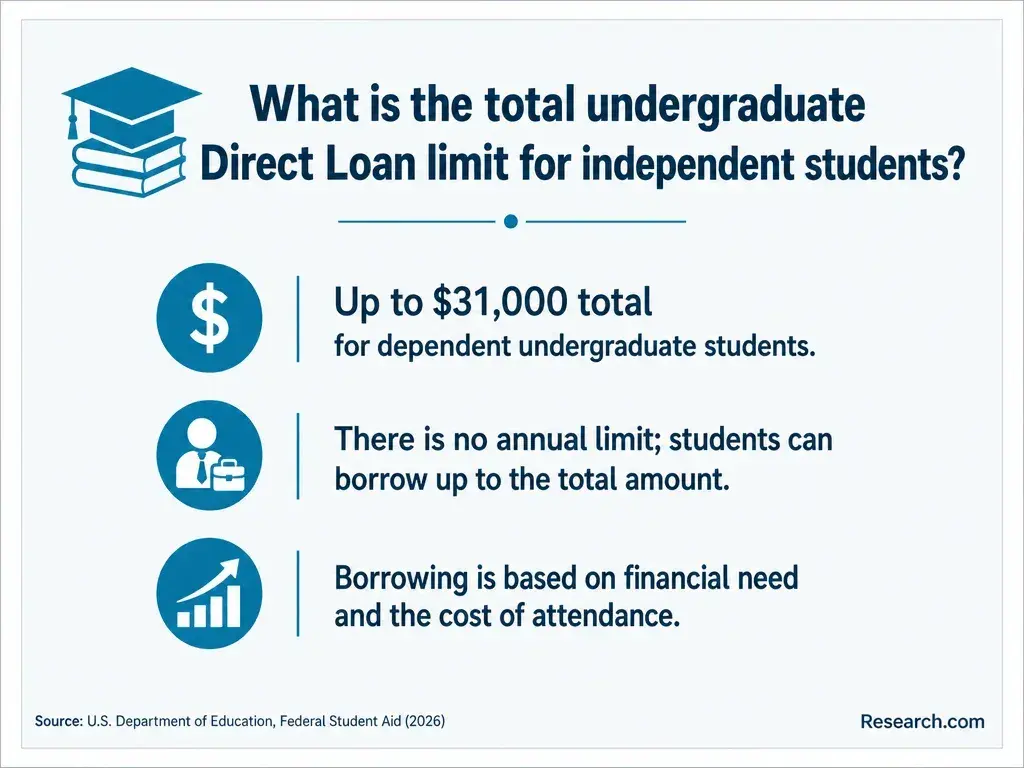
Compare schools using an individual degree audit rather than advertised tuition alone. Request the remaining credits and a term-by-term course plan, then account for tuition, mandatory fees, books or software, travel or placement costs, and any lost work hours. Confirm whether a public-sector employer offers education assistance, which courses qualify, when reimbursement occurs, and whether continued employment is required. Do not count unapproved transfer credit or prospective reimbursement as savings.
Affordable online business program comparisons can identify candidates for a closer cost review. The better-value option is the one that meets your course priorities at a manageable total completion cost, not necessarily the one with the lowest advertised rate.
Relevant entry or transition targets include administrative specialist, purchasing assistant, budget-office support, HR assistant, and operations or project coordinator. Titles vary by municipality. Read the duties rather than assuming that every "analyst" or "coordinator" posting asks for the same degree and experience.
For budget support, show accounting knowledge, careful spreadsheet work, and the ability to explain assumptions. For purchasing, add procurement coursework and familiarity with the employing government's rules. For operations, document a supervised process analysis or relevant work responsibility, not just a classroom management course. An employee already in city government may be able to seek cross-department projects or internal training before pursuing another credential.
HR roles warrant a closer qualification check: a business degree may provide useful foundations, but some positions seek specific HR coursework or experience. Compare human resources qualifications and degree routes if personnel work is your definite destination. A BS can support advancement, but it does not confer a management position or authority over staff and budgets.
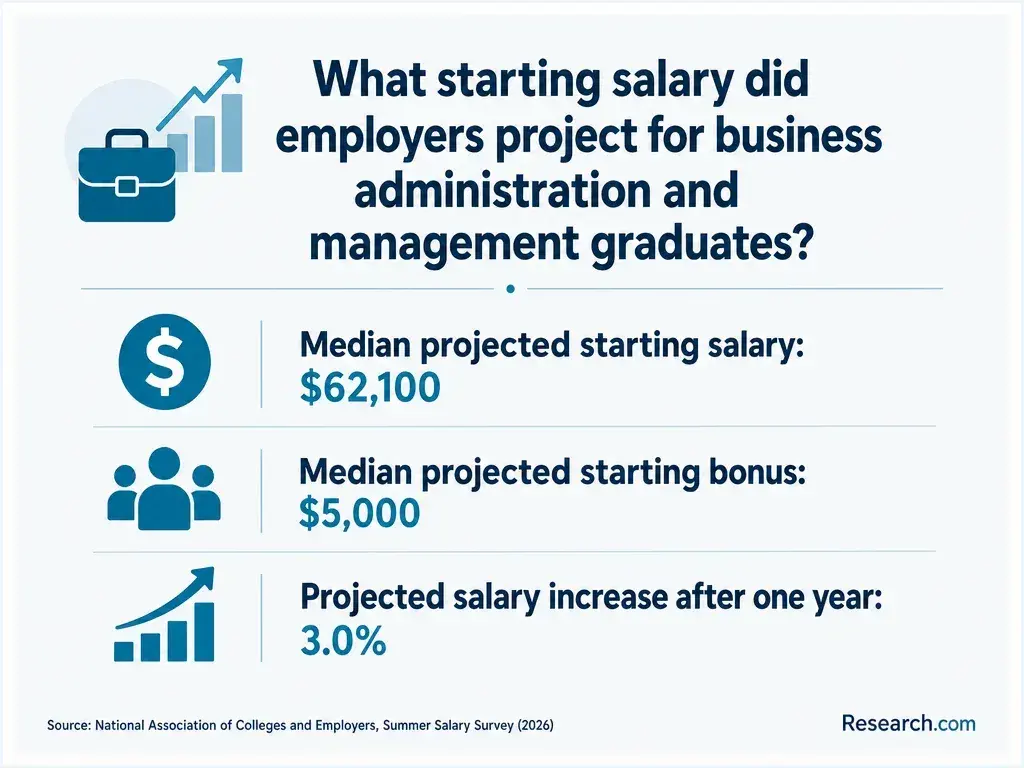
There is no single salary or growth rate for "municipal government business graduates." Pay depends on the occupation, city pay schedule, location, and prior experience. For a relevant benchmark, the U.S. Bureau of Labor Statistics reports a $91,640 median annual wage for budget analysts in May 2025 and projects 2% employment growth from 2025 to 2035 nationwide. Those figures cover the occupation across employers and experience levels; they are not municipal starting-pay or degree-outcome figures.
Use the benchmark to understand the occupation, then inspect current municipal postings for pay ranges, required experience, and civil-service rules. A move from administrative support to budget analysis may require demonstrated analytical work, not just a degree. If you are comparing that path with project coordination, budgeting for online project management college study can help frame education costs - but compare actual local job requirements before treating another degree as an earnings strategy.
Do Municipal Government Careers Require Licenses or Certifications?
Many municipal administrative, budget-support, and operations positions do not have a single universal license. Requirements instead come from the specific employer, jurisdiction, and job duties. Purchasing, HR, and project-management certifications may strengthen an application, but eligibility and value differ; a business course or concentration does not award one automatically. Accounting positions involving regulated professional practice have separate rules.
Check the exact posting before paying for a credential. If it names a certification, confirm the issuing organization's education and experience requirements, examination, fees, and renewal obligations. If it merely lists one as preferred, ask whether relevant municipal experience or employer training is more useful for the role.
Where a bachelor's degree is the missing qualification, review the full degree cost and aid eligibility rather than assuming a short certificate will meet the posting. Information on online business administration degrees accepting federal aid applications can help identify programs to investigate; the school's financial-aid office must determine your actual eligibility and award.
Other Things You Should Know About Business Administration
Possibly. Agree on the scope with your instructor and employer first, and use public or properly authorized data. A proposal for improving a process is not evidence that the city approved or implemented it.
Choose the experience that builds skills missing from your current duties. An internship in another department may be useful, but ask the school whether either role meets its supervision and assessment rules before expecting credit.
It may be if its required courses fit your target role and graduation plan. Compare the minor's added requirements with the value of selecting a few targeted public budgeting or procurement classes.
Use public budgets, meeting materials, and published service information to create a clearly labeled analysis. Explain its assumptions and limits; do not present a classroom recommendation as an authorized city project.
- City of Dixon, CA https://www.cityofdixonca.gov/media/HumanResources/Job%20Descriptions/Finance/Accountant,%20Senior%20Accountant,%20Accounting%20Manager
- Chapter 25: Procurement and contract management | projectdelivery.gov.uk https://projectdelivery.gov.uk/teal-book/home/part-e-planning-and-control/chapter-25-procurement-and-contract-management/
- 7 High-Impact Government and Public Service Careers for MPA Graduates - Cornell Brooks Public Policy https://publicpolicy.cornell.edu/masters-blog/7-high-impact-government-and-public-service-careers-for-mpa-graduates/
- Internship and Co-op Support - Careers | Coles College of Business https://campus.kennesaw.edu/offices-services/careers/students/internships-co-ops.php
- Business - Major Maps - Virginia Commonwealth University https://majormaps.vcu.edu/Major/business
- Chapter 7: Public Human Resources Management | umn.edu https://manifold.open.umn.edu/read/chapter-7-public-human-resources-management
- What Does It Take to Work in Government Accounting? | Freeman News https://freemannews.tulane.edu/2025/11/03/what-does-it-take-to-work-in-government-accounting
- What Does a Supply Chain Manager in the Public Sector Do? | Tseng College (CSUN) https://tsengcollege.csun.edu/blog/supply-chain-manager-public-sector
- What is a business administration degree? | Northwest Media Center https://www.nwmissouri.edu/media/news/2025/07/what-is-a-business-administration-degree.htm
- Government Accounting Jobs & Public Sector Career Guide | STU https://online.stu.edu/degrees/business/masters-accounting/government-jobs-public-sector-careers/