2027 BS in Business Administration Program Choice: A Sales Process Improvement Proposal as a Capstone Option
Audited and Verified:
Our Editorial and Data Verification Process
Research.com uses government datasets, official education statistics and primary institutional information to support its career and degree guides. Our review process checks factual accuracy, occupational definitions, source dates and the requirements associated with the credentials discussed.
How This Article Was Fact-Checked
Our editorial team verifies salary estimates, employment projections, education requirements and program information against original data providers and official organizations. Salary figures are checked against the relevant occupational definitions and reporting periods. Information about licensure, accreditation and required in-person training is reviewed separately.
Fact-checked and verified on:

Co-Founder and Chief Data Scientist
A sales process improvement capstone can turn business coursework into a proposal a manager could evaluate - but only if the project has a clear decision, usable evidence, and a manageable scope. This option is especially relevant to students with sales, customer service, or operations experience who want to demonstrate practical judgment without claiming results they have not achieved. This guide explains what the proposal should contain, how to handle workplace data and approvals, and how to decide whether this capstone and the degree program offering it fit your goals.
Key Things You Should Know
- A strong capstone proposes a specific change - such as improving lead handoffs - and defines a baseline, responsible decision-maker, and measures for evaluating a future pilot.
- Employer permission to use sales records is separate from faculty approval of the project; an anonymized case may be the better option if data access is limited.
- Market research analyst employment is projected to grow 7% from 2025 to 2035, but that occupation-wide outlook does not make one capstone or degree a job qualification.
What is a BS in Business Administration degree?
A Bachelor of Science in Business Administration is an undergraduate degree combining general education with business subjects such as accounting, management, marketing, finance, and operations. Its exact requirements vary by institution. A sales process improvement capstone is typically an applied assignment within the degree, not a separate sales credential or proof that a company adopted the proposal.
The BS can suit a student who wants broad business preparation and a project connecting customer-facing work to operational decisions. A specialized marketing or sales program may offer more functional depth; a management-focused program may emphasize supervising people instead. If your primary interest is hiring, employee relations, or workforce policy rather than sales operations, human resources degree planning basics can help frame that different academic choice.
What can you do with a BS in Business Administration?
Graduates may pursue sales support, account coordination, customer success support, marketing coordination, or operations roles, depending on their experience and the employer's requirements. A capstone can provide a work sample showing how you define a problem, interpret data, communicate with stakeholders, and recommend a feasible change. It does not substitute for selling experience, confer managerial authority, or establish that a proposed change produced results.
For a student moving toward HR rather than sales, prior business credits may matter more than a sales-focused portfolio. Compare the degree audit for your current program with the requirements to apply prior credits to an HR bachelor's degree before changing paths; accepted credits do not necessarily satisfy a new major's requirements.
How does a sales process improvement capstone project work?
The deliverable is a decision-ready proposal, not a claim of improved sales. Choose a bounded problem - for example, inconsistent handoffs between initial inquiries and follow-up - and identify who could authorize a change. Ask the faculty adviser what the capstone must demonstrate, then ask the organization what information you may use. Academic approval does not grant access to employer records or permission to implement a pilot.
This adaptable structure keeps the proposal specific enough to assess:
- Decision and scope: Name the process, affected team, customer touchpoint, decision-maker, and period under review.
- Current-state map: Show the stages, handoffs, responsibilities, and documented points where work stalls or is repeated.
- Evidence and limitations: Define permitted data sources, stage definitions, missing records, and any reasons the baseline may not represent typical performance.
- Proposed change: Compare the current process with a realistic alternative, including staff time, training, systems, customer effects, and risks.
- Evaluation plan: Specify a future pilot, who would approve it, and measures such as follow-up time or qualified-opportunity conversion, with consistent definitions and denominators.
A higher conversion rate alone would not prove the proposal caused an improvement: lead quality, seasonality, or a changed definition could explain the difference. If records contain customer details, prices, or employee performance information, use only data the organization permits and follow its privacy and intellectual-property rules. A portfolio version may need redacted figures, an anonymized process map, or a clearly labeled illustrative example.
Students proposing a project at their current job should also check whether their course requires a sponsor, meetings, or a presentation outside work hours. Guidance on business administration education for employed professionals can help with that scheduling decision; workplace access alone does not make a project capstone-eligible.
For this capstone, the most useful preparation is usually marketing or sales fundamentals for understanding customer stages, operations for mapping handoffs, statistics or analytics for interpreting measures, and accounting or finance for assessing resource trade-offs. Business communication helps turn the analysis into a proposal a decision-maker can use. Check prerequisites and course sequencing: a capstone may assume that required methods courses are already complete.
If the problem centers on inventory availability, order fulfillment, or supplier delays rather than the sales team's workflow, operations or supply chain electives may provide better preparation. Compare that path with accelerated degree planning for supply chain undergraduates only if the underlying problem - and your intended role - actually extends beyond sales process design. An elective is not automatically an official concentration.
A conventional full-time bachelor's pathway often spans four academic years, but transfer credit, course availability, enrollment pace, and residency rules determine an individual completion date. The capstone may be scheduled near the end because it draws on earlier coursework. Confirm when it is offered, how long approvals take, and whether a project must run across more than one term.
Do not choose an accelerated schedule solely because the capstone sounds like a familiar work task. A proposal still requires analysis, revisions, and coordination with a faculty adviser and possibly a workplace sponsor. If you are weighing a separate project management degree against finishing a business degree with this capstone, compare remaining requirements and financing rather than treating them as interchangeable; undergraduate project management grants and scholarship planning addresses the aid side of that alternative.
There is no reliable single price for the degree or this capstone. Compare each school's tuition basis, mandatory fees, remaining required credits, books or software, and any travel or proctoring costs. A workplace proposal can also carry an opportunity cost if meetings or data preparation require time away from paid work. Ask whether the capstone has a separate course charge and whether an extended project would require another enrollment term.
For a meaningful comparison, use each institution's written degree audit and aid offer to estimate your remaining cost, not its advertised tuition alone. Guidance on business administration tuition budgets using federal student aid can help you separate sticker price from grants, borrowing, and out-of-pocket costs. Do not assume employer reimbursement or financial aid covers extra terms without checking the applicable rules.
Requirements depend on the institution and whether you are entering as a first-year or transfer student. Schools commonly review prior academic records, while admission to the business major may involve additional coursework or academic-standing requirements. Your ability to propose a useful workplace project is not, by itself, evidence that you meet admission or capstone prerequisites.
Before applying, obtain the current catalog and ask admissions which records are required, an adviser which courses must precede the capstone, and the registrar how prior credits would apply. Review prerequisites for a business administration degree as preparation for those questions, then rely on the institution's evaluation for your actual requirements.
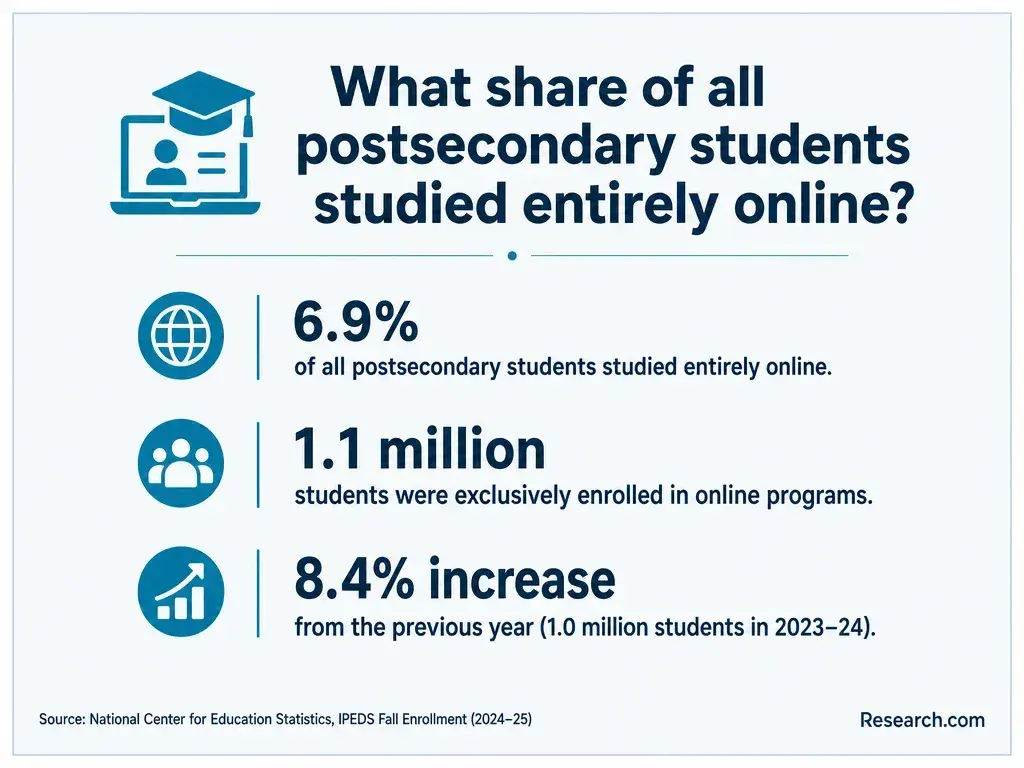
Neither format is inherently better for a sales process capstone. Online study may make it easier to remain employed near a potential project site, while campus study may make faculty meetings and presentations simpler. The deciding issue is whether the format supports the required supervision, collaboration, data access, and deadlines.
Request a sample capstone syllabus. Check for live meetings, group assignments, presentation times, approved project types, and any required visits before committing - particularly if you work variable shifts. Options described as business degrees through accelerated online learning may shorten the calendar but do not remove the time needed to secure permission and develop a defensible proposal.
Start by confirming the institution's recognized institutional accreditation, then verify whether any claimed AACSB, ACBSP, or IACBE accreditation covers the relevant business school or program. Business accreditation and institutional accreditation have different scopes; neither confirms that a sales process proposal is an approved capstone option.
Ask the program for its current capstone requirements, faculty-review process, policy for employer-sponsored projects, and an acceptable alternative if access to company data falls through. Compare those answers with your work schedule and degree audit. Free application options at accredited online schools may reduce an upfront application expense, but a waived fee is not a substitute for checking academic fit or total completion cost.
What salary and job outlook can business administration graduates expect?
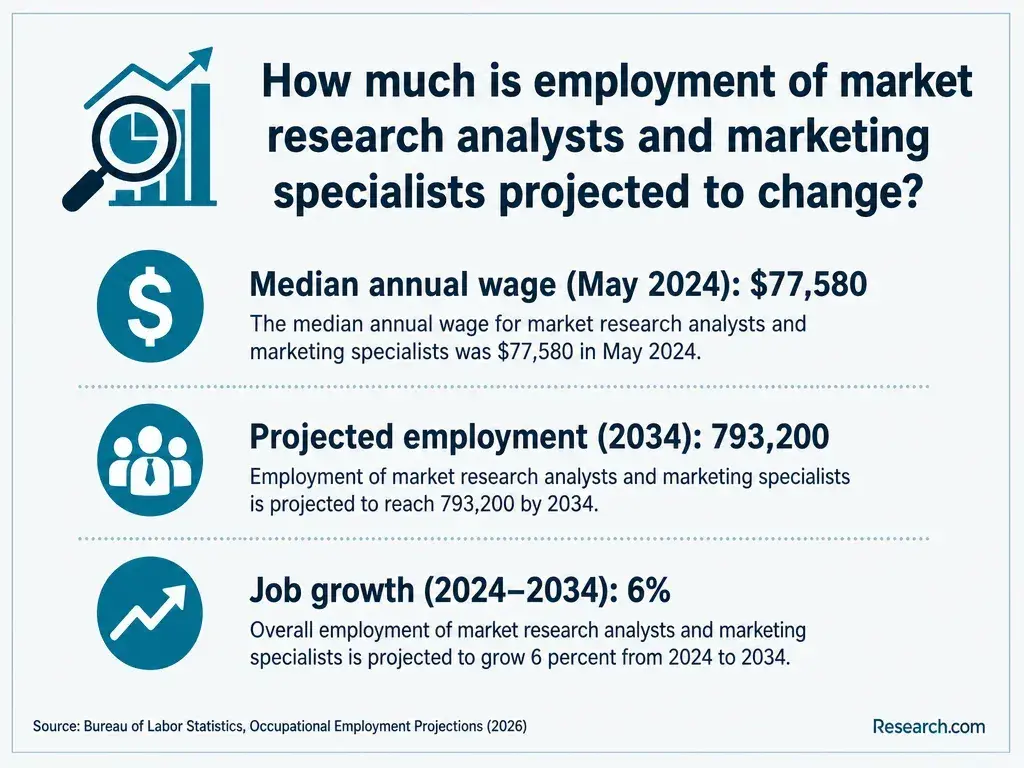
A degree title does not correspond to one occupation or starting salary. For context, the U.S. Bureau of Labor Statistics reports a May 2025 median annual wage of $78,760 for market research analysts and projects 7% employment growth for that occupation from 2025 to 2035. Those figures describe workers across experience levels, not new business graduates or sales process capstone students. Relevant jobs may require research, analytical, or industry skills beyond this project.
Evaluate the capstone against the roles you actually want: a sales operations or marketing support employer may value a clear process map and defensible measures, while a supervisory role will usually also require demonstrated responsibility for people or results. If leadership is your primary goal, explore shorter organizational leadership bachelor's programs as a comparison - not as a presumed faster route to management. The stronger next step is to match job postings to your coursework, experience, and the evidence your portfolio can legitimately show.
Other Things You Should Know About Business Administration
Possibly. Ask your instructor whether a public-data case or clearly labeled hypothetical process is acceptable. Do not present invented figures as an organization's actual baseline.
Follow your course's AI-use policy and your organization's data rules. Do not enter confidential customer or company information into an unapproved tool, and verify any output you use.
Not automatically. Certification bodies set their own eligibility rules; a course project is not a separately awarded professional credential.
Tell your faculty adviser promptly. Ask whether you can revise the project using authorized, anonymized information or switch to another approved case without missing required milestones.
- Privacy and Data Sharing | ed.gov https://studentprivacy.ed.gov/privacy-and-data-sharing
- Change Management: From Theory to Practice - PMC https://pmc.ncbi.nlm.nih.gov/articles/PMC9462626/
- Principles and Best Practices for Protecting Participant Privacy | Grants & Funding https://grants.nih.gov/policy-and-compliance/policy-topics/sharing-policies/dms/privacy/best-practices
- Plan your business - Small Business Administration https://www.sba.gov/counseling/plan-your-business/
- CTE Pathways: Definitions and Coding Guidance | ca.gov https://www.cde.ca.gov/ci/ct/sf/ctepathcodes.asp
- Data Security Guidelines | Research Ethics & Compliance https://research-compliance.umich.edu/data-security-guidelines%20
- How To Develop a Project Scope Statement in 8 Steps | Northeastern University Graduate Programs https://graduate.northeastern.edu/knowledge-hub/develop-project-scope-statement/
- Using Rubrics to Assess Student Learning | fsu.edu https://ipa.fsu.edu/resources/using-rubrics-to-assess-student-learning
- Program: Business Administration, B.S. | cpp.edu https://catalog.cpp.edu/preview_program.php
- Business Administration - Craig School of Business | California State University, Fresno https://craig.fresnostate.edu/advising/degprog/businessadminmajor.html