2027 Online BS in Business Administration vs. a BS in Logistics: Which Route Fits Your Career Plan?
Audited and Verified:
Our Editorial and Data Verification Process
Research.com uses government datasets, official education statistics and primary institutional information to support its career and degree guides. Our review process checks factual accuracy, occupational definitions, source dates and the requirements associated with the credentials discussed.
How This Article Was Fact-Checked
Our editorial team verifies salary estimates, employment projections, education requirements and program information against original data providers and official organizations. Salary figures are checked against the relevant occupational definitions and reporting periods. Information about licensure, accreditation and required in-person training is reviewed separately.
Fact-checked and verified on:

Co-Founder and Chief Data Scientist
If you want to work in supply chain management, a logistics degree may seem like the direct choice - but a business administration degree could leave more room to change functions later. That trade-off matters whether you are starting college, transferring credits, or using a bachelor's degree to move beyond your current role. This comparison shows where the programs overlap, where they differ, and how to evaluate career opportunities, online schedules, completion costs, and program quality before you enroll.
Key Things You Should Know
- Choose a BS in Logistics for deeper preparation in transportation, inventory, procurement, and supply chain analysis; choose a BS in Business Administration for broader options across business functions.
- The US Bureau of Labor Statistics projects 18% employment growth for logisticians from 2025 to 2035, but a degree alone does not qualify a graduate for every supply chain role.
- Compare required courses, credits that satisfy the major, applied projects, and total remaining cost - not just the degree title or an advertised online completion time.
What is the difference between an online BS in Business Administration and a BS in Logistics?
A BS in Business Administration generally teaches how organizations make decisions across accounting, finance, marketing, management, and operations. A BS in Logistics concentrates more heavily on how goods, materials, and information move through supply chains. Either may be offered online; delivery format does not determine the academic focus.
The degree title is only a starting point. A business administration program may offer a formal supply chain concentration, while a logistics program may include a substantial general business core. The comparison below identifies the distinction to check in each school's catalog.
| Decision factor | BS in Business Administration | BS in Logistics |
| Primary focus | Decisions across multiple business functions | Movement, sourcing, storage, and delivery within supply chains |
| Likely advantage | Flexibility if your target function is unsettled | More concentrated preparation for logistics-related work |
| Potential limitation | Supply chain coursework may be introductory unless you choose relevant electives or a concentration | Less room for coursework outside operations and supply chain topics |
If you already work in warehousing, transportation, or purchasing, the specialized degree may build directly on that experience. If you are still deciding among operations, marketing, HR, and finance, the broader degree may be safer. Before choosing either path, use a business administration applicant eligibility checklist as a starting point, then confirm the logistics program's separate entry and transfer requirements with its school.
Which degree offers better career opportunities in business and supply chain management?
Neither degree is better for every career. Logistics is the more direct academic route when your goal is supply chain planning, inventory analysis, transportation coordination, or procurement support. Business administration offers more flexibility when you want to explore several functions or combine existing industry experience with broader financial and managerial knowledge.
For a career changer, experience can outweigh a small difference in degree titles. A retail employee who has managed replenishment or vendor issues may be able to show relevant supply chain evidence alongside either degree. Someone whose experience is mainly in customer service may need an internship, supervised project, or entry-level operations role to make the same transition. Employers may also expect particular software skills or industry knowledge.
If HR rather than supply chain becomes your target, compare the business core with a specialized HR pathway; returning students can also examine how prior college coursework toward an HR bachelor's might apply. The best route is the one that satisfies the most relevant requirements without unnecessarily repeating credits.
What jobs can you get with a Business Administration or Logistics degree?
Both degrees can support applications for coordinator, analyst-support, and specialist-track positions, but employers hire for demonstrated tasks - not a degree title alone. For example, a logistics coordinator may track shipments and resolve delivery exceptions, while an operations coordinator may monitor workflows, budgets, and schedules across a department.
A logistics graduate might pursue transportation coordinator, inventory analyst, purchasing assistant, or supply chain analyst openings, depending on experience and technical skills. A business administration graduate might pursue operations coordinator, sales operations associate, HR assistant, or marketing coordinator roles. Graduates of either program can compete for overlapping operations positions when their coursework and work samples fit the job description.
Project coordination is another overlapping route, but it is not interchangeable with logistics management. If it becomes your primary goal and you have prior credits, compare project management bachelor's credit transfer rules before assuming either degree is the quickest fit. Supervisory and management jobs typically require evidence of responsibility and results beyond graduation.
Both programs commonly draw on accounting, economics, statistics, communication, and organizational decision-making. Business administration then tends to spread upper-level study across functions such as finance, marketing, management, and strategy. Logistics typically devotes more of that space to inventory, transportation, procurement, supply chain systems, and operations analysis.
For a supply chain career, inspect the required upper-level courses, not just the catalog description. A program with a supply chain elective may offer less depth than one requiring forecasting, purchasing, and logistics analysis. Conversely, a broad business degree with an official supply chain concentration and a relevant internship could be a strong fit. A concentration must appear in the school's requirements; a few electives do not automatically create one.
Applied assignments matter too. Look for opportunities to analyze a process, interpret inventory or delivery data, and explain a recommendation while respecting workplace confidentiality. You can use ranked school options for studying business online to identify programs to investigate, but compare their current catalogs and project requirements yourself.
Online and campus-based programs can teach the same degree requirements, but their day-to-day demands may differ. An online course may still require live meetings, timed exams, group presentations, or an internship at an approved site. Campus classes may make in-person collaboration and local recruiting easier, while adding travel and fixed attendance times.
Ask each school for a sample course schedule and assessment policy. For working students, the decisive question is whether required classes and projects fit their actual work hours - not whether the website calls the program "flexible." Also check access to faculty, tutoring, career services, and supply chain software. Online tuition should be weighed against fees, equipment, travel requirements, and any income lost to scheduling conflicts; compare low-cost online business administration pathways using those full costs rather than tuition alone.
Requirements vary by institution and by whether you enter as a first-year or transfer student. Schools commonly request prior academic transcripts and may set GPA, general education, or prerequisite conditions. Some admit students directly to the major; others require additional coursework before upper-level business or logistics courses.
If you have previous college work, request an official evaluation showing which credits satisfy general education, business core, logistics requirements, and electives. Accepted transfer credit is not necessarily credit toward the major. Ask the admissions or transfer office who approves equivalencies for accounting, statistics, and other sequential courses. Application fees are a smaller consideration, but you can compare no-fee college applications while checking each school's current policy and deadlines.
A bachelor's degree is commonly planned as roughly four years of full-time undergraduate study, but an individual completion timeline depends on accepted credits, course availability, prerequisites, and enrollment pace. A transfer student could finish sooner, while a student studying part time or waiting for a required course could take longer.
Ask for a term-by-term plan for both degrees after your credits are evaluated. Compare how often specialized logistics courses run and whether either program requires a sequenced internship or capstone. American colleges offering fast-track business bachelor's can help you identify accelerated options, but an advertised timeline is not a personal graduation estimate.
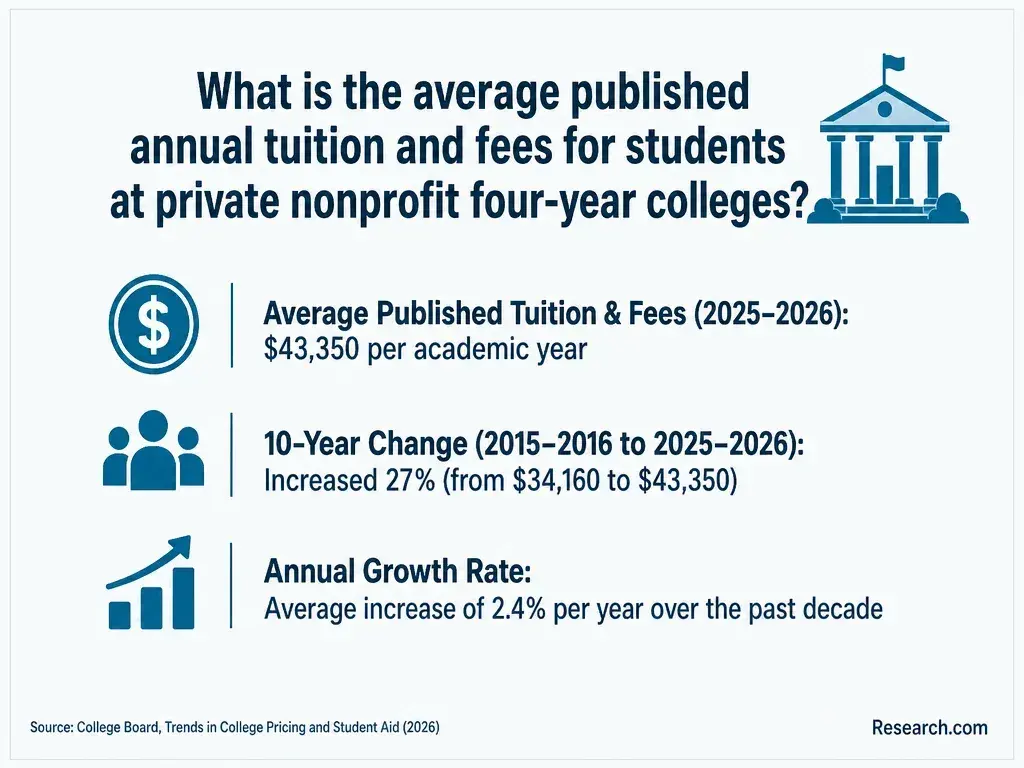
There is no reliable single price for either degree. Your cost depends on the school's tuition structure, fees, credits that apply to requirements, remaining courses, enrollment pace, books or software, and any travel or proctoring expenses. A specialized program can cost more to complete if fewer of your existing credits satisfy its major - even when its advertised tuition rate is lower.
Request a written remaining-course plan and a current cost estimate from each school. Compare the amount you must pay before grants or employer reimbursement, the amount you expect to borrow, and any work hours you may need to give up. Check aid eligibility and employer-benefit conditions before counting either as savings. If you are considering project management as an alternative major, scholarship search options for project management majors are a separate starting point; confirm that any award actually applies to your chosen program.
First, verify that the institution holds recognized institutional accreditation and that the status covers the school awarding the online degree. Then check whether the business school or specific program has additional accreditation from AACSB, ACBSP, or IACBE. These organizations have different scopes, so do not assume a logistics degree is covered merely because another business program at the institution is.
Ask the school to identify the exact online program and accreditor scope in writing. Accreditation is an important quality and eligibility check, not proof of a particular job outcome. Cost-focused searches can be useful, but when reviewing budget-friendly online business schools, verify accreditation alongside the current catalog, support services, and total completion cost.
What salaries and job outlook can graduates expect in these fields?
US Bureau of Labor Statistics figures describe occupations, not the earnings of graduates from either degree. The table shows relevant national benchmarks: median annual wages in May 2025 and projected employment change from 2025 to 2035.
| Occupation | Median annual wage | Projected employment growth |
| Logistician | $82,320 | 18% |
| Human resources specialist | $75,940 | 6% |
| Project management specialist | $102,320 | 7% |
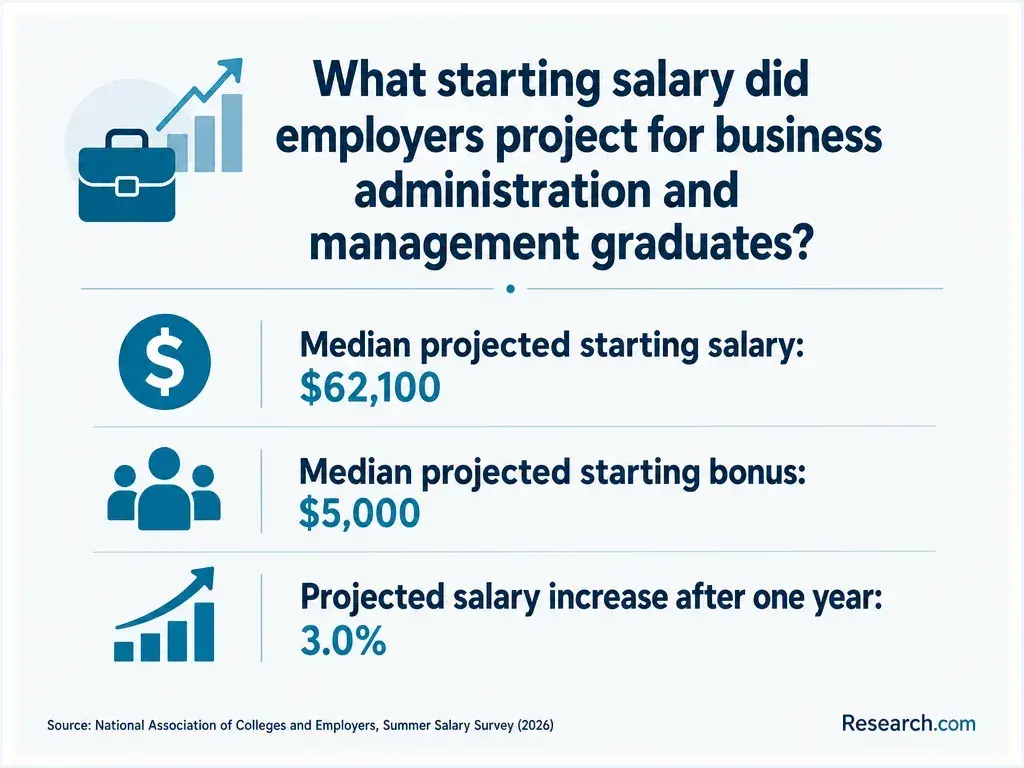
The logistician projection suggests substantial demand in a directly related occupation, but its median includes experienced workers; it is not a starting-salary offer. Pay and hiring prospects vary with location, industry, skills, and prior work. If that occupation is your target, compare the logistics curriculum with business programs that offer substantial supply chain study, and inspect entry-level postings in your intended area. An online supply chain bachelor's fast-track guide can surface another specialized option, but confirm its coursework and your own completion timeline before deciding.
Other Things You Should Know About Business Administration
Yes. Relevant operations coursework, inventory or purchasing experience, and evidence of analytical work can support the move. Check local job postings to identify gaps before deciding whether you need more education.
No. A concentration is part of a broader degree, while a BS in Logistics is a separately named major. Compare required upper-level courses to judge how much specialized preparation each provides.
Not universally. Some employers value specific credentials, but entry requirements depend on the role. Check the positions you want before paying for a certification.
Not automatically. If your existing degree meets employers' education requirements, targeted coursework, relevant work experience, or a certificate may address a skill gap more efficiently. Compare those options against the credits and cost of a second bachelor's.
- Accreditation in the U.S. | ed.gov http://www.ed.gov/laws-and-policy/higher-education-laws-and-policy/college-accreditation/accreditation-in-the-us
- Cost of Attendance (Budget) | 2025-2026 Federal Student Aid Handbook https://fsapartners.ed.gov/knowledge-center/fsa-handbook/2025-2026/vol3/ch2-cost-attendance-budget
- How Online & Virtual Courses Work | Ivy Tech Community College https://www.ivytech.edu/classes/how-online-virtual-courses-work/
- Find the Right Online Degree Program by Using a Comparison Framework | Columbia Southern University https://www.columbiasouthern.edu/blog/blog-articles/2026/august/find-the-right-online-degree-program
- Types of Business Degrees: Your Complete Guide | UWA Online https://online.uwa.edu/news/types-business-degrees/
- BSBA in Supply Chain Management - App State https://onlineprograms.appstate.edu/programs/undergraduate-degrees/bsba-supply-chain-management/
- Supply Chain Logistics Management, BSBA Online | University of West Florida https://uwf.edu/programs/online/supply-chain-management-bsba/
- What Can You Do With a Bachelor's Degree in Supply Chain, Transportation and Logistics Management? | Bellevue University https://www.bellevue.edu/articles/what-can-you-do-with-a-bachelors-degree-in-supply-chain-transportation-and-logistics-management/
- Online Program Definition | Center for Innovative Teaching and Learning | Northern Illinois University https://www.niu.edu/citl/online/standards-and-principles/online-program-definition.shtml
- Accreditation Process | AACSB https://www.aacsb.edu/educators/accreditation/accreditation-process