2027 Hybrid vs Fully Online Physical Education Bachelor's Degree Programs

Co-Founder and Chief Data Scientist
A busy single parent pursuing a career change debates between logging into classes from home or attending campus sessions once a week. The desire for flexible study hours conflicts with the need for hands-on experience and face-to-face interaction essential in physical education fields. Balancing childcare, work schedules, and commuting challenges heightens this dilemma. According to recent data, 42% of physical education bachelor's students prefer hybrid programs for blending online convenience with in-person labs. This article explores how hybrid and fully online physical education bachelor's degree programs differ in flexibility, practical training, networking, and location to guide prospective students in making an informed choice.
Key Benefits of Hybrid vs Fully Online Physical Education Bachelor's Degree Programs
- Hybrid programs offer enhanced learning flexibility by combining online coursework with scheduled in-person sessions, benefiting students who need structured face-to-face interaction for practical skills.
- Fully online formats provide minimal in-person interaction, relying on virtual tools, which suits self-motivated learners balancing remote study with work and family commitments.
- Both formats support balancing education and responsibilities, but hybrids often better integrate hands-on training essential for physical education careers, aligning with industry demands for experiential learning.
What Is a Hybrid vs Fully Online Physical Education Bachelor's Degree?
Hybrid and fully online physical education bachelor's degree programs vary in how course content is delivered, the level of in-person engagement, and overall learning structure. Approximately 40% of undergraduate students nationwide participate in some form of online learning, highlighting the growing prominence of these formats. Below is a closer look at how each option serves different student needs.
Hybrid Programs
- Course delivery combines online lectures and theory-based classes with mandatory on-campus practical sessions, labs, or assessments.
- Scheduling requires students to coordinate campus visits, which may involve travel or fixed appointment times for hands-on activities.
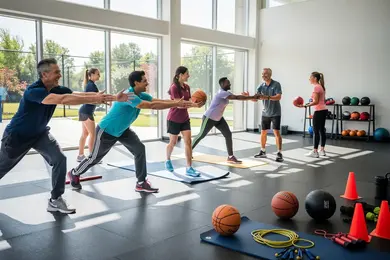
- Interaction occurs through direct collaboration during in-person labs and practicums, fostering better skill development and immediate feedback.
- The learning experience supports experiential education by blending digital flexibility with physical engagement, suitable for those valuing traditional instruction elements.
Fully Online Programs
- All coursework, including instruction, discussions, and assignments, is delivered through virtual platforms without any campus visits.
- Students benefit from flexible scheduling, allowing study at any time or place that fits their lifestyle and commitments.
- Interaction primarily takes place through discussion boards, video conferences, and group projects, requiring self-motivation and adaptability.
- Online format demands strong self-discipline and technological proficiency to master practical concepts remotely.
- This format aligns with the advantages of a fully online physical education bachelor's degree format, ideal for learners seeking maximum flexibility.
Those exploring options such as a hybrid physical education bachelor's degree program structure or fully online pathways may also consider affordability when choosing schools; resources for finding the cheapest online colleges that accept FAFSA in USA can be valuable in this process.
How Does a Hybrid vs Fully Online Physical Education Bachelor's Degree Program Work?
Both hybrid and fully online physical education bachelor degree programs follow structured academic pathways that provide foundational knowledge and practical skills. They vary mainly in how coursework is delivered and how students engage with instructors and peers throughout their studies. According to the National Center for Education Statistics, enrollment in at least one distance education course has increased by nearly 5% annually over the past decade, demonstrating a clear trend toward online and hybrid learning in higher education. Below is a comparison of how these two program formats operate.
Hybrid Programs
- Online components are delivered through a learning management system (LMS), including video lectures, quizzes, and discussion boards.
- Scheduled in-person sessions provide opportunities for hands-on practice, physical skill demonstrations, and face-to-face assessments.
- Class participation involves both virtual discussions and live group workshops or activities.
- Students communicate with instructors via email, LMS messaging, and in-person meetings on campus.
- Scheduling follows a mix of online deadlines combined with fixed days for on-campus sessions to balance flexibility and structure.
Fully Online Programs
- All lectures, readings, and assignments are accessed remotely through an online platform or LMS.
- Class participation includes live webinars, recorded video discussions, and written forums.
- Practical physical education components are adapted using video demonstrations or supervised local internships approved by the institution.
- Communication with instructors and peers relies on email, video calls, and online discussion forums.
- Schedules tend to be flexible, with weekly deadlines but no fixed meeting times.
Students pursuing a fully online physical education bachelor admission requirements will find these flexible delivery methods accommodate diverse lifestyles. For those interested in exploring the most lucrative college majors, including degrees with strong online options, resources like most lucrative college majors provide valuable insight.
Are Admission Requirements Different for Hybrid and Fully Online Physical Education Bachelor's Degrees?
Admission criteria for hybrid and fully online physical education bachelor's programs are generally alike, reflecting consistent standards across delivery methods. Still, some differences arise due to program format and institutional rules. The following points outline key distinctions prospective students should consider.
- Technical and Equipment Needs: Fully online programs typically insist on reliable internet access and specific hardware like webcams to ensure remote participation. Hybrid programs are less stringent since some requirements are met during on-campus sessions.
- On-Campus Attendance Commitments: Hybrid formats often require students to be available for in-person labs, exams, or practicums, necessitating proof of accessibility during admission. Fully online programs usually do not ask for this, as all coursework is remote.
- Health and Fitness Screening: Some hybrid programs mandate physical fitness tests or health clearances to prepare for hands-on activities at campus facilities, whereas fully online programs frequently waive these health-related prerequisites.
- Documentation for Access to Facilities or Fieldwork: Hybrid applicants may need to provide evidence of their ability to attend in-person components, such as local residency or travel arrangements. Conversely, fully online students are often tasked with arranging local practicum placements independently before admission.
A student in a fully online physical education bachelor's degree program shared that navigating admission initially felt complex due to the need to solidify local practicum options. "I had to find a supervisor near me and submit a detailed plan of how I'd complete my in-person requirements," she explained. This process required significant coordination but ultimately provided flexibility, as it let her tailor her fieldwork to fit personal scheduling constraints. She appreciated that, unlike hybrid admissions, where on-campus visits are mandatory, her pathway accommodated her lifestyle while maintaining rigorous standards.
Is the Learning Experience Better in Hybrid vs Online Physical Education Bachelor's Degrees?
Hybrid physical education bachelor's degree programs combine in-person and online learning, enhancing student engagement through direct interaction with instructors and classmates. This format supports practical, hands-on activities and live demonstrations vital for skill mastery, offering immediate feedback that can be harder to receive in other settings.
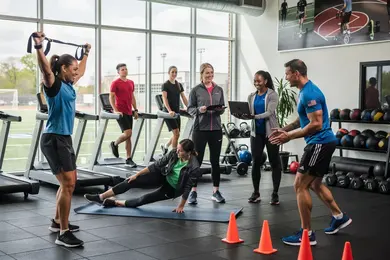
The blend of face-to-face sessions and virtual coursework accommodates various learning styles and personal schedules. Additionally, students benefit from access to campus facilities such as labs, fitness centers, and support services, which enrich the educational experience. This environment fosters collaboration and a sense of community, often leading to more active participation and motivation.
Fully online physical education degrees provide maximum flexibility, appealing to students who need to balance education with work or family life. These programs rely heavily on multimedia tools and virtual platforms to replicate some aspects of hands-on learning, but they may lack the immediacy and personal connection of in-person settings.
Interaction with instructors and peers is more limited, which can sometimes result in feelings of isolation or decreased motivation. Although online learners can access digital resources like libraries and tutoring, the absence of physical campus amenities reduces opportunities for experiential learning. Success in this format often depends on strong self-discipline and effective time management to stay engaged and connected.
Which Is More Flexible: Hybrid or Fully Online Physical Education Bachelor's Degree?
Hybrid physical education bachelor's degree flexibility lies in its structured blend of online and in-person elements. While students can complete many courses remotely, they are required to attend scheduled campus sessions for activities like labs or skill assessments.
These in-person commitments often happen weekly or monthly, requiring students to coordinate their time carefully. This format offers a compromise, combining the convenience of distance learning with essential hands-on practice. Such a balance is particularly valuable for physical education programs that demand physical engagement alongside theoretical study.
Fully online physical education bachelor's degree schedule options, on the other hand, offer significant autonomy by enabling students to access all materials and complete assignments remotely. Many programs feature asynchronous classes, allowing learners to manage their studies without fixed meeting times and to fit education around work or family responsibilities.
According to a 2023 report by the Online Learning Consortium, 68% of students enrolled in fully online programs cited flexibility as their main reason for choosing this format. For those seeking even greater scheduling freedom while pursuing the easiest associate degree, fully online options minimize campus visits but may offer fewer hands-on training opportunities than hybrid programs.
What Is the Workload for Hybrid vs Fully Online Physical Education Bachelor's Degrees?
Both hybrid and fully online physical education bachelor's degree programs generally meet the same academic requirements, but their methods of course delivery influence how students pace their work and manage time. Studies reveal that online learners typically invest about 25% more time on coursework than peers in traditional settings, reflecting the demands of self-directed study and digital engagement. These differences shape the workload experience in each program type.
In hybrid physical education programs, students divide their workload between on-campus classes and online coursework. Scheduled face-to-face sessions provide structured time commitments that encourage routine attendance and participation in hands-on activities, practical exercises, and group collaboration. This arrangement helps maintain a steady rhythm throughout the week but requires managing both physical presence and digital assignments simultaneously, which can be challenging for balancing priorities.
Fully online physical education programs rely predominantly on asynchronous learning, offering students the flexibility to access lectures and assignments when convenient within deadline frameworks. This format demands strong self-discipline since students must independently organize their study schedules and keep pace without fixed class times. Online coursework often includes video projects or interactive tasks that require dedicated personal study hours, making proactive time management essential to avoid last-minute workloads and ensure consistent progress.
How Does Tuition Compare for Hybrid vs Online Physical Education Bachelor's Degrees?
Tuition for hybrid and fully online physical education bachelor's degree programs varies significantly, influenced by the program's delivery format, institutional policies, and additional fees. On average, fully online programs tend to charge about 10% less per credit than hybrid options, reflecting lower overhead costs and resource demands.
- Per-Credit Costs: Fully online physical education programs usually offer lower per-credit tuition rates compared to hybrid programs. This is largely due to reduced expenses for classroom space and on-site faculty support.
- Technology vs. Facility Fees: While hybrid programs often include campus or facility fees covering gyms and labs used for in-person sessions, fully online programs may charge technology fees to support digital learning platforms. However, these tech fees are generally less expensive than hybrid facility charges.
- Residency and Tuition Rates: Hybrid students might face higher tuition if they are classified as out-of-state, reflecting campus-based residency policies. In contrast, fully online programs frequently apply uniform tuition rates regardless of a student's location.
- Payment Flexibility: Fully online programs typically offer greater flexibility in payment plans and scheduling, allowing students to spread out tuition costs more conveniently. Hybrid programs might require larger upfront deposits linked to on-campus attendance commitments.
When asked about how tuition compared for his hybrid physical education bachelor's degree, a graduate shared that managing the upfront campus fees added an unexpected financial hurdle initially. He explained, "The technology fees were upfront but predictable, whereas the campus usage fees varied by semester." He emphasized that while the hybrid program's costs were higher, the hands-on experience and access to physical facilities were invaluable. He described balancing these expenses alongside his work schedule as a learning curve but felt the investment aligned with his career goals. This perspective highlights the nuanced considerations students face beyond just sticker price when choosing between hybrid and fully online physical education degrees.
Do Employers Prefer Hybrid or Fully Online Physical Education Bachelor's Degrees?
Employer perceptions of hybrid and fully online physical education bachelor's degrees have evolved significantly as online education has gained wider acceptance. A recent survey by the National Association of Colleges and Employers found that over 70% of employers now consider online degrees equally credible to traditional programs. This shift reflects more openness towards different learning formats, leading to a nuanced comparison of hybrid versus fully online degrees in the field of physical education.
- Practical Experience: Employers often favor hybrid programs because they combine online coursework with in-person physical activities and lab work. This hands-on component is seen as essential for preparing graduates for practical roles in physical education.
- Flexibility and Accessibility: Fully online degrees are valued for accommodating students who require flexible schedules, such as working adults or those in remote locations. Employers recognize that the quality depends on program accreditation and curriculum more than delivery mode.
- Skill Demonstration: Graduates from fully online physical education programs often exhibit strong self-motivation and time-management skills, attributes prized by employers. These degrees also incorporate virtual simulations or internships to address hands-on learning concerns.
- Employer Priorities: Most employers emphasize the reputation of the institution and the candidate's proven competencies over whether the degree was earned through hybrid or fully online study. Employer perceptions of online versus hybrid physical education degrees increasingly focus on outcomes rather than format.
Students comparing hybrid and fully online physical education bachelor's degrees will find that employer preference is evolving and that both formats offer distinct advantages depending on individual learning styles and career goals. For those exploring flexible graduate options, the best online MSW programs provide a similar blend of accessibility and quality within another professional field.
Who Should Choose a Hybrid vs Fully Online Physical Education Bachelor's Degree?
Choosing between a hybrid and fully online physical education bachelor's degree depends greatly on individual learning preferences, schedule flexibility, and lifestyle needs. Each format caters to different students, offering varied benefits based on how one learns and manages time. Understanding these distinctions can help in making an informed decision.
- Hands-On Learners: Students who prefer direct interaction with instructors and value practical experience benefit from hybrid physical education bachelor's degree benefits by engaging in face-to-face sessions alongside online coursework.
- Structured Schedule: Those who need a consistent routine and thrive with set in-person activities find hybrid programs supportive of their learning style and time management.
- Flexible Commitment: Fully online programs suit people with demanding work or family obligations that limit their ability to attend campus regularly, offering greater location independence.
- Self-Motivated Students: Individuals comfortable managing their time independently and staying motivated without physical classroom presence excel in fully online formats.
- Distant Learners: Students living far from educational institutions offering physical education degrees find fully online options more accessible and practical for pursuing their studies.
- Explorers of Related Fields: Those interested in diverse online programs, such as online graphic design courses, may consider fully online pathways to combine various skill sets while maintaining schedule flexibility.
Prospective students should also review the fully online physical education bachelor's degree eligibility criteria before applying, ensuring they meet specific program requirements aligned with their educational goals and lifestyle.
How Can I Succeed in a Hybrid vs Fully Online Physical Education Bachelor's Degree Program?
Success in hybrid and fully online physical education bachelor's degree programs requires tailored approaches due to their different formats and engagement levels. Hybrid learning mixes classroom and virtual sessions, while fully online depends entirely on digital interaction. The following strategies help students thrive in these distinct settings.
- Attendance Commitment: Hybrid students should prioritize regular attendance at in-person classes to deepen understanding and ask questions directly, complementing online work with active participation.
- Daily Structure: Fully online learners benefit from establishing a consistent daily schedule to maintain focus and prevent procrastination in the absence of fixed class times.
- Interactive Engagement: Hybrid students can leverage face-to-face interaction to build relationships, while online-only students must engage through forums, emails, and video calls to stay connected.
- Technology Mastery: Familiarity with learning platforms, video conferencing, and fitness apps is essential for fully online students to participate fully in practical and theoretical activities.
- Goal Setting: Both formats require setting clear academic and skill objectives to stay motivated and measure progress throughout the program.
- Time Management: Hybrid learners balance physical activities during campus sessions with asynchronous online assignments, while online students plan for independent study and virtual practice.
- Resource Utilization: Using video tutorials and digital materials enhances comprehension in either format, allowing students to apply physical education concepts effectively outside scheduled sessions.
What Graduates Say About Hybrid vs Fully Online Physical Education Bachelor's Degree Programs
- Armando: "Choosing a fully online physical education bachelor's degree allowed me to tailor my study schedule around my full-time job, which was crucial for balancing work and academics. Navigating the online platform was surprisingly smooth, with intuitive course materials and accessible instructors that made virtual learning engaging. Earning this degree has opened doors for me in community fitness programs, highlighting how flexible education can lead to tangible career growth."
- Damien: "Pursuing a hybrid physical education program was ideal because I value the blend of in-person interaction and online convenience. Adjusting to the hybrid format initially challenged me to develop strong self-discipline, but the hands-on sessions enriched my understanding of training techniques. Professionally, this balanced approach gave me confidence and practical skills that employers appreciate in sports coaching environments."
- Aiden: "I opted for a fully online physical education bachelor's degree due to geographic constraints and the need for a personalized learning pace. The experience taught me to be proactive and resourceful, as staying connected virtually required deliberate effort and communication. Now, as a wellness coordinator, I find that my online education prepared me well for remote teamwork and program development in diverse settings."
Other Things You Should Know About Physical Education Degrees
Most physical education bachelor's degree programs, whether hybrid or fully online, require in-person components like student teaching or internships to meet state certification standards. While coursework can be completed remotely in fully online programs, practical experience must usually be arranged locally and completed face-to-face. Hybrid programs often integrate these hands-on requirements into the on-campus or in-person portions of the curriculum.
Fully online programs may offer fewer direct opportunities for face-to-face networking with peers and faculty compared to hybrid programs. Hybrid degrees often include on-campus classes or activities that facilitate in-person interactions, enhancing professional connections. That said, many online programs create virtual forums and networking events to support student engagement and professional growth.
Fully online programs necessitate reliable internet access, compatible devices, and familiarity with learning management systems since all coursework is delivered remotely. Hybrid programs still require these technologies but may rely less heavily on them during on-campus sessions. Both formats may also require specialized software for fitness assessments, virtual labs, or instructional videos in physical education courses.
References
- View of Exploring the pros and cons of online courses for physiotherapists https://journals.anstar.edu.pl/index.php/hppa/article/view/527/592
- Online and hybrid college programs explained. Flexibility, risk, and the real value equation | CG https://collegegrind.org/posts/online-and-hybrid-college-programs-explained/
- Online Physical Education Degrees: Compare Top Programs https://www.publicservicedegrees.org/online-degrees/education-teaching-programs/physical-education-pe/
- Hybrid class vs. online: Choosing the best for your student https://www.asuprepdigital.org/blog/hybrid-class-vs-online/
- The Best of Both Worlds: Exploring the Benefits and Challenges of Hybrid Education https://www.facultyfocus.com/articles/online-education/online-course-delivery-and-instruction/the-best-of-both-worlds-exploring-the-benefits-and-challenges-of-hybrid-education/
- Physical Education https://www.ualberta.ca/en/undergraduate-programs/bachelor-of-science-physical-education.html
- 2025 Health and Physical Education/Fitness Tuition https://www.collegetuitioncompare.com/majors/31.0501/health-and-physical-education-fitness/
- Hybrid Online College Models: The Future of Flexible Higher Education https://preview.bravebitsglobal.com/news/hybrid-online-college-models--the-future-of-flexible-higher-education
- Online or hybrid training? The 5 differences https://www.dyndevice.com/en/news/online-or-hybrid-training-the-5-differences-ELN-1808/
- Hybrid vs. fully online: how different teaching models impact satisfaction https://www.amba-bga.com/insights/hybrid-vs-fully-online-how-different-teaching-models-impact-satisfaction