2027 Hybrid vs Fully Online Applied Behavior Analysis Bachelor's Degree Programs

Co-Founder and Chief Data Scientist
Choosing between a hybrid and a fully online applied behavior analysis bachelor’s degree is not just a scheduling decision. It affects how you practice behavior-analytic concepts, how often you interact with faculty and classmates, how much structure you have each week, and how easily the program fits around work, caregiving, commuting, or relocation.
For some students, a fully online format is the only realistic path because it removes campus travel and allows coursework to happen around fixed responsibilities. For others, the accountability and hands-on rhythm of scheduled in-person sessions make a hybrid program more effective. With over 60% of applied behavior analysis students enrolled in online formats, students now have more options—but also more details to compare before enrolling.
This guide explains how hybrid and fully online applied behavior analysis bachelor’s programs differ in delivery, admissions, workload, flexibility, tuition, employer perception, and student fit. It is designed to help prospective students choose the format that supports both academic success and long-term professional readiness.
Key Benefits of Hybrid vs Fully Online Applied Behavior Analysis Bachelor's Degree Programs
- Hybrid programs offer flexible scheduling by combining online coursework with scheduled in-person sessions, supporting students who benefit from direct interaction without sacrificing convenience.
- Fully online programs provide maximum flexibility, ideal for those balancing full-time work or family, though they may limit real-time social engagement and networking opportunities.
- Hybrid formats facilitate practical skills through face-to-face training, enhancing readiness for applied behavior analysis careers, whereas fully online formats emphasize self-directed learning and time management.
What Is a Hybrid vs Fully Online Applied Behavior Analysis Bachelor's Degree?
A hybrid applied behavior analysis bachelor’s degree combines online coursework with required in-person components, while a fully online program delivers academic coursework remotely. Both formats can cover the same core undergraduate topics, including behavior principles, assessment, intervention planning, ethics, research methods, and data-based decision-making. The main difference is how students access instruction, interact with others, and complete any hands-on learning expectations.
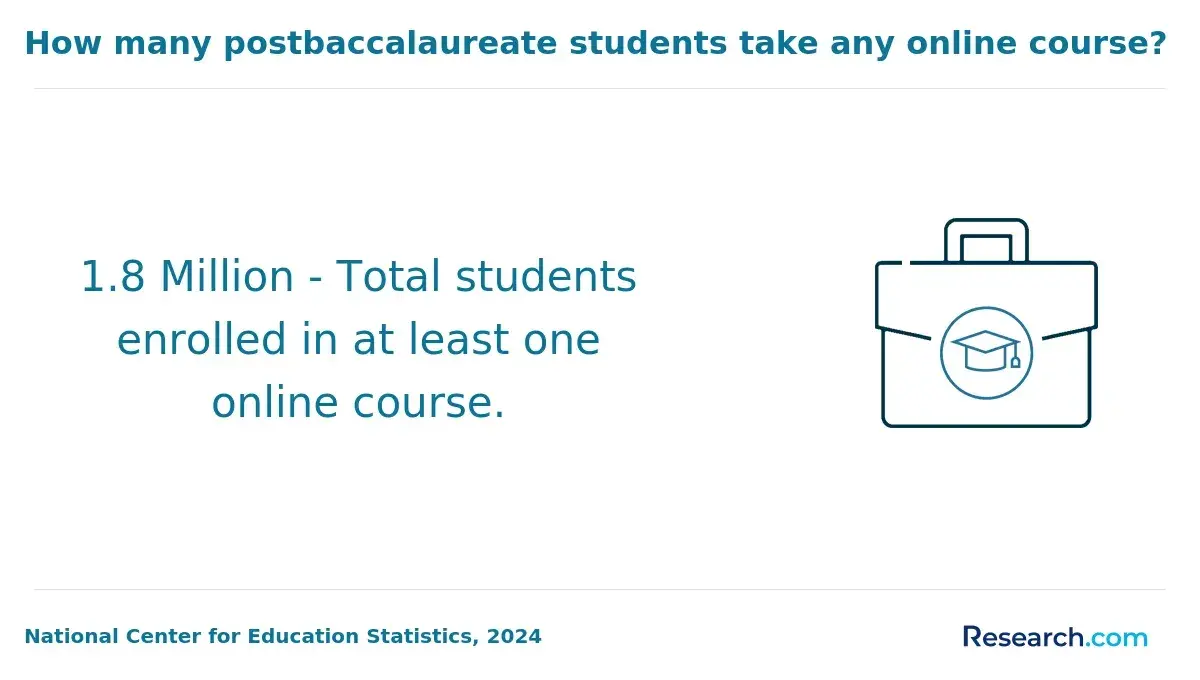
Before the pandemic, about 45% of U.S. college students had already taken at least one online course, showing that online and blended formats were already becoming a standard part of higher education. In applied behavior analysis, the format matters because students are preparing for work that often involves observation, documentation, collaboration, and ethical decision-making in real service settings.
Hybrid Programs
- Delivery format: Students complete part of the curriculum online and attend scheduled campus sessions, intensives, labs, seminars, or other in-person activities.
- Structure: Hybrid programs usually provide more built-in routine because students must be present at specific times for some learning experiences.
- Interaction: Students receive more face-to-face access to instructors and peers, which can make discussions, demonstrations, and feedback feel more immediate.
- Best fit: This format often works well for students who want flexibility but still learn better with periodic in-person accountability and guided practice.
- Trade-off: Students must plan around commuting, campus schedules, and possible location requirements.
Fully Online Programs
- Delivery format: Students complete lectures, readings, assignments, discussions, quizzes, and exams through online platforms.
- Structure: Programs may be asynchronous, synchronous, or a combination of both, but they do not require regular campus attendance.
- Interaction: Students communicate through discussion boards, email, video meetings, chat tools, and virtual group projects.
- Best fit: This format often suits working adults, parents, military-connected students, rural students, and learners who cannot reliably travel to campus.
- Trade-off: Students must be comfortable managing deadlines, technology, and communication without the natural routine of in-person classes.
Students who already know they may continue into certification-oriented study should also compare undergraduate preparation with future bcba courses, since supervised fieldwork, graduate coursework, and credentialing requirements may depend on later program choices. For those considering broader academic pathways after graduation, exploring short masters programs can provide additional context for planning beyond the bachelor’s degree.
How Does a Hybrid vs Fully Online Applied Behavior Analysis Bachelor's Degree Program Work?
Hybrid and fully online applied behavior analysis bachelor’s programs usually follow the same broad academic sequence: general education requirements, major coursework, electives, and, when included, field-based or experiential learning. The difference is not necessarily what students study, but how the program organizes instruction, participation, assessment, and support.
With approximately 45% of U.S. higher education students now enrolled in at least one online course, many institutions have built stronger systems for remote learning. Still, students should look closely at whether a program is mostly self-paced, highly scheduled, or somewhere in between.
Hybrid Programs
- Students access readings, lecture materials, quizzes, and assignments through a learning management system.
- They attend required in-person meetings, which may happen weekly, several times per term, during weekend intensives, or at designated points in the program.
- Face-to-face meetings may be used for case discussions, role-play, research activities, data practice, presentations, or collaborative learning.
- Students communicate with instructors through both digital channels and live classroom contact.
- The schedule combines fixed attendance requirements with flexible online work, so students need to plan around both.
Fully Online Programs
- Students complete all academic coursework through online platforms, including lectures, readings, assessments, and discussion activities.
- Courses may include live video sessions, recorded lectures, discussion boards, virtual office hours, and group projects.
- Some classes are asynchronous, allowing students to complete weekly modules by stated deadlines; others require live attendance at set times.
- Communication happens primarily through email, messaging tools, video conferencing, and instructor feedback on assignments.
- If the program includes fieldwork, internship, or practicum expectations, students typically arrange approved experiences near their local area rather than on campus.
What to Ask Before Enrolling
- Are online classes asynchronous, synchronous, or both?
- How often are campus visits required in the hybrid format?
- Are field experiences included, optional, or required?
- Who helps students locate approved local placements?
- What technology, webcam, testing, or proctoring requirements apply?
- How quickly do instructors respond to questions in online courses?
The best format is the one whose delivery model matches how you realistically study. Students comparing digital learning in adjacent fields may also find it useful to review an online library science degree to understand how different disciplines structure online coursework.
Are Admission Requirements Different for Hybrid and Fully Online Applied Behavior Analysis Bachelor's Degrees?
Admission requirements are usually similar for hybrid and fully online applied behavior analysis bachelor’s degrees. Most programs ask for a high school diploma or equivalent, transcripts, an application form, and any institution-specific materials. Transfer students may also need college transcripts and course evaluations.
The differences usually appear in logistics rather than academic standards. Hybrid programs may need applicants to confirm they can attend campus activities, while fully online programs place more emphasis on technology readiness and remote participation.
- Academic qualifications: Both formats commonly require evidence of high school completion or equivalent preparation. Some hybrid programs may require certain prerequisites to be completed in person, especially if the institution connects them to campus labs or local experiences. Fully online options more often allow prerequisite coursework to be completed remotely.
- Technical requirements: Fully online students need reliable internet access, a suitable computer, webcam or audio capability when required, and the ability to use learning platforms. Hybrid students also use online systems, but they may rely more on campus resources for some activities.
- Geographic expectations: Hybrid programs may expect students to live within commuting distance or travel to campus at specific times. Fully online programs generally remove regular campus attendance, although students should still confirm whether any orientation, exam, internship, or practicum requirement has a location component.
- Application materials: Some hybrid programs may request proof that students can meet in-person attendance expectations. Fully online programs may ask applicants to complete readiness surveys, technology checks, or virtual orientations.
- Interviews: If interviews are required, hybrid programs may offer or prefer in-person meetings, while fully online programs usually conduct them by video or phone.
When asked about her experience navigating the admissions process for a fully online applied behavior analysis bachelor’s degree, one student said that managing the technical requirements felt stressful at first, but clear virtual communication made the process easier. “I appreciated that every step, from submitting transcripts to scheduling virtual interviews, was accessible without having to leave home,” she noted. She also found the lack of residency restrictions beneficial because it allowed her to pursue the degree from another state.
Is the Learning Experience Better in Hybrid vs Online Applied Behavior Analysis Bachelor's Degrees?
Neither format is automatically better. A hybrid program may offer a stronger experience for students who learn through live discussion, modeling, and direct feedback. A fully online program may be better for students who need control over their schedule and can stay engaged without in-person class meetings.
Where Hybrid Programs Can Be Stronger
- Immediate feedback: Students can ask questions during live sessions and receive clarification in real time.
- Peer connection: Regular campus interaction can make it easier to build study groups and professional relationships.
- Applied learning: In-person meetings may support role-play, demonstrations, data exercises, and guided practice.
- Routine: Scheduled attendance can help students maintain momentum and reduce procrastination.
- Campus access: Students may use libraries, advising, counseling, tutoring, labs, and faculty office hours more naturally.
Where Fully Online Programs Can Be Stronger
- Access: Students can enroll without relocating or commuting, which is especially useful for those in rural areas or with demanding schedules.
- Reviewable materials: Recorded lectures and digital resources can be paused, replayed, and revisited before assignments or exams.
- Flexible study rhythm: Students can often complete work during evenings, weekends, or other available blocks.
- Broader participation: Online discussions may give quieter students more time to reflect before contributing.
- Continuity: Students who move or travel may be able to continue progressing without interrupting enrollment.
The quality of the learning experience depends heavily on course design. A well-run online program should include regular instructor presence, meaningful feedback, accessible advising, clear rubrics, and opportunities to apply concepts. A well-run hybrid program should use in-person time for activities that truly benefit from live interaction, not simply require campus attendance for work that could have been completed online.
Which Is More Flexible: Hybrid or Fully Online Applied Behavior Analysis Bachelor's Degree?
A fully online applied behavior analysis bachelor’s degree is usually more flexible because students do not need to travel to campus for regular class sessions. Hybrid programs offer some flexibility, but mandatory in-person requirements make them less adaptable for students with unpredictable work schedules, caregiving duties, transportation barriers, or long commutes.
A 2023 survey from the Online Learning Consortium found that 85% of online students select this format primarily for its flexible nature. That flexibility can be valuable, but it does not mean fully online programs are effortless or completely self-paced. Students still have deadlines, participation requirements, exams, group work, and possibly scheduled live sessions.
Flexibility by Program Type
| Factor | Hybrid Bachelor’s Degree | Fully Online Bachelor’s Degree |
| Campus attendance | Required at scheduled times | Usually not required for coursework |
| Weekly schedule | Partly fixed, partly flexible | Often more flexible, depending on live sessions |
| Commuting | May be required | Generally not required |
| Instructor access | Online and in person | Online through email, video, and course tools |
| Best for | Students who want structure and face-to-face learning | Students who need maximum location and schedule flexibility |
Students who need maximum flexibility should ask whether an online program is asynchronous or requires live attendance. A fully online program with frequent mandatory evening sessions may be less flexible than it first appears. Students comparing other flexible online pathways can also review masters in social work online programs for examples of how distance education is structured in service-focused fields.
What Is the Workload for Hybrid vs Fully Online Applied Behavior Analysis Bachelor's Degrees?
The workload is often comparable because both formats must cover bachelor’s-level academic expectations. The difference is how the workload feels. Hybrid students must balance online assignments with scheduled in-person attendance, while fully online students must create their own structure and stay consistent without campus-based reminders.
A 2022 Online Learning Consortium report found that 68% of online students identified time management as their primary challenge. That challenge is especially relevant in applied behavior analysis coursework, where students may need to read research, complete data-based assignments, analyze behavior scenarios, participate in discussions, and prepare written work.
Hybrid Workload
- Students spend time attending campus sessions in addition to completing online assignments.
- Commuting, parking, and preparation can add hidden time costs.
- Scheduled class meetings can help students maintain a study routine.
- In-person discussions may make difficult concepts easier to clarify quickly.
- Group work may be easier to coordinate when classmates meet regularly.
Fully Online Workload
- Students complete lectures, readings, quizzes, discussions, and projects through digital platforms.
- Asynchronous courses allow more control over study time but require stronger self-management.
- Students may spend more time writing discussion posts, emails, and project updates because communication happens digitally.
- Recorded lectures and online resources can help with review, but students must avoid falling behind.
- Group projects may require extra coordination across time zones or work schedules.
For either format, students should expect the workload to increase in upper-division courses as assignments become more applied, research-based, and case-oriented. A practical way to prepare is to block weekly study time before the term begins rather than waiting to see how busy the first few weeks feel.
How Does Tuition Compare for Hybrid vs Online Applied Behavior Analysis Bachelor's Degrees?
Tuition comparisons are not always straightforward. A hybrid program may have a lower per-credit rate but require commuting, parking, campus fees, and schedule adjustments. A fully online program may cost more per credit but reduce transportation and relocation expenses. Students should compare total cost of attendance, not just tuition.
A 2023 national survey found that fully online programs often charge per-credit tuition rates 10-15% higher than hybrid options, though this can differ significantly by institution. Institutional pricing policies, residency rules, technology fees, course loads, transfer credits, and financial aid eligibility can all change the final amount a student pays.
- Per-credit tuition: Hybrid programs may offer lower per-credit pricing in some cases, especially when tied to in-state or campus-based rates. Fully online programs may use a separate online tuition structure.
- Technology fees: Fully online students may pay fees for learning platforms, digital support, proctoring, or online course delivery.
- Campus fees: Hybrid students may pay activity, facility, transportation, parking, or student service fees connected to campus access.
- Residency rules: Hybrid programs may distinguish between in-state and out-of-state tuition. Some online programs use different pricing models, so students should confirm the exact policy.
- Travel and time costs: Hybrid students should account for fuel, transit, parking, childcare, missed work hours, and commuting time.
- Payment timing: Online programs may use accelerated terms or flexible payment schedules, while hybrid programs may follow standard semester billing.
When asked about tuition during his hybrid applied behavior analysis bachelor’s program, one graduate said the mix of in-state tuition and campus fees was confusing at first but eventually became predictable. “I appreciated having some classes on campus because the tuition was lower per credit, but I had to plan carefully for the additional campus fees,” he said.
Before enrolling, students should request a written cost estimate that includes tuition, mandatory fees, technology charges, books, materials, travel, and any field placement expenses. They should also confirm whether the program is eligible for the types of financial aid they intend to use.
Do Employers Prefer Hybrid or Fully Online Applied Behavior Analysis Bachelor's Degrees?
Most employers care less about whether the degree was hybrid or fully online and more about whether the institution is legitimate, the program is academically rigorous, and the graduate can demonstrate relevant skills. In applied behavior analysis roles, employers may pay close attention to experience with data collection, behavior support, ethical practice, communication, and work with clients or teams.
A 2023 survey by the National Association of Colleges and Employers found that approximately 75% of employers now view online degrees as comparable to traditional in-person degrees. That acceptance has grown as online learning and remote collaboration have become more common, but students should still evaluate program quality carefully.
- Accreditation and institutional reputation: Employers are more likely to trust degrees from properly accredited institutions with clear academic standards.
- Practical preparation: Hybrid programs may be viewed favorably when they include meaningful in-person practice, labs, or field-based learning.
- Evidence of applied skills: Fully online graduates can be competitive when they complete strong projects, local field experiences, internships, or work-based learning.
- Communication ability: Employers value graduates who can write clearly, document behavior data accurately, collaborate with families and teams, and explain intervention plans professionally.
- Credential alignment: Students planning careers that require certification, graduate education, or supervised experience should verify that the bachelor’s program supports the next step, even if it does not by itself qualify them for licensure or certification.
- Interview performance: Graduates should be ready to discuss what they learned, how they applied it, and how they handled real or simulated behavior-related scenarios.
Students worried about employer perception should focus on outcomes they can document: relevant coursework, supervised or practical experiences, strong references, research or capstone projects, and clear knowledge of ethical practice. Those comparing online education in related behavioral health fields may also find an online master in clinical psychology useful for understanding how employers and graduate programs evaluate online credentials.
Who Should Choose a Hybrid vs Fully Online Applied Behavior Analysis Bachelor's Degree?
The right choice depends on your schedule, learning style, location, support system, and career goals. A hybrid program is often better for students who want structure and in-person engagement. A fully online program is often better for students who need maximum flexibility and can stay organized independently.
Choose a Hybrid Program If You:
- Live close enough to campus to attend required sessions without major disruption.
- Learn best through face-to-face discussion, demonstration, and immediate feedback.
- Want more direct access to faculty, classmates, tutoring, and campus services.
- Prefer a fixed weekly or term-based schedule to stay accountable.
- Value in-person group activities, labs, presentations, or applied exercises.
- Can manage commuting, childcare, transportation, or work schedule adjustments when required.
Choose a Fully Online Program If You:
- Work full time, care for family members, relocate often, or cannot reliably commute.
- Need to study during evenings, weekends, or nontraditional hours.
- Are comfortable using digital platforms, video meetings, online libraries, and discussion boards.
- Can create your own weekly study routine and meet deadlines without in-person reminders.
- Live far from a campus that offers applied behavior analysis coursework.
- Want access to programs outside your immediate region.
A common mistake is choosing the most convenient format without considering learning support. If you struggle with procrastination, a fully online program may require more planning than expected. If you have an unpredictable schedule, a hybrid program’s campus requirements may become difficult even if the coursework is appealing.
Students exploring broader academic planning can compare how online programs affect career direction by reviewing online interdisciplinary studies degree career outcomes.
How Can I Succeed in a Hybrid vs Fully Online Applied Behavior Analysis Bachelor's Degree Program?
Success in either format requires consistency, communication, and early planning. Applied behavior analysis coursework often asks students to connect theory with observable behavior, data, ethics, and intervention decisions, so passive reading is rarely enough. Students need a system for studying, practicing, asking questions, and staying current with assignments.
Strategies for Hybrid Students
- Use campus time intentionally: Ask questions, attend office hours, participate in discussions, and clarify difficult concepts while instructors are available in person.
- Prepare before in-person sessions: Complete readings and online modules early so live meetings can be used for deeper practice rather than basic review.
- Plan for commuting time: Add travel, parking, meals, and transition time to your weekly calendar so campus days do not crowd out assignments.
- Build peer connections: Use in-person meetings to form study groups, share resources, and practice explaining concepts.
- Keep one master calendar: Track online deadlines and campus attendance requirements in the same place to avoid conflicts.
Strategies for Fully Online Students
- Create a weekly routine: Set fixed study blocks even if the course is asynchronous. Flexibility works best when it is planned.
- Log in frequently: Check announcements, discussion boards, grades, and messages several times a week.
- Communicate early: Contact instructors before small problems become major delays, especially if technology, work, or family issues affect deadlines.
- Use digital organization tools: Calendars, reminders, file folders, and task lists help replace the structure of a physical classroom.
- Stay visible: Participate meaningfully in discussions, attend virtual office hours, and contribute to group work so instructors and peers know you are engaged.
Strategies for Both Formats
- Review feedback carefully and apply it to later assignments.
- Practice connecting course concepts to real behavior examples.
- Keep copies of strong projects, papers, or presentations for future job or graduate school applications.
- Use advising early to confirm degree progress, transfer credits, and future credential goals.
- Protect study time as seriously as work shifts or class meetings.
What Graduates Say About Hybrid vs Fully Online Applied Behavior Analysis Bachelor's Degree Programs
- Eddie: "I chose a fully online applied behavior analysis program because I needed the flexibility to work part-time and manage family responsibilities. The platform was easy to navigate, and the instructors were incredibly supportive, which made the experience feel personalized despite being virtual. Completing this program has opened doors for me to advance in my career while continuing to balance my personal life."
- Sage: "Opting for a hybrid applied behavior analysis bachelor's degree was a game-changer for me. The blend of in-person labs and online coursework helped me grasp complex concepts more thoroughly and stay engaged throughout the program. This approach prepared me exceptionally well for real-world challenges in my professional role, making me a confident and competent practitioner."
- John: "As someone returning to education after years in the workforce, the fully online applied behavior analysis program offered the chance to learn without relocating or interrupting my job. Although it required strong self-discipline to keep up with deadlines, the convenience and relevance of the coursework directly enhanced my skills and made a measurable difference in my clinical practice. It was an efficient path to achieve my career goals."
Other Things You Should Know About Applied Behavior Analysis Degrees
In 2027, both hybrid and fully online Applied Behavior Analysis bachelor's degree programs are designed to meet industry standards for certification. They typically align with the Behavior Analyst Certification Board's criteria, ensuring students receive the necessary training and coursework required for certification.
Employers generally recognize both hybrid and fully online degrees equally, as long as the degree is accredited and meets certification requirements. The credibility of the institution and the program's alignment with BACB standards tend to matter more than delivery format. Graduates from both formats can be competitive in the job market, particularly if they gain practical experience alongside their studies.
Hybrid programs may offer more direct access to on-campus resources like advising, tutoring, and counseling due to scheduled in-person visits. Fully online programs typically provide virtual support services such as online tutoring, career counseling, and technical assistance. The quality of these services varies by institution, so prospective students should evaluate available support when choosing their format.
Fully online ABA programs often require a reliable computer, stable internet connection, and sometimes specific software for virtual classes and assignments. Hybrid students need these as well for online components but also must be able to attend in-person sessions on campus. Both formats may require familiarity with learning management systems, but fully online students rely more heavily on technology for their entire academic experience.
References
- Applied Behavior Analysis Master's Program Tuition https://www.collegetuitioncompare.com/graduate/applied-behavior-analysis
- Top 30 ABA Programs in the US 2024 https://www.actionbehavior.com/resource/blog/top-30-aba-programs-in-the-us-2024
- Top Online Bachelor's in Behavior Analysis https://www.appliedbehavioranalysisedu.org/bachelors-in-behavior-analysis-online/
- A Comprehensive Guide to ABA Courses Online: Unlocking the Potential of Applied Behavior Analysis https://outlet.beddinginn.com/favorite-finds/a-comprehensive-guide-to-aba-courses-online-unlocking-the-potential-of-applied-behavior-analysis/amp/
- Applied Behavior Analysis Degrees Online and On Campus https://www.thechicagoschool.edu/programs/behavioral-sciences/applied-behavior-analysis/
- Free Online Courses — Certificate & Lifetime Access | Elevify https://www.elevify.com/en-zw/courses/health-and-medicine/psychology/curso-de-metodo-aba-b8710
- How does an e-learning bachelor’s in psychology compare to traditional on-campus programs? https://m.umu.com/ask/q11122301573854363686
- Outside the Clinic: A Guide to Behavior-Based Degrees https://www.abatechnologies.com/blog/outside-the-clinic-a-guide-to-behavior-based-degrees
- Pros and Cons of Online ABA Courses and Certifications | Links https://linksaba.com/pros-and-cons-of-online-aba-courses-and-certifications/