2027 Online Applied Behavior Analysis Bachelor's Degree Programs With No SAT or ACT Requirements

Co-Founder and Chief Data Scientist
Choosing an online applied behavior analysis bachelor's degree without SAT or ACT requirements is often less about avoiding a test and more about finding an admissions process that recognizes your current readiness. Many applicants to these programs are working adults, transfer students, caregivers, or career changers whose high school test record is unavailable, outdated, or not a useful measure of their ability to succeed in college.
Test-optional and test-free policies can make ABA-related bachelor's programs more accessible, but they do not remove the need to prove academic preparation, motivation, and fit for the field. According to recent surveys, over 40% of online applied behavior analysis programs have adopted test-optional policies to increase access and diversity. That shift gives applicants more pathways, but it also makes it important to understand what schools review instead of SAT or ACT scores.
This guide explains who these programs are best for, how test-optional and test-free policies differ, what admissions materials usually matter most, how GPA is reviewed, and how to strengthen an application when standardized test scores are not part of the process.
Key Benefits of Online Applied Behavior Analysis Bachelor's Degree Programs With No SAT or ACT
- Online applied behavior analysis bachelor's degree programs without SAT or ACT requirements enhance accessibility for diverse applicants, including adult learners and those from lower socioeconomic backgrounds.
- Flexible course schedules accommodate working students, enabling them to balance career, family, and education effectively in a fully online environment.
- The streamlined admissions process reduces barriers and processing time, increasing enrollment rates for qualified candidates who may lack standardized test scores.
Who Should Consider an Online Applied Behavior Analysis Bachelor's Degree With No SAT or ACT?
An online applied behavior analysis bachelor's degree with no SAT or ACT requirement is a strong option for applicants who can show readiness through coursework, work history, service experience, or a clear academic plan rather than standardized test scores. Approximately 70% of U.S. colleges and universities have embraced test-optional policies, reflecting a broader shift toward admissions models that consider more than a single exam result.
These programs may be especially appropriate for students who want to study behavior, learning, intervention strategies, and human services while needing an admissions process that fits adult life and online learning.
- Working adults: Applicants balancing employment and school may not have time to prepare for standardized tests. A no-SAT or no-ACT pathway lets them focus on transcripts, professional experience, and career goals.
- Career changers: People moving into behavioral health, education, autism services, or human services can use prior work experience to show maturity, communication skills, and commitment to the field.
- Returning students: Students who have been out of school for years may find that old test scores no longer represent their academic potential. Test-optional admissions can place more weight on recent coursework or life experience.
- Transfer students: Applicants with prior college credits can often demonstrate readiness through completed classes instead of first-year admissions exams.
- Caregivers and students with scheduling constraints: Online programs without testing requirements can reduce logistical barriers for students managing family, transportation, health, or work responsibilities.
- Students with strong non-test credentials: Volunteer work, paraprofessional experience, childcare experience, tutoring, special education support, or entry-level behavioral health roles can strengthen an application when framed clearly.
These programs are not only for students who struggled with testing. They are also useful for applicants who want admissions committees to evaluate the full picture: academic history, motivation, discipline, and readiness for online study. If you are comparing how different online programs evaluate adult learners, reviewing admissions approaches in affordable MBA programs can offer a useful contrast across fields.
What Is the Difference Between Test-Optional and Test-Free Online Applied Behavior Analysis Bachelor's Degrees?
Test-optional and test-free do not mean the same thing. In an online applied behavior analysis bachelor's degree program, the difference affects whether SAT or ACT scores can help, hurt, or simply have no role in your application. Institutions adopting test-free policies have reported nearly a 20% rise in first-year enrollments, highlighting how removing testing barriers can expand access for students who have historically been underserved by standardized testing.
Test-optional programs
In a test-optional program, you decide whether to submit SAT or ACT scores. If your scores are strong and support the rest of your application, submitting them may help. If your scores are weak, outdated, or inconsistent with your current ability, you can usually leave them out without being automatically penalized.
- Scores are accepted but not required.
- Admissions review usually includes transcripts, essays, recommendations, and relevant experience.
- Submitting scores may be useful if they strengthen an otherwise borderline application.
- Applicants should confirm whether scores are also optional for scholarships, honors programs, or specific admissions tracks.
Test-free programs
In a test-free program, SAT and ACT scores are not considered at all. Even if you have strong scores, the school will base the decision on other materials. This can create a clearer process for applicants who want to be evaluated without standardized testing.
- Scores are not accepted or reviewed.
- Admissions decisions rely on academic records, written materials, recommendations, and other evidence of readiness.
- The policy can benefit students whose strengths are better shown through experience, grades, or recent coursework.
- Applicants should invest extra effort in the parts of the application that replace test scores.
How to choose between them
If you have strong SAT or ACT scores, a test-optional program gives you the choice to include them. If you do not want standardized testing involved at all, a test-free program offers the cleanest admissions path. Either way, the absence of a testing requirement does not mean the program has no standards; it means the school is using different evidence to judge college readiness.
Students comparing long-term value should also look beyond admissions and consider employment paths, graduate school expectations, and field requirements. Broader comparisons of the most lucrative majors can provide helpful context, though ABA-focused career planning should also account for certification, supervised experience, and employer expectations.
What Are the Admission Requirements for an Online Applied Behavior Analysis Bachelor's Degree Without SAT or ACT?
Admissions requirements vary by school, but online applied behavior analysis bachelor's programs without SAT or ACT requirements usually rely on a holistic review. With over 60% of U.S. colleges adopting test-optional policies in 2023, many institutions now place more emphasis on academic history, writing ability, motivation, and evidence that the applicant can succeed in an online format.
Common requirements include the following:
- Official transcripts: Schools typically require high school transcripts, GED documentation, and any prior college transcripts. Admissions teams look for completed coursework, grade trends, and evidence of readiness for college-level writing, reading, and quantitative work.
- Minimum education credential: Applicants usually need proof of high school completion or an equivalent credential. Transfer applicants may need to document all previous institutions attended.
- Personal statement or admissions essay: This is often the most important non-transcript component. A strong essay explains why you want to study applied behavior analysis, what experiences shaped that interest, and how the degree supports your goals.
- Letters of recommendation: Some programs ask for recommendations from teachers, employers, supervisors, mentors, or community leaders. The best letters speak directly to reliability, communication, empathy, persistence, and readiness for college work.
- Resume or experience summary: Work, volunteer, or caregiving experience may matter, especially if it involves children, individuals with disabilities, education, social services, or behavioral support.
- Proof of online learning readiness: Some schools may require orientation modules, placement assessments, technology checks, or preparatory coursework to confirm that students can manage an online program.
One graduate of an online applied behavior analysis bachelor's degree program without SAT or ACT requirements described the process as reassuring but not effortless. The applicant appreciated that previous college work mattered more than an old test score, but also noted that writing a thoughtful essay and requesting strong recommendations required planning. That is the key lesson: when test scores are removed, the rest of the application must carry more weight.
Do Online Applied Behavior Analysis Bachelor's Degrees Require a Minimum GPA?
Some online applied behavior analysis bachelor's degree programs require a minimum GPA, while others use GPA as one part of a broader review. Approximately 60% of test-optional programs emphasize a comprehensive review of academic history rather than relying solely on GPA. This means a lower GPA may not automatically disqualify an applicant, but it does need to be explained or balanced by stronger evidence elsewhere.
How schools may review GPA
- Recent academic performance: A school may give more weight to recent college courses than to older high school grades, especially for returning adults and transfer students.
- Relevant coursework: Strong grades in psychology, education, social science, biology, statistics, writing, or human services can help show preparation for ABA-related study.
- Grade trends: An upward trend can be more persuasive than a flat GPA number. Admissions reviewers often want to see whether the applicant has become more consistent over time.
- Context: Work demands, caregiving responsibilities, military service, illness, or other disruptions may help explain past academic difficulty if addressed professionally.
- Conditional admission: Some schools may admit students conditionally, require a probationary period, or recommend support courses for applicants who do not meet preferred GPA standards.
What to do if your GPA is below the preferred range
Do not ignore the issue. Use the application to show what has changed and why you are prepared now. A brief, accountable explanation can help, but it should not sound like an excuse. Pair it with concrete evidence: recent successful coursework, supervisor recommendations, relevant work experience, improved study habits, or a clear plan for managing online classes.
If your main priority is online study but you are still comparing academic fields, you can also review alternatives such as an online video game design degree to understand how admissions flexibility differs across programs.
Is It Easier to Get Into an Online Applied Behavior Analysis Bachelor's Degree Without SAT or ACT?
It can be easier to apply to an online applied behavior analysis bachelor's degree without SAT or ACT requirements, but it is not always easier to get admitted. Removing standardized tests eliminates one barrier, especially for students who did not test recently or whose scores do not reflect their current ability. However, schools still need evidence that applicants can handle college-level coursework and the demands of online learning.
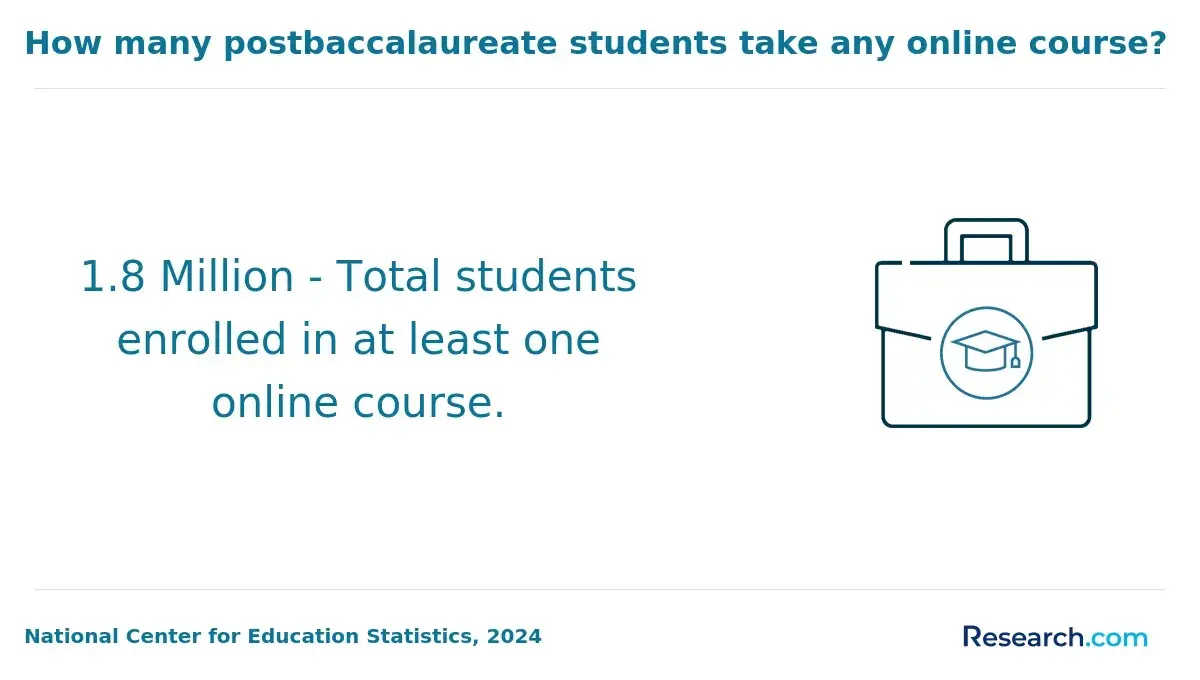
Data from the National Center for Education Statistics indicates that nearly 40% of online programs maintain relatively open admissions policies, yet admissions standards still vary by institution. Some schools have broad access missions, while others review applicants more selectively based on transcripts, essays, recommendations, and experience.
Why no-test admissions may feel easier
- You do not need to schedule, pay for, or prepare for a standardized exam.
- You can focus on current strengths instead of older test performance.
- Transfer credits, work experience, and personal motivation may receive more attention.
Why the process can still be competitive
- Programs may expect strong writing in the personal statement.
- Weak or incomplete transcripts can still raise concerns.
- Recommendations and experience may matter more when test scores are absent.
- Some applicants underestimate the discipline required for online coursework.
A current student in an online applied behavior analysis bachelor's program without SAT or ACT requirements explained that the missing test requirement reduced stress but did not make the application automatic. The school wanted to understand her academic history, hands-on experience, and reasons for entering the field. Her strongest materials were a focused personal statement and references that could speak to her work with people in support settings.
Which Online Applied Behavior Analysis Bachelor's Degree Programs Do Not Require SAT or ACT?
No-SAT and no-ACT policies are common across many online bachelor's programs, including programs connected to health, education, psychology, and human services. Data shows that over 70% of online degrees in health and human services have moved toward more flexible testing requirements, which can make applied behavior analysis pathways more accessible for adult learners, transfer students, and applicants with relevant experience.
When comparing programs, do not look only for the phrase “no SAT or ACT.” Review the full admissions page to confirm whether the policy is test-optional, test-free, or limited to certain applicant types. For example, a school may waive tests for transfer students with prior college credits but still request them from some first-year applicants.
Common ABA-related focus areas
- Child and adolescent development: Coursework may examine behavioral growth, developmental milestones, and intervention strategies for children and teens.
- Autism spectrum disorders: Students may study evidence-based supports, communication needs, behavior plans, and family-centered approaches for individuals with autism.
- Organizational behavior management: This focus applies behavioral principles to workplaces, staff performance, training, productivity, and systems improvement.
- Behavioral research methods: Students learn how behavior is measured, tracked, analyzed, and evaluated through data-informed methods.
- Special education applications: This area connects behavioral strategies with classroom support, individualized plans, and collaboration with educators and families.
What to verify before applying
- Whether SAT and ACT scores are optional or not accepted at all.
- Whether the policy applies to first-year students, transfer students, adult learners, or all applicants.
- Whether scholarships or honors admissions still require scores.
- Whether the program includes supervised fieldwork, practicum experiences, or preparation for later graduate study.
- Whether the institution is properly accredited and transparent about transfer credit policies.
Because ABA career paths can depend on future education and credentialing, applicants should also consider how a bachelor's degree fits into longer-term goals rather than choosing only based on admissions convenience.
Breakdown of Private Fully Online Nonprofit Schools

How Do I Apply to an Online Applied Behavior Analysis Bachelor's Degree Without SAT or ACT?
Applying to an online applied behavior analysis bachelor's degree without SAT or ACT requirements is usually completed through the school's online admissions portal. The process is straightforward, but applicants should treat it as a professional submission. Missing documents, vague essays, or rushed materials can delay a decision or weaken an otherwise qualified application.
- Confirm the testing policy: Read the admissions page carefully. Look for language such as “test-optional,” “test-free,” “no SAT/ACT required,” or “scores not considered.” If the policy is unclear, contact admissions before applying.
- Create an applicant account: Register through the school's admissions portal so you can start, save, and track your application.
- Complete the application form: Enter your personal information, education history, residency details, and intended program accurately. Small errors can create processing delays.
- Request transcripts early: Ask high schools, GED providers, and colleges to send official records according to the school's instructions. Transfer students should include every institution attended.
- Prepare your personal statement: Explain why applied behavior analysis interests you, what experiences shaped your decision, and how the degree supports your academic or career goals.
- Choose recommenders carefully: If letters are required, ask people who can describe your reliability, communication skills, judgment, and ability to work with others.
- Upload supporting materials: Add resumes, certificates, training records, or documentation of relevant work or volunteer experience if the program allows supplemental materials.
- Review before submitting: Check spelling, file names, deadlines, required fields, and document formats. Make sure you have not left optional questions blank if they could strengthen your case.
- Track your status: After submission, monitor email and the applicant portal. Respond quickly to requests for missing documents or clarification.
If you are applying to more than one program, create a simple checklist for each school. Admissions policies may look similar at first, but deadlines, transcript rules, recommendation requirements, and transfer credit procedures can differ significantly.
How Can I Improve My Online Applied Behavior Analysis Bachelor's Degree Application Without SAT Scores?
When SAT or ACT scores are not included, the strongest applications make a clear case for readiness. Holistic admissions processes, which evaluate multiple facets of an applicant's background beyond standardized testing, have increased by nearly 25% at U.S. colleges in recent years. That means applicants should be intentional about every remaining part of the file.
- Show academic readiness through transcripts: Highlight strong or improving grades, especially in psychology, education, science, writing, math, statistics, or human services courses.
- Write a specific personal statement: Avoid generic claims such as “I want to help people.” Explain which populations, settings, or behavioral questions interest you and why ABA is the right academic path.
- Connect experience to the field: Include work or volunteer roles involving children, disability services, autism support, tutoring, caregiving, mental health, schools, camps, clinics, or community programs.
- Use recommendations strategically: Ask recommenders who can give examples, not just compliments. A strong letter might describe your patience, ethical judgment, consistency, teamwork, or ability to follow behavior-support procedures.
- Address weaknesses directly: If your grades are uneven, briefly explain what happened and what has changed. Then point to evidence of improved preparation.
- Demonstrate online learning discipline: Mention time management, technology comfort, independent study habits, and your plan for balancing school with work or family responsibilities.
- Submit polished materials: Proofread essays, use professional formatting, and make sure your resume and application tell the same story.
Applicants who are comparing flexible online education pathways may also find it useful to review cost and planning considerations in an online MBA under $35k, even though ABA programs have different academic and career requirements. The broader lesson is the same: affordability, admissions fit, and long-term goals should be evaluated together.
What Mistakes Should I Avoid When Applying Without SAT or ACT?
Applying without SAT or ACT scores can help remove a barrier, but it also means the rest of the application must be complete and persuasive. Nearly 30% of test-optional applications face rejection due to incomplete or inadequate materials, which shows how easily avoidable mistakes can affect admissions outcomes.
- Assuming no test means automatic admission: Schools may still review GPA, transcripts, writing quality, recommendations, and readiness for online study.
- Submitting incomplete materials: Missing transcripts, unsigned forms, absent recommendations, or incorrect uploads can delay or derail an application.
- Writing a generic essay: A vague personal statement does little to explain why you are prepared for applied behavior analysis. Use concrete examples from school, work, volunteering, or personal motivation.
- Ignoring relevant experience: Do not overlook childcare, tutoring, caregiving, paraprofessional work, community service, or behavioral support roles. These can help show fit for the field.
- Failing to explain academic concerns: If your GPA or transcript has weak points, silence can leave admissions reviewers to make assumptions. A concise explanation paired with evidence of improvement is usually stronger.
- Choosing weak recommenders: A title alone does not make a strong letter. Choose people who know your work habits, maturity, communication skills, and reliability.
- Missing program-specific requirements: Some programs require prerequisites, placement steps, technology readiness checks, or transfer credit evaluations even when they do not require tests.
- Not checking accreditation and career alignment: Admissions flexibility should not be the only factor. Make sure the school and program support your academic, transfer, graduate school, or career plans.
Students who plan to continue beyond the bachelor's level should think ahead about graduate education and professional pathways. Reviewing masters degrees that are worth it can help applicants place an ABA-related bachelor's degree within a broader education plan.
Will Not Taking the SAT or ACT Affect My Career After an Online Applied Behavior Analysis Bachelor's Degree?
Not taking the SAT or ACT generally should not affect your career after completing an online applied behavior analysis bachelor's degree. Employers are far more likely to care about your degree, relevant experience, communication skills, ethical judgment, data skills, and ability to work with clients, families, teachers, or clinical teams. A 2023 survey by the National Association of Colleges and Employers found that 84% of hiring managers value internships and demonstrated skills more than standardized testing when selecting candidates.
In applied behavior analysis and related human services fields, career growth depends on what you can do, how well you can document and interpret behavior, and whether you meet employer or credentialing expectations. A bachelor's degree may support roles in behavioral support, education assistance, human services, case support, autism services, or preparation for graduate study, depending on the program and employer.
Students should be careful not to confuse undergraduate admission requirements with professional requirements. A school may not require SAT or ACT scores, but later career steps may involve supervised experience, graduate education, certification exams, or state-specific rules. If your long-term goal includes becoming a Board Certified Behavior Analyst or pursuing related graduate preparation, researching an online bcba pathway can help you understand how bachelor's study may connect to future credential-focused education.
The practical takeaway is simple: employers are unlikely to ask whether you submitted SAT or ACT scores. They are much more likely to ask what you studied, where you gained experience, how you handle challenging situations, and whether you can apply behavioral principles responsibly.
What Graduates Say About Online Applied Behavior Analysis Bachelor's Degree Programs With No SAT or ACT
- : "Choosing an online applied behavior analysis bachelor's degree with no SAT or ACT requirement changed what felt possible for me. I could keep working, focus on my courses, and prove myself through effort and skill instead of an old test score. — Lena"
- : "The no-test admissions policy removed a barrier I had carried since high school. The program still expected serious work, but it gave me a fair chance to show my motivation, experience, and growth as a student. — Avery"
- : "As a full-time professional, I needed a program that respected my schedule and valued my experience. Not having to submit SAT or ACT scores helped me move forward faster, but the real benefit was gaining practical knowledge I could use in my work. — Jodi"
Other Things You Should Know About Applied Behavior Analysis Degrees
Yes, students who complete an online bachelor's degree in Applied Behavior Analysis without submitting SAT or ACT scores can pursue certification, such as the Board Certified Assistant Behavior Analyst (BCaBA) credential. It is important to ensure that the program is accredited and meets the Behavior Analyst Certification Board (BACB) coursework requirements to be eligible for certification exams.
Online Applied Behavior Analysis programs that do not require SAT or ACT scores typically offer flexible scheduling, which benefits working adults. These programs often provide asynchronous coursework, allowing students to balance professional and personal responsibilities while completing their degree.
References
- Applied Behavior Analysis Degrees Online and On Campus https://www.thechicagoschool.edu/programs/behavioral-sciences/applied-behavior-analysis/
- Best Online Behavior Analysis Degrees Updated for 2026 https://www.psychologydegrees.org/programs/behavior-analysis
- Find Online Applied Behavior Analytics ABA Degree Programs https://teach.com/online-ed/psychology-degrees/online-masters-applied-behavior-analysis/
- Undergraduate Academic Information https://catalog.fit.edu/content.php
- Bachelors in Applied Behavior Analysis | Online BA and BS Programs in Applied Behavior Analysis https://www.appliedbehavioranalysisedu.org/bachelors-in-aba/
- Applied Behavior Analysis https://onlinegrad.pepperdine.edu/psychology/online-masters-behavior-analysis/
- Applied Behavior Analysis, B.A. https://www.fit.edu/programs/applied-behavior-analysis-ba/
- Find Test-Optional Colleges — No SAT/ACT Requirement https://www.accreditedschoolsonline.org/online-colleges/no-sat-or-act/
- BA in Applied Behavioral Science | UAGC https://www.uagc.edu/online-degrees/bachelors/applied-behavioral-science
- Top 35 Education Programs for Applied Behavior Analysis (ABA) https://www.actionbehavior.com/resource/blog/top-35-education-programs-applied-behavior-analysis-aba