2027 Accredited Online Applied Behavior Analysis Bachelor's Degree Programs: How to Verify Quality

Co-Founder and Chief Data Scientist
Choosing an online bachelor’s degree in applied behavior analysis is not just a question of convenience or tuition. The bigger decision is whether the program will be recognized by employers, graduate schools, certification bodies, and state licensing boards when it matters. A program may advertise ABA coursework, flexible online classes, or a fast path to graduation, but those claims mean little if the institution or curriculum lacks legitimate accreditation.
This guide is for prospective students comparing online applied behavior analysis bachelor’s programs, especially working adults, transfer students, and career changers who need to protect their time and money. Nearly 40% of prospective students report uncertainty about program legitimacy or effective accreditation, and that confusion can lead to credits that do not transfer, financial aid problems, or a degree that does not support certification goals.
Below, you will learn how accreditation works, which accrediting bodies matter, how to verify a school’s claims, what data to review before enrolling, and which warning signs may indicate a diploma mill or low-value program.
Key Benefits of Knowing How to Verify the Quality of Accredited Online Applied Behavior Analysis Bachelor's Degree Programs
- Verifying accreditation helps students avoid diploma mills that produce invalid degrees, protecting their time and financial investment from fraudulent institutions promising quick credentials.
- Distinguishing programs with recognized credentials ensures degrees meet regional accreditation standards-critical for credit transferability, employer recognition, and future licensure eligibility.
- Identifying poor-value or fraudulent online programs safeguards against substandard education, enabling students to confidently earn a regionally accredited Applied behavior analysis bachelor's degree with real career benefits.
What Accreditation Bodies Are Authorized to Certify Online Applied Behavior Analysis Bachelor's Degree Programs in the United States?
Accreditation is the main quality-control system used in U.S. higher education. For online applied behavior analysis bachelor’s programs, students should look at two levels: the accreditation of the college or university and the field-specific review of the ABA curriculum. Both matter, but they serve different purposes.
Institutional accreditation tells you whether the school as a whole meets recognized standards for academic quality, faculty qualifications, student services, financial stability, and administrative practices. Programmatic review focuses more narrowly on whether the behavior analysis coursework aligns with professional expectations in the field.
- Institutional accreditation: The U.S. Department of Education recognizes institutional accrediting agencies that review colleges and universities, including those offering online applied behavior analysis degrees. The six major regional accreditors commonly associated with four-year institutions are the Higher Learning Commission (HLC), Southern Association of Colleges and Schools Commission on Colleges (SACSCOC), New England Commission of Higher Education (NECHE), Western Senior College and University Commission (WSCUC), Middle States Commission on Higher Education (MSCHE), and Northwest Commission on Colleges and Universities (NWCCU).
- Programmatic accreditation and approval: Applied behavior analysis programs may also be connected to field-specific organizations such as the Association for Behavior Analysis International (ABAI) or the Behavior Analyst Certification Board (BACB). Students should read these claims carefully because institutional accreditation, programmatic accreditation, and verified coursework are not the same thing.
- Credit transfer and financial aid: Institutional accreditation is especially important for transfer credit, federal financial aid eligibility, and recognition by graduate schools. A school without recognized institutional accreditation can create serious barriers even if its website uses professional-sounding language.
- Certification and employment relevance: Program-specific recognition can affect whether a curriculum supports future certification or licensure plans. Requirements vary by credential and state, so students should confirm the current rules directly with the relevant certification body and licensing board before enrolling.
- Best verification source: The U.S. Department of Education's Database of Accredited Postsecondary Institutions and Programs (DAPIP) is an authoritative place to confirm whether a school’s accreditor is recognized. Students should also compare what the school advertises with what appears in official accreditor records.
Students exploring lower-cost or staged education options may also compare transfer-friendly pathways, including a 6 month degree course, before committing to a full bachelor’s program in applied behavior analysis.
How Can Prospective Students Verify Whether an Online Applied Behavior Analysis Bachelor's Program Holds Valid, Current Accreditation?
Do not rely only on an accreditation badge on a university website. Accreditation should be verified through official databases and the accreditor’s own records. This step is especially important for online ABA bachelor’s programs because students may be comparing nonprofit universities, public institutions, private colleges, and career-oriented schools with very different levels of recognition.
A careful verification process can usually be completed in less than an hour and can prevent costly mistakes.
- Find the exact institution name: Use the school’s legal or official name, not only a brand name, campus name, or marketing name. Accreditation records must match the institution that will issue your degree.
- Search DAPIP and CHEA: Check the U.S. Department of Education's Database of Accredited Postsecondary Institutions and Programs (DAPIP) and the Council for Higher Education Accreditation (CHEA) database. Confirm that the accrediting agency is recognized and that the institution appears in the listing.
- Verify directly with the accreditor: Go to the accreditor’s official website and look for its directory of accredited institutions. The school’s accreditation status, dates, and any public notices should match what the school claims.
- Check the scope of accreditation: Confirm whether accreditation applies to the institution generally, the specific campus or online division, and, when relevant, the applied behavior analysis bachelor’s program or coursework.
- Review dates and status: Look for the effective date, next review date, expiration date, probation status, warning status, or show-cause order. Current accreditation is more useful than an expired or pending claim.
- Confirm certification alignment: If your goal involves future certification, licensure, or graduate study, ask the program to identify exactly how its coursework supports those requirements. Then verify that answer with the credentialing or licensing body.
- Contact the accreditor if anything is unclear: If the school’s claim does not match database records, ask the accrediting agency directly before paying an application fee or tuition deposit.
Students comparing affordable behavioral science pathways may find an online psychology degree cheap resource useful as a starting point, but affordability should always be weighed against accreditation, transferability, and career requirements. Students comparing ABA-focused graduate preparation can also review online bcba programs to understand how accreditation and verified coursework become even more important at advanced levels.
What Is the Difference Between Regional and National Accreditation for Online Applied Behavior Analysis Bachelor's Programs, and Which Matters More?
Regional and national accreditation are older but still widely used terms that describe different types of institutional accreditation. The Department of Education no longer officially uses these terms in the same way, but the distinction still affects how colleges, employers, and graduate programs evaluate degrees.
For most students pursuing an online applied behavior analysis bachelor’s degree, accreditation associated with traditional four-year colleges and universities is usually the safer choice. It tends to provide stronger transfer options, broader graduate school recognition, and clearer acceptance by employers.
| Factor | Regional Accreditation | National Accreditation |
| Common institution type | Public universities, private nonprofit colleges, and traditional four-year institutions | Career-focused, vocational, technical, or faith-based institutions |
| Credit transfer | More widely accepted by other colleges and universities | May be harder to transfer into regionally accredited institutions |
| Graduate school admissions | Often preferred or expected by graduate programs | May limit options depending on the graduate school’s policies |
| Employer perception | Generally viewed as a strong baseline for academic credibility | Recognition varies more by employer and field |
| Best fit | Students who may transfer, pursue graduate study, or seek broad professional recognition | Students focused on a specific training path after confirming acceptance by employers and licensing bodies |
The key issue is not the label alone. Students should ask whether the accreditor is recognized, whether the school’s credits will transfer, and whether the degree supports their long-term goals. A lower tuition rate or faster completion timeline can become expensive if credits are rejected later.
One graduate described spending hours comparing accreditation records, licensure expectations, and advisor responses before enrolling. The process felt tedious, but it helped him avoid programs that sounded credible but lacked the recognition he needed. When he later applied for internships and jobs, the program’s verified accreditation made the degree easier to explain and defend.
Are There Programmatic Accreditation Standards Specific to Online Applied Behavior Analysis Bachelor's Degrees That Students Should Look For?
Yes. Students should look for program-level quality markers in addition to institutional accreditation. Institutional accreditation confirms that the college or university is recognized, but it does not automatically prove that the applied behavior analysis curriculum meets professional expectations for behavior analysis practice, certification preparation, or state requirements.
BACB approval: The Behavior Analyst Certification Board (BACB) does not accredit bachelor's degree programs but verifies course sequences that meet essential behavior analyst certification requirements. A program that includes BACB-approved coursework may be better aligned with professional competencies, but students should confirm how the coursework applies to their specific certification goal.
Behavior Analysis Accreditation Board: The Council for Accreditation of Behavior Analysis Programs, also known as the Behavior Analysis Accreditation Board (BAAB), provides specialized accreditation for behavior analysis degrees. This type of review may examine curriculum quality, faculty expertise, student outcomes, and field relevance.
Licensure requirements: State licensure rules can differ from certification rules. A bachelor’s degree may support entry-level roles or prepare students for graduate study, but some behavior analyst credentials require additional education, supervised experience, or exams. Students should check their state board’s current requirements before enrolling.
Employer and licensing board preferences: Employers and licensing authorities may prefer candidates whose education includes recognized behavior analysis coursework or comes from a program with field-specific review. A degree from an accredited institution is important, but it may not be enough by itself for every career path.
What to ask the program: Before applying, request a written explanation of how the curriculum aligns with ABA competencies, certification preparation, supervised experience expectations, and graduate school prerequisites. Vague answers such as “our program prepares you for the field” are not enough.
Students considering future clinical or doctoral pathways may also compare quality signals across related programs, including online PsyD programs, to see how accreditation, outcomes, and licensure alignment shape long-term career options.
How Do Online Applied Behavior Analysis Bachelor's Programs Demonstrate Curriculum Quality and Academic Rigor Comparable to On-Campus Peers?
A credible online applied behavior analysis bachelor’s program should be able to show that its online courses are not a lighter version of an on-campus degree. The strongest programs use the same academic standards, comparable faculty expectations, structured assessments, and documented learning outcomes across delivery formats.
Students should look for evidence, not promises. A school that claims online and campus programs are equivalent should be able to explain how it designs courses, evaluates student learning, and supports online learners.
- Measurable learning outcomes: The program should publish or provide clear outcomes showing what students are expected to know and do by graduation, such as applying behavioral principles, interpreting data, and understanding ethical practice.
- Comparable course requirements: Online students should complete substantial reading, writing, projects, exams, discussions, and applied assignments. If the program has an on-campus counterpart, course titles and requirements should be similar.
- Qualified faculty: Courses should be taught by instructors with appropriate graduate education, behavior analysis expertise, and relevant professional experience. Faculty should be visible in the program catalog or department website.
- Instructional design standards: Strong online courses include organized modules, clear deadlines, regular instructor interaction, meaningful feedback, and assessments tied to learning objectives.
- Academic support: Online learners should have access to advising, tutoring, library resources, technical support, disability services, and career guidance. Flexibility should not mean isolation.
- Outcome data: Retention, graduation, student satisfaction, field placement feedback, and licensure or certification-related outcomes can help students judge whether the program supports completion and career progress.
Prospective students can request sample syllabi, ask whether online courses are developed by faculty or third-party vendors, and speak with current students or alumni when possible. These steps reveal whether the program is academically serious or simply convenient.
One graduate described her online ABA coursework as “immersive and demanding,” especially because assignments required applied analysis rather than memorization. She credited structured assessments, active instructor feedback, and accessible office hours with making the online format feel rigorous and professionally relevant.
What Faculty Credentials and Qualifications Should an Accredited Online Applied Behavior Analysis Bachelor's Program Require?
Faculty quality is one of the clearest indicators of whether an online applied behavior analysis bachelor’s program is serious. Accreditation standards generally require instructors to be academically and professionally qualified for the courses they teach. In ABA, that means students should look for faculty with graduate education in applied behavior analysis, psychology, education, special education, or a closely related field, along with relevant professional experience.
Regional accreditors expect faculty teaching online Applied Behavior Analysis bachelor's programs to have appropriate advanced preparation. Terminal degrees such as a PhD or EdD in applied behavior analysis or related fields can signal research and scholarly expertise. Professional credentials such as the Board Certified Behavior Analyst (BCBA) credential can also be important when courses focus on applied practice.
Faculty quality checklist
- Relevant graduate degrees: Instructors should hold advanced degrees connected to the courses they teach, particularly in behavior analysis, psychology, education, or a related discipline.
- Professional certification: For practice-focused ABA courses, credentials like BCBA can show that faculty understand field expectations beyond theory.
- Applied experience: Faculty with clinical, school-based, organizational, or community behavior analysis experience can connect coursework to real-world settings.
- Scholarly or professional activity: Publications, conference presentations, professional memberships, and continuing education can show that faculty remain active in the field.
- Online teaching skill: Strong subject expertise does not automatically translate into effective online instruction. Look for evidence that faculty are trained or experienced in teaching online learners.
- Availability to students: Programs should provide advising access, office hours, and clear communication expectations. A high-quality online program should not leave students dependent only on prerecorded materials.
Students can verify faculty credentials by reviewing university bios, course catalogs, department pages, LinkedIn profiles, and published work. Admissions staff should also be able to answer how many ABA courses are taught by full-time faculty versus adjunct instructors. A balanced faculty model can work well, but a program that relies heavily on adjuncts without clear student support may offer less continuity and mentorship.
How Are Student Learning Outcomes Measured and Reported in Accredited Online Applied Behavior Analysis Bachelor's Programs?
Student learning outcomes describe what graduates should be able to demonstrate by the end of the program. In an accredited online applied behavior analysis bachelor’s degree, these outcomes should be measurable, assessed regularly, and connected to the curriculum rather than presented as broad marketing claims.
Accreditors expect institutions to show that students are learning what the program promises to teach. For ABA students, that may include understanding behavioral principles, using data to evaluate behavior, recognizing ethical issues, communicating with clients and teams, and applying evidence-based intervention concepts at an appropriate undergraduate level.
- Course-embedded assessments: Exams, research papers, case analyses, and applied projects can show whether students are mastering specific concepts throughout the curriculum.
- Capstone projects: A capstone may require students to integrate theory, data interpretation, ethics, and applied decision-making into a final project.
- Standardized or common assessments: Some programs use shared exams or rubrics across course sections to make sure online students are evaluated consistently.
- Supervised field or internship feedback: When included, evaluations from applied settings can show how well students transfer classroom learning into professional environments.
- Licensure or certification-related outcomes: Where applicable, pass rates and certification-related data can help students understand how graduates perform after completing the program.
- Retention and graduation data: These indicators help show whether students are receiving enough support to continue and complete the degree.
Prospective students should look for outcome data on the program website, in accreditation materials, and through federal tools such as IPEDS. Programs reporting licensure pass rates above 80%, positive internship feedback, and steady graduation rates usually suggest stronger instruction and support. Lower or undisclosed rates do not automatically prove poor quality, but they should prompt follow-up questions.
Good questions to ask include: How often are learning outcomes reviewed? What happens when students do not meet benchmarks? Are online students included in the same outcome reporting as campus students? Can the program share recent graduation, retention, or certification-related results?
What Role Does the U.S. Department of Education Play in Overseeing the Accreditation of Online Applied Behavior Analysis Bachelor's Programs?
The U.S. Department of Education does not accredit online applied behavior analysis bachelor’s programs directly. Instead, it recognizes accrediting agencies that meet federal standards. This recognition matters because accreditation by an ED-recognized agency is tied to Title IV federal financial aid eligibility and provides a baseline signal that the institution is not operating outside the recognized higher education system.
Federal recognition is especially important for online students because distance education creates more room for confusing claims. A school may operate nationally, recruit across state lines, and advertise flexible programs to working adults. ED-recognized accreditation helps students distinguish legitimate institutions from providers with unrecognized or misleading credentials.
- Recognition of accrediting agencies: The Department of Education evaluates whether accreditors have appropriate standards and oversight processes.
- Financial aid connection: Schools accredited by ED-recognized agencies may qualify to participate in Title IV federal financial aid programs, depending on other eligibility requirements.
- NACIQI review: The National Advisory Committee on Institutional Quality and Integrity (NACIQI) reviews accrediting agencies and advises the Secretary of Education.
- Consequences of lost recognition: If an accrediting agency loses ED recognition, institutions under that accreditor may face serious financial aid and legitimacy problems.
- Distance education scrutiny: Recent policy attention has placed more emphasis on online student engagement, learning outcomes, and institutional accountability.
- Limits of federal oversight: ED recognition is necessary for legitimacy, but it does not guarantee that a specific ABA program is the best fit for your certification, licensure, or career goals.
Students should combine Department of Education resources with program-level research. DAPIP can confirm accreditation, IPEDS can provide institutional outcomes, and the College Scorecard can help compare costs, completion, debt, and earnings. Students comparing quality indicators across professional degrees may also find the MBA in operations management resource useful as an example of how program outcomes and accreditation should be weighed together.
How Can Students Use the College Scorecard and IPEDS to Evaluate the Quality of Affordable Online Applied Behavior Analysis Bachelor's Programs?
The College Scorecard and IPEDS are two of the most useful public tools for evaluating affordable online applied behavior analysis bachelor’s programs. They do not replace accreditation verification, but they help students move beyond marketing language and compare schools using federal data.
Use the College Scorecard to review information such as completion, median earnings after graduation, average student debt, and loan repayment rates. When available, field-of-study filters can help students avoid relying only on institution-wide averages that may not reflect outcomes for applied behavior analysis or related programs.
IPEDS provides institutional data that can help students evaluate stability and student support. Retention rates, graduation within 150% of the typical program duration, and outcomes for Pell Grant recipients are especially useful when comparing affordable programs. Strong affordability is most meaningful when students are also completing the degree and seeing credible post-graduation results.
| Metric | Why It Matters | How to Use It |
| Accreditation status | Confirms baseline legitimacy and financial aid eligibility | Verify first through official accreditation databases before comparing cost |
| Retention rate | Shows whether students tend to continue after enrolling | Low retention may signal weak support, poor fit, or affordability problems |
| Graduation within 150% | Shows whether students finish within a reasonable extended timeline | Compare across similar online bachelor’s programs |
| Average student debt | Shows the borrowing burden students may carry after graduation | Compare debt against completion and earnings data, not tuition alone |
| Median earnings after graduation | Helps estimate financial outcomes | Use cautiously, especially if data are not specific to ABA graduates |
| Pell Grant recipient outcomes | Shows how well the institution supports lower-income students | Look for schools where affordability and completion both appear reasonable |
The best approach is to compare several accredited programs side by side. A very low-cost program with weak completion data may be a higher risk than a moderately priced program with stronger support and outcomes. Likewise, a program with attractive earnings data may still be a poor choice if it does not align with your transfer, certification, or licensing goals.
Students asking how much does it cost to become a librarian can see a similar principle at work: degree cost should be judged alongside accreditation, completion likelihood, and career outcomes, not in isolation.
What Are the Warning Signs That an Online Applied Behavior Analysis Bachelor's Program May Be a Diploma Mill or Lack Legitimate Accreditation?
A diploma mill is a provider that sells degrees with little meaningful academic work. In applied behavior analysis, this can be especially damaging because employers, graduate schools, certification bodies, and licensing boards may reject the credential. The result can be lost tuition, nontransferable credits, and delayed career progress.
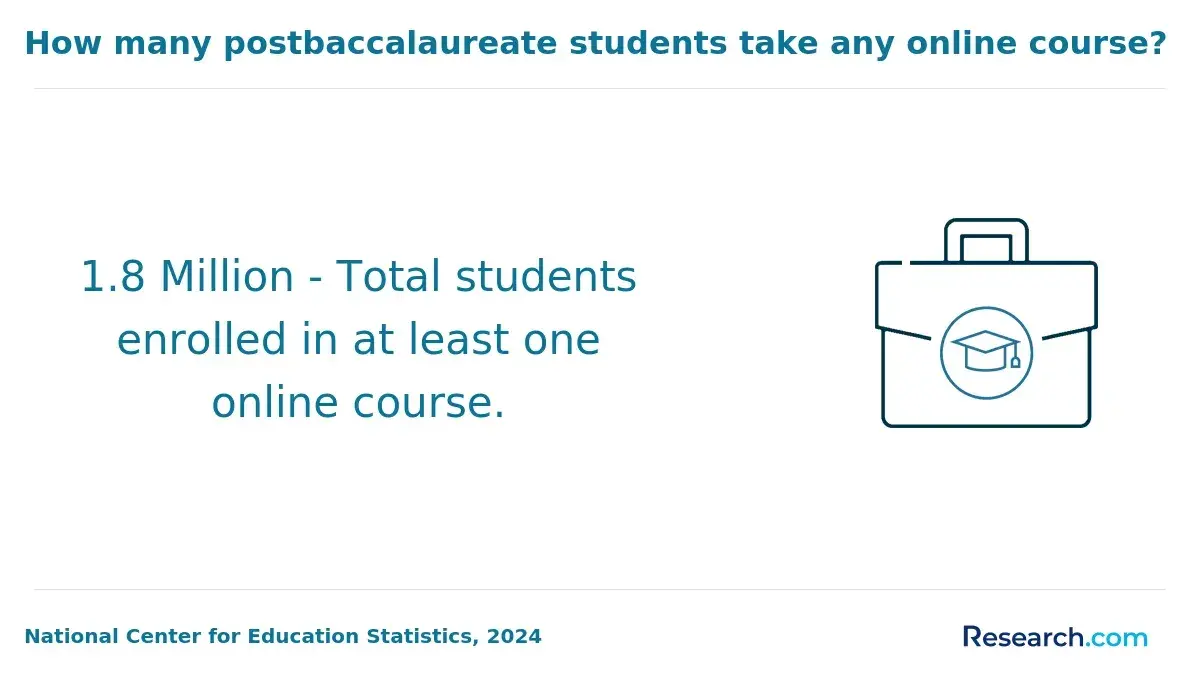
According to the National Center for Education Statistics, about 2% of online degree providers lacked recognized accreditation in 2023. The risk is real enough that every student should verify accreditation before enrolling, especially when a program promises unusually fast completion or uses aggressive recruitment tactics.
- Accreditation from an unrecognized agency: If the accreditor does not appear in CHEA or Department of Education resources, treat the claim as a serious red flag.
- Guaranteed or instant degrees: Legitimate bachelor’s degrees require substantial coursework, assessment, and time. Promises of a degree with little effort are not credible.
- No clear curriculum: A reputable program should publish course requirements, credit totals, general education expectations, and major coursework.
- No faculty transparency: Be cautious if you cannot find faculty names, credentials, department information, or academic leadership.
- High-pressure enrollment tactics: Recruiters who push immediate payment, discourage comparison, or avoid accreditation questions may be prioritizing sales over student fit.
- Unclear transfer or licensure statements: Vague promises such as “widely accepted” or “career-ready” should be backed by written details.
- Prices that seem detached from the degree: Extremely low flat fees for a full bachelor’s degree can indicate that the provider is not delivering a recognized academic program.
- No federal aid eligibility when expected: Not every legitimate program participates in all aid options, but lack of Title IV eligibility should prompt additional questions about accreditation and institutional status.
Before paying tuition, verify the institution in DAPIP, check the accreditor’s own directory, review CHEA resources, and ask admissions for written documentation. If a school avoids direct answers, choose another program.
How Does Accreditation Status Affect Credit Transferability for Students in Online Applied Behavior Analysis Bachelor's Programs?
Accreditation has a major effect on whether credits transfer into or out of an online applied behavior analysis bachelor’s program. Colleges are not required to accept every transfer credit, but credits from recognized, regionally accredited institutions are generally easier to evaluate and more likely to be accepted than credits from nationally accredited or unaccredited schools.
This matters for ABA students because many begin at community colleges, change majors, return to school after a break, or plan to continue into graduate programs. A poor accreditation choice early on can force students to repeat courses, extend time to graduation, or lose eligibility for preferred graduate pathways.
- Community college pathways: Many community colleges are regionally accredited. Students planning to transfer into a four-year online ABA bachelor’s program should confirm that credits will apply to general education, electives, and major requirements.
- Nationally accredited credits: Some credits from nationally accredited institutions may transfer, but acceptance is more limited and depends on the receiving school’s policy.
- Unaccredited coursework: Credits from unaccredited schools are often rejected, even if course titles appear similar.
- Program-specific fit: A course may transfer as an elective but not satisfy an ABA major requirement. Students should ask for a transfer evaluation before enrolling whenever possible.
- Graduate school planning: Students who may pursue a master’s degree, BCBA-related preparation, or other advanced study should choose an undergraduate institution with broad recognition.
- State authorization: Online students should also confirm whether the institution is authorized to serve students in their state, including through applicable State Authorization Reciprocity Agreement (SARA) participation where relevant.
According to the National Student Clearinghouse Research Center, over 40% of students attempt to transfer at least once during their academic careers. That makes transfer planning a practical necessity, not a backup concern. Before enrolling, ask the school for its transfer credit policy, articulation agreements, maximum transfer limits, and whether previous ABA, psychology, education, or human services courses can apply to the major.
What Graduates Say About How to Verify the Quality of Accredited Online Applied Behavior Analysis Bachelor's Degree Programs
- : "I chose the online applied behavior analysis bachelor's degree program after confirming its accreditation because I wanted assurance that my education met industry standards. The cost was surprisingly reasonable compared to other programs, which helped me manage my budget without sacrificing quality. Since graduating, I've noticed a significant boost in job offers—employers clearly value the credibility that comes with an accredited degree. — Eddie"
- : "Reflecting on my experience, the accreditation of the online applied behavior analysis program was the key factor that convinced me to enroll despite many options. The tuition fees were transparent, which made planning feasible alongside my part-time job. Completing this program has greatly enhanced my confidence and opened doors to professional licensing opportunities I had aimed for. — Sage"
- : "As a working professional, I appreciated the flexibility of weekly start dates in my online applied behavior analysis bachelor's degree program, but what really sold me was its verified accreditation—this was crucial for long-term career growth. Although the price was a bit higher than non-accredited alternatives, the investment was worth it to ensure my education was respected in the field. Since earning my degree, I've moved into supervisory roles much faster than I anticipated. — John"
Other Things You Should Know About Applied Behavior Analysis Degrees
Students should inquire about the program's accreditation status, specifically whether it holds regional accreditation and is recognized by the Behavior Analyst Certification Board (BACB) or relevant professional bodies. It is important to ask about faculty qualifications, availability of practicum or fieldwork opportunities, and how the curriculum aligns with BACB coursework requirements for certification. Additionally, understanding how online courses are delivered and supported can reveal the program's commitment to student success.
Only students enrolled in programs with recognized regional or national accreditation are eligible for federal financial aid, including Pell Grants and student loans. Programs lacking proper accreditation disqualify students from accessing these resources, which can significantly increase out-of-pocket costs. Therefore, verifying accreditation quality is critical for financial planning and affordability.
Accredited programs undergo re-evaluations every few years-typically every 5 to 10 years-depending on the accrediting agency's requirements. This process reviews curricular content, faculty qualifications, and student outcomes. If accreditation is revoked, students may face difficulties transferring credits, obtaining licensure, or securing employment, as their credentials might not be recognized by employers or certification boards.
References
- Accredited vs. Credit-Recommended vs. Transfer Policy: What It All Means for Your College Credits https://straighterline.com/blog/transfer-accredited-vs-credit-recommended-vs-transfer-policy-what-it-all-means-for-your-college-credits
- Can You Be a BCBA With a Bachelor's Degree? The Real Requirements - Online ABA Programs https://onlineabaprograms.org/become-a-bcba/bcba-with-a-bachelors/
- Pros and Cons of Online ABA Courses and Certifications | Links https://linksaba.com/pros-and-cons-of-online-aba-courses-and-certifications/
- Diploma Mill Warning Signs and Verification https://www.c4lacademy.com/diploma-mill-warning-signs-and-verification
- Applied Behavior Analysis Graduate Programs https://www.magnetaba.com/blog/applied-behavior-analysis-graduate-programs
- These tips can help you tell if an online degree program is the real deal - and save you money https://abc13.com/post/online-degrees-college-scams-diploma-mills-how-to-contact-bbb/13642986/
- Applied Behavior Analysis MA (Online) Student Outcomes https://www.williamjames.edu/academics/school/applied-behavior-analysis/outcomes-online.html
- Don't Be a Victim! Here's how you Can Identify a Diploma Mill https://www.theamericanacademy.com/blogs/articles/dont-be-a-victim-heres-how-you-can-identify-a-diploma-mill
- Regional vs National Accreditation: What This Means for You https://www.uopeople.edu/blog/regional-vs-national-accreditation-whats-the-difference/
- Applied Behavior Analyst (ABA) Credentialing Criteria - Amromed | Aba Billing Services https://amromed.com/applied-behavior-analyst-aba-credentialing-criteria/