2027 Regional vs National Accreditation for Online Applied Behavior Analysis Bachelor's Degrees

Co-Founder and Chief Data Scientist
Choosing an online applied behavior analysis bachelor's degree is not just a question of tuition, format, or convenience. Accreditation can affect whether your credits transfer, whether graduate schools recognize your degree, how employers evaluate your education, and whether your program keeps future certification or advanced study options open.
The main decision is between regional accreditation and national accreditation. Regional accreditation is usually associated with broader academic recognition, while national accreditation is often tied to career-focused or vocational institutions. Both can signal that a school has passed an external quality review, but they do not always carry the same weight with colleges, employers, financial aid programs, or graduate admissions committees.
This guide explains how regional and national accreditation differ for online applied behavior analysis bachelor's programs, what each type may mean for cost and financial aid, how transfer credits are reviewed, and how to choose the accreditation path that best matches your long-term goals.
Key Benefits of Regional vs National Accreditation for Online Applied Behavior Analysis Bachelor's Degrees
- Regional accreditation offers broader recognition and credibility, often preferred by employers and graduate programs, enhancing long-term career prospects in applied behavior analysis.
- Credits from regionally accredited online applied behavior analysis programs typically transfer more easily, increasing eligibility for advanced degrees and reducing redundant coursework.
- National accreditation may better suit career-focused students seeking immediate certification, while regional accreditation supports diverse educational goals, including research and interdisciplinary opportunities.
What Is the Difference Between Regional and National Accreditation for an Online Applied Behavior Analysis Bachelor's Degree?
Regional and national accreditation are both forms of institutional quality assurance, but they serve different parts of higher education and can lead to different outcomes for students. For an online applied behavior analysis bachelor's degree, the distinction matters because ABA students often plan to transfer credits, enter graduate school, pursue certification-related coursework, or apply for behavioral health roles where employers look closely at education history.
Regional accreditation is granted by accrediting organizations that review colleges and universities within defined U.S. regions. These agencies evaluate institutional governance, faculty qualifications, academic standards, student services, financial stability, and learning outcomes. It is common among nonprofit colleges, public universities, and traditional private institutions. About 75% of accredited online degrees come from regionally accredited schools, which helps explain why this accreditation type is widely recognized across higher education.
National accreditation is usually associated with career-oriented, technical, distance education, or specialty institutions that operate across the country. These schools may emphasize practical preparation, flexible scheduling, and workforce-focused training. National accreditation can be legitimate and recognized, but it may not be treated the same way by all graduate schools, employers, or transfer institutions.
The biggest practical difference is portability. Credits from regionally accredited schools are generally more likely to be accepted by other colleges, while credits from nationally accredited schools may face more review or rejection. Employers and graduate programs also tend to recognize regionally accredited degrees more consistently. Nearly 70% of employers in the behavioral health field prioritize candidates from regionally accredited institutions.
Students who expect to pursue graduate education should be especially cautious. If a bachelor's degree is not recognized by the graduate programs you may apply to later, a lower-cost option can become more expensive in the long run. Students comparing next-step options after graduation may also look at a 1 year masters, but they should confirm the admissions accreditation requirements before enrolling in any undergraduate program.
Which Agencies Provide Regional Accreditation for Online Applied Behavior Analysis Bachelor's Degrees?
Regional accreditation is awarded at the institutional level, not only to one online ABA program. That means the accreditor reviews the college or university as a whole, including its academic policies, faculty standards, online learning infrastructure, student support, and financial operations. Approximately 6,000 institutions hold regional accreditation.
For students considering an online applied behavior analysis bachelor's degree, confirming the regional accreditor is one of the first steps in evaluating legitimacy. The name of the accrediting body should appear on the school's accreditation page and can be cross-checked through official accreditation databases.
- The Middle States Commission on Higher Education (MSCHE): MSCHE accredits institutions mainly in New York, New Jersey, Pennsylvania, Delaware, Maryland, and Washington D.C. Students considering online ABA programs from schools in these areas should verify MSCHE status when reviewing institutional quality.
- The New England Commission of Higher Education (NECHE): NECHE covers colleges in Connecticut, Maine, Massachusetts, New Hampshire, Rhode Island, and Vermont. Its review process focuses on academic quality, institutional effectiveness, and student learning, including online delivery where applicable.
- The Higher Learning Commission (HLC): HLC serves a large Midwest region including Illinois, Indiana, Iowa, Michigan, Minnesota, Missouri, Nebraska, North Dakota, Ohio, South Dakota, and Wisconsin. Many institutions offering online undergraduate psychology, human services, and behavior analysis-related programs fall under HLC review.
- The Southern Association of Colleges and Schools Commission on Colleges (SACSCOC): SACSCOC accredits schools in Alabama, Florida, Georgia, Kentucky, Louisiana, Mississippi, North Carolina, South Carolina, Tennessee, Texas, and Virginia. Its accreditation can be important for students planning graduate study or professional pathways in behavioral health.
- The Western Association of Schools and Colleges Senior College and University Commission (WSCUC): WSCUC focuses on California, Hawaii, and Pacific territories. It evaluates institutional quality, educational effectiveness, and student achievement, including for institutions offering online bachelor's degrees.
- The Northwest Commission on Colleges and Universities (NWCCU): NWCCU accredits colleges in Alaska, Idaho, Montana, Nevada, Oregon, Utah, and Washington. Its standards address institutional integrity, academic rigor, and student success.
Regional accreditation does not automatically mean an online ABA bachelor's program is the right fit. Students should still review curriculum, faculty background, field experience options, student support, graduation requirements, and whether the program aligns with future certification or graduate school plans. However, regional accreditation often gives students more flexibility if they later transfer, apply to master's programs, or seek employer recognition.
The same accreditation logic applies in other academic areas. For example, students comparing a library degree should also check whether the institution and program meet the standards expected by employers and graduate schools in that field.
What Are the Main National Accrediting Bodies for Online Applied Behavior Analysis Bachelor's Degree Programs?
National accreditation is typically connected to institutions that emphasize career preparation, technical training, distance education, or specialized professional education. Nearly 10% of U.S. higher education establishments hold national accreditation. For online applied behavior analysis bachelor's students, this can mean a program is designed for practical skill development, but it may also mean fewer transfer or graduate school options compared with a regionally accredited institution.
The main national accrediting bodies students may encounter include:
- The Accrediting Commission of Career Schools and Colleges (ACCSC): ACCSC accredits postsecondary schools focused on career education. Its standards are commonly relevant to institutions that emphasize workforce training, applied skills, and job preparation.
- The Distance Education Accrediting Commission (DEAC): DEAC specializes in distance education. It reviews institutions that deliver online or correspondence-based programs and evaluates whether their academic policies, student services, and learning outcomes support quality distance learning.
- The Council on Occupational Education (COE): COE accredits vocational and technical schools. Its focus is on occupational education, skill development, and workforce readiness.
National accreditation is not automatically inferior, but it serves a different purpose. A nationally accredited online ABA-related bachelor's program may be attractive to students who need flexible scheduling, lower tuition, or a more career-directed curriculum. The trade-off is that some regionally accredited colleges, graduate schools, and employers may not treat nationally accredited coursework or degrees as equivalent.
Before enrolling, ask the school for written answers to three questions: whether credits have transferred to regionally accredited institutions, whether graduates have entered ABA-related master's programs, and whether the degree satisfies the education expectations of employers or certification pathways you are targeting.
How Do Admission Requirements Vary by Accreditation Type for an Online Applied Behavior Analysis Bachelor's Degree?
Admission requirements can differ because regionally and nationally accredited institutions often serve different student populations. Regionally accredited online applied behavior analysis bachelor's programs commonly use admissions standards similar to traditional universities. Nationally accredited programs may place more emphasis on access, flexibility, and readiness for career-focused study.
Regionally accredited programs
Regionally accredited programs usually require a high school diploma or equivalent, official transcripts, and evidence that the applicant is prepared for college-level coursework. Some programs may expect a GPA around 3.0 or higher. Additional materials can include standardized test scores, letters of recommendation, a personal statement, or documentation of relevant coursework or experience. Nearly 60% of students admitted to such programs have GPAs exceeding 3.0.
These requirements can feel more demanding, but they also help schools assess academic readiness. For students planning graduate school, a more rigorous admissions environment may better mirror the expectations they will face later.
Nationally accredited programs
Nationally accredited programs often have more open or simplified admissions processes. A high school diploma or equivalent is typically the baseline requirement, while GPA thresholds, standardized tests, essays, or recommendations may carry less weight. This approach can benefit adult learners, career changers, working parents, and students returning to school after time away.
The advantage is accessibility. The possible drawback is that easier admission does not guarantee easier transfer, graduate school acceptance, or employer recognition. Students should separate the convenience of getting admitted from the long-term value of the credential.
One graduate of an online applied behavior analysis bachelor's program described the difference clearly. Applying to a regionally accredited program required recommendation letters and detailed essays, which made the process more stressful but also helped her assess her readiness. Nationally accredited programs she researched appeared more straightforward and better suited to students who needed fewer administrative barriers. Her takeaway was practical: admissions requirements shape the student experience from the beginning, but they should be evaluated alongside transfer, career, and graduate school goals.
How Does Online Applied Behavior Analysis Bachelor's Degree Tuition Differ by Accreditation Type?
Tuition for online applied behavior analysis bachelor's degrees varies by school, program length, fees, residency status, and delivery model. Accreditation type is one factor, but it should not be the only basis for comparison. Regionally accredited institutions typically charge 20-30% more than nationally accredited ones for comparable online undergraduate degrees.
- Pricing model: Regionally accredited programs often use semester-based tuition and may include technology, advising, library access, and student support fees. Nationally accredited schools may charge by the credit hour, which can make costs look lower at first but may not include all required fees.
- Tuition range: Regionally accredited universities generally cost between $15,000 and $30,000 for the full online bachelor's degree. Nationally accredited options typically range from $10,000 to $20,000 overall.
- Fee structure: Some regional programs bundle fees into tuition, while some national programs list separate charges for materials, administration, exams, or technology. Students should compare total cost of attendance rather than advertised tuition alone.
- Value beyond price: A cheaper program may not be the better financial decision if credits do not transfer, graduate programs do not recognize the degree, or employers prefer regional accreditation. A higher-cost program may offer stronger advising, broader recognition, and better long-term academic mobility.
- Program comparison: Accreditation-related pricing differences are not unique to ABA. Students can see similar variation when comparing an online school for game design, where institutional model, support services, and credential recognition can influence total value.
Before choosing based on tuition, request a full cost breakdown, including fees, books, technology charges, transfer credit limits, and any costs tied to fieldwork or experiential requirements. Then compare that cost with the program's transfer policies and graduate school acceptance history.
Can I Get Financial Aid for Both Types of Accredited Online Applied Behavior Analysis Bachelor's Degrees?
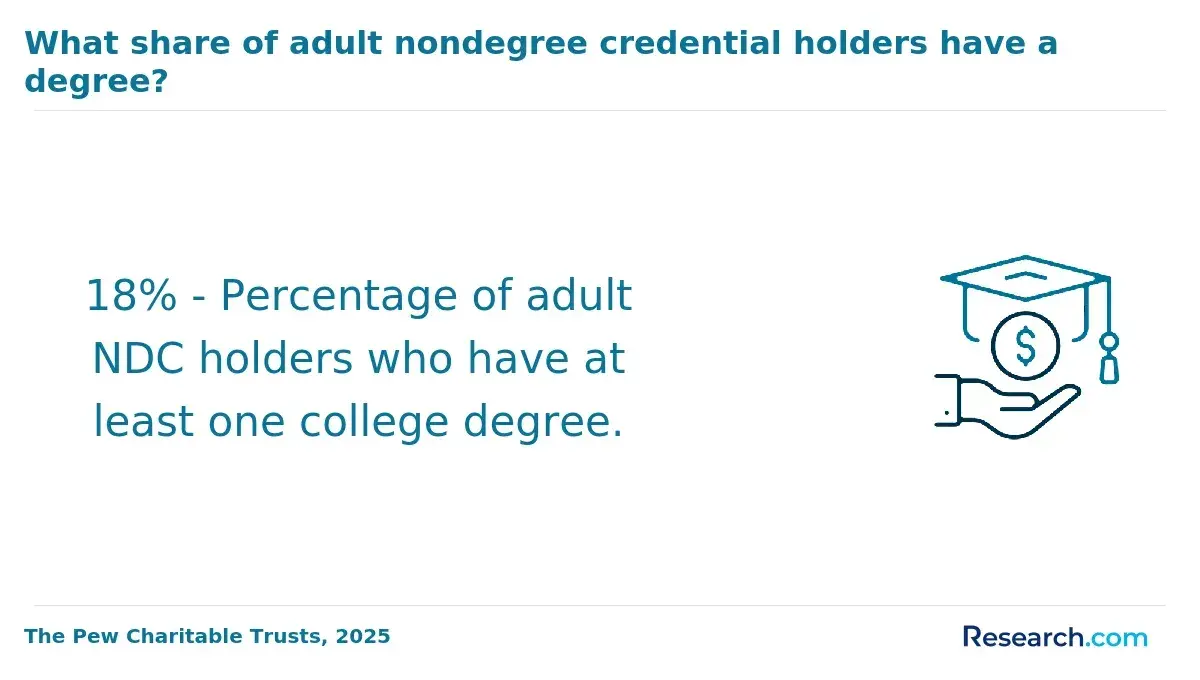
Financial aid depends on more than the word “accredited.” The school must hold recognized accreditation and participate in the relevant aid programs. Around 85% of full-time undergraduates in the U.S. receive some form of aid, so confirming eligibility early can prevent major budgeting problems.
- Federal student aid: Regionally accredited schools usually participate in federal financial aid programs, which can include Pell Grants, federal student loans, and work-study opportunities. Many nationally accredited institutions may not qualify for these federal funds, so students should verify eligibility before applying.
- State aid programs: State grants and scholarships often require attendance at approved or regionally accredited colleges. Students in nationally accredited programs may face restrictions or reduced access depending on state rules.
- Institutional scholarships: Both regional and national institutions may offer school-based scholarships or grants. Regionally accredited institutions often have larger endowments, which may allow for more scholarship opportunities, though awards vary widely by school.
- Private loans: Private loans may be available regardless of accreditation type, but lenders can set their own eligibility rules. These loans often require a credit check or cosigner, and terms can vary significantly.
- Veterans benefits: Military education benefits often apply to accredited institutions broadly, but eligibility depends on the specific school and benefit program. Veteran students should confirm approval with the institution and the appropriate benefits authority before enrolling.
The safest approach is to complete the aid conversation before committing. Ask the financial aid office whether the program is eligible for federal aid, state aid, institutional scholarships, employer tuition assistance, and veterans benefits. Also ask whether online students receive the same aid access as campus-based students.
Can I Transfer Credits From a Nationally Accredited to a Regionally Accredited Online Applied Behavior Analysis Bachelor's Degree?
Yes, it may be possible to transfer credits from a nationally accredited program to a regionally accredited online applied behavior analysis bachelor's degree, but students should not assume the credits will be accepted. Transfer decisions are made by the receiving institution, and regionally accredited schools often review nationally accredited coursework carefully.
The receiving school may evaluate course level, credit hours, grades earned, learning outcomes, faculty qualifications, and whether the course content matches its own curriculum. ABA-related courses may require extra scrutiny because programs often need specific psychology, behavior analysis, research methods, ethics, or human services coursework.
Students trying to transfer should prepare documentation before applying. Useful materials include official transcripts, course descriptions, syllabi, assignment samples, textbook lists, and learning outcomes. The more clearly a course matches the receiving school's requirements, the stronger the case for transfer credit.
A student pursuing an online applied behavior analysis bachelor's degree described the process as “frustrating but manageable.” He said detailed course descriptions and frequent communication with academic advisors helped, but official decisions took weeks. He also noted that unclear transfer policies created stress because he could not predict which courses would count. In the end, he transferred some credits but not all, which changed both his course load and timeline.
To reduce risk, ask for a preliminary transfer evaluation in writing before enrolling. If you are currently in a nationally accredited program and may later want a regionally accredited degree, transfer as early as possible rather than waiting until you have completed most of your credits.
Does Accreditation Type Affect Job Opportunities After an Online Applied Behavior Analysis Bachelor's Degree?
Accreditation type can affect job opportunities because it influences how employers judge the credibility of a degree. According to a survey by the National Association of Colleges and Employers, about 85% of employers consider accreditation status an important factor when evaluating candidates.
- Employer perception: Regional accreditation is often viewed as the standard for traditional academic quality. In competitive behavioral health, human services, education support, or psychology-related roles, this can help a graduate pass initial screening more easily.
- Industry expectations: Some employers and graduate programs favor regionally accredited degrees because they are associated with broader academic review. National accreditation is recognized by the U.S. Department of Education, but it is often linked to vocational or career-oriented institutions, which can shape employer assumptions.
- Hiring filters: Applicant tracking systems and human resources policies may screen for degrees from regionally accredited institutions. Even if a nationally accredited program provides useful training, the credential may need more explanation during the hiring process.
- Role-specific requirements: For applied behavior analysis roles, employers may also look for supervised experience, relevant coursework, professional references, and eligibility for certification pathways such as Board Certified Behavior Analyst (BCBA). These factors can strengthen a candidate's profile, but they do not always erase concerns about accreditation.
Students should research the job postings they hope to qualify for before choosing a program. Look for phrases such as “degree from a regionally accredited institution,” “recognized college or university,” or “eligible for graduate study.” If most target employers prefer regional accreditation, that should weigh heavily in the decision.
Students considering broader management or administrative pathways may also compare how accreditation affects recognition in other fields, such as AACSB online MBA programs, where the accrediting body can strongly influence employer perception.
Will Accreditation Affect Eligibility for Advanced Degrees After an Online Applied Behavior Analysis Bachelor's Degree?
Yes. Accreditation can strongly affect eligibility for advanced degrees after an online applied behavior analysis bachelor's degree. Most graduate schools prefer applicants from regionally accredited institutions because regional accreditation is widely treated as the standard academic credential in U.S. higher education. Approximately 90% of traditional graduate programs prefer applicants from regionally accredited schools.
- Admissions recognition: Graduate admissions committees often view regional accreditation as a stronger indicator of academic preparation. Applicants from nationally accredited schools may be asked to provide more documentation or may find that some programs will not consider their degree.
- Credit transfer: Regionally accredited institutions generally offer smoother transfer and recognition pathways. Nationally accredited coursework may be reviewed course by course, and some credits may not apply toward prerequisite or graduate admission requirements.
- Program eligibility: Some master's and doctoral programs explicitly require a bachelor's degree from a regionally accredited institution. This is especially important for students who plan to pursue graduate-level ABA, psychology, counseling, special education, or related behavioral health study.
- Institutional variability: Policies differ. Some graduate programs may accept nationally accredited degrees if the applicant has strong grades, relevant experience, prerequisite coursework, or additional evidence of academic readiness. Students should confirm requirements directly with the graduate programs they may apply to later.
If your goal is a BCBA-related pathway, review graduate admission requirements and certification-related coursework expectations before choosing a bachelor's program; comparing bcba accredited programs online can also help you understand how accreditation, affordability, and professional preparation fit together.
Students still exploring entry points into higher education may compare options such as 1 year associate degree programs online, but they should keep accreditation in mind from the start if a bachelor's or graduate degree is part of the long-term plan.
How Do I Choose Between Regional vs National Accreditation for an Online Applied Behavior Analysis Bachelor's Degree?
Choose based on your long-term goal, not only on which program is cheapest or easiest to enter. Regional accreditation is usually the safer choice for students who may transfer, pursue graduate school, seek broader employer recognition, or want the most academic flexibility. National accreditation may make sense for students who need a career-focused, flexible, or lower-cost program and are confident it will meet their employment and education goals.
Surveys show that nearly 60% of students consider accreditation type a critical aspect when choosing an online program. That caution is justified because accreditation can affect cost, aid, credit transfer, graduate admissions, and job screening.
Use this decision checklist
- Verify accreditation directly: Do not rely only on marketing language. Confirm the accreditor through official sources, such as the U.S. Department of Education's database.
- Check transfer policy before enrollment: Ask whether credits from the program have transferred to regionally accredited schools and whether the school has articulation agreements.
- Review graduate school requirements: If a master's degree is likely, check admission rules for several programs now. Do not wait until senior year to discover that your bachelor's accreditation limits your options.
- Ask employers what they recognize: Review job postings and, when possible, ask local behavioral health providers, school districts, autism service organizations, or human services agencies what accreditation they expect.
- Compare total cost, not sticker price: Include tuition, fees, aid eligibility, transfer credit loss, time to completion, and potential need to retake coursework.
- Evaluate ABA relevance: Accreditation is institutional. You still need to review the curriculum, faculty expertise, practicum or field experience options, ethics training, and advising support.
For most students who want maximum flexibility, regional accreditation is the lower-risk option. National accreditation can still be appropriate, but only when the student has confirmed that the credential will be accepted by the employers, licensing-related pathways, or graduate programs that matter to them.
What Graduates Say About Regional vs National Accreditation for Online Applied Behavior Analysis Bachelor's Degrees
- Eddie: "Choosing a nationally accredited online applied behavior analysis bachelor's program was a strategic decision for me because it allowed flexibility while ensuring quality education. I appreciated how the program balanced rigorous coursework with accessible support services, helping me manage my schedule efficiently. Earning a degree from a nationally accredited program has definitely boosted my credibility in the professional field."
- Sage: "Reflecting on my experience, I selected a regionally accredited online applied behavior analysis bachelor's degree for its broader recognition and transferability of credits. While some courses demanded more self-discipline, the comprehensive curriculum exceeded my expectations. This degree opened doors to advanced certifications and gave me confidence working with clients in diverse settings."
- John: "From a professional standpoint, enrolling in a regionally accredited online applied behavior analysis bachelor's program was essential for my career advancement. The accreditation reassured employers of the program's quality, and the practical training components translated smoothly into real-world practice. I'm grateful that this pathway equipped me with the skills and credentials needed to excel in behavioral health."
Other Things You Should Know About Applied Behavior Analysis Degrees
Credits from nationally accredited applied behavior analysis bachelor's programs are less likely to transfer smoothly to regionally accredited colleges or universities.
Regional accreditation is generally regarded as more rigorous, so institutions with this status often limit or refuse credit transfers from nationally accredited schools.
Students should verify transfer policies before enrolling if they plan to switch schools or pursue graduate study at a regionally accredited institution.
National accreditation alone typically does not guarantee eligibility for certification such as the Board Certified Behavior Analyst (BCBA) credential.
Certification boards often require that candidates graduate from programs that meet specific criteria, frequently aligned with regional accreditation standards or specialized accreditation. Therefore, students should confirm that their program's accreditation meets certification requirements.
Employers in applied behavior analysis may be aware of the differences between regional and national accreditation, especially in clinical or research settings.
Graduates from regionally accredited programs may have an advantage in competitive job markets due to perceptions of stronger academic preparation. However, practical experience and certifications often play a more decisive role in hiring decisions.
References
- BHCOE - Accreditation for Applied Behavior Analysis Organizations https://www.bhcoe.org/
- Association for Behavior Analysis International Accreditation Board https://accreditation.abainternational.org/accredited-programs.aspx
- Association for Behavior Analysis International Accreditation Board - (ABAI) https://www.chea.org/association-behavior-analysis-international-accreditation-board
- ABA Certification Explained: RBT, BCaBA, BCBA, BCBA-D https://onlinecounselingprograms.com/mental-health-careers/how-to-become-behavior-analyst-bcba/aba-certification-explained/
- 29+ ABAI Accredited Programs: B.A. and Master’s Degrees https://abamastersprograms.org/abai-accredited-bcba-programs/
- What Is an Accredited University? | National University https://www.nu.edu/blog/what-is-an-accredited-university/
- Applied Behavior Analysis Online - Niagara University https://www.niagara.edu/programs/applied-behavior-analysis-online/
- 10 Best Online Bachelor’s Degree Programs for ABA https://www.abadegreeprograms.net/rankings/online-aba-bachelors/
- Psychology, BA to Applied Behavior Analysis, MA Fastforward Track https://catalog.ncu.edu/preview_program.php
- Accreditation FAQs https://www.apbahome.net/accreditation-faqs