2027 Healthcare Consultant Manager: Translating MHA Projects Into Client Evidence

Co-Founder and Chief Data Scientist
An MHA capstone can demonstrate consulting ability, but a polished presentation alone will not show a client what changed or whether the result is reliable. For healthcare administrators considering a move into consulting management, the challenge is translating academic work into evidence of sound analysis, stakeholder leadership, and measurable operational value. This guide explains which projects travel well beyond the classroom, how to present their limitations honestly, and when an MHA, an MBA, or more work experience is the better next step.
Key Things You Should Know
- The strongest MHA project evidence connects a defined client problem to a defensible baseline, an intervention or recommendation, and a measured or clearly labeled projected result.
- Consulting manager roles generally require demonstrated delivery and team leadership; an MHA project can support that case but rarely replaces relevant work experience.
- The $126,520 median annual wage for U.S. management occupations in May 2025 is broad context, not a salary estimate for healthcare consultant managers or MHA graduates.
What does a healthcare consultant manager do with MHA project experience?
A healthcare consultant manager leads teams that help hospitals, health systems, payers, or other healthcare organizations solve operating and strategic problems. The work may involve defining a client's question, overseeing analysis, managing a budget and timeline, presenting recommendations, and helping leaders implement changes. Unlike a clinician, the manager's authority comes from organizational and analytical expertise, not an MHA credential to practice medicine.
An MHA project is useful when the manager can explain how its methods would withstand client scrutiny. A patient-access study, for example, becomes consulting evidence when it shows how wait times were defined, which data were excluded, what staff said about the bottleneck, and how the proposed change would be tested. The manager must also distinguish work completed personally from work done by a project team.
People earlier in their careers may first need analyst, operations, or project-lead experience before seeking a manager title. Those building that foundation through undergraduate study can compare online healthcare administration bachelor's programs with rolling starts, while checking whether a program offers meaningful applied work.
How can an MHA degree prepare you for healthcare consulting management?
A Master of Health Administration (MHA) develops management judgment in healthcare settings. Depending on the program, students may study healthcare finance, operations, policy, quality, analytics, and organizational leadership, then apply those subjects in a capstone, practicum, or employer-sponsored project. Program designs vary; a client-facing assignment should never be assumed from the degree name alone.
For a hospital operations professional, an MHA can add a framework for decisions already encountered at work. For someone changing industries, it can build healthcare context, but it will not by itself supply a consulting track record or access to client data. When you compare online MHA degree programs, examine who sponsors applied projects, whether students can use workplace problems, and how faculty review methods and results.
An MBA may fit better if the goal is broader corporate strategy or finance across industries. Its general management core is not interchangeable with an MHA's healthcare-specific study, although a verified healthcare concentration can narrow that gap.
What qualifications are required to become a healthcare consultant manager?
There is no single U.S. degree or license that qualifies someone for every healthcare consultant manager role. Employers set their own requirements, often weighing relevant healthcare experience, analytical ability, client communication, project delivery, and evidence of supervising people or workstreams. Some roles favor an MHA, MBA, MPH, or clinical background; specialized assignments may require expertise that none of those degrees alone provides.
A realistic path depends on where you start. An experienced healthcare operations manager may be able to demonstrate consulting readiness through internal improvement projects and external client work. A graduate without management experience is more likely to enter through an analyst or associate role. If you are still choosing an undergraduate foundation, explore healthcare administration bachelor's study at accredited U.S. colleges alongside opportunities for internships and quantitative coursework.
The best project is not necessarily the one with the largest claimed savings. It is the one whose problem, data, decisions, and limitations a prospective client can examine. This comparison shows what different MHA projects can credibly demonstrate.
| Project type | Useful evidence | Important limitation to disclose |
| Patient access or throughput | Baseline measures, process map, tested workflow, and follow-up results | Seasonality or staffing changes may also affect outcomes |
| Revenue-cycle improvement | Defined denial or collection measure, root-cause analysis, and financial model | Projected recovery is not realized revenue |
| Quality or population health | Measure specification, eligible population, intervention, and monitoring plan | A short observation period may not establish lasting improvement |
| Health information or data governance | Data-quality assessment, controls, and accountable owners | Restricted records may prevent a public project sample |
A credible client summary separates observed outcomes from modeled benefits and names what the student actually contributed. For data-intensive projects, online HIM programs accredited by CAHIIM represent a more specialized education path than a general MHA; they may suit someone whose primary goal is health information management rather than consulting leadership.
Prioritize coursework that helps you defend a decision in front of both financial and clinical stakeholders: managerial accounting and finance for testing business cases, statistics and analytics for evaluating claims, operations and quality improvement for redesigning workflows, and leadership for negotiating implementation. Healthcare policy, reimbursement, and privacy knowledge matter because a recommendation that ignores sector constraints may be unusable.
Consulting management also requires skills that coursework alone cannot verify: scoping ambiguous work, assigning analyses, challenging assumptions, writing concise executive findings, and responding when a client rejects a proposal. Seek feedback on these behaviors during projects, not just on the final report.
If your intended work spans healthcare and other industries, compare accelerated healthcare-focused MBA degrees with MHA curricula. Check whether a healthcare concentration is formally offered and whether its applied coursework is deep enough for your target clients; speed alone is a poor selection criterion.
Neither delivery format automatically produces better consulting evidence. An online MHA may let an employed administrator turn a workplace problem into a supervised project and retain professional relationships. A campus-based program may make local employer projects and in-person recruiting easier to access. Those are possibilities to verify with each school, not benefits guaranteed by the format.
Ask who finds project sponsors, whether remote students can join client engagements, how teams meet across schedules, and whether career services serve experienced students seeking consulting roles. Confirm live-session times, required visits, and whether a practicum can be completed with your current employer before treating an online option as flexible.
If completion time is a constraint, review online master's options for faster healthcare management study. Compare the actual project opportunities and scheduling requirements, not just the advertised duration.
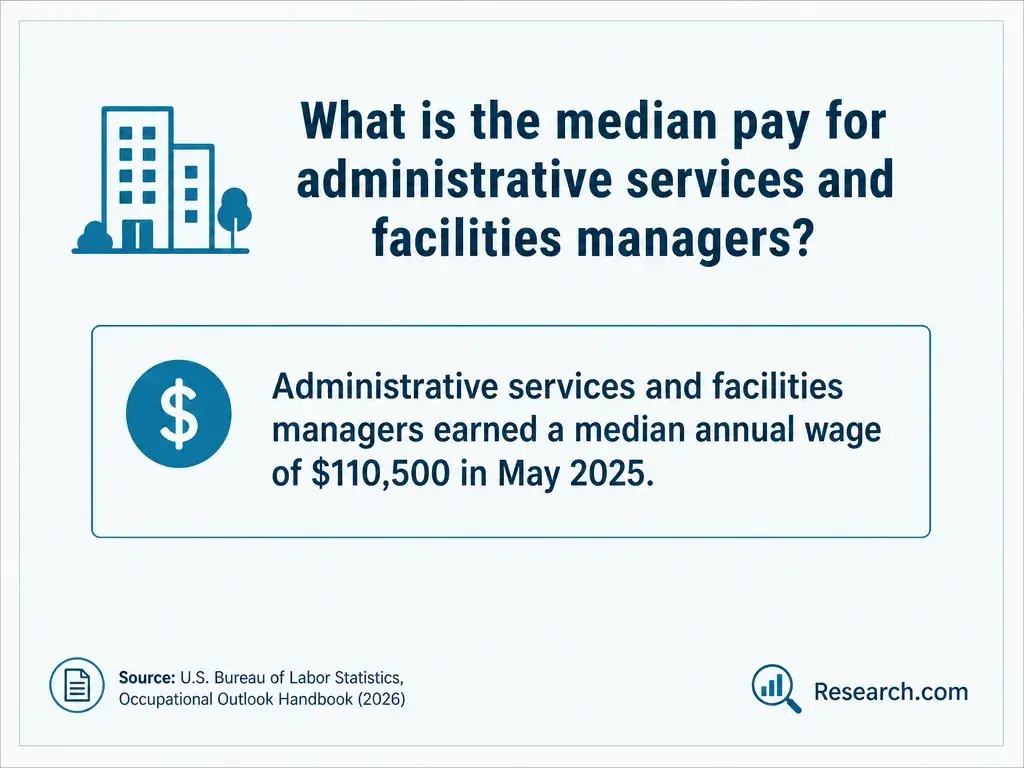
There is no single reliable national wage figure that isolates "healthcare consultant manager" across consulting firms and healthcare employers. As broad context, the U.S. Bureau of Labor Statistics reports a $126,520 median annual wage for management occupations in May 2025. That group includes many jobs unrelated to healthcare consulting, so its median should not be read as an offer expectation or an MHA graduate outcome.
Compensation will depend on role scope, employer, location, experience, and whether pay includes a bonus. When judging whether a degree is financially sensible, compare likely roles you can actually pursue with your current compensation, then account for tuition, fees, financing, and time away from paid work. Budgeting for a master's in healthcare administration is most useful when it includes the full program cost rather than tuition alone. Employer assistance can change the calculation substantially.
No general certification is universally required to manage healthcare consulting projects. A project-management credential may help demonstrate delivery discipline; a reputable quality-improvement or Lean Six Sigma credential may support process work; and a healthcare leadership credential may be relevant to experienced administrators. Eligibility, assessment standards, and employer recognition differ, so match a credential to the assignments you want rather than collecting initials.
Certification is not a substitute for client results. Nor is a doctorate a routine prerequisite for consulting management. Professionals considering senior academic, research, or specialized leadership goals can separately examine online healthcare administration doctoral formats compared before committing to a longer degree.
The outlook is favorable at the broad management level, but it does not predict hiring for a specific consulting title. The Bureau of Labor Statistics projects management occupations overall to grow faster than the average for all occupations from 2025 to 2035, with about 1.1 million openings annually on average from growth and replacement needs. Those openings span many industries and occupations; competition for healthcare consulting manager positions will depend heavily on relevant experience and employer demand.
For a career changer, the practical signal is the work an employer is buying: demonstrated ability to improve operations, assess financial trade-offs, or lead implementation in a regulated setting. If you need that foundation before pursuing consulting, faster online study routes in healthcare administration may shorten the education stage, but they cannot compress the experience needed to lead client teams.
How can you choose an accredited MHA program for healthcare consulting?
First confirm the institution's recognized institutional accreditation, then check whether the specific healthcare management graduate program holds accreditation from the Commission on Accreditation of Healthcare Management Education (CAHME). Institutional and programmatic accreditation answer different questions; neither guarantees consulting placement. Verify current status with the accreditor and the school rather than relying on an old program listing.
For this career goal, project access should carry as much weight as a course list. Ask for recent examples of client or employer-sponsored assignments, the rules for using workplace data, the support available to online students, and career outcomes reported specifically for the MHA cohort. You can use selecting an online CAHME-accredited graduate program as a starting point, then confirm each program's current accreditation and requirements directly.
Choose the MHA when its healthcare depth and applied work address a gap in your record at a sustainable cost. If you already have that knowledge but lack supervised delivery experience, a stronger project assignment or consulting-adjacent role may do more for your next application than another degree.
Other Things You Should Know About Healthcare Administration
Only if your client or employer permits it. Remove protected and confidential information, follow applicable privacy rules, and obtain approval before sharing even an anonymized case.
State your role, the analyses or decisions you owned, and which results belong to the team. Keep evidence such as approved deliverables or supervisor feedback where sharing is permitted.
No. An MHA is a management degree, not a clinical license. Clinical recommendations require the appropriate qualified professionals and oversight.
Present the validated baseline, your recommendation, implementation plan, and proposed measures. Label any expected benefit as a projection, not an achieved outcome.
- Tools and Strategies for Quality Improvement and Patient Safety | nih.gov https://www.ncbi.nlm.nih.gov/books/NBK2682/
- A scoping review of continuous quality improvement in... - PMC https://pmc.ncbi.nlm.nih.gov/articles/PMC11031995/
- Ways to Approach the Quality Improvement Process | Agency for Healthcare Research and Quality https://www.ahrq.gov/cahps/quality-improvement/improvement-guide/4-approach-qi-process/index.html
- Quality Measurement and Quality Improvement | cms.gov https://www.cms.gov/medicare/quality-initiatives-patient-assessment-instruments/mms/quality-measure-and-quality-improvement-
- Master of Health Administration (MHA) Capstone Projects | kgi.edu https://www.kgi.edu/degrees-and-programs/healthcare/master-of-health-administration/capstone-projects.html
- Important Considerations: MHA Capstone | gmu.edu https://hapi.gmu.edu/students/capstone-practicum/important-considerations-mha-capstone
- Health Management Degree vs. Healthcare Administration | Lindenwood University https://www.lindenwood.edu/blog/healthcare-management-vs-healthcare-administration/
- What is Healthcare Consulting? | UIC Online MHA https://healthcareadministration.uic.edu/news-stories/what-is-healthcare-consulting/
- What Is Healthcare Consulting? | American College of Education https://ace.edu/blog/what-is-healthcare-consulting/
- What does a Healthcare Consultant do? Career Overview, Roles, Jobs | MNP https://jobs.marylandnonprofits.org/career/healthcare-consultant