2027 Long-Term Services Regional Director: Education and Licensure Questions

Co-Founder and Chief Data Scientist
Moving from one long-term care facility to regional leadership changes both the job and the credential questions. A regional director may oversee several licensed facilities, yet the director's own licensing obligation depends on the position and state rules, not the job title alone.
This guide is for professionals weighing a healthcare administration degree, an MBA, or a shorter credential. It explains what employers typically need, when an administrator license matters, and how to compare education options without paying for a degree that will not solve a licensing or experience gap.
Key Things You Should Know
- No single degree or nationwide regional-director license applies to every long-term services role; verify the duties, facility types, and state rules for each position.
- Regional oversight generally requires substantial long-term services experience. An MBA or MHA can strengthen business or healthcare leadership skills but does not replace required facility-administrator licensure.
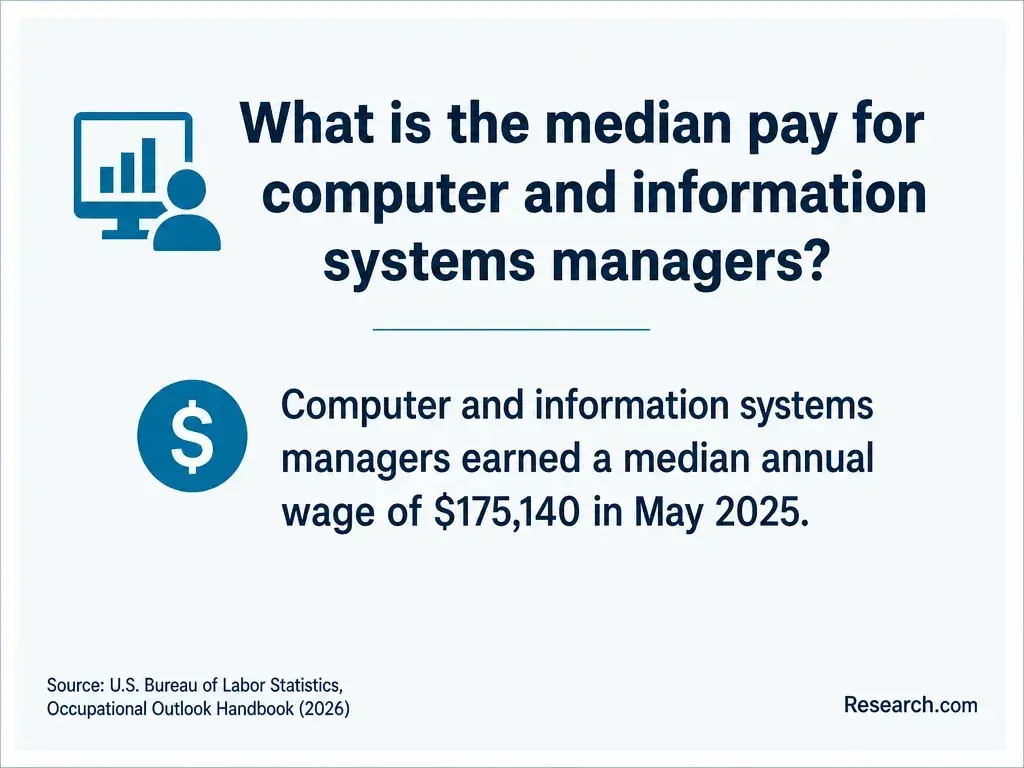
- The Bureau of Labor Statistics reports a May 2025 median wage of $126,520 for management occupations overall, not a regional-director salary, so use local job postings and compensation data to evaluate a degree's potential payoff.
What does a long-term services regional director do?
A long-term services regional director typically oversees operations across multiple locations or service areas. Depending on the employer, that may include nursing facilities, assisted living communities, home- and community-based services, or a combination.
The director supports local leaders, reviews budgets and staffing, monitors quality and regulatory performance, and addresses problems that one site cannot resolve alone.
The role differs from both a single-facility administrator and a specialist in medical records. A regional director must understand how information about incidents, staffing, reimbursement, and resident or client outcomes translates into operational decisions.
Readers considering a more data-focused career can compare degree routes in healthcare administration and HIM before choosing a program.
Scope matters more than title. Compare job descriptions for the number and type of sites supervised, direct reports, travel expectations, budget authority, and responsibility for regulatory responses. Those details determine which experience and credentials will be most valuable.
What education is required to become a long-term services regional director?
There is no universal degree requirement attached to the title. Employers commonly look for a bachelor's degree in healthcare administration, business, nursing, social work, or a related field, alongside a record of managing long-term services operations.
Some prefer a graduate degree for larger or more complex regions. A clinical degree can be useful, but clinical training alone does not establish competence in multi-site budgets, personnel management, or compliance.
For someone starting with an associate degree, completing a bachelor's may be a more direct next step than planning immediately for an MBA. Review associate-to-bachelor's credit planning in healthcare administration and confirm which credits a prospective school will actually accept.
If you already manage a facility, first compare your job's stated graduate-degree preference with the operational experience you still need; another degree may not be the limiting factor.
Is a long-term services regional director required to have a license?
Not necessarily for regional oversight alone. Licensure depends on state law, facility type, and whether the person also serves in a regulated administrator role.
States regulate nursing home administrators, while requirements for assisted living and other long-term services settings vary. Employers may require an active administrator license even when the regional position itself is not separately licensed.
Before accepting a role, identify every state and facility type in the territory. Ask the employer who is designated as administrator at each site, whether the regional director must hold that designation or act as an interim administrator, and whether an existing license meets the relevant state's requirements. Confirm the answer with the applicable licensing board; do not assume a license automatically transfers across states.
A graduate degree, including a doctorate, does not waive a state licensing requirement. If advanced study is also part of your career plan, review doctoral tuition in healthcare administration as a separate investment, not as a substitute for checking license eligibility.
The best degree depends on the gap between your current experience and the responsibilities you want. The comparison below distinguishes entry preparation from graduate study; none of these degrees independently grants an administrator license:
| Degree route | Most useful when | Important limitation |
| Bachelor's in healthcare administration or a related field | You need a management foundation or a credential requested for supervisory roles. | Coursework does not replace facility-level leadership experience. |
| Master of Health Administration (MHA) | You want graduate study centered on healthcare organizations, policy, quality, and operations. | Check whether the curriculum addresses long-term services, not only hospitals. |
| MBA, with or without a healthcare management concentration | You need stronger finance, strategy, and multi-site business management skills. | A healthcare elective is not necessarily a formal concentration or training in long-term care regulation. |
| Doctoral degree | You have a defined goal in research, teaching, or advanced organizational leadership. | It usually demands more time and expense than regional operations roles require. |
For an experienced facility administrator, the choice between an MHA and an MBA is often a choice of emphasis, not seniority. Examine course descriptions and applied projects. Online MHA pathways for future healthcare managers can provide a starting point, but verify each school's current curriculum and admissions terms directly.
Relevant programs may cover healthcare finance and reimbursement, quality improvement, workforce management, ethics, policy, and organizational leadership. An MBA generally teaches a broader management core; a healthcare concentration or selected electives may add sector context.
An MHA generally concentrates more directly on healthcare organizations. Neither format guarantees substantial instruction in nursing facility regulations or home- and community-based services.
Look for assignments that require students to interpret quality measures, build staffing or operating budgets, manage change across sites, and explain decisions to regulators, residents, families, and staff. A project based on the employer's own long-term services operations may be especially useful to a working manager, subject to confidentiality rules.
Doctoral coursework can go further into research and organizational change, but that depth is not automatically necessary for regional supervision. Consider healthcare leadership doctorate acceleration and workload only if a doctoral goal justifies the additional commitment.
Online delivery alone does not determine a degree's value. Employers can assess whether the institution is institutionally accredited, whether the curriculum fits the role, and whether the applicant has led people and operations in relevant settings.
Depending on the degree, specialized program or business-school accreditation may also be worth considering; it is distinct from institutional accreditation and does not confer professional licensure.
For a working long-term services manager, an online program may make continued employment possible. Still, check live-session times, group projects, required placements or campus visits, and access to instructors and career services.
If a bachelor's is the immediate goal, accelerated healthcare management undergraduate programs are worth comparing against standard-paced options, but an accelerated calendar is only helpful if it is manageable alongside facility responsibilities.
Requirements vary by school and degree level. Bachelor's programs evaluate prior education and, where applicable, transfer credits. MHA and MBA programs generally require a bachelor's degree and application materials such as transcripts and a résumé; work-experience expectations, recommendations, essays, tests, and prerequisite courses depend on the program.
A nonbusiness bachelor's degree does not automatically rule out an MBA, but accounting or quantitative preparation may help.
Doctoral programs have their own admission standards and may expect a defined research or leadership purpose. Compare admission rules with the time you can realistically commit: review healthcare administration doctorate schedules before applying rather than treating admission as the only hurdle.
For any program, request written confirmation of prerequisites, transfer-credit decisions, and in-person requirements before enrolling.
Both vary substantially with the degree, transfer credits, enrollment pace, and school. A bachelor's may take several years from entry, while a student transferring substantial approved credit may finish sooner.
Graduate study can be completed on a full-time or part-time schedule; accelerated options may compress the calendar without reducing the work. Published tuition alone may omit mandatory fees, materials, travel, and financing costs.
Compare programs using the total credits you must complete, the tuition charged for those credits, mandatory fees, and any required visits.
Then account for employer tuition assistance and the effect of reduced work hours, if any. Affordable online healthcare administration degrees are useful to investigate, but the lowest advertised rate may not produce the lowest personal cost after transfer-credit and fee decisions.
Targeted credentials can document knowledge in areas such as long-term care administration, quality improvement, or healthcare management.
Their value depends on the issuing organization's eligibility rules, the credential's recognition by employers, and whether it addresses a real skill gap. A voluntary certification is not interchangeable with a state-issued administrator license.
If you already qualify for regional roles but need stronger skills in one area, a focused credential or employer training may be more efficient than another degree.
If the gap is broad financial and strategic management, compare that narrower route with accelerated online MBA programs in healthcare management. Verify that a program offers the healthcare coursework you want and that its pace fits your workload.
What salary and job outlook can regional directors expect?
There is no single reliable national salary figure for the title "long-term services regional director." Pay depends on geography, employer size, service mix, number of sites, travel, and budget responsibility.
As broad context, the Bureau of Labor Statistics reports a $126,520 median annual wage for management occupations in May 2025. That figure covers many kinds of managers; it is not the median for regional directors or MBA graduates.
BLS projects about 1.1 million management-occupation openings per year on average from 2025 to 2035, including openings caused by workers leaving occupations.
This broad outlook cannot tell you how many regional long-term services jobs will be available locally. Compare current postings for the territories you could actually serve and note their pay ranges, license requirements, and experience thresholds.
Before paying for an MBA, compare its full cost with the advancement opportunities available at your employer and the pay attached to roles for which you are already competitive. Budgeting for an MBA in healthcare management is most useful when paired with realistic - not assumed - promotion prospects.
Other Things You Should Know About Healthcare Administration
It provides relevant leadership experience, but nursing facilities have different regulatory and operational demands. Check the employer's experience requirements and the licensing rules for any administrator duties.
Some planning and reporting can be done remotely, but site visits, leadership support, and responses to operational problems often require travel. Confirm the territory and expected on-site schedule before accepting an offer.
No. Site size, service complexity, direct reports, and decision-making authority also matter. Compare those responsibilities rather than relying on the number of locations alone.
Ask which site leaders report to you, how quality and financial performance are measured, what travel is expected, and who holds each facility's administrator designation. The answers reveal both the job's scope and its potential licensing implications.
- GAC - Chapter 393-3 LICENSURE BY EXAMINATION https://rules.sos.ga.gov/gac/393-3
- Long Term Care and Skilled Nursing Facilities - PMC - NIH https://pmc.ncbi.nlm.nih.gov/articles/PMC9894029/
- eCFR:: 42 CFR Part 483 -- Requirements for States and Long Term Care Facilities https://www.ecfr.gov/current/title-42/chapter-IV/subchapter-G/part-483
- Laws and Regulations - Minnesota.gov https://mn.gov/boards/beltss/public/laws/index.jsp
- Licensing across state lines | hhs.gov https://telehealth.hhs.gov/licensure/licensing-across-state-lines
- Florida Board of Nursing Home Administrators https://floridasnursinghomeadmin.gov/nursing-home-administrator/
- Nursing Home Administrator - CDPH - CA.gov https://www.cdph.ca.gov/Programs/CHCQ/LCP/Pages/NHA.aspx
- Streamlining Licensing Across State Lines: Initiatives to Enhance Occupational License Portability https://www.ftc.gov/news-events/events/2017/07/streamlining-licensing-across-state-lines-initiatives-enhance-occupational-license-portability
- South Carolina Board of Long Term Health Care Administrators | sc.gov https://llr.sc.gov/lthc/faq.aspx
- Nursing Home Administrator Job Description and Salary | Southeast Missouri State University https://semo.edu/blog/blog-posts/nursing-home-administrator