2027 Best Accredited Online Neurodiagnostic Technology Degree Programs: Compare Tuition, Admissions, and Career Outcomes

Co-Founder and Chief Data Scientist
Choosing an online neurodiagnostic technology program is difficult because "online" rarely means fully remote: students still need supervised clinical training to qualify for key credentials. O*NET's 2024 profile places neurodiagnostic technologists in a broader health technologist category with a national median wage of $48,790, making cost, accreditation, and clinical access important ROI factors. This guide is for first-time college students, working adults, and transfer students comparing accredited options. You'll learn how to evaluate value, admissions, tuition, online formats, and career outcomes before applying.
Key Things You Should Know
- The strongest accredited online neurodiagnostic technology options are usually hybrid associate degree programs that combine online didactic coursework with required in-person clinical rotations.
- Programmatic accreditation through CAAHEP, with review by the Committee on Accreditation for Education in Neurodiagnostic Technology, is the key signal to check before comparing cost or convenience.
- The 2024 federal Pell Grant maximum is $7,395, which can materially reduce out-of-pocket cost for eligible students, especially at lower-tuition public community colleges.
Which Accredited Online Neurodiagnostic Technology Degree Programs Offer the Best Overall Value?
The best overall value is not simply the cheapest program. For neurodiagnostic technology, value usually means the lowest realistic total cost for a program that is properly accredited, offers accessible clinical placements, prepares students for registry exams, and fits their schedule.
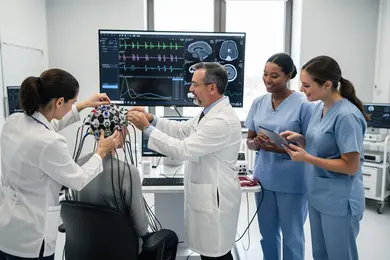
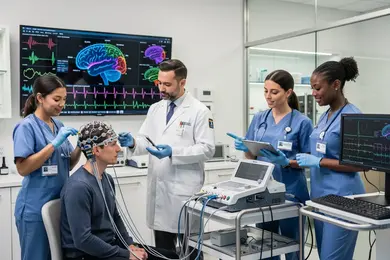
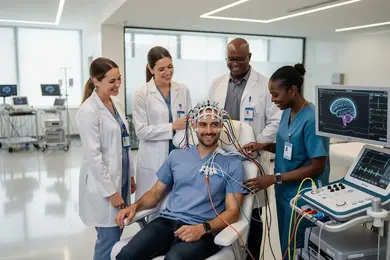
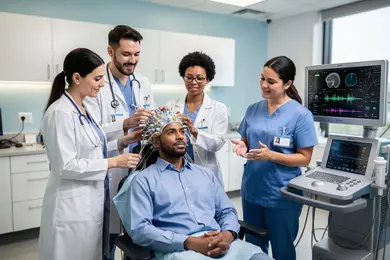
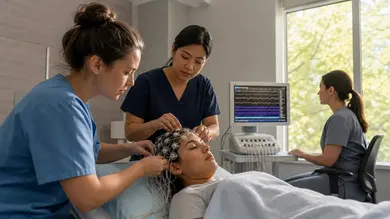
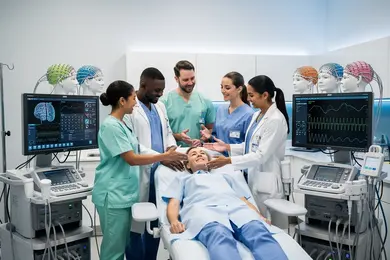
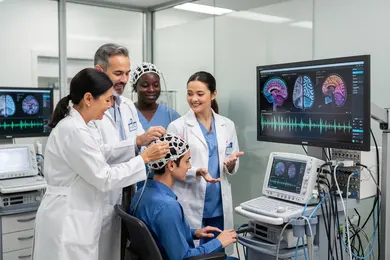
Neurodiagnostic technology programs train students to record and monitor electrical activity in the brain, nervous system, and related body systems. Depending on the curriculum, students may learn electroencephalography, evoked potentials, nerve conduction studies, intraoperative neuromonitoring, and sleep-related testing. Because these skills require hands-on patient work, even online programs typically include local or campus-based clinical experiences.
The table below compares common accredited or accreditation-focused online and hybrid pathways that prospective students often review. Because accreditation, tuition, and delivery format can change, students should confirm the current program page and CAAHEP status before applying.
| Program type | Typical credential | Best fit | Value strength | Main trade-off |
| Public community college hybrid NDT program | Associate of Applied Science or similar associate degree | In-state students, first-time college students, and cost-conscious learners | Often the strongest tuition value when clinical sites are nearby | May require specific campus labs, limited start dates, or local clinical availability |
| Private nonprofit online-supported NDT associate program | Associate degree | Working adults who need more online coursework and structured advising | Can offer stronger scheduling support and healthcare-focused services | Tuition may be higher than public options |
| Hospital-affiliated or certificate-to-degree pathway | Certificate plus transfer or degree-completion option | Students already employed in healthcare or sponsored by an employer | Can reduce career-change friction when clinical training is embedded | May not be a full degree by itself, so transfer planning matters |
| Non-accredited online-only training program | Certificate or continuing education credential | Students seeking introductory knowledge only | May be convenient for exploration | Weak option if it does not support credential eligibility or supervised clinical competency |
For most students, the best value is a CAAHEP-accredited associate degree with transparent clinical placement support and a total cost that does not require excessive borrowing. Paying more can make sense if the program has stronger clinical coordination, better scheduling for working adults, or a clear track record of helping students meet registry requirements.
Paying more is harder to justify when a program lacks specialized accreditation, does not publish clinical expectations, or leaves students to find training sites with little support.
Students comparing multiple healthcare routes should also think about long-term role fit. For example, someone drawn to medication therapy, doctoral-level training, and licensure-heavy practice may be comparing a neurodiagnostic degree with an online pharmacy degree, but the time commitment, cost, and patient-care responsibilities are very different.
What Accreditation Should Students Look for in an Online Neurodiagnostic Technology Degree Program?
Accreditation should be the first filter. Institutional accreditation tells you the college meets broader academic and administrative standards, while programmatic accreditation tells you the neurodiagnostic technology curriculum has been reviewed against field-specific expectations.
For this field, students should look for programs accredited by the Commission on Accreditation of Allied Health Education Programs, commonly known as CAAHEP, with review by the Committee on Accreditation for Education in Neurodiagnostic Technology. This matters because employers and credentialing bodies often use program quality, clinical training, and exam readiness as signals when evaluating applicants.
Use the following steps before you request information or pay an application fee:
- Confirm the college has institutional accreditation from a U.S. Department of Education-recognized accreditor.
- Search the current CAAHEP program directory for the neurodiagnostic technology program, not just the college name.
- Check whether the program is accredited, on probation, recently withdrawn, or only seeking accreditation.
- Ask the program which registry exams graduates are prepared to pursue, such as EEG-focused credentials through ABRET.
- Verify that clinical hours, competencies, and supervision are included in writing before enrollment.
A common mistake is assuming that an online healthcare program is automatically career-ready because the college itself is accredited. In neurodiagnostic technology, programmatic accreditation and clinical competency are especially important because students are preparing for patient-facing technical work.

How Do Tuition Costs Compare Across Accredited Online Neurodiagnostic Technology Degree Programs?
Tuition varies widely because online neurodiagnostic technology programs may be offered by public community colleges, private nonprofit healthcare colleges, or hospital-affiliated institutions. The most affordable sticker price is often found at public community colleges, especially for in-district or in-state students, but the lowest tuition is not always the lowest total cost if travel, lab visits, clinical placement expenses, or lost work hours are substantial.
The table below summarizes the cost categories students should compare across programs. This is often more useful than comparing tuition alone because neurodiagnostic technology programs can include specialized equipment, health documentation, and clinical requirements that general online degrees may not have.
| Cost category | What to compare | Why it matters |
| Tuition | In-district, in-state, out-of-state, and online rates | Public colleges may look inexpensive only if you qualify for the lowest residency rate |
| Program fees | Lab, technology, simulation, clinical, and testing fees | Fees can change the real cost of an "affordable" program |
| Clinical expenses | Background check, immunizations, drug screening, uniforms, travel, and parking | These costs are often paid before or during clinical placement |
| Books and materials | Textbooks, online platforms, and required supplies | Allied health courses may require specialized resources |
| Exam preparation | Registry exam review materials and testing costs | Credential preparation can affect job readiness after graduation |
| Opportunity cost | Work schedule changes, unpaid clinical hours, and commute time | A slightly higher-tuition flexible program may be better for working adults |
The 2024 federal Pell Grant maximum of $7,395 is an important benchmark for eligible undergraduates. At lower-tuition public colleges, a Pell Grant can cover a larger share of direct educational costs, while at higher-tuition private programs it may reduce borrowing but not eliminate the need for loans, payment plans, employer support, or scholarships.
To compare costs accurately, request a program-specific cost sheet from each school and calculate the full cost through completion, not just the first semester.
Students who are still exploring faster healthcare entry points may also compare allied health options such as a 9 month LPN program, but they should remember that practical nursing and neurodiagnostic technology lead to different scopes of practice, clinical responsibilities, and credential pathways.
How Competitive Is Admission to Accredited Online Neurodiagnostic Technology Degree Programs?
Admission to accredited online neurodiagnostic technology degree programs is often moderately selective because programs must match students with clinical capacity. A school may have open admission to the college but limited admission to the neurodiagnostic technology cohort.
Typical requirements vary by institution, but many programs review academic readiness, healthcare compliance, and the student's ability to complete clinical training. This is where online learners need to be especially careful: being academically admissible does not always mean a clinical site is available near you.
Applicants commonly need to prepare the following items before or shortly after admission:
- High school diploma, GED, or prior college transcript.
- Minimum GPA or placement test results for college-level reading, writing, math, and science.
- Prerequisite courses such as anatomy and physiology, medical terminology, biology, or psychology.
- Background check, drug screening, immunization records, CPR certification, and health documentation.
- Interview, orientation, observation hours, or proof of understanding of neurodiagnostic work.
- Evidence that the student can attend labs or complete approved clinical rotations.
The most competitive applicants are not always those with the highest GPA. Programs also value readiness for patient care, professional communication, schedule reliability, and the ability to complete clinical requirements without repeated delays.
A common red flag is a program that advertises easy admission but gives vague answers about clinical placement. Flexible admission can help working adults and transfer students, but it should not replace transparency about labs, supervised practice, registry preparation, and completion timelines.
Which Learning Formats Offer the Greatest Flexibility in Online Neurodiagnostic Technology Degree Programs?
The most flexible online neurodiagnostic technology programs are usually hybrid programs with online lectures, scheduled virtual coursework, and in-person clinical rotations near the student or at approved partner sites. Fully online programs with no patient-facing training are usually not appropriate for students seeking entry-level clinical employment.
The table below compares common learning formats. Use it to match program delivery with your work schedule, learning style, and access to clinical sites.
| Learning format | Flexibility level | Best for | Potential drawback |
| Asynchronous online coursework plus local clinicals | High for classroom learning | Working adults who need to study outside fixed class times | Clinical schedules may still be daytime, weekday, or site-dependent |
| Synchronous online classes plus clinicals | Moderate | Students who want live instruction and regular class structure | Less flexible for shift workers or caregivers |
| Hybrid campus labs plus clinicals | Moderate to low depending on travel | Students near campus who benefit from hands-on lab practice | Travel and campus attendance can increase total cost |
| Campus-based program with online support | Lower | Students who prefer face-to-face instruction and immediate lab access | May be difficult for rural students or full-time workers |
Students should ask whether lectures are recorded, whether exams require proctoring, how often campus visits are required, and whether clinical shifts can be completed near home. These details matter more than whether a school labels the program "online."
Healthcare students comparing formats across fields may notice similar flexibility trade-offs in programs such as a CCMA to LPN bridge program, where online theory can support working adults but in-person clinical training remains essential.
What Student Support Services Improve Success in Online Neurodiagnostic Technology Degree Programs?
Student support can be the difference between finishing on time and losing momentum during clinical placement. Neurodiagnostic technology students need both academic support and healthcare-specific support because they are balancing science coursework, technical skill development, patient interaction, and credential preparation.
The most useful services are those tied directly to completion and employability. Before enrolling, ask whether each support service is included, optional, or available only during certain terms.
- Clinical placement coordination that helps identify approved sites, supervisors, and required documentation.
- Dedicated allied health advising that understands sequencing, prerequisites, and registry preparation.
- Tutoring for anatomy, physiology, medical terminology, and neurodiagnostic concepts.
- Simulation or lab access for students who need repeated hands-on practice before clinical work.
- Career services that help with resumes, interview preparation, employer connections, and credential timelines.
- Technology support for online learning platforms, remote exams, and digital clinical tracking systems.
- Mental health and accessibility services for students balancing intensive clinical training with work or family obligations.
A strong program should be able to explain what happens if a clinical site falls through, a student fails a competency, or a learner needs to repeat a course. Vague "we support our students" language is less useful than clear policies, named contacts, and documented timelines.
Students planning a longer healthcare education pathway should also ask whether credits transfer into bachelor's or graduate study. For example, someone who later considers advanced nursing routes such as the shortest post master's FNP program online will need a very different credential ladder, so early advising can prevent wasted credits.
Which Financial Aid Options Are Available for Accredited Online Neurodiagnostic Technology Degree Students?
Accredited online neurodiagnostic technology students may qualify for federal, state, institutional, employer, and private aid, depending on the school and credential level. The most important rule is that the program must be eligible for the type of aid you plan to use; not every certificate, continuing education program, or short-term training option qualifies for federal student aid.
Students should compare aid offers after admission, not just advertised tuition. A higher-tuition program may become more affordable if it offers grants or employer partnerships, while a lower-tuition program may still create out-of-pocket costs if aid does not cover fees, clinical expenses, or repeated travel.
Common funding options include the following:
- Federal Pell Grants for eligible undergraduate students, with a 2024 maximum award of $7,395.
- Federal Direct Subsidized and Unsubsidized Loans, if the institution and program are aid-eligible.
- State grants or workforce training funds for allied health students in shortage areas.
- Institutional scholarships from the college, healthcare division, or foundation.
- Employer tuition assistance or reimbursement, especially for students already working in hospitals or clinics.
- Payment plans that spread remaining balances across the term.
- Veterans education benefits for eligible service members, veterans, and dependents.
To avoid overborrowing, ask each school for a net price estimate and a program-specific budget that includes tuition, fees, books, supplies, clinical requirements, and transportation. Then compare how much you would need to borrow through graduation, not just for the first term.
If your goal is broader healthcare leadership rather than patient testing, financial aid comparisons may look different for programs in healthcare administration, where clinical fees may be lower but bachelor's-level tuition and management-focused credentials can change the cost-benefit calculation.
Which Career Outcomes Are Associated With Accredited Online Neurodiagnostic Technology Degree Programs?
Accredited neurodiagnostic technology programs are designed to prepare students for roles that help physicians diagnose and monitor neurological conditions. Graduates may work in hospitals, epilepsy monitoring units, sleep centers, outpatient neurology clinics, operating rooms, and specialized diagnostic labs.
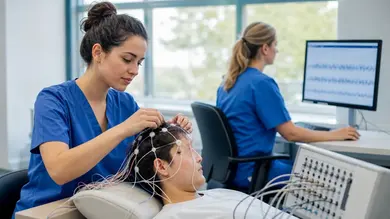
Common entry-level and early-career roles include EEG technologist, neurodiagnostic technologist, electroneurodiagnostic technologist, epilepsy monitoring technologist, and intraoperative neuromonitoring assistant or trainee. Responsibilities can include preparing patients, applying electrodes, recording data, recognizing artifacts, documenting observations, maintaining equipment, and communicating findings to supervising clinicians.
O*NET's 2024 profile for neurodiagnostic technologists reports the national median wage for the broader occupational category at $48,790. This number is useful as a labor-market benchmark, but actual pay can vary by credential, modality, region, shift differential, employer type, and experience level.
The table below summarizes how different program features may connect to career outcomes. No program can guarantee employment, but these factors can improve a student's readiness to compete for entry-level roles.
| Program feature | Career relevance | What to ask the school |
| CAAHEP-accredited curriculum | Signals alignment with recognized neurodiagnostic education standards | Is the current NDT program listed as accredited? |
| Supervised clinical rotations | Builds patient-care experience and technical competency | How are clinical sites assigned, and what happens if no local site is available? |
| Registry exam preparation | Supports pursuit of credentials valued by employers | Which exams are students prepared to take after completion? |
| Employer partnerships | May improve exposure to hiring networks | Which hospitals, clinics, or labs have hosted recent students? |
| Career services | Helps students translate clinical training into job applications | Are resume reviews and interview preparation specific to allied health roles? |
This degree is most worthwhile for students who want a technical, patient-facing healthcare role but do not necessarily want to become nurses, physicians, or respiratory therapists. It may be a poor fit for students who dislike detailed procedures, cannot complete in-person clinical hours, or want a fully remote healthcare job immediately after graduation.
How Do Online and Campus-Based Neurodiagnostic Technology Degree Programs Compare?
Online and campus-based neurodiagnostic technology programs can lead to similar educational goals when they are properly accredited and include comparable clinical training. The main difference is how students complete classroom learning, labs, advising, and clinical coordination.
The table below compares online-supported and campus-based formats across the decision factors that matter most for enrollment.
| Factor | Online or hybrid program | Campus-based program |
| Schedule flexibility | Stronger for theory courses, especially if asynchronous | More fixed class and lab times |
| Clinical training | Still required in person, sometimes near the student | Often coordinated through local campus partners |
| Peer and faculty interaction | May rely on discussion boards, video meetings, and virtual office hours | More immediate face-to-face interaction |
| Hands-on practice | May require travel for labs or intensive sessions | More consistent access to campus labs and equipment |
| Best fit | Working adults, rural students, and students who need flexible coursework | Students who live near campus and prefer structured in-person learning |
Choose an online or hybrid format if you are self-directed, have reliable internet access, can manage deadlines independently, and have a realistic clinical plan. Choose a campus-based format if you learn best through in-person demonstrations, need frequent lab access, or want stronger day-to-day structure.
The biggest mistake is assuming online automatically means easier. In neurodiagnostic technology, online students still need discipline, clinical availability, technical practice, and the ability to perform in patient-care environments.
How Should Students Choose the Best Accredited Online Neurodiagnostic Technology Degree Program?
Students should choose the best accredited online neurodiagnostic technology degree program by weighing accreditation, total cost, clinical access, schedule fit, and career preparation together. A low-cost program that you cannot complete because no clinical site is available is not a good value; a more expensive program without strong credential preparation is also risky.
Use this decision process to narrow your list before applying:
- Start with accreditation by confirming institutional accreditation and current CAAHEP programmatic accreditation for neurodiagnostic technology.
- Eliminate programs that cannot clearly explain clinical placement requirements, location options, supervision, and contingency plans.
- Compare total cost through completion, including tuition, fees, travel, supplies, clinical documentation, and exam preparation.
- Review admissions requirements early so you can complete prerequisites, GPA requirements, health records, and background checks on time.
- Ask for completion, credential exam, and job placement information if the school tracks it, and note whether the data is program-specific.
- Match the format to your life by checking whether courses are asynchronous, synchronous, hybrid, or campus-intensive.
- Compare financial aid offers after admission and calculate likely debt at graduation.
- Talk with admissions, faculty, and ideally a current student or graduate before committing.
The strongest combination for many students is a CAAHEP-accredited associate degree with reasonable tuition, transparent clinical coordination, flexible online coursework, and documented registry preparation. However, the "best" program can differ for a rural working adult, a recent high school graduate, a transfer student, or a hospital employee seeking advancement.
Before enrolling, ask admissions counselors direct questions:
- What happens if I cannot secure a clinical site?
- Are campus visits required? Which credentials do graduates pursue?
- What is the total estimated cost?
- Are credits transferable?
- How many students finish on time?
Clear answers are a sign of a program that understands the realities of online allied health education.
Other Things You Should Know About Neurodiagnostic Technology
Sometimes, but it depends on the employer, your prior education, clinical experience, and credentialing pathway. A degree may offer broader transfer value, while a certificate may be useful for students who already have healthcare experience or a related credential.
Licensure requirements vary by state and employer. Many positions emphasize professional credentials, clinical competency, and employer-specific requirements rather than a universal state license. Students should check their state rules and local job postings before enrolling.
It can be. Technologists may stand for long periods, position patients, work in dim rooms, respond to patient discomfort, and maintain focus during lengthy recordings or monitoring procedures.
Helpful skills include attention to detail, patient communication, comfort with medical equipment, anatomy knowledge, problem-solving, documentation accuracy, and the ability to stay calm during clinical testing.
References
- Neurodiagnostic Technology https://orangecoastcollege.edu/academics/career-advantage/program-areas/neurodiagnostic-technology.html
- Neurodiagnostic Technologist - Explore Healthcare Careers - Mayo Clinic College of Medicine & Science https://college.mayo.edu/academics/explore-health-care-careers/careers-a-z/neurodiagnostic-technologist/
- Neurodiagnostic Technology Requirements https://www.southeasttech.edu/_showcase/test-pages/neurodiagnostic-technology/requirements.php
- ASSOCIATE OF SCIENCE IN NEURODIAGNOSTIC TECHNOLOGY - Procirca https://www.procirca.com/associate-of-science-in-neurodiagnostic-technology/
- Neurodiagnostic Technologist https://explorehealthcareers.org/careers/allied-health-professions/neurodiagnostic-technologist/
- Neurodiagnostic Technology https://www.baptistu.edu/neurodiagnostic-technology
- Career Growth in Neurodiagnostics: How to Advance, Specialize, and Lead in the Field - Neuro Pathway https://myneuropathway.com/blog/career-development-in-neurodiagnostics/
- Electroneurodiagnostic Technology - Institute of Health Sciences https://adm.iohs.edu/medical-programs/neurodiagnostic-technology/
- Neurodiagnostic Tech Certification & Licensure Guide â Trusted Health https://www.trustedhealth.com/allied-career-guide/neurodiagnostic-tech/certification-guide
- Neurodiagnostic Technologist - Salary, How to Become, Job Description & Best Schools https://www.onlinedegree.com/careers/medical-healthcare/neurodiagnostic-technologist/