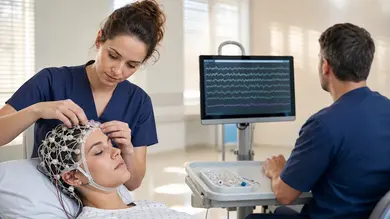
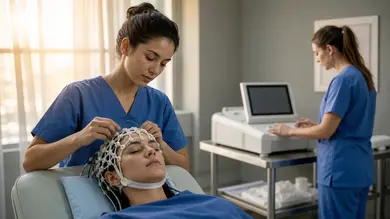
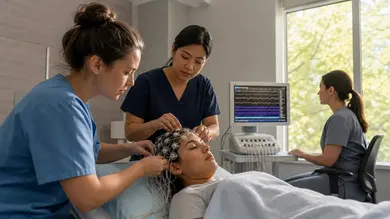
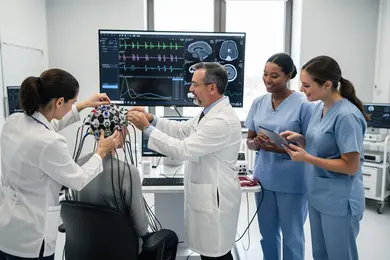
2027 Cheapest Accredited Online Neurodiagnostic Technology Degree Programs That Accept FAFSA

Co-Founder and Chief Data Scientist
Neurodiagnostic technology students face a tough choice: find a program affordable enough to finish, but accredited enough to support certification and employment. The maximum Federal Pell Grant is $7,395 for the 2024-25 award year, which can materially reduce costs for eligible students.
This guide is for prospective EEG, END, and neurodiagnostic technology students comparing online or hybrid degree programs that accept FAFSA. You will learn how to compare tuition, aid, accreditation, clinical requirements, transfer credits, and career ROI before committing to a program.
Key Things You Should Know
- The cheapest FAFSA-eligible neurodiagnostic technology options are usually public community college associate programs with online coursework and required in-person clinical rotations, not fully online programs.
- FAFSA participation does not mean a program is free; Pell Grants can reach $7,395 for eligible students in the 2024-25 award year, while remaining costs may still include fees, books, equipment, travel, and loans.
- For career value, prioritize CAAHEP-accredited neurodiagnostic technology programs or programs that clearly support eligibility for professional certification exams such as ABRET pathways.
Which Are the Cheapest Accredited Online Neurodiagnostic Technology Degree Programs That Accept FAFSA?
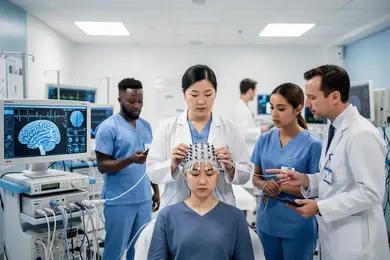
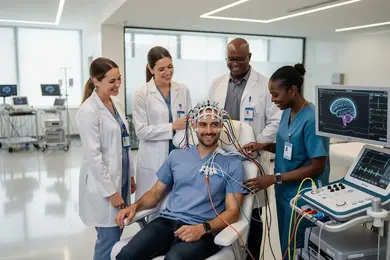
The cheapest accredited online neurodiagnostic technology degree programs that accept FAFSA are typically hybrid associate degree programs at public colleges. "Online" usually means lectures and didactic coursework are delivered online, while lab competencies and clinical rotations must be completed in person at approved healthcare sites.
The table below is a practical shortlist of affordable program types and schools commonly considered by students seeking online or hybrid neurodiagnostic technology education.
Because tuition, distance-learning status, clinical placement rules, and federal aid participation can change, use this as a starting point and verify each item with the school's financial aid office, program director, CAAHEP listing, and Federal School Code before applying.
| School or program type | Credential | Online or hybrid format | Affordability signal | What to verify before applying |
| Public community college neurodiagnostic technology programs | Associate of Applied Science or similar associate degree | Often online lectures with in-person labs and clinical rotations | Usually the lowest tuition for in-district or in-state students | CAAHEP program accreditation, FAFSA participation, clinical site availability near you |
| Collin College | Neurodiagnostic Technology AAS pathway | Hybrid structure may include online coursework and required clinical experiences | Public college pricing can be low for Texas residents and district students | Current modality, total program fees, admission cycle, and CAAHEP status |
| Johnson County Community College | Neurodiagnostic Technology associate pathway | Hybrid or distance-supported coursework with clinical requirements | Community college tuition can make it competitive for Kansas-area students | Residency tuition rate, clinical placement expectations, and federal aid eligibility |
| Kirkwood Community College | Electroneurodiagnostic or neurodiagnostic technology associate pathway | Program format may combine online instruction with hands-on clinical practice | Public two-year college pricing may reduce borrowing for eligible students | Program availability, accreditation status, and whether your location can support clinicals |
| Labouré College of Healthcare | Associate degree in neurodiagnostic technology or related pathway | Designed for working healthcare students with online coursework and clinical components | May cost more than public colleges but can be valuable for students needing flexible delivery | Total tuition, transfer credit policy, clinical placement support, and institutional aid |
The main affordability lesson is simple: the lowest published tuition is not always the lowest real cost. A nearby public program may be cheaper if it has local clinical placements, while a more expensive distance program may be worth considering if it accepts more transfer credits or allows you to keep working while enrolled.
How Does FAFSA Eligibility Work for Online Neurodiagnostic Technology Degree Programs?
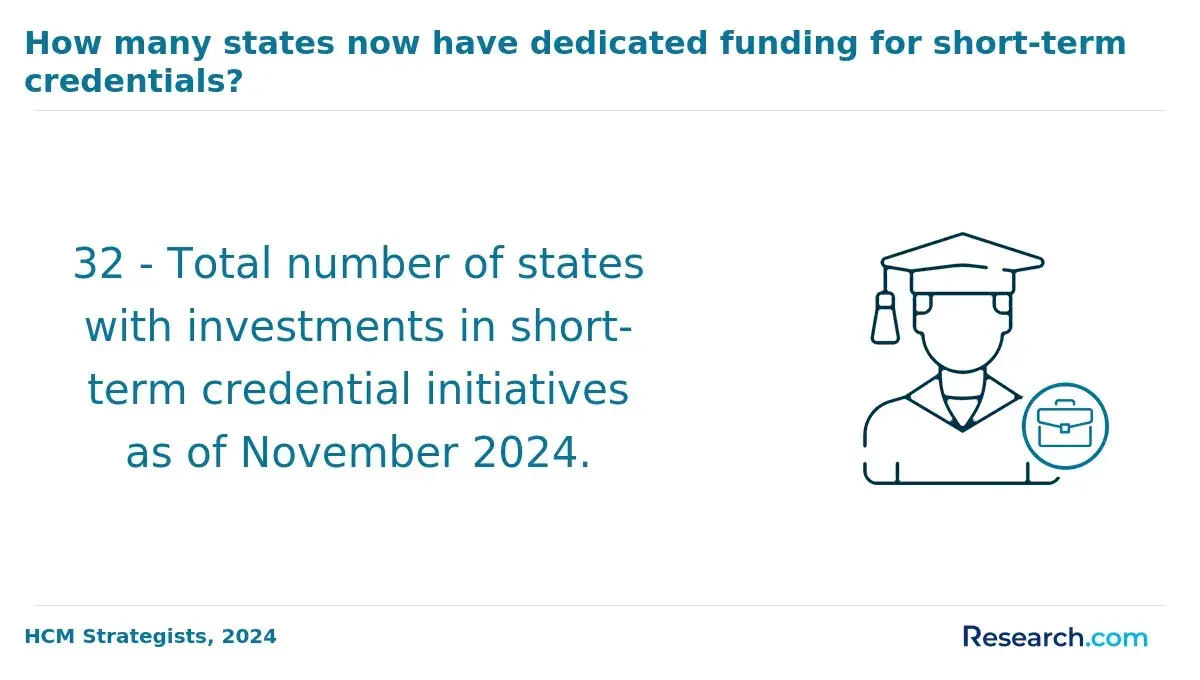
FAFSA eligibility means the institution participates in federal student aid programs and the student may be considered for federal grants, federal loans, and work-study. It does not automatically mean every program, enrollment status, certificate track, or student will receive aid.
For neurodiagnostic technology, the most important detail is whether the credential is an eligible program at a Title IV-participating school. Degree programs are more commonly aid-eligible than short noncredit training options, but students should still confirm program-level eligibility before enrolling.
Use this process before you treat a school as FAFSA-eligible:
- Search for the school using its Federal School Code and confirm that it appears as a participating institution for the aid year you plan to attend.
- Ask the financial aid office whether the specific neurodiagnostic technology degree, not just the college, is eligible for federal aid.
- Confirm whether you must enroll at least half time to receive federal loans or certain types of aid.
- Ask whether online students, out-of-state students, and students completing clinicals away from campus have the same aid access.
- Request a written cost of attendance estimate that includes tuition, fees, books, equipment, travel, and living expenses.
A common mistake is assuming that "accepts FAFSA" means "fully funded by FAFSA." FAFSA is only the application. The actual aid offer depends on federal rules, your Student Aid Index, dependency status, enrollment intensity, prior aid usage, satisfactory academic progress, and the school's cost of attendance.
How Much Does an Online Neurodiagnostic Technology Degree Cost After Financial Aid?
The cost after financial aid depends on four things: published tuition, fees, grants and scholarships, and how many credits you still need to complete. For many students, the key comparison is not "tuition per credit" but "net price after grants plus the amount I may need to borrow."
The table below shows how the same FAFSA-eligible program can look very different depending on aid. These examples are decision scenarios, not price quotes from a specific school.
| Cost scenario | What it means | How it affects affordability |
| Low tuition and strong grant aid | A public college charges relatively low tuition and the student qualifies for Pell Grant support | Usually the best case because grants reduce out-of-pocket cost without repayment |
| Low tuition but limited grant eligibility | The school is inexpensive, but the student receives little or no need-based grant aid | Still affordable for some students, but loans or payment plans may be needed |
| Higher tuition with generous transfer credit | The program costs more per credit but accepts prior college or healthcare coursework | May cost less overall if the student completes fewer credits |
| Higher tuition with work-friendly scheduling | The program is more expensive but allows continued employment | Can reduce opportunity cost if the student avoids leaving work |
| Low tuition with distant clinical requirements | Tuition is attractive, but the student must travel for labs or clinical placement | Travel, lodging, and lost work hours can erase the apparent savings |
For a realistic estimate, ask each school for a term-by-term budget. Include application fees, uniforms, background checks, immunizations, drug screening, CPR certification, liability insurance, technology fees, clinical travel, textbooks, and exam preparation costs. In healthcare programs, these non-tuition costs can be the difference between a manageable budget and unexpected borrowing.
Which Affordable Online Neurodiagnostic Technology Degree Programs Offer the Best Value?
The best-value program is not automatically the cheapest. It is the program that gives you the strongest combination of accreditation, clinical access, certification preparation, transfer credit acceptance, scheduling flexibility, completion support, and low net cost.
Students comparing neurodiagnostic technology with broader healthcare pathways may also want to compare flexibility and advancement options in fields such as healthcare administration, especially if they are more interested in management, operations, or nonclinical roles than direct patient testing.
Use the following value factors to compare programs beyond tuition:
- Accreditation fit: Give more weight to programs with clear CAAHEP accreditation or transparent certification pathways because this can affect employer confidence and exam eligibility.
- Clinical placement support: A low-cost online program may be poor value if it cannot help you secure approved clinical experience near your location.
- Completion time: A program that takes fewer terms because it accepts transfer credits may beat a cheaper per-credit program that makes you repeat coursework.
- Work compatibility: Evening, asynchronous, or hybrid coursework can preserve income while you study, which improves real-world affordability.
- Certification preparation: Strong programs align coursework and clinical competencies with EEG, evoked potential, nerve conduction, or related neurodiagnostic certification expectations.
- Student support: Tutoring, advising, financial aid counseling, and clinical coordination matter more in selective health programs than in many general online degrees.
A more expensive program may be worth choosing if it has stronger clinical placement coordination, better transfer acceptance, a schedule that lets you remain employed, or a clearer route to certification. A cheaper program may be the better choice if it is properly accredited, local clinicals are available, and you can complete it with little or no borrowing.
Are the Cheapest Online Neurodiagnostic Technology Degree Programs Properly Accredited?
Accreditation is the quality-control issue students should verify before cost. For neurodiagnostic technology, there are two levels to check: institutional accreditation and programmatic accreditation. Institutional accreditation affects federal aid eligibility and credit transfer, while programmatic accreditation can affect certification preparation and employer recognition.
For this field, CAAHEP accreditation, often based on review by the Committee on Accreditation for Education in Neurodiagnostic Technology, is a major indicator that a program meets specialized education standards. Not every employer requires graduation from a CAAHEP-accredited program in every situation, but students should be cautious about programs that cannot clearly explain certification pathways.
Before enrolling, complete these accreditation checks:
- Confirm that the school is institutionally accredited by an accreditor recognized by the U.S. Department of Education.
- Confirm that the school participates in federal student aid if FAFSA funding is part of your plan.
- Search the current CAAHEP program list for the specific neurodiagnostic technology program, not only the college name.
- Ask whether graduates are prepared for ABRET or other relevant credentialing exams and what prerequisites apply.
- Ask employers or clinical sites in your area which program credentials they prefer for entry-level EEG or neurodiagnostic roles.
Red flags include vague accreditation language, pressure to enroll quickly, unclear clinical requirements, no published curriculum, no named program director, or promises that a short online course alone will qualify you for all neurodiagnostic jobs. In healthcare education, "cheap" becomes expensive if the credential is not recognized by employers or certification bodies.
What FAFSA Grants and Federal Aid Can Pay for an Online Neurodiagnostic Technology Degree?
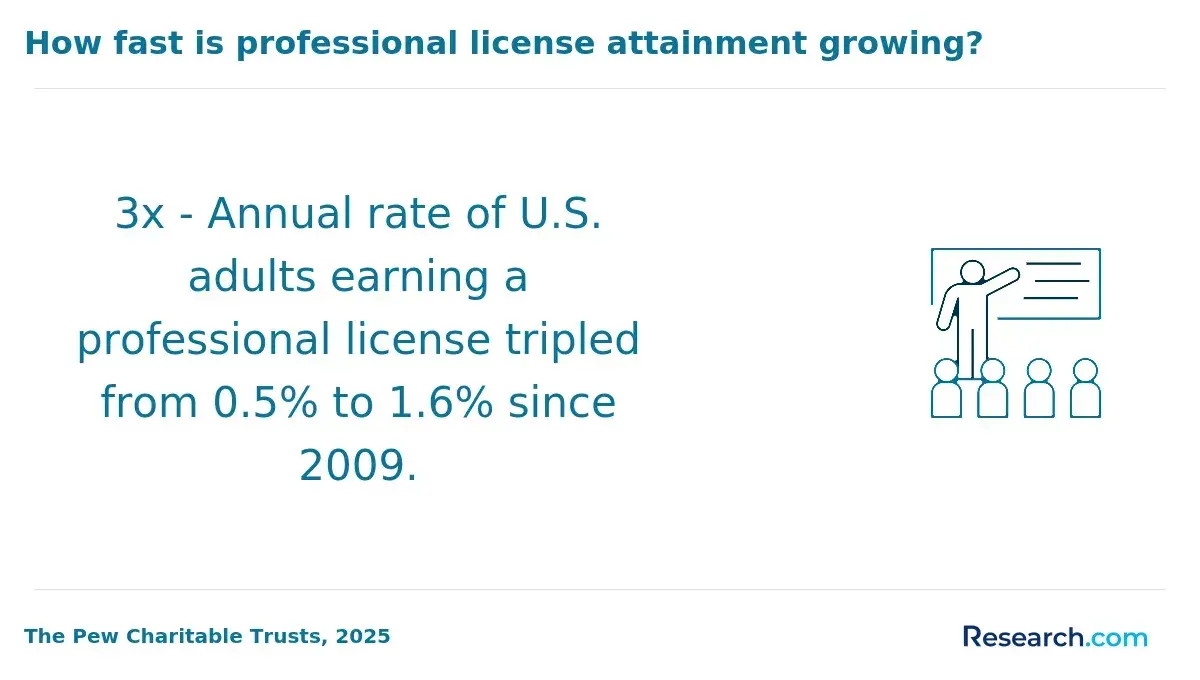
FAFSA can open the door to federal grants, federal loans, and sometimes work-study. For eligible undergraduates, the Federal Pell Grant maximum is $7,395 for the 2024-25 award year, which is important because grant aid does not have to be repaid if enrollment and eligibility rules are met.
Students considering healthcare degrees at different levels should remember that aid rules can vary by credential type. For example, federal aid planning for an online pharmacy degree will look very different from aid planning for an associate-level neurodiagnostic technology program because professional programs often involve higher tuition, different borrowing needs, and different time horizons.
The main FAFSA-related funding sources to understand are:
- Federal Pell Grant: Need-based undergraduate grant aid that can reduce tuition and fee costs for eligible students.
- Federal Supplemental Educational Opportunity Grant: Campus-based grant aid for students with high financial need, available only at participating schools with limited funds.
- Federal Direct Subsidized Loan: Undergraduate loan for eligible students with financial need, with the federal government covering interest during certain periods.
- Federal Direct Unsubsidized Loan: Undergraduate loan not based on financial need, but interest begins accruing after disbursement.
- Federal Work-Study: Part-time employment funding that may help with living expenses, depending on school participation and job availability.
- State grants and institutional scholarships: Aid that may require FAFSA completion even when the funds are not federal.
The safest approach is to compare award letters by net price and loan amount, not by total aid. A large aid package that is mostly loans may be less affordable than a smaller package with more grants and scholarships.
How Do Transfer Credits Lower the Cost of an Online Neurodiagnostic Technology Degree?
Transfer credits can lower total cost by reducing the number of credits you must pay for, shortening your time in school, and helping you reach clinical coursework sooner. This is especially useful for students who already completed anatomy, physiology, medical terminology, psychology, English composition, math, or allied health courses.
Students coming from medical assisting or practical nursing pathways should compare bridge-style options carefully. For example, a CCMA to LPN bridge program may use prior healthcare training differently than a neurodiagnostic technology program, so you should not assume the same credits will transfer across fields.
Before choosing a program based on transfer savings, ask for a formal evaluation:
- Send official transcripts before enrollment, not after your first term begins.
- Ask which credits apply to the degree requirements, not just which credits transfer to the institution.
- Confirm the minimum grade required for science, math, and technical courses.
- Ask whether older anatomy, physiology, or health science credits expire after a certain number of years.
- Verify whether transfer credits affect financial aid pace, satisfactory academic progress, or full-time status.
- Compare the total remaining credits at each school rather than the per-credit tuition alone.
The biggest transfer-credit mistake is choosing a low per-credit tuition school that accepts few prior credits. A higher-priced program that accepts more applicable credits can sometimes produce a lower total bill and a faster completion date.
Which Students Benefit Most From a Low-Cost Online Neurodiagnostic Technology Degree With FAFSA?
Low-cost online or hybrid neurodiagnostic technology degrees are best for students who want direct clinical work, can complete in-person clinical requirements, and need federal aid to make school manageable. The field fits detail-oriented students who are comfortable with patients, technology, anatomy, physiology, and careful documentation.
Students still exploring fast healthcare entry routes may also compare neurodiagnostic technology with a 9 month LPN program, but the career fit is different: LPN training focuses on nursing care, while neurodiagnostic technology focuses on testing brain, nerve, and nervous system function under physician supervision.
This type of program is often a strong fit for:
- Students seeking an allied health career without committing immediately to a four-year degree.
- Working adults who need online lecture flexibility but can arrange local clinical hours.
- Students who qualify for Pell Grants, state grants, or employer tuition assistance.
- Current healthcare workers who want a specialized technical role in EEG, epilepsy monitoring, sleep-related testing, or neurophysiology support.
- Students who are comfortable following protocols, handling equipment, communicating with patients, and documenting test conditions accurately.
It may be a poor fit if you need a program that is 100% online with no clinical attendance, cannot travel to an approved clinical site, dislike patient-facing work, or want a broad administrative degree instead of a specialized diagnostic role. The cheapest program is not the right program if the format prevents you from completing required competencies.
How Does the Cost of an Online Neurodiagnostic Technology Degree Affect Career ROI?
Career ROI depends on how much you spend, how much you borrow, how quickly you finish, and whether the program supports the credentialing and clinical experience employers expect. The Bureau of Labor Statistics' May 2024 wage data places neurodiagnostic technologists within a broader "Health Technologists and Technicians, All Other" category, with a national median annual wage of about $48,540. That figure is not a guaranteed neurodiagnostic salary, but it gives students a practical benchmark for debt decisions.
Students comparing clinical and advanced practice paths should keep credential level in perspective. The shortest post master's FNP program online serves already-licensed nurses pursuing advanced practice, while an online neurodiagnostic technology associate degree is typically an entry-level allied health pathway with a very different cost, timeline, and earning profile.
Use these ROI rules before borrowing:
- Estimate total borrowing before enrollment and compare it with entry-level wages in your local labor market.
- Give extra value to programs that prepare you for certification because credentials may improve competitiveness for hospital and lab roles.
- Ask local employers whether they hire graduates from the program and whether clinical experience can lead to job opportunities.
- Consider opportunity cost: a flexible program may improve ROI if it lets you keep working while enrolled.
- Avoid borrowing up to the maximum loan amount just because it is offered; borrow only what you need for direct education and essential living costs.
A low-cost program can produce strong ROI when it is accredited, clinically feasible, and completed with modest debt. A very cheap program can produce weak ROI if it lacks recognized accreditation, does not lead to certification readiness, or forces delays because clinical placements are unavailable.
How Should Students Choose the Cheapest FAFSA-Eligible Online Neurodiagnostic Technology Degree?
Start by separating "cheap tuition" from "affordable completion." The best decision is based on total net cost, aid eligibility, accreditation, clinical feasibility, transfer credits, time to completion, and local employer recognition.
Use this step-by-step checklist before accepting admission:
- Confirm institutional accreditation and federal student aid participation using the school's official information.
- Confirm programmatic accreditation or a clear credentialing pathway for neurodiagnostic technology.
- Ask whether the specific degree is FAFSA-eligible for online or hybrid students.
- Request a full cost of attendance estimate, including fees, books, equipment, background checks, insurance, and clinical travel.
- Compare financial aid offers by grants, scholarships, loans, and remaining out-of-pocket cost.
- Request a transfer credit evaluation and calculate remaining credits at each school.
- Ask where clinical rotations occur and whether the school helps arrange placements near your location.
- Ask about program outcomes such as completion support, certification preparation, and employer relationships, while remembering that outcomes can vary by student and market.
- Calculate your likely debt at graduation and compare it with local wage data for EEG or neurodiagnostic technology roles.
- Choose the lowest-cost program only if it also meets accreditation, clinical, and career-readiness requirements.
The most important question to ask every school is: "What will I realistically pay and what credential, clinical experience, and certification preparation will I have when I finish?" If the school cannot answer clearly, keep comparing programs before you enroll.
Other Things You Should Know About Neurodiagnostic Technology Programs
Usually not. Many programs offer online lectures, but neurodiagnostic technology requires hands-on clinical training with patients, equipment, safety procedures, and supervised competencies. Expect at least some in-person labs or clinical rotations.
Certification requirements vary by employer and role, but many hospitals and labs prefer or require professional credentials such as EEG-related certification. Before enrolling, ask the program which exams it prepares students for and what additional clinical hours may be required.
An associate degree can be sufficient for many entry-level neurodiagnostic technology roles when it includes appropriate clinical training and supports certification readiness. Some employers may prefer additional credentials, experience, or specialized training for epilepsy monitoring, evoked potentials, or nerve conduction roles.
Common requirements include a high school diploma or GED, college placement requirements, prerequisite science or math courses, immunizations, background checks, drug screening, CPR certification, and a minimum GPA. Selective programs may also require an interview or limited-entry application.
References
- Neurodiagnostic Technology https://www.southeasttech.edu/_showcase/test-pages/neurodiagnostic-technology/index.php
- EEG Associate in Applied Science Pathway https://midmich.edu/degrees-programs/programs/eeg/eeg-aas-pathway
- How to Become a Neurodiagnostic Technologist - Neuro Pathway https://myneuropathway.com/blog/how-to-become-a-neurodiagnostic-technologist/
- Neurodiagnostic Technology https://orangecoastcollege.edu/academics/career-advantage/program-areas/neurodiagnostic-technology.html
- Neurodiagnostic Technology https://www.caahep.org/committees-on-accreditation/neurodiagnostic-technology
- Tuition & Fees - Neurodiagnostic Technology Institute https://neurodiagnostictechnologyinstitute.com/pay-fees/
- Neurodiagnostic Tech Certification & Licensure Guide â Trusted Health https://www.trustedhealth.com/allied-career-guide/neurodiagnostic-tech/certification-guide