2027 Accredited Online Neurodiagnostic Technology Degree Programs for Working Adults: Flexible, Part-Time, and Self-Paced Options

Co-Founder and Chief Data Scientist
Choosing an accredited online Neurodiagnostic Technology degree is usually a schedule decision as much as a career decision. Working adults need flexible coursework, local clinical options, clear accreditation, and costs that make sense. The timing matters: College Board reported average 2024-25 published tuition and fees of $4,050 at public two-year colleges, making associate-level healthcare programs a practical entry point for many adults. This guide explains formats, accreditation, admissions, cost, transfer credit, and career outcomes so you can compare programs against your work schedule and long-term goals.
Key Things You Should Know
- Accreditation matters most: prioritize institutionally accredited schools and, when available, CAAHEP-accredited neurodiagnostic technology programs because programmatic accreditation may affect clinical placement quality, employer recognition, and eligibility pathways for professional credentials.
- Part-time online programs usually fit full-time workers better than accelerated full-time tracks; expect many didactic courses to require about 8 to 15 hours per week, while clinical terms can require scheduled daytime availability that is not fully self-paced.
- Transfer credit can shorten completion time substantially, especially for general education courses; adult learners with prior college credit may reduce a two-year associate pathway, but clinical neurodiagnostic courses typically must be completed through the program.
What Is an Accredited Online Neurodiagnostic Technology Degree Program and Why Does Accreditation Matter?
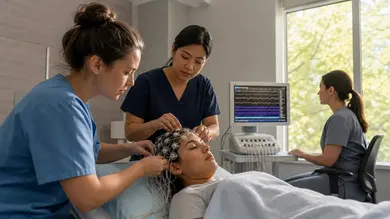
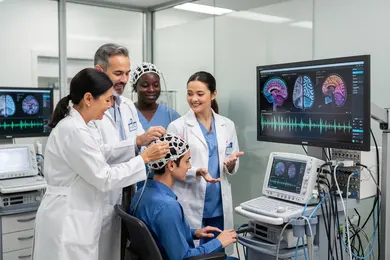
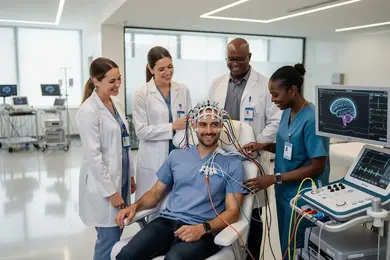
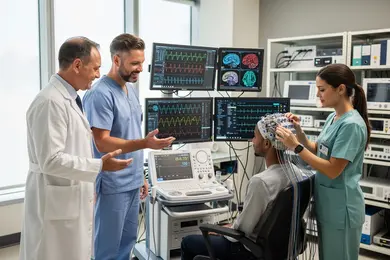
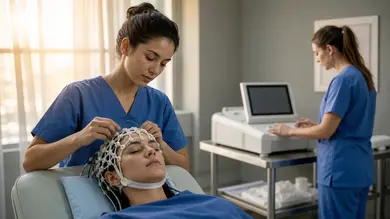
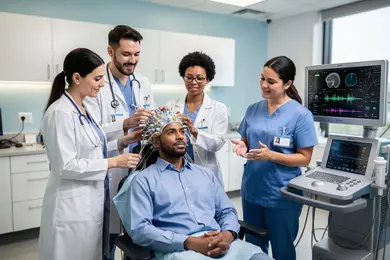
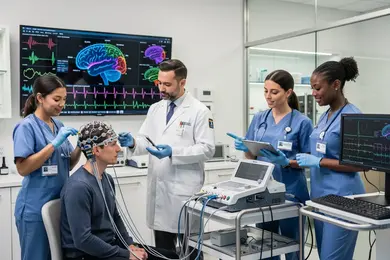
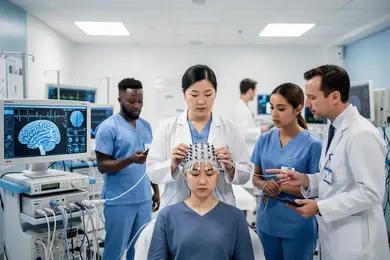
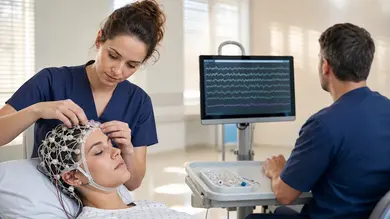
An accredited online Neurodiagnostic Technology degree program prepares students to perform tests that measure electrical activity in the brain, spinal cord, peripheral nerves, and related systems. Common procedures include electroencephalograms, evoked potentials, nerve conduction studies, long-term monitoring, and intraoperative neuromonitoring support, depending on the program's scope and clinical training.
"Online" usually means the classroom portion is delivered through a learning platform, but neurodiagnostic education is not a fully virtual field. Students still need supervised hands-on training with patients or simulation equipment, often through an approved clinical site near where they live. For working adults, the key question is not simply whether the program is online; it is whether the program's clinical schedule can realistically fit around employment.
Accreditation has two layers. Institutional accreditation applies to the college or university and is essential for federal financial aid eligibility, transfer credit recognition, and baseline academic quality. Programmatic accreditation, commonly associated with the Commission on Accreditation of Allied Health Education Programs for neurodiagnostic technology programs, signals that the curriculum, clinical experience, faculty qualifications, and outcomes have been reviewed against field-specific standards.
This distinction is important because neurodiagnostic technology is a credential-sensitive healthcare field. Employers may prefer or require applicants who completed a recognized program and who are eligible to pursue professional credentials such as Registered EEG Technologist, Registered Evoked Potential Technologist, Certified Long Term Monitoring Technologist, or Certified Neurophysiologic Intraoperative Monitoring credentials, depending on the role.
The table below summarizes the major types of accreditation and recognition you should verify before applying. Use it to separate legitimate flexible programs from schools that sound convenient but may not support your career goals.
| Quality marker | What it means | Why it matters for working adults |
| Institutional accreditation | The college or university meets recognized academic standards | Supports federal aid eligibility, transfer credit, and employer confidence |
| Programmatic accreditation | The neurodiagnostic technology program meets field-specific education standards | May improve clinical training quality and credentialing readiness |
| Approved clinical sites | The program has a process for supervised hands-on learning | Determines whether you can complete required hours without relocating |
| Credential exam alignment | Courses prepare students for relevant neurodiagnostic certification exams | Helps connect the degree to practical employment requirements |
Accreditation is also a protection against common enrollment mistakes. A program can advertise online convenience while leaving students responsible for finding clinical sites, paying unexpected lab fees, or discovering too late that the curriculum does not align with employer expectations in their region.
Which Flexible Neurodiagnostic Technology Degree Formats Are Best for Working Adults: Part-Time, Full-Time, or Self-Paced?
The best format depends on your work hours, clinical availability, prior credits, and tolerance for deadline pressure. Neurodiagnostic technology programs can be flexible in the classroom portion, but clinical training is usually scheduled, supervised, and tied to healthcare facility availability.
For most full-time workers, part-time asynchronous coursework is the most realistic option. Full-time study may be faster, but it can be difficult when labs, exams, and clinical rotations require weekday availability. Self-paced options can help adults move faster through general education courses, but they are less common in technical neurodiagnostic courses because faculty assessment and clinical sequencing matter.
The table below compares common online formats from the perspective of an adult learner balancing job, family, and clinical requirements. It can help you identify which format fits your weekly schedule before you speak with admissions.
| Format | Best fit | Main advantage | Main trade-off |
| Part-time online | Adults working full time or managing family care | Lower weekly course load and more time to absorb technical material | Longer time to graduation |
| Full-time online or hybrid | Students who can reduce work hours | Faster completion and stronger cohort momentum | Higher weekly workload and less flexibility during clinical terms |
| Asynchronous online | Workers with changing shifts | Lectures and assignments can often be completed outside business hours | Deadlines still apply, and labs or exams may be scheduled |
| Synchronous online | Students who benefit from live instruction | Real-time interaction with faculty and classmates | Fixed class times can conflict with work shifts |
| Self-paced coursework | Students with strong discipline and prior college experience | Potential to move faster through eligible nonclinical courses | May not apply to clinical or neurodiagnostic core courses |
Before choosing a format, ask the school to define "flexible" in writing. Some programs use the term to mean asynchronous lectures, while others mean evening classes, rolling start dates, or limited part-time pacing. These are not the same experience.
A practical selection process can prevent schedule surprises after enrollment. Use these steps when comparing program formats:
- Map your fixed work obligations first, including commute time, shift changes, overtime periods, and family care responsibilities.
- Ask each program for a sample weekly schedule for both didactic and clinical terms, not just the first semester.
- Confirm whether exams require live proctoring, campus visits, scheduled lab sessions, or specific technology.
- Find out whether clinical rotations can be completed near your home and whether weekday daytime hours are required.
- Choose the fastest program you can complete consistently, not the fastest one advertised.
A common mistake is assuming self-paced means unlimited time and no deadlines. In healthcare programs, self-paced often applies only to selected online modules, while clinical competencies must be completed in a fixed sequence.

What Are the Admission Requirements for Accredited Online Neurodiagnostic Technology Degree Programs?
Admission requirements vary by school and degree level, but most accredited online Neurodiagnostic Technology programs expect applicants to show readiness for college science, healthcare professionalism, and patient-facing clinical work. Associate degree programs are common, while certificate pathways may be available for applicants who already hold a degree or healthcare credential.
Typical requirements include a high school diploma or equivalent, college placement scores or prior college coursework, prerequisite courses in anatomy and physiology or medical terminology, immunization records, CPR certification, background checks, drug screening, and proof that you can meet technical standards for clinical practice. Some programs also require observation hours, interviews, or documentation of healthcare experience.
Working adults should pay special attention to prerequisite timing. If you have been out of school for several years, a program may ask you to retake science courses if they are older than the school's accepted time limit. This can add a semester or more before you officially begin neurodiagnostic coursework.
The table below outlines common applicant profiles and the admission issues each group should review. This is useful because adult learners often enter from different starting points, not straight from high school.
| Applicant background | Likely strengths | Admission questions to ask |
| No healthcare experience | Fresh start and flexibility to learn program standards | Are observation hours or introductory healthcare courses required? |
| Medical assistant or patient care worker | Familiarity with patient interaction and clinical settings | Can any prior coursework or certifications reduce requirements? |
| Prior college student | Potential transfer credit for general education courses | Which credits apply to the degree audit, and which must be repeated? |
| Current healthcare employee | Employer support and possible clinical site connections | Can the employer host or support approved clinical rotations? |
If you are comparing entry-level healthcare pathways before committing to neurodiagnostic technology, you may also want to review how a 9 month LPN program differs in clinical scope, licensing structure, and patient care responsibilities. That comparison can clarify whether you prefer diagnostic testing, nursing care, or another allied health route.
Before applying, request a written admissions checklist and program sequence. This helps you avoid the common mistake of being accepted to the college but not yet admitted to the selective neurodiagnostic technology cohort.
How Much Does an Online Neurodiagnostic Technology Degree Cost, and What Financial Aid Options Are Available?
The cost of an online Neurodiagnostic Technology degree depends on school type, residency status, credit requirements, clinical fees, books, equipment, background checks, uniforms, and exam preparation costs. Public community colleges are often the most affordable route, especially when they offer in-district tuition and approved local clinical placements.
College Board's 2024-25 data reported average published tuition and fees of $4,050 at public two-year colleges and $11,610 for in-state students at public four-year institutions. For a working adult, the practical takeaway is that the school type and residency rate can matter as much as whether the program is online.
The table below shows major cost categories that adults should include when estimating total program cost. Tuition is only one part of the budget, especially in clinical healthcare programs.
| Cost category | What to check | Why it can change the total |
| Tuition and mandatory fees | Per-credit rate, online fees, lab fees, and residency rules | Online students may still pay technology or program-specific fees |
| Clinical preparation | Immunizations, background check, drug screen, CPR, and health insurance requirements | These costs often occur before clinical placement begins |
| Books and equipment | Textbooks, software, scrubs, supplies, and possible device requirements | Technical courses may require specialized materials |
| Travel and scheduling | Commute to clinical site, parking, fuel, and unpaid time away from work | Clinical terms can create indirect costs that are easy to underestimate |
| Credentialing preparation | Exam review materials and certification exam fees | Professional credentials may strengthen employment prospects |
Financial aid may include federal grants, federal loans, state grants, scholarships, workforce development funding, employer tuition assistance, and payment plans. For eligible undergraduates, the maximum Federal Pell Grant for the 2024-25 award year is $7,395, but actual awards depend on financial need, enrollment intensity, cost of attendance, and federal formulas.
Adults working in hospitals, sleep labs, neurology clinics, or broader healthcare settings should also ask about employer tuition assistance. Some employers are more willing to support programs that address staffing needs in diagnostic, nursing, pharmacy, or healthcare administration roles, especially when the employee can explain how the credential supports retention or advancement.
To compare affordability accurately, request a full cost sheet from each school. It should include tuition, fees, books, technology, clinical clearance costs, expected travel, and any exam-related expenses. Avoid choosing a program based only on the lowest tuition if it lacks local clinical support or requires unpaid travel that your schedule cannot absorb.
How Long Does It Take to Complete an Online Neurodiagnostic Technology Degree, and Can Transfer Credits Help You Graduate Faster?
Most entry-level Neurodiagnostic Technology associate degree pathways are designed around roughly two academic years of study, but working adults often take longer when enrolled part time. Certificate pathways may be shorter for students who already have a related degree or healthcare background, but they still require structured clinical skill development.
Transfer credit can help you finish faster by reducing general education requirements such as English composition, psychology, math, anatomy and physiology, or medical terminology. However, neurodiagnostic core courses and clinical competencies are usually taken through the program because they must align with faculty oversight, equipment standards, and patient safety requirements.
The table below summarizes how pace and prior credit can affect completion planning. Use it as a planning tool, not a guarantee, because each school controls its own curriculum and transfer policy.
| Pathway | Typical planning range | Best for | Important limitation |
| Full-time associate degree | About two academic years | Students who can prioritize school and clinical availability | May be difficult with full-time employment |
| Part-time associate degree | Often longer than two years | Working adults who need a manageable weekly course load | Program sequencing may limit how slowly courses can be taken |
| Certificate after prior degree | Varies by prerequisites and clinical requirements | Students with completed general education or healthcare coursework | Not all certificates serve entry-level students |
| Transfer-friendly route | Can reduce nontechnical coursework | Adults with prior college credit | Clinical and program-specific courses usually remain required |
Completion time also depends on course availability. Some neurodiagnostic courses are offered only once per year, so failing or dropping one course can delay graduation. This is one reason part-time students should ask for the full degree map before enrolling.
If you are comparing multiple allied health routes, look beyond advertised speed. For example, a CCMA to LPN bridge program may appeal to medical assistants who want a nursing license, while neurodiagnostic technology is better suited to adults drawn to diagnostic testing, neurology, sleep medicine, and patient monitoring.
To make transfer credit work for you, complete these steps before committing to a program:
- Request an unofficial transfer review before applying, if the school offers one.
- Ask which credits apply directly to the degree plan rather than only counting as electives.
- Confirm whether science prerequisites expire after a certain number of years.
- Ask whether credit for prior learning, military training, or healthcare certifications is available.
- Compare your revised graduation timeline after transfer credit, not the standard timeline shown on the website.
What Should You Look for When Comparing Accredited Online Neurodiagnostic Technology Degree Programs?
A strong online Neurodiagnostic Technology program should combine recognized accreditation, clear clinical placement support, qualified faculty, transparent costs, credential exam preparation, and online learning systems that work for adults. Flexibility is valuable, but it should not replace clinical quality or student support.
Start with accreditation and clinical logistics, then evaluate cost and pace. Many adults make the mistake of comparing programs by tuition first, only to discover later that clinical placement, schedule rigidity, or limited course availability creates a bigger barrier than cost.
The table below highlights comparison criteria that matter most when the program is online or hybrid. These factors help you judge whether a program is truly adult-friendly, not merely marketed that way.
| Comparison factor | What strong programs provide | Red flag |
| Accreditation | Clear institutional accreditation and transparent programmatic accreditation status | Vague claims such as "nationally recognized" without naming the accreditor |
| Clinical placement | Documented process for assigning or approving clinical sites | Students must find sites independently with little school support |
| Schedule transparency | Sample weekly workload, clinical hour expectations, and course sequence | Admissions staff cannot explain when labs or clinical rotations occur |
| Faculty expertise | Instructors with neurodiagnostic practice experience and credential familiarity | Limited information about faculty qualifications |
| Credential preparation | Curriculum aligned with relevant professional exams and competencies | No discussion of certification pathways or employer expectations |
| Student outcomes | Available information on retention, completion, placement, or exam readiness where reported | No outcomes data or unwillingness to explain program performance |
When you speak with admissions, do not rely on broad claims. Ask specific questions that reveal how the program operates after enrollment.
- Is the neurodiagnostic technology program programmatically accredited, and if not, what credentialing or employer limitations should I understand?
- Who is responsible for securing clinical sites, and how far might I need to travel?
- Are online courses asynchronous, synchronous, self-paced, or deadline-based?
- How many hours per week should I expect during lecture terms and clinical terms?
- What happens if my work schedule changes or I cannot attend a scheduled clinical shift?
- Which courses are offered every term, and which are offered only once per year?
- What fees are not included in published tuition?
A program is usually a better fit when it can answer these questions clearly before you apply. If answers are vague, ask to speak with the program director, clinical coordinator, or an academic advisor who works directly with neurodiagnostic students.
What Career Opportunities and Salary Potential Can You Expect With a Neurodiagnostic Technology Degree?
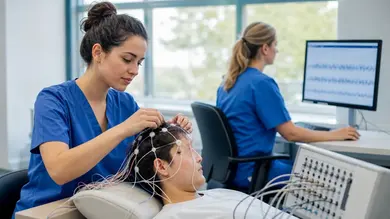
A Neurodiagnostic Technology degree can prepare students for roles that support neurologists, surgeons, sleep specialists, epilepsy monitoring units, hospitals, outpatient clinics, and diagnostic laboratories. The work is patient-facing and technical, requiring careful electrode placement, equipment operation, patient communication, data collection, and accurate documentation.
Salary varies by region, employer, shift, credential, experience, and specialty area. The U.S. Bureau of Labor Statistics groups neurodiagnostic technologists under broader health technologist and technician categories, so national wage data should be used as a benchmark rather than a precise prediction for every neurodiagnostic role. In May 2024 BLS data, healthcare practitioners and technical occupations had a median annual wage of $83,090, which reflects the broader healthcare technical labor market rather than only entry-level neurodiagnostic positions.
The table below shows common career directions connected to neurodiagnostic education. Use it to compare day-to-day work, not just job titles.
| Career path | Typical setting | Common responsibilities | Credential focus |
| EEG technologist | Hospital, neurology clinic, epilepsy center | Prepare patients, apply electrodes, record brain activity, document test conditions | Registered EEG Technologist preparation may be relevant |
| Long-term monitoring technologist | Epilepsy monitoring unit or remote monitoring service | Monitor extended EEG studies and identify events for review | Long-term monitoring credential pathways may apply |
| Evoked potential technologist | Hospital or specialty diagnostic lab | Perform tests that assess sensory pathway function | Evoked potential credential preparation may be relevant |
| Intraoperative neuromonitoring technologist | Operating room or surgical monitoring company | Assist with monitoring nervous system function during surgery | Specialized intraoperative monitoring credentials may be expected |
| Sleep or neurodiagnostic lab support | Sleep center, hospital lab, outpatient facility | Support diagnostic studies, patient preparation, and equipment workflows | Additional sleep technology credentials may be useful |
This degree may be worth considering if you like technology, anatomy, patient interaction, detailed observation, and structured clinical procedures. It may not be the best fit if you want a fully remote job, dislike patient contact, cannot manage clinical hours, or prefer a broader administrative healthcare track.
Some working adults compare neurodiagnostic technology with longer clinical education routes such as nursing, pharmacy, or advanced practice certificates. If your long-term goal is medication therapy, prescribing collaboration, or pharmacy leadership rather than diagnostic testing, an online pharmacy degree may align better, although it involves a very different admission process, time commitment, and professional scope.
Career outcomes are strongest when the program's clinical training, employer connections, and credential preparation match your local labor market. Before enrolling, review job postings in your region and note which credentials, shifts, and experience levels employers request.
How Can Working Adults Balance a Neurodiagnostic Technology Degree With Full-Time Work and Family Responsibilities?
Balancing a neurodiagnostic technology program with full-time work requires planning around two different workloads: online coursework and clinical practice. The classroom portion may be flexible, but clinical hours often follow healthcare facility schedules, which can include weekday daytime blocks.
A realistic schedule is more important than an optimistic one. Adults who succeed in technical healthcare programs usually protect recurring study time, communicate early with employers and family members, and avoid taking too many demanding science or clinical courses at once.
The table below offers a planning view of common enrollment situations. Use it to decide whether you should start full time, part time, or with prerequisites only.
| Life situation | Better starting strategy | Reason |
| Full-time job with fixed daytime hours | Part-time coursework first | Clinical terms may require advance negotiation with your employer |
| Shift work or rotating schedule | Asynchronous online courses with early clinical planning | Recorded lectures help, but clinical attendance still needs stability |
| Caregiving responsibilities | Reduced course load and predictable weekly study blocks | Unexpected family needs can make accelerated pacing risky |
| Prior college credit completed | Technical courses with careful workload review | Fewer general education courses may reduce total time pressure |
| Employer support available | Coordinate tuition assistance and schedule flexibility before enrollment | Written support can reduce financial and clinical scheduling stress |
Use a structured routine before the semester begins. The goal is to create enough margin that one difficult week at work does not derail the course.
- Block study time on a calendar before classes start, treating it like a work shift.
- Tell your employer early about future clinical requirements and ask whether schedule flexibility is possible.
- Take no more than one high-intensity science or clinical course at a time if you are working full time.
- Create a backup plan for childcare, transportation, internet access, and exam proctoring.
- Use office hours or tutoring before you fall behind, especially in anatomy, physiology, and waveform interpretation.
One of the most common mistakes is underestimating the emotional and cognitive load of healthcare training. Neurodiagnostic coursework requires memorization, technical accuracy, patient communication, and clinical judgment, so a lighter pace can sometimes produce better long-term results than rushing.
What Student Support Services and Online Learning Resources Should You Expect From a Neurodiagnostic Technology Degree Program?
Online student support can determine whether a flexible program actually works for adults. At minimum, you should expect academic advising, technical support, library access, tutoring, faculty office hours, disability services, career guidance, and a clear clinical coordination process.
Support is especially important in neurodiagnostic technology because students must connect online theory to real patient testing. A strong program should help you understand not only course content but also professional expectations, clinical documentation, patient safety, and preparation for credentialing exams.
The table below summarizes support services that are particularly valuable in an online or hybrid neurodiagnostic program. These services are worth asking about before you enroll because they affect persistence and confidence.
| Support service | What to look for | Why it matters |
| Academic advising | Degree maps, transfer reviews, and part-time planning | Prevents sequencing mistakes that delay graduation |
| Clinical coordination | Assistance identifying, approving, and documenting clinical sites | Reduces the risk of being unable to complete hands-on requirements |
| Online tutoring | Help in anatomy, physiology, medical terminology, and technical courses | Supports students returning to school after a long break |
| Technology support | Evening or weekend helpdesk access when possible | Working adults often study outside business hours |
| Career services | Resume help, interview preparation, and credential guidance | Connects the degree to job search readiness |
| Accessibility services | Documented accommodation process for eligible students | Ensures online and clinical learning requirements are addressed appropriately |
Ask whether support is available during the hours you actually study. A helpdesk open only during business hours may not be enough if you complete assignments after work or on weekends.
Adults who are exploring future advancement in nursing or advanced practice should also compare how student support differs across healthcare pathways. For example, a shortest post master's FNP program online serves licensed nurses with graduate preparation, while neurodiagnostic technology programs focus on entry-level or specialty diagnostic competencies.
A practical red flag is a program that has strong marketing but limited access to faculty, advisors, or clinical staff. In a hands-on healthcare field, you should know who will help you solve problems before those problems affect your progression.
Do Online Neurodiagnostic Technology Degree Programs Include Internships, Practicums, or Other Hands-On Learning Requirements?
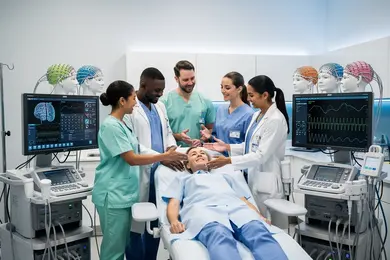
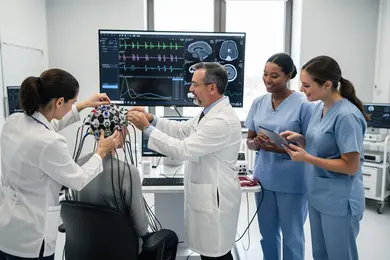
Yes. Accredited online Neurodiagnostic Technology programs typically include hands-on learning because students must demonstrate patient care, electrode application, equipment operation, recording procedures, safety practices, and professional documentation. The exact requirement may be called a clinical rotation, practicum, internship, lab, competency assessment, or externship.
This is the most important difference between online neurodiagnostic technology and many fully online academic degrees. You may be able to watch lectures online, submit assignments remotely, and participate in discussion boards asynchronously, but you cannot fully learn neurodiagnostic testing without supervised practice.
The table below explains common hands-on components and how they affect working adults. Review these requirements before enrolling because they can shape your work schedule for entire terms.
| Hands-on component | What students may do | Scheduling issue to verify |
| On-campus lab | Practice electrode placement, equipment setup, and simulated procedures | Whether campus visits are required and how often |
| Local clinical rotation | Work under supervision in a hospital, clinic, or diagnostic lab | Whether sites are available near your home |
| Competency checkoff | Demonstrate specific technical and patient care skills | Whether assessments must occur on fixed dates |
| Capstone or externship | Apply skills in a supervised clinical environment near program completion | Whether hours can be completed evenings or weekends |
| Simulation activities | Use case studies, software, or lab scenarios to reinforce concepts | Whether simulation replaces or supplements in-person clinical hours |
Before committing, ask the clinical coordinator direct questions. The answers will tell you whether the program's flexibility is compatible with your life.
- Does the school assign clinical sites, or must students secure their own placements?
- Can clinical hours be completed near my city or state?
- Are evening, weekend, or condensed clinical schedules available?
- What happens if a clinical site cancels or cannot accept students?
- Are there health, vaccination, background check, or drug screening requirements before placement?
- How many clinical hours are required, and during which semesters do they occur?
The biggest red flag is a program that advertises online convenience but cannot clearly explain clinical placement. For working adults, a flexible course schedule is only useful if the hands-on requirements are equally transparent and feasible.
Other Things You Should Know About Neurodiagnostic Technology
No. The fields overlap in some settings, but they are not identical. Neurodiagnostic technology focuses on nervous system testing such as EEG and evoked potentials, while sleep technology focuses on sleep studies and sleep-related breathing or neurological patterns. Some professionals pursue training or credentials in both areas.
Some experienced technologists may support remote monitoring or review workflows, especially in long-term EEG monitoring, but entry-level training and many jobs remain patient-facing. Do not choose this degree expecting a fully remote healthcare job immediately after graduation.
You do not need to be a mathematician, but you should be comfortable learning anatomy, physiology, medical terminology, electrical concepts, waveform recognition, and equipment procedures. Students who have been away from school for a while may benefit from tutoring or a lighter first term.
Attention to detail, patience, communication skills, professionalism, comfort with technology, and the ability to stay calm with patients are important. The work often requires precise setup and careful observation, so reliability and focus matter as much as academic performance.
References
- Electroneurodiagnostic Technology - Institute of Health Sciences https://adm.iohs.edu/medical-programs/neurodiagnostic-technology/
- Getting Your Employer to Pay for Your Online Masters https://www.onlinemastersdegrees.org/financial-aid/employer-tuition-assistance/
- Tuition Reimbursement: How Do Employers Benefit from It? | KBI Benefits https://www.kbibenefits.com/tuition-reimbursement-benefits
- How to Get Your Employer to Pay for College With Tuition Assistance Programs https://www.umassglobal.edu/blog-news/get-your-employer-pay-college-tuition-assistance-programs
- Become a Neurodiagnostic Technician: A Step-by-Step Guide - Neuro Pathway https://myneuropathway.com/blog/become-a-neurodiagnostic-technician-a-step-by-step-guide/
- Neurodiagnostic Technology Program | Lurie Children's https://www.luriechildrens.org/en/for-healthcare-professionals/education/medical-education-training/training-programs/neurodiagnostic-technology-program/
- Employer Tuition Assistance Plans May Help Pay for College https://campus.edu/blog/financial-aid/employer-tuition-assistance-programs-can-help-pay-for-college
- Neurodiagnostic Technology https://www.baptistu.edu/neurodiagnostic-technology
- How to Balance Part-Time Work and Studies https://www.ish.org.uk/how-to-balance-part-time-work-and-studies/
- Tuition Reimbursement Programs [A Guide for HR and Employers] https://compt.io/blog/employee-tuition-reimbursement/