2027 Online Neurodiagnostic Technology Degree Programs With No Application Fee and Rolling Admissions

Co-Founder and Chief Data Scientist
Choosing an online neurodiagnostic technology degree is harder than it looks because "no application fee" and "rolling admissions" do not always mean low cost or easy entry. The U. S. Bureau of Labor Statistics projects about 1.9 million healthcare job openings each year from 2023 to 2033, making allied health training especially relevant for career changers and working adults.
This guide explains how to compare programs, verify admissions claims, estimate real costs, and decide whether a flexible online or hybrid neurodiagnostic technology pathway fits your goals.
Key Things You Should Know
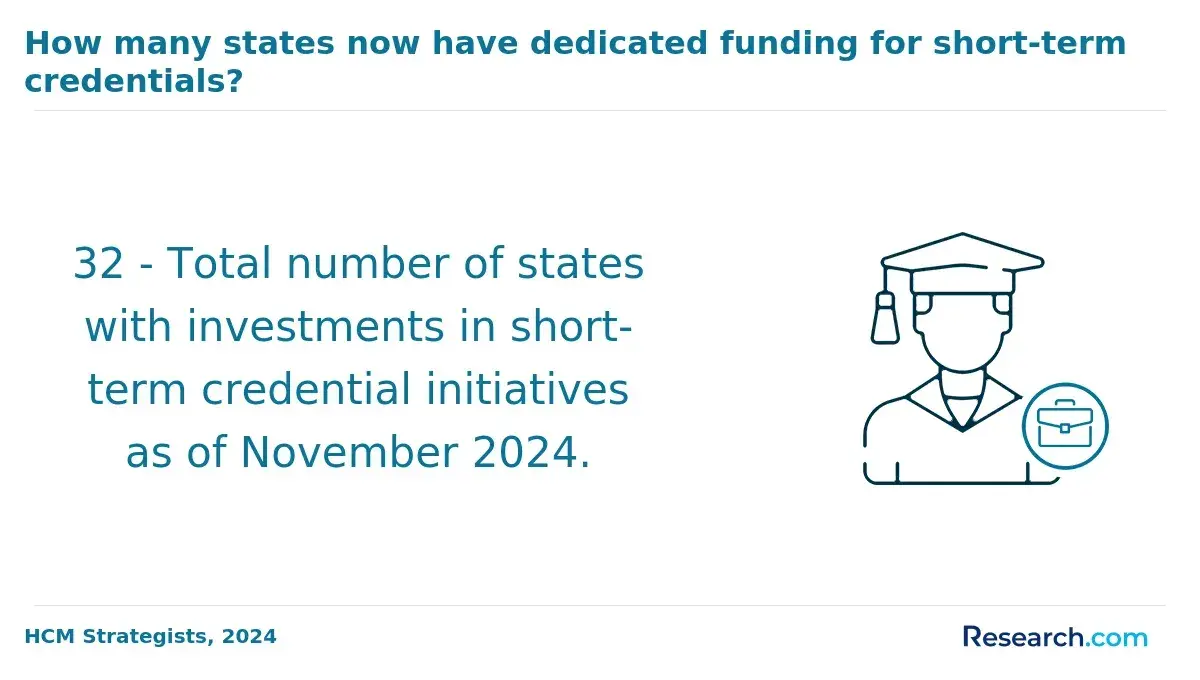
- No-application-fee programs can reduce upfront costs, but the bigger financial decision is total tuition; College Board's 2024-25 averages list public two-year in-district tuition and fees at $4,050 and public four-year in-state tuition and fees at $11,610.
- Rolling admissions usually means applications are reviewed as they arrive, but neurodiagnostic technology programs may still have clinical-placement limits, cohort start dates, prerequisite deadlines, or priority review dates.
- For career value, accreditation, clinical access, board-exam preparation, transfer-credit policy, and employer recognition matter more than saving a one-time application fee.
Which Online Neurodiagnostic Technology Degree Programs Have No Application Fee and Rolling Admissions?
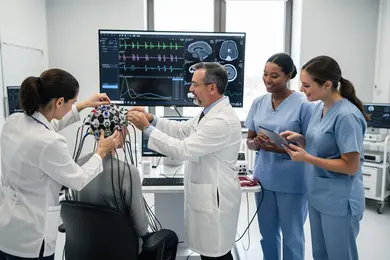
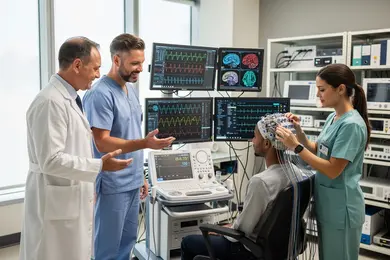
Online neurodiagnostic technology programs are uncommon because students must complete supervised clinical training on real patients using EEG and related monitoring equipment. The best match is often a hybrid associate degree or certificate with online didactic coursework and approved local clinical rotations, rather than a fully online program.
The table below summarizes program types students commonly evaluate when searching for no-fee, rolling-admission online neurodiagnostic technology degrees. Because colleges can change application fees, health-program deadlines, and cohort capacity without much notice, use this as a verification shortlist rather than a permanent ranking.
| Program or program type to verify | Typical credential | Online or hybrid structure | How it may fit this search | Important caution |
| North Carolina community college neurodiagnostic technology programs, such as Pamlico Community College or Pitt Community College | Associate of Applied Science or diploma pathway, depending on catalog | Often online coursework with in-person clinical requirements | Community colleges in this system commonly emphasize accessible admissions and low-cost application processes | Health science programs may use separate selective admission steps, prerequisite deadlines, or limited clinical slots |
| Private allied health colleges offering online associate-level neurodiagnostic technology options, such as Labouré College of Healthcare | Associate degree | Online theory courses with clinical or laboratory requirements | May offer multiple starts or rolling review for adult learners | Confirm whether the current application is fee-free and whether neurodiagnostic technology admits every term |
| Community colleges with hybrid electroneurodiagnostic or EEG technology tracks | Associate degree or certificate | Online general education plus campus labs and clinical placements | Often lower tuition than private options and may offer free general applications | Some have fixed annual health-program deadlines even if the college itself has rolling admission |
| Hospital-affiliated or clinical-partner programs with online coursework | Certificate or degree-completion pathway | Remote coursework paired with hospital-based clinical training | Can be useful for students already employed in healthcare settings | May not be degree-granting, may not accept federal financial aid, or may require employer sponsorship |
A practical search strategy is to separate the college's general application policy from the neurodiagnostic technology department's admission policy. A school can have no general application fee and rolling college admission while the NDT program still uses a competitive review date, background-check deadline, or clinical-placement cutoff.
How Does Rolling Admission Work for Online Neurodiagnostic Technology Degree Programs?
Rolling admission means a school reviews applications continuously instead of waiting for one fixed deadline. For online neurodiagnostic technology degrees, however, rolling admission usually applies to the first stage of admission: entry to the college or pre-program track. Entry to the clinical NDT major may still depend on course completion, seat availability, health documentation, and clinical-site approval.
The distinction matters because neurodiagnostic technology is a patient-care field. Programs must coordinate instructors, lab access, affiliate hospitals, immunization records, background checks, and clinical supervision before students can begin hands-on training.
The table below compares rolling admission with fixed-deadline admission so students can understand where the flexibility is real and where it may be limited.
| Admissions model | How applications are reviewed | Best for | Risk to watch |
| Rolling admission | Reviewed as completed applications arrive | Working adults, transfer students, and applicants who want faster feedback | Seats, clinical placements, or financial aid may still run out before the final start date |
| Priority rolling admission | Reviewed continuously, but earlier applications receive first consideration | Students who want flexibility but can apply early | Late applicants may meet minimum requirements but miss the strongest consideration window |
| Fixed deadline | Reviewed after a single published deadline | Selective cohorts with limited clinical slots | Missing one date can delay enrollment by a term or full year |
| Open college admission plus selective health-program admission | College entry is broad, but the NDT track has separate review | Students who need prerequisites before applying to the major | Applicants may mistakenly believe college acceptance equals program acceptance |
Students comparing neurodiagnostic technology with other healthcare pathways should also notice that rolling admissions is not unique to NDT. Some adjacent programs, such as a 9 month LPN program, may advertise accelerated starts, but each pathway has different clinical, licensing, and scheduling rules.
How Much Can Students Save by Choosing an Online Neurodiagnostic Technology Degree With No Application Fee?
A no-application-fee neurodiagnostic technology degree can save money at the point of applying, but it rarely changes the overall return on investment by itself. The direct savings equal the application fees you avoid across the schools where you apply; the larger savings usually come from choosing a lower-tuition program, transferring credits, avoiding repeated courses, and staying on track to graduate.
Use the following steps to estimate whether the fee waiver is financially meaningful or mostly a convenience.
- List every school you are considering and write down the current application fee shown inside the application portal, not only on a marketing page.
- Add any separate program review fees, placement-test fees, transcript fees, background-check fees, drug-screening fees, immunization costs, technology fees, lab fees, uniforms, and clinical-travel costs.
- Compare total tuition for the full credential, not just per-credit tuition, because neurodiagnostic technology programs may include required general education, clinical courses, and program-specific fees.
- Subtract transferable credits only after the school confirms in writing how they apply to the NDT curriculum.
- Estimate opportunity cost, including reduced work hours during labs, synchronous online sessions, or clinical rotations.
The table below shows why the waived application fee should be treated as one line item in a larger cost comparison.
| Cost category | Why it matters | How to verify it |
| Application fee | Immediate upfront cost; useful when applying to multiple schools | Check the live application before submitting |
| Tuition and mandatory fees | Main driver of total program cost | Use the tuition calculator or request a full program estimate |
| Clinical costs | Can include travel, health records, background checks, and site onboarding | Ask the program director for the clinical-cost checklist |
| Equipment and technology | Online programs may require a laptop, webcam, software, or testing platform | Review technical requirements before enrolling |
| Certification preparation | May affect job readiness after graduation | Ask whether exam preparation is embedded in courses or optional |
The bottom line is simple: no application fee is valuable when it lets you compare more programs without upfront friction, but it should not outweigh accreditation, clinical quality, graduation support, or total price.
What Are the Admission Requirements for No-Fee Online Neurodiagnostic Technology Degree Programs?
Admission requirements vary by college and by whether the applicant is entering a pre-program track, a certificate, an associate degree, or a degree-completion option. Most online neurodiagnostic technology programs expect students to demonstrate academic readiness, meet health and safety rules, and qualify for clinical placement.
Before applying, review the requirements below and confirm which ones are due at general admission versus program admission.
- High school diploma, GED, or recognized equivalent
- Official transcripts from high school and all colleges previously attended
- Minimum GPA or placement scores for college-level reading, writing, math, and science
- Prerequisite coursework, often including anatomy and physiology, medical terminology, biology, or basic patient-care concepts
- Background check, drug screening, immunization records, CPR certification, and health forms before clinical placement
- Proof of computer access, reliable internet, and ability to attend synchronous sessions if required
- Documentation of state residency or service-area eligibility if tuition rates or clinical placements depend on location
- Interview, essay, or professional reference if the NDT program is selective
Students with prior healthcare experience may have an advantage if they can document patient-care exposure, comfort with medical terminology, and reliability in clinical settings. For example, a medical assistant comparing neurodiagnostic technology with a CCMA to LPN bridge program should compare not only admission speed but also licensing outcomes, clinical schedules, and long-term role fit.
A common mistake is assuming that a fee-free application is a low-stakes application. In selective health programs, incomplete transcripts, missing prerequisites, or late clinical documents can delay admission even when the school accepts applications year-round.
When Should Students Apply to Online Neurodiagnostic Technology Degree Programs With Rolling Admissions?
Students should apply as early as they can submit a complete, accurate application. Rolling admission rewards preparedness because programs can review qualified applicants before seats, clinical sites, or preferred start dates are full.
The safest timeline is to work backward from your desired start date. This sequence helps prevent the most common rolling-admission problem: waiting too long because "rolling" sounds like "anytime."
- Six to nine months before the target start, identify programs that match your state, schedule, online format, and clinical-placement needs.
- Four to six months before the target start, request transcripts and ask each program whether the NDT track has priority review dates.
- Three to four months before the target start, complete prerequisites or placement testing and confirm transfer-credit decisions.
- Two to three months before the target start, submit the program application, financial aid forms, and any scholarship materials.
- One to two months before the target start, finish clinical onboarding items such as immunizations, CPR, background checks, and drug screening.
Applying early can also help students compare aid offers and course availability. It does not guarantee admission, but it gives applicants more time to fix missing documents, choose among programs, or shift to the next cohort without losing momentum.
How Can Students Strengthen an Online Neurodiagnostic Technology Degree Application?
A strong online neurodiagnostic technology application shows that the student understands both the science and the patient-care responsibilities of the field. Admissions teams may look for evidence that applicants can handle online coursework, clinical professionalism, and technical procedures that require accuracy under pressure.
Use the following actions to improve your application before submitting it.
- Complete anatomy and physiology, biology, and medical terminology with strong grades whenever possible.
- Document healthcare, caregiving, EMS, medical assisting, sleep lab, patient transport, or hospital volunteer experience.
- Ask recommenders to describe reliability, professionalism, communication, and ability to follow safety protocols.
- Write a focused personal statement explaining why neurodiagnostic technology fits your goals, not just why online learning is convenient.
- Prepare a brief explanation for past academic weaknesses and show what has changed, such as recent grades, work maturity, or study planning.
- Confirm that your state and local clinical sites are eligible before relying on an online program outside your region.
- Submit all documents in one complete package if the program reviews applications only after the file is complete.
Students already thinking about broader healthcare leadership should still focus the NDT application on direct patient-care readiness. Later, if they want to move toward operations or management, a separate healthcare administration pathway may be a better fit than trying to make an entry-level NDT application sound managerial.
Red flags include vague promises of "instant acceptance," no clear clinical plan, no published curriculum, or advisors who cannot explain certification preparation. A legitimate rolling-admission process should still include academic review and clinical-readiness checks.
Are Online Neurodiagnostic Technology Degree Programs With No Application Fees Accredited and Legitimate?
No application fee does not prove a program is legitimate, and rolling admissions does not prove it is weak. The right question is whether the institution and program meet recognized quality standards for allied health education and whether the curriculum prepares students for the roles they want.
For neurodiagnostic technology, students should check institutional accreditation and program-level recognition. Institutional accreditation affects federal financial aid eligibility and transferability. Programmatic accreditation or formal recognition in neurodiagnostic technology can matter for employer confidence, clinical partnerships, and certification preparation.
The table below shows the main legitimacy checks students should complete before enrolling.
| What to verify | Why it matters | What to ask |
| Institutional accreditation | Supports federal aid eligibility and academic credibility | Is the college accredited by an agency recognized by the U.S. Department of Education? |
| Programmatic accreditation or recognition | May affect employer trust and certification readiness | Is the NDT program accredited, approved, or formally aligned with recognized neurodiagnostic standards? |
| Clinical placement model | Hands-on training is essential in this field | Does the school assign clinical sites, or must students find their own? |
| Certification exam preparation | Many employers value professional credentials | Which exams does the curriculum prepare students to pursue? |
| State authorization | Online programs may not be able to enroll students in every state | Can the program enroll students and place them clinically in my state? |
Students should be especially cautious with programs that are entirely online but do not explain how clinical competencies are completed. Neurodiagnostic technology is not a purely theoretical field; legitimate training must include supervised practice with patients, equipment, safety procedures, and documentation.
How Do Financial Aid and Total Costs Compare Among Online Neurodiagnostic Technology Degree Programs?
Financial aid and total cost can differ sharply among online neurodiagnostic technology programs, even when the application is free. College Board's 2024-25 data shows why this matters: average published tuition and fees were $4,050 for public two-year in-district students, $11,610 for public four-year in-state students, and much higher at private nonprofit four-year institutions. For NDT students, that means school type and residency can matter far more than the application fee.
The table below summarizes cost and aid factors that should be compared before enrollment.
| Comparison factor | Lower-cost signal | Higher-cost or higher-risk signal | Decision point |
| Tuition rate | In-district or in-state public tuition | Private tuition or out-of-state rates | Compare total program cost, not per-credit cost alone |
| Federal financial aid | Degree-granting, accredited institution with aid eligibility | Non-degree training or unclear aid status | Ask whether the specific NDT program is aid-eligible |
| Scholarship deadlines | Published priority dates and health-science awards | Rolling admission but separate missed aid deadlines | Apply early enough to meet both admission and aid timelines |
| Transfer credits | Written evaluation before enrollment | Unofficial promises from advisors | Confirm how credits apply to the NDT plan of study |
| Clinical travel | Local placement or established regional partners | Student must locate distant or unpaid clinical sites | Estimate transportation, time, and work-schedule impact |
Students comparing healthcare pathways should also consider how long each credential takes and whether it leads to the role they actually want. A highly specialized option like an online pharmacy degree has a very different cost, timeline, and licensing model than an associate-level neurodiagnostic technology program, so the cheapest application should never be the main comparison point.
One financial-aid mistake is assuming rolling admission means rolling financial aid. Scholarship, state-grant, employer-tuition, and institutional-aid deadlines may close before the admissions office stops accepting applications.
Which Students Benefit Most From No-Fee, Rolling-Admission Online Neurodiagnostic Technology Degrees?
No-fee, rolling-admission online neurodiagnostic technology degrees are most useful for students who need flexibility but are still ready to act quickly. These features are especially valuable when they reduce friction without lowering academic quality.
The students below tend to benefit most from this admissions model.
- Working adults who need to apply outside a traditional fall-only admissions cycle
- Career changers who want faster feedback before leaving a job or changing work hours
- Transfer students who need time to evaluate how prior credits apply
- Healthcare workers who already understand patient care and want a technical diagnostic role
- Students applying to multiple allied health programs and trying to avoid unnecessary upfront application costs
- Applicants who missed a fixed deadline elsewhere but can still submit a complete file for the next available start
These programs are not the best fit for everyone. Students who need a guaranteed clinical site near home, a fully asynchronous schedule, or a single clear annual deadline may prefer a traditional cohort model. Nurses considering advanced practice, for example, may find that a shortest post master's FNP program online aligns better with their current license and career goals than starting a separate neurodiagnostic technology credential.
The strongest candidates use rolling admission strategically: they apply early, confirm clinical logistics, compare total costs, and keep a backup option. They do not treat the absence of an application fee as proof that the program is affordable or easy.
How Should Students Choose Among No-Fee Online Neurodiagnostic Technology Degree Programs?
The best no-fee online neurodiagnostic technology degree is the one that meets your academic, clinical, financial, and career requirements at the lowest reasonable total cost. Application-fee savings and rolling admissions are helpful only when the underlying program is strong.
Use this decision sequence before enrolling.
- Confirm the credential: Decide whether you need an associate degree, certificate, diploma, or degree-completion pathway for your target employers.
- Verify accreditation: Check institutional accreditation and ask about programmatic accreditation, certification alignment, and employer recognition.
- Confirm the real admissions model: Ask whether the NDT major has rolling review, priority dates, cohort limits, or separate clinical deadlines.
- Get the fee answer in writing: Verify that the current application is free and ask whether separate program, testing, or clinical-onboarding fees apply.
- Map the clinical plan: Ask who secures clinical placements, where students train, and what happens if a local site is unavailable.
- Compare total cost: Include tuition, fees, books, technology, clinical travel, background checks, immunizations, and lost work hours.
- Review start dates: Confirm which courses are available in each term and whether starting later delays clinical sequencing.
- Ask about outcomes: Request board-exam preparation details, graduate placement support, employer partnerships, and student completion information if available.
- Check transfer policy: Obtain a written transfer-credit evaluation before committing.
- Choose based on fit, not marketing: Prioritize clinical quality, affordability, and completion likelihood over a free application alone.
A useful final question is: "If this program charged an application fee, would I still choose it?" If the answer is no, the no-fee offer may be distracting you from more important concerns such as cost, clinical access, accreditation, or schedule fit.
Other Things You Should Know About Neurodiagnostic Technology
Usually no. Lecture-based courses may be online, but students typically need in-person labs, simulations, or supervised clinical rotations to develop EEG and patient-care skills.
Neurodiagnostic technologists help record and monitor electrical activity in the nervous system. Common duties may include preparing patients for EEG testing, operating diagnostic equipment, documenting results, and assisting physicians during neurological evaluations.
Many employers prefer or require professional certification, but requirements vary by role, state, and employer. Students should ask each program which certification exams its curriculum is designed to prepare them for.
No. The fields overlap in patient monitoring and recording physiological signals, but neurodiagnostic technology focuses more broadly on brain, nerve, and nervous-system testing, while sleep technology focuses on sleep studies and sleep-related breathing or neurological disorders.
References
- How to Compare Nursing Programs in California: What You Should Look For https://blog.stanbridge.edu/how-to-compare-nursing-programs-in-california-what-you-should-look-for/
- How to Get a Full-Ride Scholarship: A Guide for Utah High Schoolers https://mountainheightsacademy.org/blog/how-to-get-a-full-ride-scholarship-a-guide-for-utah-high-schoolers
- Beyond Financial Aid - Finaid https://finaid.org/beyond/
- Paying for College in 2026: Proven Ways to Cut Costs and Maximize Financial Aid https://www.scholaro.com/db/News/how-to-pay-for-college-in-2026-260
- Program Information https://orangecoastcollege.edu/academics/consumer-health/allied-health/neurodiagnostic-technology/program-information.html
- Different Types of Nursing Education Programs Explained https://www.allnursingschools.com/articles/understanding-the-different-types-of-nursing-degrees/
- What Do You Learn in Nursing School? - ABSN@CTX https://absn.concordia.edu/blog/what-do-you-learn-in-nursing-school/
- Career Growth in Neurodiagnostics: How to Advance, Specialize, and Lead in the Field - Neuro Pathway https://myneuropathway.com/blog/career-development-in-neurodiagnostics/
- 1.0 Utah Scholarship and Aid Landing Page - Utah System of Higher Education https://ushe.edu/state-scholarships-aid/
- Neurodiagnostic Tech Certification & Licensure Guide â Trusted Health https://www.trustedhealth.com/allied-career-guide/neurodiagnostic-tech/certification-guide