2027 Best Online Neurodiagnostic Technology Degree Programs at Nonprofit Universities

Co-Founder and Chief Data Scientist
Choosing an online neurodiagnostic technology program is difficult because clinical training, accreditation, and certification eligibility matter as much as online convenience. Neurodiagnostic technologists support EEG, sleep, epilepsy-monitoring, and intraoperative neuromonitoring services, often in hospitals and specialty clinics.
This guide helps prospective students compare nonprofit university options, distinguish degree pathways, estimate total costs, verify clinical requirements, and select a program that fits their schedule and career goals without assuming that nonprofit status alone signals quality.
Key Things You Should Know
- Most entry-level neurodiagnostic technology roles require hands-on clinical training; a fully online program should clearly identify approved clinical sites, supervision rules, travel expectations, and certification alignment.
- Institutional accreditation and programmatic recognition are different: verify both before paying a deposit, especially if your goal is EEG, sleep technology, or long-term monitoring work.
- Compare total cost, not tuition alone: fees, equipment, clinical travel, background checks, immunizations, and reduced work hours can materially affect affordability.
What Makes an Online Neurodiagnostic Technology Degree Program at a Nonprofit University Different?
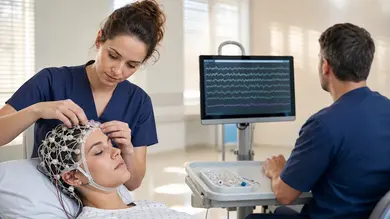
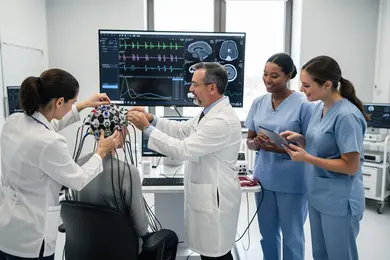
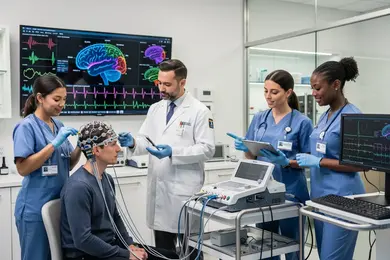
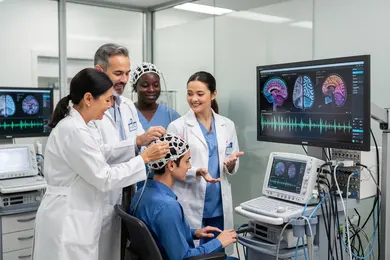
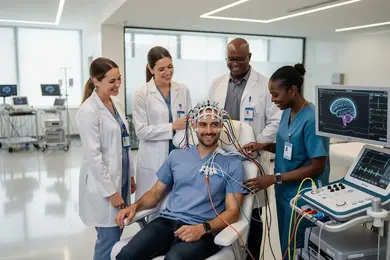
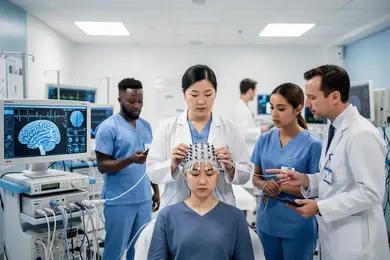
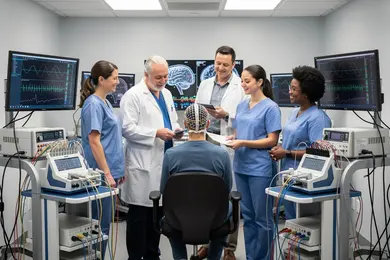
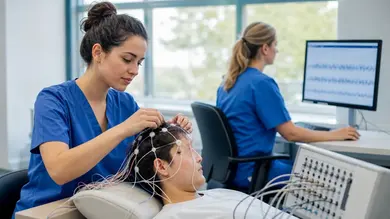
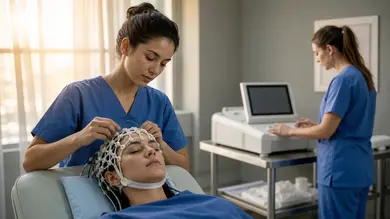
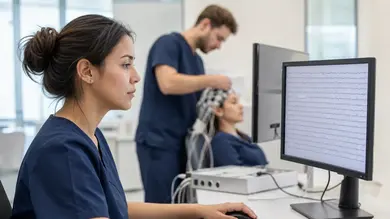
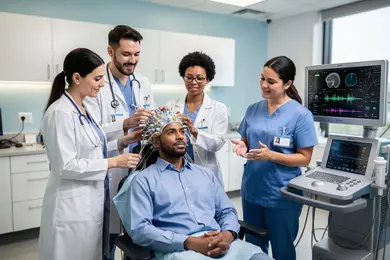
An online neurodiagnostic technology degree teaches students to collect and evaluate physiologic data from the nervous system under clinical protocols. Typical coursework covers neuroanatomy, neurophysiology, EEG instrumentation, patient safety, seizure recognition, sleep fundamentals, infection control, medical terminology, and professional ethics. Students commonly practice electrode application, equipment calibration, artifact recognition, documentation, and patient communication during in-person clinical experiences.
Nonprofit universities include public institutions and private nonprofit institutions. Their tax status does not automatically make a program less expensive, more selective, or better aligned with professional certification. The meaningful comparison is whether the specific program has credible oversight, adequate clinical placements, transparent outcomes, and a curriculum that supports the role you want.
The degree level should match your starting point and career plan. The following comparison highlights common pathways rather than universal requirements; employers, states, and certification organizations can set different expectations.
| Pathway | Typical fit | Common format considerations | Potential next step |
| Certificate or diploma | Career changers seeking focused technical preparation | Often shorter but still requires substantial clinical practice | Entry-level EEG or sleep-related work where accepted |
| Associate degree | Students seeking a direct clinical workforce credential | Academic courses may be online; labs and clinicals are in person | Technologist roles and later bachelor's completion |
| Bachelor's degree | Students seeking broader science, leadership, or advancement preparation | May accept transfer credit and include advanced coursework | Management, education, research support, or graduate study |
| Graduate degree | Working clinicians pursuing related advanced healthcare fields | Rare as a direct entry route into neurodiagnostic practice | Specialized healthcare, education, or administration pathways |
A bachelor's degree is not automatically necessary for entry-level technical practice, while a short certificate may not provide the general education or advancement options some students want. Students considering broader healthcare leadership can also compare an online healthcare administration pathway if their long-term objective is operations rather than direct neurodiagnostic testing.
How Can Students Verify Accreditation for an Online Neurodiagnostic Technology Degree at a Nonprofit University?
Start with institutional accreditation. A legitimate nonprofit university should identify its institutional accreditor and accreditation status on its website. Then verify whether the neurodiagnostic program itself holds relevant programmatic accreditation, recognition, or eligibility alignment for the credential you intend to pursue. Institutional accreditation supports transferability and federal aid eligibility; it does not by itself confirm that a clinical program meets profession-specific standards.
Ask the admissions office to provide written answers to the following questions before enrollment. Written documentation is especially important when marketing materials use broad terms such as "approved," "recognized," or "certification-ready."
- Which institutional accreditor oversees the university, and is the institution currently in good standing?
- Does the program hold specialized accreditation, and what is the accreditor's exact name?
- Which certification examinations can graduates pursue, and what additional clinical documentation is required?
- Does the curriculum meet requirements in the state where you expect to complete clinicals and work?
- Can the school provide recent completion, credentialing, and employment information for this exact program?
A red flag is a school that discusses "national recognition" but will not name the accreditor, explain clinical-hour requirements, or state whether graduates are eligible for relevant professional credentials. Also confirm whether accreditation applies to the online delivery format and your specific concentration, not merely to a different campus program.
How Rigorous Are Online Neurodiagnostic Technology Degree Programs at Nonprofit Universities?
Online delivery does not make neurodiagnostic technology easy or entirely remote. Strong programs combine online lectures, case reviews, assessments, simulated learning, and instructor feedback with supervised laboratory and clinical education. Because technologists work directly with patients and diagnostic equipment, schools generally cannot replace all hands-on competency assessment with recorded modules.
Academic rigor should be visible in the curriculum, not inferred from the institution's nonprofit status. Look for sequenced science courses, practical skill checkoffs, documented clinical competencies, faculty with current field experience, and clear progression standards. Programs should also explain how they assess skills such as electrode placement, impedance checking, artifact troubleshooting, patient preparation, emergency escalation, and accurate documentation.
Students should ask how many hours each week are realistic during clinical rotations. Accelerated programs can reduce calendar time, but they typically compress deadlines and clinical obligations rather than reduce required learning. A traditional part-time format may be more sustainable for employed students, particularly when clinical shifts occur during daytime, evening, or weekend hours.
For a useful comparison, request a sample term-by-term plan and identify which courses are asynchronous, which require live attendance, and which require travel. Do not assume a program advertised as online permits students to complete all practical requirements from home.
How Much Does an Online Neurodiagnostic Technology Degree Cost at a Nonprofit University?
The cost of an online neurodiagnostic technology degree varies substantially by degree level, residency status, transfer credit, and whether the school is public or private nonprofit. Public nonprofit institutions may offer lower tuition to in-state residents, while private nonprofit institutions may use a single tuition rate but offset it with institutional grants. Neither model is automatically the better value.
Build a total-cost estimate using the school's written financial aid offer and program-specific fee list. The categories below often explain why two programs with similar advertised tuition have different real costs.
| Cost category | What to verify | Why it matters |
| Tuition and mandatory fees | Per-credit rate, course fees, technology fees, and graduation fees | Mandatory charges can change the effective cost per credit |
| Clinical expenses | Transportation, parking, lodging, uniforms, vaccinations, drug screening, and background checks | Clinical placement may create costs not included in online tuition |
| Equipment and materials | Laptop specifications, software, textbooks, testing supplies, and professional tools | Required materials may be purchased before clinical work begins |
| Transfer credit | Maximum accepted credits, course-age limits, and evaluation fees | More accepted credit can reduce both time and total tuition |
| Lost income | Required clinical schedule and ability to retain work hours | The least expensive tuition option may still be difficult to finance |
Request the estimated cost of attendance for the full program, not merely one term. Compare that figure with your expected transfer credit and clinical location. Students considering other technical healthcare routes can also review a 9 month LPN program, but nursing and neurodiagnostic technology have different scopes of practice, clinical requirements, and career pathways.
What Financial Aid Is Available for an Online Neurodiagnostic Technology Degree at a Nonprofit University?
Students at eligible nonprofit institutions may qualify for federal aid after submitting the Free Application for Federal Student Aid. Aid can include grants, work-study eligibility, and federal student loans, depending on financial need, enrollment level, prior borrowing, and program eligibility. The maximum Federal Pell Grant for the 2025-26 award year is $7,395, but an individual award can be lower and should not be treated as a guaranteed amount.
Use aid strategically rather than accepting every offered loan. A sound financing plan combines grants, scholarships, employer assistance, savings, and manageable borrowing after the school has provided a complete aid package.
- Submit the FAFSA early and respond promptly to verification requests, since incomplete files can delay disbursement.
- Ask whether institutional scholarships apply to online students, clinical students, transfer students, or part-time enrollment.
- Check whether a current healthcare employer offers tuition reimbursement, paid clinical education, or schedule flexibility.
- Confirm whether clinical terms require full-time enrollment, because enrollment changes can affect aid eligibility.
- Compare loan borrowing against the program's total cost and the realistic time needed to complete clinical requirements.
Students should also ask whether scholarship renewal requires a minimum GPA or continuous enrollment. Those conditions can be difficult to meet if a clinical placement is delayed. For learners already working as medical assistants and considering nursing instead, a CCMA to LPN bridge program may offer a more directly aligned transition than starting an unrelated degree.
How Flexible Are Online Neurodiagnostic Technology Degree Programs at Nonprofit Universities?
Flexibility in an online neurodiagnostic program usually applies most strongly to lecture-based coursework. Asynchronous classes can let students review readings, videos, and discussions around work schedules, while synchronous courses require attendance at specified times. Clinical education is generally the least flexible part because it depends on site capacity, preceptor availability, patient volume, and required competencies.
Before applying, compare the delivery model rather than relying on "100% online" language. The following format distinctions can affect whether a program works with your job and caregiving responsibilities.
| Format feature | More flexible version | Less flexible version | Question to ask |
| Didactic courses | Asynchronous weekly modules | Live classes at fixed times | Are live sessions required, recorded, or optional? |
| Clinical placement | School-approved site near the student when available | Assigned site with travel or relocation required | Who secures the placement, and what happens if no site is available? |
| Program pacing | Part-time sequence with fewer courses per term | Lockstep full-time cohort | Can students pause, reduce load, or repeat a clinical course? |
| Assessment | Scheduled windows with remote proctoring | Fixed examination dates or campus skills checks | What travel and proctoring requirements apply? |
Working students should plan for clinical periods as carefully as they plan tuition. A program may be academically online but still require daytime shifts, weekend rotations, or short-notice schedule changes. Obtain the clinical calendar before committing and ask whether students can use an employer site if it meets school requirements.
What Student Support Services Do Nonprofit Universities Provide for Online Neurodiagnostic Technology Degree Students?
Online students need support that extends beyond a learning-management system. The strongest nonprofit university programs provide an assigned academic advisor, clinical placement coordination, faculty access, disability services, tutoring, library support, technology assistance, financial aid counseling, and career guidance. Clinical support is especially important because a placement delay can extend time to completion.
Evaluate services based on access and accountability. It is useful to ask whether support staff serve online students during evening hours, whether clinical coordinators actively arrange placements, and how quickly students receive help when a site changes requirements.
- Ask for the clinical placement process in writing, including geographic limitations, required documents, and the school's contingency plan for delays.
- Request information on tutoring for anatomy, physiology, medical terminology, and test preparation.
- Confirm access to online library databases, remote librarian assistance, and accessibility accommodations.
- Ask whether career services provide resume review, interview preparation, employer introductions, or credentialing guidance for neurodiagnostic roles.
Support quality can be a larger differentiator than a modest tuition difference. A low-cost program with limited clinical coordination may create more risk than a somewhat higher-cost program with reliable placement and advising systems.
Do Online Neurodiagnostic Technology Degree Programs at Nonprofit Universities Prepare Graduates for In-Demand Careers?
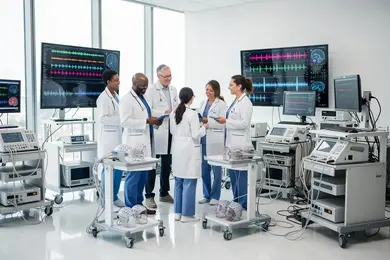
Online programs can prepare graduates for in-demand healthcare work when their clinical education, competency assessment, and credential alignment are strong. Neurodiagnostic technologists may perform EEG studies, support epilepsy monitoring units, assist with sleep-related testing, prepare patients for procedures, recognize recording artifacts, and communicate findings according to facility protocols. Advanced opportunities can include long-term monitoring, pediatric services, sleep technology, and intraoperative neuromonitoring, depending on training and employer requirements.
The U.S. Bureau of Labor Statistics does not publish a separate national employment projection for every neurodiagnostic specialty, so prospective students should be cautious with broad job-growth claims. Instead, examine local hospital systems, neurology practices, sleep centers, pediatric facilities, and surgical centers; demand can differ considerably by region and specialty.
Career readiness depends on whether the program builds the skills employers actually evaluate. Review these areas alongside any published employment outcomes.
- Supervised experience with EEG equipment, electrode application, recording quality, and patient preparation.
- Training in safety, privacy, infection prevention, documentation, and escalation procedures.
- Exposure to relevant patient populations, including adults, children, or patients with seizure disorders when available.
- Clear guidance on professional certification pathways and the clinical records needed to document eligibility.
- Career services that understand local healthcare hiring processes rather than offering only general job-board access.
Salary varies by employer, region, shift differential, experience, credential, and specialty. Treat any school-reported salary figure as a starting point for questions, not as an earnings promise. Ask whether the figure represents all graduates, only employed respondents, a particular geographic market, or a different occupation entirely.
Can an Online Neurodiagnostic Technology Degree From a Nonprofit University Prepare Students for Graduate School?
A bachelor's degree in neurodiagnostic technology or a related health science can support graduate-school preparation, but admission requirements depend on the destination field. Graduate programs may expect specific science prerequisites, a minimum GPA, statistics, research exposure, clinical licensure, or professional experience. An associate degree or certificate can be an efficient route into technical work but may require later degree completion before many graduate options become practical.
Students interested in graduate school should choose electives and transfer pathways deliberately. A program designed mainly for entry-level employment may not include the research, writing, chemistry, statistics, or upper-division science courses required by a future master's or doctoral program.
Before enrolling, compare your intended graduate program's prerequisites with the neurodiagnostic curriculum. If the goal is advanced nursing practice, for example, a neurodiagnostic degree does not replace nursing education or RN licensure; a shortest post master's FNP program online is relevant only to nurses who already meet its advanced-degree and licensure requirements.
Ask the university whether credits are designed to transfer into its own bachelor's completion program and whether academic advisors can map prerequisite gaps. This planning is particularly valuable for students who begin with an associate degree while working.
How Should Students Compare the Best Online Neurodiagnostic Technology Degree Programs at Nonprofit Universities?
The best online neurodiagnostic technology program is the one that meets your credential goal, provides attainable clinical training, and fits your finances and schedule. A public nonprofit may be the strongest value for an in-state student, while a private nonprofit may offer better advising, a more predictable online sequence, or stronger clinical partnerships. Compare the program itself rather than choosing only by price, brand, or nonprofit designation.
Create a shortlist of three to five programs, then use the same evidence for each school. This process reduces the risk of comparing marketing claims that use different definitions of "online," "placement," or "job support."
- Define your target role, preferred work setting, desired certification pathway, and geographic area for clinical training and employment.
- Verify institutional accreditation and any program-specific accreditation or credential eligibility in writing.
- Request the full curriculum, clinical-hour expectations, placement policy, graduation requirements, and sample student schedule.
- Calculate total cost after transfer credit, grants, fees, equipment, travel, and potential reduction in work hours.
- Compare student support, faculty access, clinical coordination, retention information, completion outcomes, and career services.
- Speak with admissions, financial aid, and clinical-placement staff separately so that important details are not filtered through one conversation.
- Choose the program with the strongest overall fit, not simply the shortest timeline or lowest advertised tuition.
Common mistakes include confusing institutional accreditation with specialized program approval, assuming all online courses are self-paced, overlooking clinical travel, and accepting a tuition quote without reviewing fees. Students exploring adjacent healthcare careers should also compare the education required for their target role; an online pharmacy degree path prepares for a distinctly different profession and typically involves substantially different admissions and licensure requirements.
Other Things You Should Know About Neurodiagnostic Technology
Usually not entirely from home. Coursework may be online, but programs generally require in-person labs, competency evaluations, and supervised clinical training because students must demonstrate safe patient-facing and equipment-based skills.
EEG is a major area within neurodiagnostic technology. Neurodiagnostic technology can also include related work in long-term epilepsy monitoring, sleep testing, evoked potentials, and intraoperative monitoring, depending on a program's curriculum and available clinical experiences.
Not always. Some programs admit students without prior clinical employment but may require prerequisite science courses, CPR certification, immunizations, background screening, drug testing, and the ability to complete clinical rotations. Experience as a nursing assistant, medical assistant, or patient-care technician may still be helpful.
General education and science credits are often more transferable than technical clinical courses, but transfer decisions are made by the receiving institution. Obtain an official credit evaluation before relying on transfer assumptions, particularly if you may later pursue a bachelor's or graduate degree.
References
- Neurodiagnostic Tech Certification & Licensure Guide â Trusted Health https://www.trustedhealth.com/allied-career-guide/neurodiagnostic-tech/certification-guide
- Best Non-Profit Online Universities for Career Growth in 2024 https://lakewood.edu/best-non-profit-online-universities-for-career-growth-in-2024/
- Neurodiagnostic Technology https://www.baptistu.edu/neurodiagnostic-technology
- Unlocking the Mind: EEG Tech Training and Career Guide - Neuro Pathway https://myneuropathway.com/blog/unlocking-the-mind-eeg-tech-training-and-career-guide/
- EEG Program https://www.micollegesonline.org/eegprogram.html
- New Report Shows Graduates of NLN CNEA Accredited Programs Land Jobs at a Higher Rate than the National Average https://www.nln.org/detail-pages/news/2026/04/09/new-report-shows-graduates-of-nln-cnea-accredited-programs-land-jobs-at-a-higher-rate-than-the-national-average
- ASSOCIATE OF SCIENCE IN NEURODIAGNOSTIC TECHNOLOGY - Procirca https://www.procirca.com/associate-of-science-in-neurodiagnostic-technology/
- Program Information https://orangecoastcollege.edu/academics/health-sciences/allied-health/neurodiagnostic-technology/program-information.html