2027 Online Neurodiagnostic Technology Degree Programs With No Personal Statement or Admissions Essay Required

Co-Founder and Chief Data Scientist
Applicants seeking a simpler route into neurodiagnostic technology should know that "no essay required" usually removes one application task, not every admissions screen. NCES reported that 53.5% of U.S. postsecondary students took at least one distance education course in fall 2023, increasing demand for flexible health-care education formats. This guide explains how no-essay policies work, what schools may require instead, and how to evaluate clinical placement, accreditation, cost, and career readiness before applying.
Key Things You Should Know
- A true no-essay neurodiagnostic technology application does not require a personal statement for general admission, but schools may still review transcripts, GPA, science prerequisites, background checks, immunizations, and clinical-placement eligibility.
- No-essay is different from essay-optional and essay-waived: an optional essay can strengthen an application, while a waiver may apply only to certain applicants; scholarships, honors tracks, and clinical appeals can still require writing.
- Neurodiagnostic technology training is rarely fully online because EEG, evoked-potential, and patient-care competencies require supervised clinical practice; the 2024 BLS median pay for cardiovascular technologists and technicians, the broader occupation group that includes EEG technologists, was $67,260.
What Does No Personal Statement or Admissions Essay Required Mean for Online Neurodiagnostic Technology Degree Programs?
A no-personal-statement or no-admissions-essay policy means the standard application does not ask applicants to submit a written narrative about their goals, background, or reasons for pursuing the program. The admissions office instead makes its initial decision using objective materials such as an application form, academic records, prerequisite completion, and identity or residency information.
For neurodiagnostic technology, readers should distinguish between an online academic format and online clinical training. A program may deliver anatomy, physiology, neurology, ethics, and EEG theory online while requiring laboratory intensives, simulation sessions, or assigned clinical rotations in person. A school can have no essay requirement while still limiting admission because clinical seats, affiliate-site capacity, or required competencies are limited.
"No essay" also does not mean open admission or automatic acceptance. A college may admit students broadly to the institution but separately screen applicants for the neurodiagnostic technology cohort after they complete foundational coursework. Ask whether the stated policy applies to institutional admission, program admission, or both.
What Admissions Requirements Do Online Neurodiagnostic Technology Degree Programs Use Instead of an Essay?
Without an essay, schools commonly rely more heavily on verifiable academic and readiness criteria. Requirements differ by institution and may be stricter for the professional phase than for initial college admission.
The comparison below separates common requirements from items that are often required later, particularly before direct patient contact. Confirm the current checklist with each admissions office because clinical partners can impose separate conditions.
| Requirement | How schools use it | What applicants should verify |
| Official transcripts | Confirm prior education, transfer credit, and academic history | Whether all colleges attended must submit records |
| Minimum GPA | May determine admission, conditional admission, or program progression | Whether GPA is cumulative, prerequisite-only, or both |
| Science prerequisites | Often assess preparation for anatomy, physiology, medical terminology, or math | Required grades, course age limits, and lab requirements |
| Placement or entrance testing | May determine readiness for college-level coursework | Whether scores can be waived with prior credit |
| Background and health documentation | Often required before clinical education rather than initial admission | Drug screening, immunizations, CPR certification, and criminal-history policies |
| Interview or information session | May assess professional expectations and clinical availability | Whether it is required, evaluative, virtual, or in person |
Applicants should not assume test-optional means requirement-free. Test-optional policies generally concern SAT or ACT scores, while no-essay policies concern writing. For learners comparing adjacent health-care routes, an 9 month LPN program has different clinical, licensing, and prerequisite expectations than neurodiagnostic technology training.
Who Is a Good Fit for Online Neurodiagnostic Technology Degree Programs With No Admissions Essay?
A no-essay pathway can fit applicants with solid transcripts and prerequisite preparation who want their academic record to carry the application. It can be especially practical for working adults, career changers with documented college credit, and students applying to several institutions on a deadline.
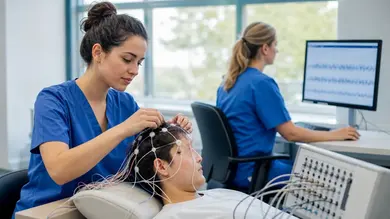
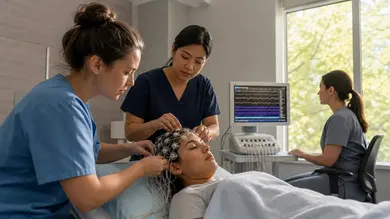
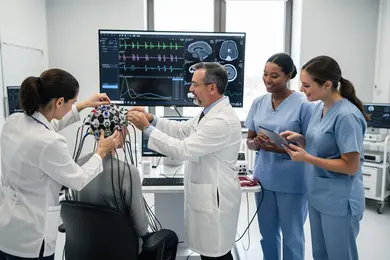
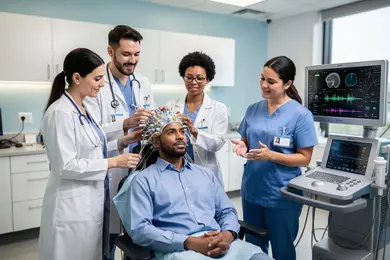
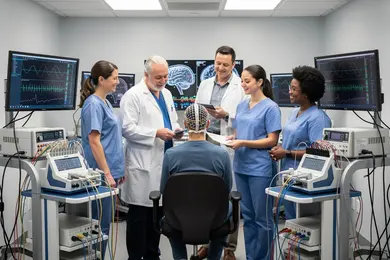
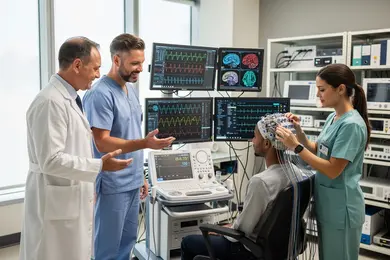
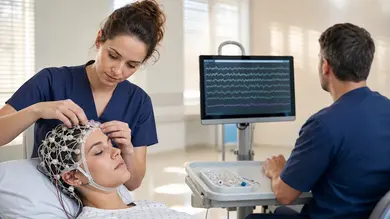
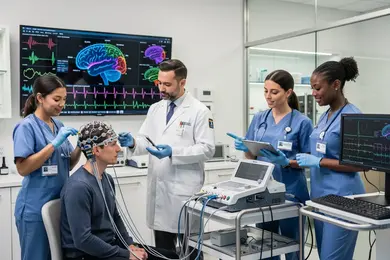
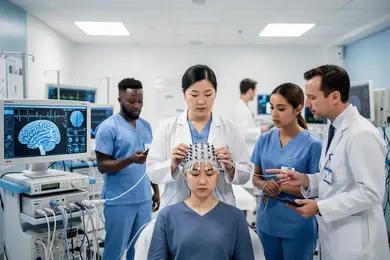
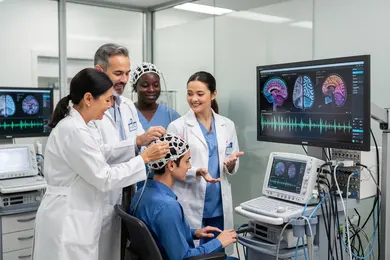
Neurodiagnostic technologists work with patients undergoing tests that assess electrical activity in the nervous system, including electroencephalography (EEG). The work calls for careful electrode placement, patient communication, observation, documentation, infection-control awareness, and the ability to follow protocols during potentially sensitive clinical situations. Online coursework may offer scheduling flexibility, but it does not remove the need for hands-on skill development.
A no-essay option may be less favorable for an applicant whose transcript does not reflect current ability, who needs to explain a major academic interruption, or who has unusual relevant experience that a written statement could clarify. An essay-optional program may offer more room to add context in those circumstances. Students primarily interested in administrative health-care leadership rather than direct diagnostic testing may find an accelerated healthcare administration degree pathway more aligned with their goals.
The Bureau of Labor Statistics groups EEG technologists within cardiovascular technologists and technicians rather than publishing a separate national wage series. Its 2024 median annual wage of $67,260 for that broader occupation group is useful context, but it is not a guaranteed salary for a neurodiagnostic graduate; pay varies by employer, specialty, experience, credentialing, and location.
What Is the Difference Between No-Essay, Essay-Optional, and Essay-Waived Neurodiagnostic Technology Degree Admissions?
Admissions language can look similar while creating different choices for applicants. Read the policy at the program level, not only the college's general admissions page.
This table shows how each policy affects an applicant's decision to prepare written material.
| Policy | Meaning | Best applicant response |
| No essay required | The standard application does not request an admissions essay or personal statement | Submit complete academic and clinical-readiness documents; ask about separate scholarship materials |
| Essay-optional | An essay is not mandatory but may be reviewed if submitted | Consider writing one when it adds useful context, explains a record, or demonstrates preparation |
| Essay-waived | A normally required essay is removed for a defined group, term, program, or application route | Confirm the waiver applies to your applicant category and does not exclude supplemental writing |
| Essay required | A written statement is part of the admission file | Use it to connect your preparation, clinical understanding, and professional goals |
An applicant should also separate admissions essays from other writing. A college may not require a personal statement yet request a short response for honors admission, competitive scholarships, clinical-placement review, prior-learning assessment, or an appeal. For applicants exploring other credential ladders, a CCMA to LPN bridge program may likewise have program-specific screening beyond the college's basic application.
Are Online Neurodiagnostic Technology Degree Programs With No Admissions Essay Easier to Get Into?
Not necessarily. Removing an essay can make the application faster and less writing-intensive, but it does not automatically lower academic standards or increase the number of available clinical seats. A selective program may simply use GPA, prerequisite grades, interviews, health requirements, and clinical capacity as its primary screening tools.
In neurodiagnostic education, the most consequential barrier may occur after initial admission. Students can be accepted to a college, complete online prerequisite classes, and still need separate approval for the technical or clinical portion of the program. A conditional admission offer can be useful, but applicants should understand the conditions, deadlines, required grades, and consequences of not securing a clinical placement.
Compare the following indicators rather than judging accessibility from the absence of an essay alone.
- Whether the school publishes separate institutional and program admission standards
- Whether clinical placement is guaranteed, student-arranged, competitive, or limited by geographic region
- Whether prerequisite courses must be completed before application or may be in progress
- Whether a minimum GPA is only an eligibility threshold or a competitive benchmark
- Whether past criminal-history issues, health requirements, or transportation limits can affect clinical participation
A program requiring an essay may be the better choice when you need to explain readiness or demonstrate commitment. A no-essay program is most useful when its curriculum, clinical structure, outcomes, and affordability fit your goals - not merely because the form is shorter.
How Can You Verify Accreditation and Quality in No-Essay Online Neurodiagnostic Technology Degree Programs?
Start by checking both institutional accreditation and programmatic accreditation. Institutional accreditation helps establish that the college meets broad academic and administrative standards and is important for federal financial aid eligibility. For neurodiagnostic technology, programmatic review is especially important because employers and credentialing pathways may expect education that meets profession-specific standards.
Look for programs accredited by the Commission on Accreditation of Allied Health Education Programs (CAAHEP), where applicable, and verify the program's current status through the accreditor rather than relying only on a school webpage. Neurodiagnostic programs are commonly reviewed with input from the Committee on Accreditation for Education in Neurodiagnostic Technology. Accreditation status, eligibility for professional credentials, and clinical requirements can change, so verify them before depositing or enrolling.
Use these checks to assess whether an online option has the structure needed for patient-facing education.
- Confirm the exact credential awarded, such as certificate, associate degree, or bachelor's completion degree, and whether it matches your career goal.
- Ask how and where clinical rotations are arranged, how many supervised experiences are required, and whether the school supports placements near your location.
- Request recent outcomes for program completion, credential-exam eligibility or performance where reported, job placement methodology, and attrition.
- Review faculty credentials, student-to-instructor support, lab or equipment access, and policies for repeating a failed clinical course.
- Read the catalog for total tuition, required travel, technology, liability insurance, uniforms, background checks, and certification-related costs.
A red flag is a program that promotes a fully online route to a hands-on diagnostic role but cannot clearly explain clinical supervision, patient-contact training, or credential eligibility. The same quality-first approach matters in other regulated health fields, including an online pharmacy degree, where professional requirements extend well beyond standard online coursework.
How Does the Application Process Work for Online Neurodiagnostic Technology Degree Programs With No Personal Statement?
The process is usually straightforward, but applicants should allow time for transcript processing and clinical compliance documents. Schools may use rolling admission, fixed cohort deadlines, or a two-stage process that separates college admission from professional-program admission.
Follow these steps to avoid confusing "no personal statement" with "no supplemental requirements."
- Locate the neurodiagnostic technology program page and catalog, then identify whether the no-essay policy applies to the program, your entry term, and your applicant type.
- Create the application account and submit the institutional application before the stated deadline.
- Order official transcripts from high school, prior colleges, and any prerequisite provider required by the school.
- Document completed or in-progress prerequisites and check whether course equivalencies need prior approval.
- Complete any separate program application, interview, orientation, placement assessment, or clinical-readiness form.
- After acceptance, meet clinical compliance deadlines for items such as CPR, immunizations, drug screening, background checks, and health insurance if required.
- Keep written confirmation of clinical-placement expectations, including travel responsibilities and whether a placement is guaranteed.
Do not leave optional text boxes blank without checking their purpose. A field labeled "additional information" may truly be optional, but a short response tied to a scholarship, selective cohort, or clinical review may be required even when the central admissions essay is not.
Can Transfer and Adult Students Apply to Online Neurodiagnostic Technology Degree Programs Without an Essay?
Yes, many transfer and adult students can apply through no-essay processes, but their requirements may differ from first-time applicants. Transfer review often emphasizes official college transcripts, transferable credits, prerequisite grades, and academic standing. Adult learners may also be asked for high school records only if they have limited college credit.
Transfer credit can shorten the academic portion of a degree, but it does not automatically reduce clinical hours or competency requirements. Programs may accept general education courses while requiring neurodiagnostic theory, laboratory work, and clinical experiences to be completed through their own curriculum. Ask for an official transfer evaluation before assuming a projected graduation date.
Applicants returning after a long break should check course-age rules for anatomy, physiology, microbiology, and other science prerequisites. They should also consider whether a brief optional statement, if permitted, would usefully explain current readiness. Professionals seeking a more advanced nursing credential should note that the shortest post master's FNP program online is designed for nurses with prior graduate preparation and is not an entry route into neurodiagnostic technology.
A common mistake is applying as a transfer student based on a college-wide no-essay policy without reviewing the department's separate selection process. Request a written list of transfer prerequisites, minimum grades, clinical restrictions, and application deadlines for the exact cohort you want.
Do No-Essay Online Neurodiagnostic Technology Degree Programs Affect Tuition, Financial Aid, or Scholarships?
No-essay admission policies generally do not change a school's tuition rate or federal financial aid rules. Tuition is driven by the institution, program length, residency policy, course load, and clinical requirements - not by whether an admissions essay is requested. Online students should calculate total program cost, including campus intensives and clinical travel, rather than comparing tuition per credit alone.
For federal aid, eligible students typically complete the Free Application for Federal Student Aid (FAFSA) and must meet enrollment, satisfactory academic progress, and program-eligibility rules. A no-essay admission application does not remove those requirements. Aid packages can include grants, loans, work-study eligibility, institutional awards, or outside scholarships depending on individual circumstances.
Scholarships are the key exception to remember. A college may admit you without an essay but require a short written response, recommendation, separate application, or deadline for merit and donor-funded awards. Skipping an optional admissions essay may save time, but it can be costly if you overlook a scholarship application that could reduce borrowing.
Before committing, request a written estimate that distinguishes tuition from mandatory fees and expected non-tuition expenses. Ask whether clinical travel, lodging, background checks, immunizations, equipment, exam preparation, and graduation fees are included. Compare net cost after grants rather than using advertised tuition as the final price.
How Should You Compare Online Neurodiagnostic Technology Degree Programs With No Admissions Essay?
Use the no-essay policy as one comparison point, not the deciding factor. The strongest option is one that offers an appropriate credential, a realistic clinical plan, transparent costs, and preparation for the type of neurodiagnostic work you want to pursue.
This decision table highlights the factors that most directly affect whether a simplified application leads to a practical education pathway.
| Comparison factor | Why it matters | Question to ask |
| Essay policy | Determines application workload and chance to add context | Is an essay absent for all applicants, optional, or waived only for certain groups? |
| Program accreditation | Can affect educational quality review and credentialing pathways | What is the current institutional and programmatic accreditation status? |
| Clinical placement | Hands-on experience is essential for neurodiagnostic competence | Who secures the site, and can students complete it in my region? |
| Admissions structure | College admission may differ from professional-program admission | Is there a second application, GPA cutoff, interview, or cohort selection process? |
| Total cost | Online delivery can still involve substantial required expenses | What costs exist beyond tuition and which are billed by the school? |
| Career preparation | Credential readiness and employer expectations shape outcomes | Which credentials can graduates pursue, and what support is provided? |
Before applying, contact each school with a short set of focused questions: Is the no-essay policy universal? Are recommendations or interviews required? Is clinical placement guaranteed? What happens if a student cannot be placed? Which costs are excluded from tuition? Get answers in writing when possible, especially for clinical arrangements and transfer-credit decisions.
Finally, avoid three common errors: assuming no essay means acceptance is automatic, choosing a program before checking accreditation and clinical logistics, and overlooking scholarship deadlines because general admission was simple. A complete application strategy weighs access, quality, affordability, and career fit together.
Other Things You Should Know About Neurodiagnostic Technology
Not always. A policy may apply only to first-time students, online applicants, a particular term, or institutional admission. Transfer applicants, international applicants, applicants seeking selective cohorts, and students requesting exceptions may have additional requirements.
Yes. Schools can request additional information when needed for an admissions review, academic appeal, transfer-credit evaluation, clinical concern, honors program, or scholarship. The school should identify whether the request is required and how it will be used.
Yes. Scholarship committees often use essays, short answers, recommendations, or activity records to distinguish among eligible applicants. Review scholarship requirements separately and do not assume the admissions policy applies to financial awards.
Online coursework can be realistic, but clinical neurodiagnostic training requires supervised hands-on practice. Confirm where laboratory and clinical requirements occur, who arranges them, and whether the schedule works with your work and transportation needs.
References
- Program Information https://orangecoastcollege.edu/academics/health-sciences/allied-health/neurodiagnostic-technology/program-information.html
- Can You Get Financial Aid for Online College? Finding Out https://beal.edu/can-you-get-financial-aid-for-online-college/
- Admission Requirements - Neurodiagnostic Technology Institute https://neurodiagnostictechnologyinstitute.com/nti-requirements/
- Kathleen Mears Education Award https://asetfoundation.org/kathleen-mears-education-award/
- Financial aid and scholarships for students who learn and think differently https://www.understood.org/en/articles/financial-aid-and-scholarships-for-students-with-learning-and-thinking-differences
- Neurodiagnostic Tech Certification & Licensure Guide â Trusted Health https://www.trustedhealth.com/allied-career-guide/neurodiagnostic-tech/certification-guide
- Financial Aid and Scholarships for Sonographers https://www.ultrasoundschoolsinfo.com/financial-aid-scholarships-sonography/
- Financial Aid For Online Colleges https://www.affordablecollegesonline.org/financial-aid/financial-aid-for-online-colleges/
- Unlocking the Mind: EEG Tech Training and Career Guide - Neuro Pathway https://myneuropathway.com/blog/unlocking-the-mind-eeg-tech-training-and-career-guide/
- 18 Scholarships for Students with Learning Disabilities - The Scholarship System https://thescholarshipsystem.com/blog-for-students-families/22-scholarships-for-students-with-learning-disabilities/