2027 Online Neurodiagnostic Technology Degree Programs With University Scholarships: Awards, Eligibility, and Net Cost

Co-Founder and Chief Data Scientist
Choosing an online Neurodiagnostic Technology program based on tuition alone can leave students with a higher bill than expected. College Board reported average published tuition and fees of $11,610 at public four-year in-state institutions and $43,350 at private nonprofit four-year institutions in 2024-25.
This guide helps prospective neurodiagnostic students compare institutional scholarships, eligibility rules, renewable aid, required clinical costs, and realistic net cost so they can identify the offer that fits their budget - not simply the largest advertised award.
Key Things You Should Know
- Online Neurodiagnostic Technology scholarship awards are not standardized: some schools extend institution-wide merit or need-based aid to online learners, while others exclude online, certificate, part-time, or clinical-program students.
- A scholarship is valuable only after subtracting it from total educational charges, including tuition, mandatory fees, technology charges, travel to clinical sites, testing, supplies, and any costs not covered by aid.
- Eligibility and renewal commonly depend on admission status, FAFSA results, enrollment intensity, satisfactory academic progress, and minimum GPA; confirm the written terms before treating an award as funding for the full program.
Which Online Neurodiagnostic Technology Degree Programs Offer University Scholarships?
Institutional scholarships are funded or administered by a college or university rather than by a federal agency. For Neurodiagnostic Technology, availability can be harder to compare than in broad majors because many programs are hybrid: didactic coursework may be online, but supervised clinical education must occur in person. A school may market the program as online while applying campus-based financial-aid rules.
Start with institutions that offer a degree or certificate pathway in neurodiagnostic technology, electroneurodiagnostic technology, EEG technology, or a closely related clinical neurophysiology field. Ask the financial-aid office whether its general academic, transfer, adult-learner, military, and need-based institutional awards explicitly include the program and the student's delivery format.
The comparison below identifies the institutional policies that matter more than promotional language. It is especially useful because an "online scholarship" may be limited to degree-seeking students, exclude certificates, or require a campus enrollment category.
| Program and aid feature to verify | Why it matters for Neurodiagnostic Technology students | Best question to ask |
| Degree-seeking status | Many university awards are limited to admitted degree candidates rather than standalone certificate students. | Is my exact Neurodiagnostic Technology credential scholarship-eligible? |
| Online or hybrid classification | Remote lectures do not necessarily make a student eligible for aid reserved for online divisions. | Does the award apply to hybrid students completing clinical rotations? |
| Institutional merit scholarship | May be based on prior GPA, transfer record, academic achievement, or admission profile. | Is consideration automatic, and what award range has been available for comparable students? |
| Institutional need-based grant | Usually depends on FAFSA-based financial need and available university funds. | Must FAFSA be filed by a priority date, and can the grant change annually? |
| Clinical-site arrangement | Travel, onboarding, immunizations, background checks, and parking may not be covered by tuition scholarships. | Which clinical expenses are billed separately or paid directly by the student? |
Students exploring adjacent health credentials should also compare how financial aid works across fields. An online pharmacy degree can have different professional-program tuition and scholarship restrictions, making direct award-size comparisons unreliable.
Do not assume that a school with a general online scholarship automatically has a qualifying neurodiagnostic program. Request an itemized financial-aid estimate that names the credential, enrollment status, term, and each institutional award.
How Much Scholarship Money Can Online Neurodiagnostic Technology Degree Students Receive?
There is no universal university scholarship amount for online Neurodiagnostic Technology students. Award size depends on the institution, credential level, prior academic record, financial need, enrollment status, donor restrictions, and annual funding. A university may publish a maximum scholarship but award a smaller amount - or no award - to students whose program or online status is excluded.
Use the school's official offer rather than a website headline to assess affordability. The most useful figure is the amount that applies to your actual enrollment period and is expected to remain available through the clinical portion of the program.
This framework shows how to interpret awards without assuming that a stated amount is guaranteed.
| Award description | What it may mean | What to verify before relying on it |
| "Up to" award | The amount is a ceiling, not an individual offer. | Your awarded amount, selection criteria, and whether funding is competitive. |
| Annual award | The figure generally applies to one academic year, not the full credential. | Number of covered terms and whether summer or clinical terms qualify. |
| Per-credit discount | The value changes with the number of enrolled credits. | Whether it applies to clinical, laboratory, repeated, or transfer credits. |
| Full-tuition scholarship | It may cover tuition only, leaving mandatory fees and clinical costs. | Excluded fees, supplies, insurance, travel, and living expenses. |
| Last-dollar award | It may be reduced after grants or outside scholarships are applied. | The order in which the school applies federal, state, and external aid. |
In practical terms, a smaller scholarship at a lower-priced public institution can produce a lower net cost than a larger private-school scholarship. Students should compare multi-term totals, not a single award letter line.
For a wider view of health-program affordability, an accelerated healthcare administration degree may use different tuition structures and scholarships because it typically does not require neurodiagnostic clinical placement.
What Are the Eligibility Requirements for Online Neurodiagnostic Technology Degree Scholarships?
Eligibility requirements are the conditions a student must meet to receive an award. They differ by scholarship, and the financial-aid office - not a general admissions page - can confirm whether they apply to online Neurodiagnostic Technology students. Institutional aid commonly evaluates academic record, financial need, residency, admission category, and enrollment level.
Clinical health programs can add requirements that are not scholarship criteria but can affect continued enrollment. For example, missed clinical eligibility because of incomplete health documentation may delay progression and change the number of terms for which an award is needed.
Review the following requirements as a checklist before applying or accepting an offer.
- Admission to the specific eligible program, often as a degree-seeking rather than nondegree or provisional student.
- Completion of FAFSA when the scholarship is need-based or when the institution uses FAFSA information for institutional aid.
- A qualifying cumulative, transfer, or program GPA for merit awards and renewal.
- Required enrollment intensity, which may mean full-time enrollment, a minimum credit load, or continuous enrollment each term.
- Citizenship, residency, military-affiliation, donor, or demographic conditions when stated in the scholarship terms.
- Completion of clinical clearance requirements when they are necessary to remain enrolled and progress on schedule.
- Meeting the institution's satisfactory academic progress policy, which usually considers GPA, course-completion pace, and maximum attempted credits.
A common mistake is treating admissions eligibility as scholarship eligibility. An adult learner may be admitted to online coursework but be ineligible for a freshman-only merit award, while a transfer student may qualify for a separate transfer scholarship. Obtain the rules in writing and ask whether part-time clinical terms remain eligible.
How Do You Apply for University Scholarships for an Online Neurodiagnostic Technology Degree?
Some institutional scholarships are awarded automatically from the admission application, but others require FAFSA, a separate scholarship portal, essays, recommendations, or documentation of military or transfer status. Completing only the program application can therefore leave aid opportunities unreviewed.
Follow this sequence early because scholarship priority deadlines can occur before the program's final admission deadline.
- Confirm that the exact online or hybrid Neurodiagnostic Technology credential is eligible for institutional scholarships.
- Apply for admission and submit complete transcripts so the university can evaluate GPA and transfer status.
- File FAFSA by the school's priority deadline if you are eligible to do so, even if you expect to receive a merit scholarship.
- Access the university scholarship portal and identify awards requiring separate applications, essays, references, or documentation.
- Submit requested clinical-program, residency, military, or transfer records before each stated deadline.
- Review the offer letter for amount, covered terms, enrollment requirements, renewal conditions, and whether the award is reduced by other aid.
- Ask for an itemized cost estimate that includes tuition, fees, clinical expenses, and the expected net amount you must pay.
Keep copies of submission confirmations and scholarship terms. If an offer does not state whether online clinical-program students qualify, ask for clarification before paying an enrollment deposit.
Students considering a nursing route alongside neurodiagnostic training can see how program pace affects planning in a 9-month LPN program. In either pathway, a compressed timeline can alter credit loads, term charges, and scholarship eligibility.
Are Scholarships for Online Neurodiagnostic Technology Degree Programs Renewable Every Year?
Some scholarships are renewable, meaning the institution may continue the award in future academic years or terms if the student meets stated conditions. Renewable does not mean unconditional: funds may be subject to annual appropriations, satisfactory academic progress, a minimum GPA, continuous enrollment, and a maximum number of semesters or credits.
For a program with online theory and in-person clinical rotations, verify whether the scholarship continues when the curriculum changes format or when the student takes fewer credits during a clinical term. That detail can materially change the final cost.
The terms below are the most important renewal points to compare in writing.
| Renewal term | Potential effect on your aid | Verification question |
| Minimum GPA | Dropping below the specified threshold can reduce or end a merit award. | Is the GPA cumulative, term-based, or program-based? |
| Enrollment requirement | Part-time study or a reduced clinical load may lower the award or make it unavailable. | What happens in a term below full-time enrollment? |
| Maximum duration | Award eligibility can end before graduation if the student extends the program. | How many terms or attempted credits are covered? |
| Annual application or FAFSA | Some aid requires yearly renewal forms or a new financial-need review. | Which forms and deadlines apply each year? |
| Satisfactory academic progress | Withdrawing, repeating courses, or low completion pace can affect institutional and federal aid. | Does the scholarship use the same policy as federal aid? |
Before accepting, calculate the cost under both scenarios: scholarship renewed for every eligible term and scholarship lost after the first year. If the second scenario is unaffordable, ask whether a payment plan, lower-cost schedule, or other institutional grant is available.
Can You Combine an Online Neurodiagnostic Technology Scholarship With FAFSA and Other Financial Aid?
Often, yes. FAFSA is the application used to determine eligibility for federal student aid and may also be used by colleges to award institutional need-based aid. A university scholarship can potentially be combined with federal grants, Direct Loans, state aid, employer assistance, veterans' education benefits, and outside scholarships, subject to the school's packaging policies and the student's cost of attendance.
Federal Pell Grant eligibility is need-based and can change with FAFSA information, enrollment intensity, and annual federal rules. For the 2024-25 award year, the maximum Pell Grant was $7,395. That maximum is not an automatic award, and it should not be treated as a substitute for an institutional aid estimate.
When several forms of aid are combined, the school may need to adjust one or more awards. These are the questions that prevent an unexpected revision.
- Does the institutional scholarship stack with Pell Grant, state grants, veterans' benefits, employer tuition assistance, and outside awards?
- Is the scholarship first-dollar, meaning it applies before other grants, or last-dollar, meaning other gift aid reduces it?
- Will receiving an external scholarship reduce institutional grant aid, student loans, work-study, or the university scholarship itself?
- Does the school include travel, clinical onboarding, equipment, and living expenses in the cost of attendance used for aid decisions?
- Must you report outside scholarships, and by what deadline?
Borrow only after accounting for grants and scholarships. Loans can fill a remaining gap, but they increase the cost of education through repayment obligations. The financial-aid office can explain its packaging order for your individual award letter.
How Much Does an Online Neurodiagnostic Technology Degree Cost After Scholarships and Financial Aid?
Net cost is the amount remaining after grants and scholarships are applied to the school's total charges and relevant educational expenses. It is more useful than sticker tuition because Neurodiagnostic Technology students may face required costs beyond online course tuition, especially when clinical training takes place away from home.
A basic calculation is: total program tuition and required fees, plus unavoidable program and clinical expenses, minus grants and scholarships. Student loans can cover part of the remaining amount, but they are not a reduction in cost because they generally must be repaid.
This example is a calculation method, not a typical price quote or a guarantee of any school's charges. Replace each line with figures from the institution's written estimate.
| Net-cost component | How to calculate it | Why it should be included |
| Tuition | Per-credit rate multiplied by required billable credits. | Rates may differ by residency, program, or course level. |
| Mandatory institutional fees | Add technology, distance-learning, registration, laboratory, and graduation fees where required. | These charges may not be covered by a tuition-only scholarship. |
| Clinical and compliance costs | Add background checks, drug screening, immunizations, CPR training, uniforms, insurance, parking, and travel when required. | These can be substantial and are frequently paid directly by the student. |
| Gift aid | Subtract confirmed institutional scholarships, grants, and outside scholarships. | Separate renewable aid from one-time awards. |
| Remaining amount | Subtract gift aid from total included costs. | This is the amount to cover through savings, income, payment plans, benefits, or borrowing. |
A lower tuition rate is not always the lower-cost choice if it requires extensive travel to a distant clinical site, delays transfer-credit recognition, or provides less institutional aid. Conversely, a higher-priced program can be financially competitive when its confirmed, renewable gift aid and included services reduce the multi-term balance.
Compare this analysis with related clinical pathways only after accounting for differing requirements. For example, a CCMA to LPN bridge program may involve separate licensure, clinical, and aid considerations.
Are There Scholarships for Transfer, Adult, Military, and Other Online Neurodiagnostic Technology Students?
Yes, many institutions maintain scholarships or tuition benefits aimed at transfer students, working adults, veterans, active-duty personnel, military spouses, employees of partner organizations, or students returning after a break. However, eligibility may vary by academic division and may not extend to every online health credential.
Transfer students should pay particular attention to how many credits the institution accepts. A scholarship can reduce tuition, but a program may still cost more if prior anatomy, physiology, medical terminology, or general-education coursework does not transfer and must be repeated.
The categories below identify opportunities worth asking about and the restrictions that most often affect actual value.
| Student group | Possible institutional support | Key limitation to check |
| Transfer students | Transfer merit awards, articulation scholarships, or partner-college awards. | Minimum transferable credits, transfer GPA, and whether clinical prerequisites count. |
| Adult or returning students | Adult-learner grants, evening/online tuition discounts, or completion scholarships. | Whether the program is classified within the adult or continuing-education division. |
| Military-affiliated students | Institutional military discounts, military scholarships, and specialized advising. | Whether the benefit can be combined with other institutional scholarships or education benefits. |
| Part-time students | Per-credit awards or reduced tuition programs at some institutions. | Whether awards are prorated, unavailable below a credit threshold, or limited to full-time students. |
| Employees and health-system partners | Employer partnerships, tuition assistance, or workforce-development funding. | Employment duration, repayment obligations, and approved-program rules. |
Students changing healthcare roles should compare total training requirements rather than assuming prior credentials guarantee credit or aid. A shortest post-master's FNP program online serves a different level of nursing education and may follow different scholarship policies.
What Is the Difference Between Merit-Based and Need-Based Scholarships for Online Neurodiagnostic Technology Degrees?
Merit-based scholarships are generally awarded for academic performance, leadership, achievement, talent, or other nonfinancial criteria. Need-based scholarships are generally based on demonstrated financial need, often using FAFSA information and the institution's aid methodology. Some institutional awards use both academic and financial factors.
Neither type is automatically better. Merit aid may offer more predictable renewal rules when academic requirements are met, while need-based aid can make a program more affordable for students with substantial demonstrated need. Both can change when enrollment, academic progress, available institutional funds, or financial circumstances change.
This comparison can help applicants identify which opportunities deserve the most attention.
| Feature | Merit-based scholarship | Need-based scholarship |
| Primary basis | Academic record or other stated achievement criteria. | Financial need, typically documented through FAFSA and institutional review. |
| Common application path | Automatic admission review or a separate scholarship application. | FAFSA plus any required institutional forms. |
| Typical renewal focus | Minimum GPA, progress, and enrollment requirements. | Continued financial need, FAFSA renewal, progress, and available funding. |
| Best planning use | Compare the written award duration and GPA threshold. | Plan for possible annual changes in family finances or aid formulas. |
| Important caution | Strong grades do not ensure eligibility for every online program. | FAFSA submission does not ensure a university need-based award. |
Apply for both types when eligible. Restricting the search to merit awards can overlook need-based institutional grants, while relying only on financial need can miss automatic academic scholarships linked to admission or transfer records.
How Should You Compare Scholarship Offers From Online Neurodiagnostic Technology Degree Programs?
The best scholarship offer is the one that produces the lowest manageable net cost while supporting a realistic path to program completion. It also must fit the program's clinical structure, accreditation expectations, certification preparation, schedule, and ability to place students in appropriate supervised training. An award is not a good value if its conditions make it unlikely to continue through graduation.
Compare offers side by side using the same time period - preferably the entire anticipated program, not just the first term. Ask each school to clarify all estimates in writing before making an enrollment decision.
- Verify the credential, online/hybrid format, clinical-placement process, and whether the program meets your state and employer requirements.
- Calculate total tuition and mandatory fees for all required terms after accepted transfer credits are applied.
- Add direct program costs, including equipment, clinical travel, compliance checks, testing, uniforms, and insurance where applicable.
- Separate confirmed grants and scholarships from loans, work-study, and unconfirmed competitive awards.
- Identify whether each institutional award is one-time, annual, per-term, renewable, first-dollar, or last-dollar.
- Test the renewal rules against your expected schedule, including part-time, summer, and clinical terms.
- Compare the remaining balance, payment timing, and likely borrowing needed to complete the credential.
- Choose only after confirming the written net-cost estimate and asking how changes in enrollment or clinical progression affect aid.
Red flags include vague statements that "online students may qualify," award letters that omit renewal terms, tuition estimates that exclude required clinical charges, and a scholarship that disappears during the part-time or clinical phase. A larger headline award should never outweigh a lower, documented multi-term net cost at another qualified program.
Neurodiagnostic Technology can lead toward work involving EEG and other neurologic diagnostic testing under clinical and facility-specific standards. Before enrolling, also confirm program accreditation or recognition, clinical experience quality, graduate eligibility for relevant professional credentials, and local employer expectations.
Other Things You Should Know About Neurodiagnostic Technology
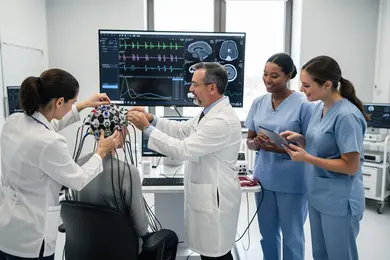
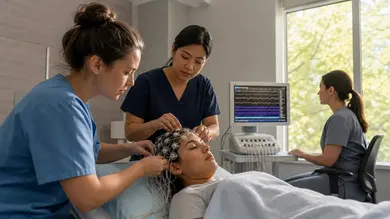
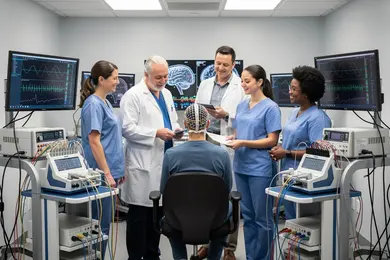
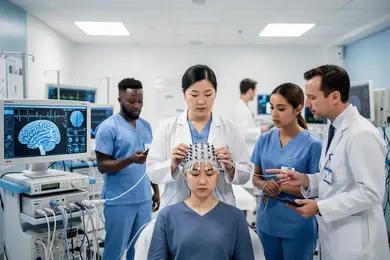
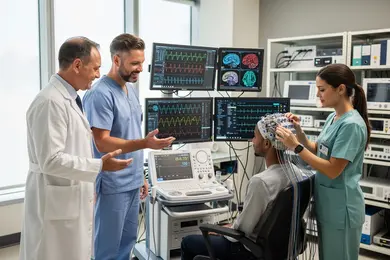
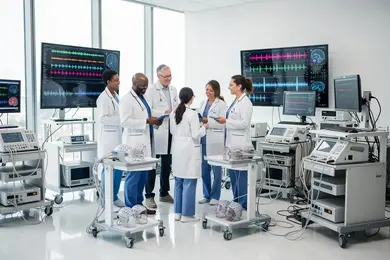
Coursework may be delivered online, but neurodiagnostic education generally requires hands-on clinical training because students must develop patient-preparation, equipment, recording, safety, and documentation skills under supervision. Ask where clinical rotations occur, who arranges them, and whether travel is required.
Neurodiagnostic technologists commonly prepare patients and operate specialized equipment used to record nervous-system activity, including EEG-related testing. Duties, supervision, and credential expectations vary by employer, specialty, state, and healthcare setting.
Length depends on the credential, prerequisite completion, transfer credits, course sequence, and availability of clinical placements. A school should provide a written plan showing required terms, clinical hours, and the conditions that can delay graduation.
Yes. Financial aid can improve affordability, but it does not establish program quality or credential eligibility. Confirm the program's accreditation or approval status, clinical requirements, graduate outcomes where available, and whether its curriculum supports the professional certification path you intend to pursue.
References
- EEG Program https://www.micollegesonline.org/eegprogram.html
- Financial Aid and Scholarships for Sonographers https://www.ultrasoundschoolsinfo.com/financial-aid-scholarships-sonography/
- Kathleen Mears Education Award https://asetfoundation.org/kathleen-mears-education-award/
- Scholarships & Awards - National Center for Learning Disabilities https://ncld.org/scholarships-awards/
- Neurodiagnostic Technologist - Explore Healthcare Careers - Mayo Clinic College of Medicine & Science https://college.mayo.edu/academics/explore-health-care-careers/careers-a-z/neurodiagnostic-technologist/
- Financial Aid For Online Colleges https://www.affordablecollegesonline.org/financial-aid/financial-aid-for-online-colleges/
- Career Growth in Neurodiagnostics: How to Advance, Specialize, and Lead in the Field - Neuro Pathway https://myneuropathway.com/blog/career-development-in-neurodiagnostics/
- Neurodiagnostic Technology https://www.baptistu.edu/neurodiagnostic-technology
- Program Information https://orangecoastcollege.edu/academics/health-sciences/allied-health/neurodiagnostic-technology/program-information.html