2027 Best Accredited Online Environmental Science Degree Programs: Compare Tuition, Admissions, and Career Outcomes

Co-Founder and Chief Data Scientist
Choosing an online environmental science degree means balancing cost, credibility, lab or field requirements, and career return. The decision matters because the U.S. Bureau of Labor Statistics reports a 2024 median pay of $80,060 for environmental scientists and specialists, making program quality and career preparation important.
This guide is for first-time students, transfer students, and working adults comparing accredited online options. You will learn how to evaluate tuition, admissions, accreditation, flexibility, student support, financial aid, and outcomes so you can choose a program that fits your budget and goals.
Key Things You Should Know
- The best overall value usually comes from regionally accredited programs that combine moderate tuition, transfer-friendly policies, online lab or local field options, and clear career support rather than from the cheapest tuition alone.
- Cost differences are significant: College Board's 2024 pricing data lists average published tuition and fees at $11,610 for in-state public four-year colleges, $30,780 for out-of-state public colleges, and $43,350 for private nonprofit colleges.
- Career outcomes vary by role: BLS data places the 2024 median pay for environmental scientists and specialists at $80,060, while entry-level technician or compliance roles may require less experience but often pay less.
Which Accredited Online Environmental Science Degree Programs Offer the Best Overall Value?
The best accredited online environmental science degree program is not always the least expensive one. Strong value usually means the program is institutionally accredited, has manageable tuition, accepts transfer credits, provides advising and career support, and offers coursework aligned with environmental consulting, conservation, compliance, sustainability, or graduate study.
Environmental science is an interdisciplinary major that combines biology, chemistry, geology, ecology, policy, statistics, and environmental management. Students still comparing university majors should know that this degree is best for people who want applied science careers connected to land, water, air quality, natural resources, or environmental regulation.
The table below compares common accredited online options by value profile. Tuition changes frequently, so use these figures as decision-starting benchmarks and verify the latest per-credit rate, fees, and transfer-credit limits before applying.
| Program | Accreditation Type to Verify | Online Value Strength | Tuition Snapshot | Best Fit |
| Oregon State University Ecampus, B.S. in Environmental Sciences | Institutional accreditation by a recognized regional accreditor | Strong science depth, broad specialization options, established online delivery | Published undergraduate Ecampus tuition has commonly been listed around the mid-$300s per quarter credit | Students who want a rigorous science-heavy public university option |
| Southern New Hampshire University, B.S. in Environmental Science | Institutional accreditation by a recognized regional accreditor | Flat online tuition model, transfer-friendly structure, broad adult-student support | Published online undergraduate tuition is commonly listed at $330 per credit | Working adults and transfer students seeking predictable pricing |
| American Public University, B.S. in Environmental Science | Institutional accreditation by a recognized accreditor | Monthly course starts, military-friendly pricing, flexible pacing | Published undergraduate tuition is commonly listed at $350 per credit, with lower military rates available | Military-affiliated students and adults needing frequent start dates |
| Unity Environmental University, online environmental science-related bachelor's options | Institutional accreditation by a recognized regional accreditor | Environment-focused institution, career-oriented sustainability and conservation coursework | Published online tuition varies by program and delivery model | Students who want a school centered on environmental and sustainability fields |
A practical value ranking should weigh affordability and outcomes together. A lower-cost program makes sense if it is accredited, accepts your prior credits, and offers the science courses you need. A higher-cost program may be worth considering if it offers stronger lab preparation, fieldwork access, alumni networks, undergraduate research, or a better pathway to graduate study.
Common red flags include vague accreditation language, unclear lab requirements, unusually high technology fees, limited transfer-credit transparency, and no visible information about career services. If a school cannot clearly explain total cost, credit transfer, field experience, and expected program length, compare more options before enrolling.
What Accreditation Should Students Look for in an Online Environmental Science Degree Program?
Accreditation is the first filter students should use because it affects financial aid eligibility, credit transfer, graduate school admission, and employer confidence. For most online environmental science degrees, institutional accreditation from an agency recognized by the U.S. Department of Education or the Council for Higher Education Accreditation is the essential requirement.
Unlike counseling, nursing, engineering, or teaching programs, environmental science bachelor's programs do not always require a single specialized programmatic accreditor. This differs from fields where programmatic accreditation is central to licensure preparation, such as CACREP online counseling programs. For environmental science, students should focus on recognized institutional accreditation plus curriculum quality, lab expectations, and career alignment.
Use the following checks before submitting an application. These steps help you avoid programs that sound legitimate but may limit your aid, transfer, or graduate school options.
- Confirm the institution appears in the U.S. Department of Education's Database of Accredited Postsecondary Institutions and Programs.
- Check whether the accrediting agency is recognized for degree-granting institutions, not just short-term training providers.
- Ask whether online students receive the same transcript and degree designation as campus students.
- Review whether required science labs, field methods, GIS, statistics, and capstone courses are available online, locally, or through approved substitutions.
- Contact graduate programs or target employers if you plan to pursue a regulated or specialized path after graduation.
Accreditation alone does not prove that a program is the best fit. It is a baseline quality and eligibility marker. After verifying it, compare curriculum rigor, faculty expertise, student outcomes, costs, and experiential learning opportunities.
How Do Tuition Costs Compare Across Accredited Online Environmental Science Degree Programs?
Tuition can vary widely because online environmental science programs may be offered by public universities, private nonprofit universities, or private institutions with flat online pricing. College Board's 2024 data shows why comparison matters: average published tuition and fees differ sharply between in-state public, out-of-state public, and private nonprofit four-year colleges, and online students may not always receive the same residency discount.
The table below summarizes major cost categories students should compare. It focuses on the total enrollment decision, not just the advertised per-credit tuition.
| Cost Factor | Why It Matters | How to Compare It |
| Per-credit tuition | This is the base cost, but it may not include fees or materials. | Multiply by the number of credits you still need after transfer evaluation. |
| Online and technology fees | These can add meaningful cost across 120 credits. | Ask for a full fee schedule, not only tuition. |
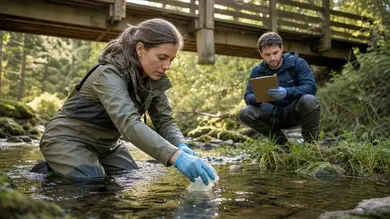
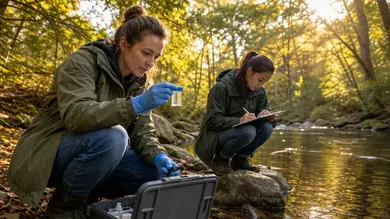
| Lab and field expenses | Environmental science may require lab kits, local fieldwork, travel, or equipment. | Confirm whether labs are virtual, at-home, local, hybrid, or campus-based. |
| Transfer-credit acceptance | Accepted credits can reduce both cost and time to graduation. | Request an official transfer evaluation before committing. |
| Residency rules | Some public universities charge different rates by residency; others use one online rate. | Compare your actual tuition classification, not the school's lowest advertised rate. |
Students should compare total cost of completion rather than sticker price. A program charging more per credit can cost less overall if it accepts more previous credits, offers shorter terms, or has fewer hidden fees.
Before enrolling, ask each school for a written estimate that includes tuition, mandatory fees, lab costs, books, transfer credits accepted, expected remaining credits, and projected completion time. This makes financial aid offers easier to compare and helps prevent the common mistake of choosing a program based only on the lowest advertised tuition.
Admissions competitiveness varies by institution. Many online environmental science bachelor's programs are designed for access and adult learners, while some public universities apply more selective transfer, GPA, prerequisite, or capacity rules. A flexible admissions policy does not automatically mean weak academics; it often means the school separates access from course rigor.
Most bachelor's programs evaluate a combination of academic readiness and documentation. The exact list differs by school, but applicants commonly need the following materials.
- High school transcript, GED documentation, or college transcripts from every institution attended
- Minimum GPA requirement or conditional admission pathway
- Placement review or prior coursework in math, biology, chemistry, or writing
- Transfer-credit evaluation for students with previous college experience
- English proficiency documentation when applicable
Students who are not ready for college-level lab science or quantitative coursework may benefit from a lower-cost starting point, such as community college science prerequisites or an associate pathway. If your priority is a shorter credential with broad earning potential outside environmental science, researching easy associate degrees that pay well can help you compare alternatives before committing to a full bachelor's program.
The main admissions trade-off is selectivity versus speed. More selective programs may offer stronger academic reputation or research depth, but access-focused online programs can be better for working adults, transfer students, military students, and students returning after time away from school.
A common mistake is applying before confirming prerequisite sequencing. Environmental science majors often need biology, chemistry, statistics, GIS, or environmental policy courses in a specific order. If those courses are offered only once or twice per year, your graduation timeline can stretch even if you are admitted quickly.
The most flexible online environmental science programs combine asynchronous coursework with predictable term schedules, online advising, local or virtual lab options, and transfer-friendly degree plans. However, environmental science is more hands-on than many online majors, so students should pay close attention to lab, field, and capstone requirements.
Online flexibility usually falls into several formats. Understanding these models helps you choose a program that matches your work schedule, learning style, and need for structure.
| Format | How It Works | Best For | Potential Drawback |
| Asynchronous online | Students complete weekly work without required live class meetings. | Working adults and students in different time zones | Requires strong self-management |
| Synchronous online | Students attend live virtual sessions at scheduled times. | Learners who want real-time discussion and structure | Less flexible for shift workers |
| Hybrid or low-residency | Most coursework is online, but some labs, fieldwork, or intensives happen in person. | Students seeking stronger hands-on science preparation | May require travel or local scheduling |
| Accelerated terms | Courses run in shorter sessions, often 5 to 8 weeks. | Experienced students who can handle a fast pace | Science courses can feel compressed |
Environmental science programs may be less accelerated than business or general studies degrees because lab science, field methods, and quantitative skills need time to build. Students comparing speed-focused options may notice that an accelerated business degree often has fewer lab constraints than an environmental science program.
Choose fully online if you need maximum schedule control and can complete approved labs remotely or locally. Choose hybrid if you want stronger fieldwork, research exposure, or preparation for roles involving sampling, monitoring, site assessment, or graduate science study.
Student support can determine whether an online program is merely convenient or actually completable. Environmental science students need general online support plus discipline-specific help with lab science, data analysis, field experience, and career planning.
The most useful services are those that reduce friction before students fall behind. Look for support that is available outside traditional business hours if you work full time or study across time zones.
- Dedicated academic advising that maps prerequisites, lab courses, transfer credits, and graduation requirements
- Online tutoring in biology, chemistry, statistics, writing, and GIS-related coursework
- Library access with scientific databases, citation tools, and research support
- Career services that understand environmental consulting, compliance, conservation, sustainability, and government hiring
- Internship or field placement guidance for online students, including help finding local opportunities
- Technical support for learning platforms, remote labs, data tools, and proctored exams
Strong programs make support visible before enrollment. If an admissions counselor cannot explain how online students complete labs, find internships, receive tutoring, or access career coaching, that is a warning sign.
Another common mistake is assuming online students receive the same field access as campus students. Ask whether online learners can participate in research projects, environmental clubs, faculty mentoring, or local field partnerships. These experiences can strengthen resumes and graduate school applications.
Students in accredited online environmental science degree programs may qualify for many of the same financial aid options as campus students, provided the institution and program meet federal aid rules. The key is to complete the FAFSA, compare net price rather than sticker price, and ask how aid applies to online terms.
Federal borrowing became more expensive for many students when the 2024-2025 Direct Loan rate for undergraduate subsidized and unsubsidized loans was set at 6.53%. That rate makes grants, scholarships, employer tuition benefits, transfer credits, and lower-cost public options especially important for reducing long-term repayment pressure.
Financial aid packages may combine several sources. Students should compare each offer carefully because the mix of grants, loans, and out-of-pocket costs can differ even when tuition looks similar.
- Federal Pell Grants for eligible undergraduate students with financial need
- Federal Direct Subsidized and Unsubsidized Loans, subject to annual and lifetime limits
- State grants or scholarships, which may depend on residency and enrollment intensity
- Institutional scholarships for transfer students, military-affiliated students, adult learners, or high-performing applicants
- Employer tuition assistance for students working in government, utilities, consulting, manufacturing, or sustainability-related roles
- Veterans education benefits for eligible service members, veterans, and dependents
The best financial aid strategy is to request comparable net-price estimates from multiple schools. A program with higher published tuition may become more affordable after scholarships, while a cheaper program may cost more if it accepts fewer transfer credits or adds significant fees.
Before accepting loans, estimate your likely monthly payment and compare it with entry-level salaries in your target roles. This is especially important if you plan to start in technician, nonprofit, or conservation positions before moving into higher-paid specialist or management roles.
An accredited online environmental science degree can support careers in environmental consulting, regulatory compliance, conservation, natural resource management, sustainability, environmental education, and government agencies. It can also prepare students for graduate study in environmental science, public health, ecology, urban planning, geoscience, or environmental policy.
BLS data lists the 2024 median pay for environmental scientists and specialists at $80,060. This figure is useful as a labor-market benchmark, but it is not a starting salary guarantee; pay depends on location, employer, experience, technical skills, and whether the role requires fieldwork, permitting, data analysis, or management responsibility.
The table below connects common career paths to the preparation students should look for in an online program. Use it to match curriculum choices with realistic job targets.
| Career Path | Typical Work | Program Features That Help | Additional Preparation to Consider |
| Environmental scientist or specialist | Assess environmental conditions, write reports, support remediation or compliance projects | Strong science core, field methods, chemistry, GIS, statistics | Internship, local field experience, graduate study for advanced roles |
| Environmental compliance specialist | Help organizations follow environmental laws, permits, and reporting rules | Environmental policy, regulation, risk assessment, technical writing | Industry-specific training in air, water, waste, or occupational safety |
| Conservation or natural resource technician | Collect samples, monitor ecosystems, support restoration or land management | Ecology, biology, field sampling, data collection | Seasonal fieldwork, agency internships, GIS certificates |
| Sustainability coordinator | Track resource use, support sustainability reporting, manage campus or corporate initiatives | Sustainability systems, data analysis, environmental economics | Project management, reporting frameworks, business coursework |
| Environmental data or GIS analyst | Analyze spatial, climate, land-use, or monitoring data | GIS, statistics, remote sensing, quantitative methods | Programming, database tools, advanced math or analytics coursework |
Students aiming for data-heavy environmental roles should prioritize statistics, GIS, coding exposure, and quantitative electives. If the data side of the field is your primary interest, comparing environmental science with an online bachelor in mathematics can clarify whether you want an applied environmental pathway or a broader quantitative degree.
This degree is a strong fit for students who enjoy applied science, outdoor or field-based questions, policy issues, and problem-solving across disciplines. It may be a weaker fit for students who dislike lab science, need a fully predictable desk-based career, or want a credential tied to one specific licensed profession.
Online and campus-based environmental science programs can lead to similar academic credentials when they are offered by accredited institutions, but the learning experience may differ substantially. The biggest differences involve lab access, fieldwork, peer interaction, scheduling, and local networking.
The table below compares the formats across decision factors that matter most for environmental science students.
| Factor | Online Program | Campus-Based Program | Best Choice When |
| Schedule flexibility | Usually stronger, especially with asynchronous courses | More fixed class and lab times | Online is better for working adults or caregivers |
| Lab access | May use virtual labs, home kits, local sites, or short residencies | Often offers direct access to campus labs | Campus may be better for lab-intensive graduate preparation |
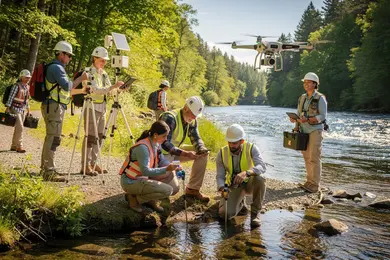
| Fieldwork | Can be local, independent, or arranged through approved experiences | Often integrated through nearby field sites and faculty projects | Hybrid or campus may be better for students wanting frequent field practice |
| Networking | Depends on online career services, faculty access, and local internships | Often easier through campus events and research groups | Campus may help traditional-age students build networks faster |
| Cost control | May reduce housing, commuting, and relocation costs | May offer more campus-based assistantships or facilities | Online may be better when relocation would add major expense |
Online study is often the better investment for students who already work, have family obligations, live far from a university, or can access environmental internships locally. Campus study may be better for students who want extensive lab facilities, frequent faculty research contact, traditional campus life, or a more structured schedule.
The best hybrid compromise is a mostly online program with intentional in-person fieldwork, local internship options, or short residencies. That structure can preserve flexibility while still building hands-on competence.
How Should Students Choose the Best Accredited Online Environmental Science Degree Program?
Students should choose an accredited online environmental science degree by comparing fit, cost, academic quality, flexibility, and outcomes together. A program that looks strong in rankings may not be the best choice if it requires travel you cannot manage, rejects many transfer credits, or lacks the specialization you need.
Use this decision process to narrow your options. It turns a broad program search into a practical comparison based on your goals and constraints.
- Define your target outcome, such as environmental consulting, conservation, sustainability, compliance, GIS, graduate school, or public-sector work.
- Verify institutional accreditation through recognized accreditation databases before evaluating anything else.
- Compare total cost to completion, including accepted transfer credits, fees, lab expenses, books, and expected time enrolled.
- Review the curriculum for biology, chemistry, ecology, statistics, GIS, policy, field methods, and a capstone or applied project.
- Ask how online students complete labs, fieldwork, internships, and research-style assignments.
- Compare student support, including tutoring, advising, technical help, career coaching, and internship assistance.
- Request outcome information such as graduation support, graduate school preparation, employer connections, or alumni career examples.
- Speak with admissions and academic advising before applying to confirm prerequisites, course rotation, transfer credits, and start dates.
If two programs look similar, prioritize the one with the clearer completion plan and lower financial risk. If one program costs more but offers stronger science preparation, field access, or career services aligned with your goals, the higher price may be reasonable.
Avoid choosing based on one factor. Tuition matters, but so do accreditation, transfer policy, schedule fit, lab quality, advising, and career preparation. The best program is the one you can afford, complete, and use toward a realistic environmental career path.
Other Things You Should Know About Environmental Science
No. Environmental science is usually more science-heavy, with biology, chemistry, ecology, geology, statistics, and field methods. Environmental studies often includes more policy, humanities, social science, ethics, and sustainability coursework.
Often, yes. Programs may use virtual labs, home lab kits, local field assignments, campus intensives, or approved transfer labs. Always ask how each required lab is completed before enrolling.
Yes, it can support roles with federal, state, and local agencies, especially in environmental protection, natural resources, compliance, and conservation. Government hiring requirements vary, so compare job postings early and choose electives that match them.
Certifications are not always required, but they can help in specialized areas such as GIS, hazardous materials, safety, wetland delineation, or sustainability reporting. Choose certifications based on your target role, not just general interest.
- 2025 Most Affordable Online Environmental Science Degrees https://www.onlineu.com/most-affordable-colleges/environmental-science-degrees
- Types of Sustainability Degrees https://www.sustainabilitydegrees.com/degrees/
- Environmental Science Courses & Degrees https://www.open.edu.au/study-online/science/environmental-science
- Online Environmental Science Degrees: Compare Schools https://www.degreesforgood.org/online-degrees/environmental-science/
- Top 50 Online and Distance Learning Universities 2026 | EUCDL Distance Accreditation Council https://www.eucdl.com/ranking-2026